Why Is There White Smoke From My Exhaust?
White exhaust smoke can be harmless condensation, but persistent smoke may point to coolant entering the engine. Here is what to check and when to stop driving.
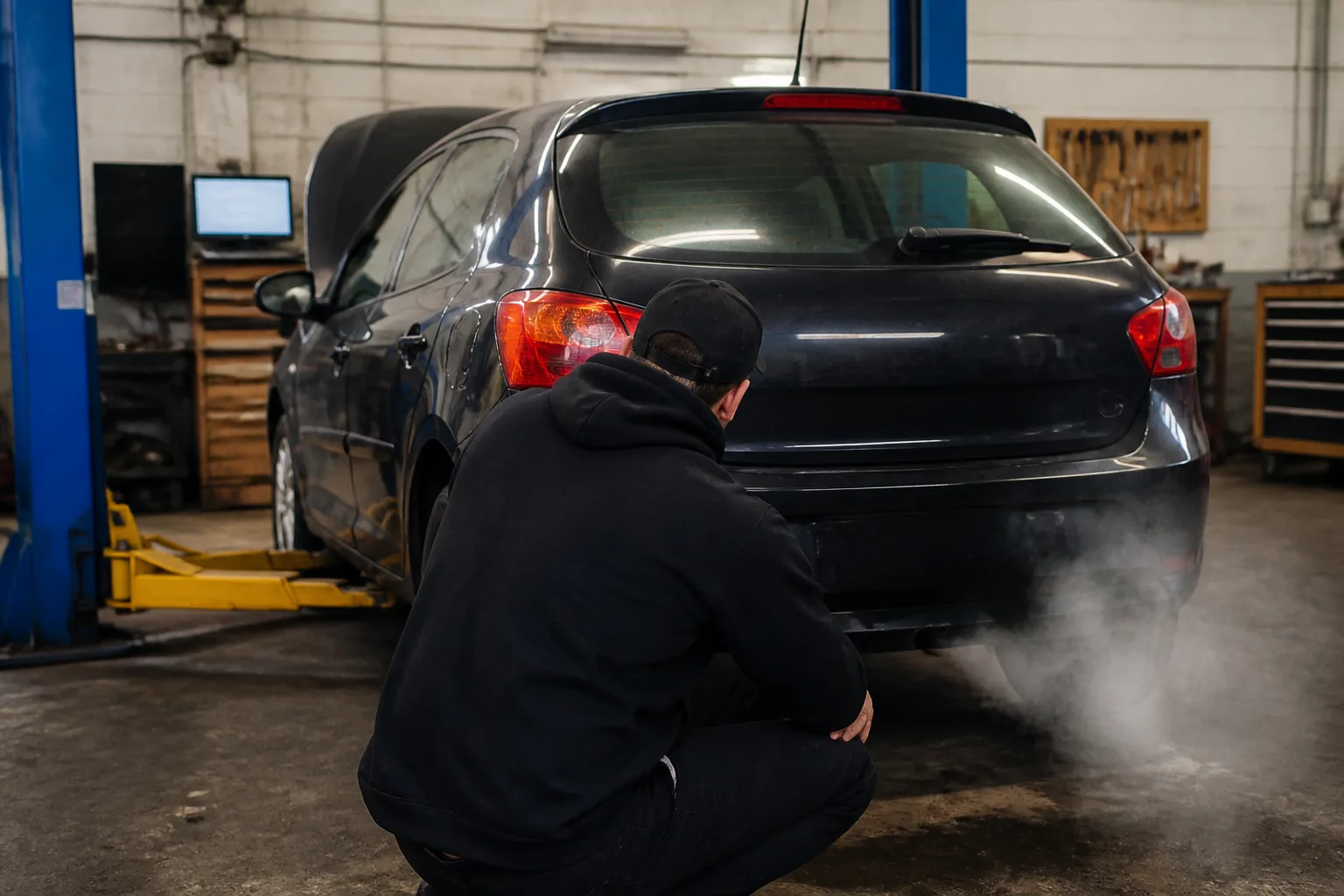
Seeing white smoke from your exhaust can be worrying, but it does not always mean there is a serious engine fault. In cool or damp weather, a small amount of white vapour may simply be condensation in the exhaust system. However, thick white smoke that continues after the engine has warmed up can indicate that coolant is entering the combustion process.
The appearance of the smoke, when it happens and whether the car has other symptoms can all help indicate how seriously it should be treated. It is not possible to confirm the cause from the exhaust alone, so a proper inspection may be needed before any repair decision is made.
White vapour on a cold start can be normal
Water vapour is a natural by-product of burning fuel. When the exhaust system is cold, this vapour can condense into visible droplets. That is why many cars produce a light white mist when started on a cold morning, particularly in damp UK weather.
This is usually less concerning when the vapour:
- appears mainly during a cold start
- is relatively thin rather than thick and cloud-like
- reduces as the engine and exhaust warm up
- is not accompanied by overheating, warning lights or unusual smells
You may also see water dripping from the tailpipe while the exhaust is cold. A small amount can be normal condensation. It should not automatically be treated as evidence of a failed head gasket or another major fault.
What persistent white smoke could mean
If white smoke remains after the engine has reached normal operating temperature, there may be more than condensation involved. One possibility is that engine coolant is getting into a cylinder and being burned with the fuel. Coolant is not meant to enter the combustion chambers, so this can indicate an internal engine sealing problem or another fault in the cooling system.
Potential causes can include a damaged head gasket, a cracked cylinder head or, less commonly, a damaged engine block. These are possibilities rather than a remote diagnosis. The same visible symptom can have different causes depending on the engine design and the other signs present.
Persistent white smoke may be more concerning if it is accompanied by:
- a falling coolant level with no obvious external leak
- an overheating warning or rising temperature gauge
- a sweet or unusual smell from the exhaust
- rough running, misfiring or difficulty starting
- a mayonnaise-like deposit under the oil filler cap
- poor heater performance or other cooling-system changes
A creamy deposit under the oil filler cap can sometimes be caused by moisture from short journeys, so it is not proof of a head gasket failure on its own. Equally, the absence of that deposit does not rule out a problem. A garage will need to assess the complete set of symptoms.
Could white smoke be caused by the exhaust or cooling system?
Sometimes the visible vapour is related to the way the exhaust system is heating up rather than an engine fault. Condensation can collect in the exhaust, especially when a vehicle is used for repeated short trips. Longer journeys may allow the system to reach a temperature that evaporates this moisture, although you should not use a long drive as a test if the car is overheating, losing coolant or running badly.
A cooling-system fault can also lead to white smoke indirectly if the engine becomes too hot or coolant enters areas where it should not. Coolant loss may be caused by an external leak from a hose, radiator, water pump or connection, but an external leak does not normally create white exhaust smoke by itself. The smoke may suggest that coolant is being drawn into the engine, while the leak or pressure loss still needs to be located.
Is white smoke from a diesel different?
Diesel engines can produce white smoke for reasons other than coolant entering the engine. Poor combustion during cold starting, an injector problem, low compression or a fault with the glow plug system can sometimes create pale smoke. In these cases, the engine may run unevenly or the smoke may be most noticeable during starting and initial warm-up.
That does not mean white smoke from a diesel should be ignored. A diesel engine that continues to smoke, misfires or struggles to start needs proper assessment. Related starting symptoms can have several causes, so it may also help to read our guide to why a car will not start or our explanation of why an engine can crank but not start.
What should you check safely?
There are a few basic observations you can make without dismantling anything:
- Note whether the smoke appears only when cold or continues when warm.
- Check the temperature gauge and any dashboard warning lights while the engine is running.
- When the engine is fully cold, check the coolant level against the marked reservoir levels.
- Look for obvious coolant traces or puddles around the vehicle, without reaching near hot or moving components.
- Notice whether the engine is running smoothly and whether the exhaust has an unusual smell.
Do not remove a coolant reservoir or radiator cap while the engine is hot. The system can be pressurised and hot coolant may escape, causing serious burns. Avoid trying to identify the fault by removing engine components or carrying out compression-related work at home.
Can you drive with white smoke from the exhaust?
If the smoke is a light mist that disappears as the exhaust warms, and the car has no other symptoms, it may be normal condensation. Continue to monitor it rather than assuming every cold-start vapour indicates a major repair.
Stop driving and arrange professional advice if the smoke is thick or persistent, the temperature rises, the coolant level is dropping, or the engine is misfiring or running poorly. Continuing to drive an overheating vehicle can cause further engine damage and may leave you stranded. If visibility is affected or the vehicle is not running safely, pull over somewhere suitable and switch the engine off.
A garage can inspect the cooling system, look for external leaks and carry out appropriate tests to establish whether coolant is entering the engine. The outcome might be a relatively simple fault, but it is better to confirm the cause than to rely on the appearance of the exhaust alone. If your vehicle needs assessment, Ashton's Garage can help investigate persistent white smoke and related engine or cooling-system problems without assuming the cause before checking the car.
Why early inspection can help
A small change in exhaust vapour may be harmless, but a persistent change can be an early sign of a fault that becomes more expensive if ignored. Recording when the smoke appears, checking whether the coolant level changes and reporting any warning lights will give the technician useful information.
If your car is also suffering from repeated starting problems or electrical symptoms, our guides to a battery that keeps going flat and how long a car battery lasts cover those separate issues. They should not be used to explain away persistent white exhaust smoke, though, as the two problems may be unrelated.
Frequently asked questions
Is white smoke from a cold exhaust normal?
A light mist that appears on a cold start and disappears as the exhaust warms is often condensation. Thick white smoke that continues once the engine is warm needs further investigation.
Does white smoke always mean a blown head gasket?
No. White smoke can be caused by normal condensation or, on some engines, an issue affecting cold combustion. A head gasket problem is one possibility when smoke is persistent and coolant is being lost, but testing is needed to confirm the cause.
Can low coolant cause white smoke from the exhaust?
Low coolant by itself does not automatically create white exhaust smoke. If coolant is entering the combustion chambers, however, it may be burned and appear as persistent white smoke. The reason for the coolant loss should be checked.
Should I drive if my car is producing thick white smoke?
Avoid driving if the smoke is thick or persistent, particularly if the temperature is rising, coolant is low or the engine is misfiring. Stop safely and arrange professional advice, because continued driving may worsen an overheating or internal engine fault.
Why does my diesel produce white smoke when starting?
Cold-start white smoke from a diesel can relate to incomplete combustion, injector or glow plug issues, low compression, condensation or coolant entering the engine. If it continues after warm-up or the engine runs unevenly, it should be inspected.
Related advice
Why Does My Engine Make a Knocking Noise?
An engine knocking noise can come from anything from combustion problems to low oil or a loose exhaust part. Learn what the sound may mean, what you can safely check and when to stop driving.
Why Does My Engine Make a Ticking Noise?
A ticking engine can be harmless, but it may also point to an oil, exhaust, valve or timing problem. Learn what the sound could mean and when to arrange a professional inspection.
Why Does My Heater Blow Cold Air When the Engine Is Hot?
A car heater that blows cold air while the engine seems hot can point to low coolant, trapped air, a circulation problem or a fault inside the heating system. Here is what the symptoms may mean and when to arrange a professional inspection.