Why Does My Car Smell of Fuel?
A fuel smell should not be ignored. Learn what may cause it, when it could be harmless, and when to stop driving and arrange a professional inspection.
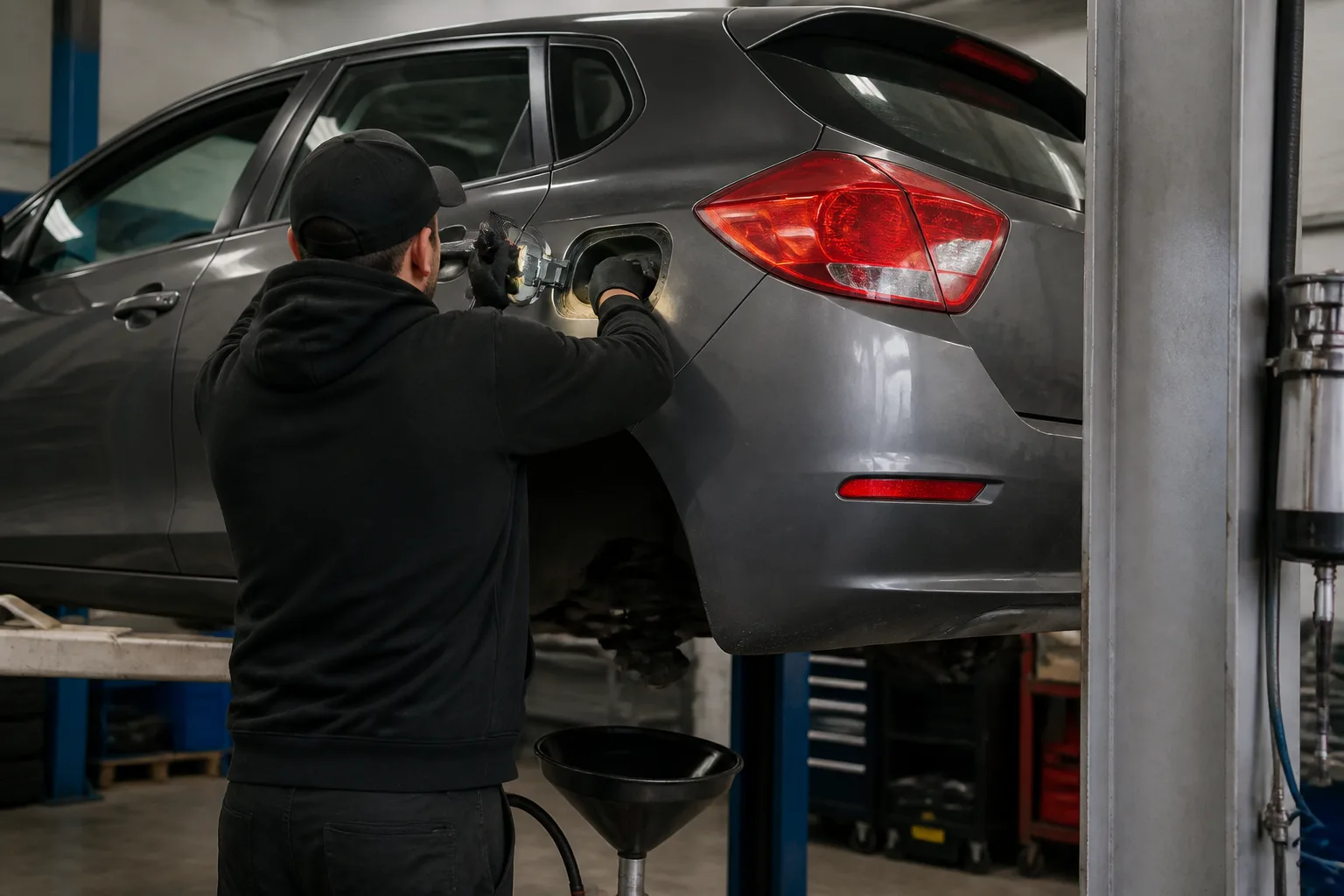
If your car smells of fuel, it is worth treating the warning seriously. Sometimes the smell comes from a small spill after refuelling or from vapour released when the fuel filler cap has not sealed properly. However, it can also indicate a fuel leak, a fault with the fuel system or an engine that is not burning fuel correctly.
It is not possible to identify the exact cause without inspecting the vehicle. Fuel vapour is flammable, and a leak can become more serious as the car is driven. If the smell is strong, returns repeatedly, appears inside the cabin or is accompanied by visible liquid, warning lights, rough running or difficulty starting, stop using the car and arrange professional help.
First, consider when the smell started
The timing and location of the smell can provide useful clues, although they do not confirm the fault.
After filling up
A brief smell immediately after refuelling may be caused by a small amount of petrol or diesel spilled around the filler opening. It should fade once the area has been cleaned and the vapour has dispersed. A fuel cap that is loose, damaged or not sealing correctly can also allow vapour to escape.
If the smell continues after a short period, do not assume it is just a spill. The filler neck, cap, seals and evaporative emissions system may need checking. The evaporative emissions system stores and controls petrol vapour so it is not released freely into the atmosphere. Faults in this system can produce a fuel smell without an obvious puddle.
When the engine is running
A fuel smell while the engine is running could indicate a leak from a pipe, connection, injector or another part of the fuel system. On a petrol car, a fault that allows vapour or liquid fuel to escape is particularly important because vapour can ignite if it reaches a suitable heat or electrical source.
The engine may also be receiving more fuel than it can burn properly. This is sometimes described as running rich. Possible signs include an engine management warning light, uneven idling, poor starting, reduced fuel economy or a noticeable smell from the exhaust. These symptoms still need diagnosis rather than guesswork, because several different faults can produce similar results.
Inside the cabin
A fuel smell inside the car is more concerning than a faint smell outside after refuelling. Vapour may be entering through the ventilation system, a seal, the boot area or a leak beneath the vehicle. Do not continue driving simply because the engine seems to be running normally. Open windows if it is safe to do so, switch off the engine and move away from sources of ignition while arranging assistance.
Common reasons a car may smell of fuel
There are several possible causes, including:
- A loose or damaged fuel filler cap: The cap may not be sealing vapour correctly, particularly if its seal is worn or the cap has been cross-threaded.
- A spill around the filler area: This should normally clear fairly quickly, but persistent odour needs further investigation.
- A damaged fuel hose or connection: Hoses and fittings can deteriorate, become loose or develop leaks.
- A problem with the fuel tank or filler neck: Damage, corrosion or a failed seal can allow liquid fuel or vapour to escape.
- A leaking injector or fuel rail component: These parts operate in the engine bay, where a leak can create a strong smell and a potential fire risk.
- An evaporative emissions fault: A failed valve, hose or seal can release petrol vapour and may also trigger the engine management light.
- An engine management or ignition fault: If fuel is not being burned correctly, the smell may be noticeable at the exhaust and the engine may run poorly.
Diesel has a different smell and is generally less volatile than petrol, but a diesel leak still creates a safety and environmental concern. Fuel on the road can also reduce tyre grip for other vehicles and may damage components if it reaches the brakes or other parts.
What should you do if your car smells of fuel?
If the smell is faint and clearly follows a small refuelling spill, clean the affected area, keep the vehicle outside in a well-ventilated place and monitor it without carrying out repairs yourself. Do not smoke near the vehicle, use naked flames or operate equipment that could create a spark.
If the smell is strong, persistent or unexplained, switch off the engine and avoid driving the car. Look from a safe position for obvious signs of liquid under the vehicle, but do not crawl underneath it, remove covers or touch suspected leaks. Do not attempt to tighten fuel-system components or repair hoses at the roadside.
Contact a recovery provider or garage and explain what you have noticed. If you also have a starting problem, our guide to why a car will not start may help you understand the other symptoms. A car that cranks but fails to run is covered in our article on why a car cranks but does not start, although a fuel smell means you should prioritise safety over repeated starting attempts.
Can you still drive with a fuel smell?
There is no safe general answer because the cause and severity matter. A short-lived odour after a minor spill may be harmless once it has cleared. An unexplained or continuing smell should be treated as a possible fuel-system fault.
Do not drive if you can see fuel, the smell is strong, the smell is inside the cabin, the engine is running roughly, the car is difficult to start, or a warning light has appeared. Continued driving could allow a leak to worsen and may expose the vehicle to an ignition risk. It is safer to arrange recovery and have the vehicle inspected.
A garage can check the fuel system, filler area, hoses, connections, engine management system and exhaust-related symptoms in a controlled environment. The inspection should establish whether there is an active leak or another fault before the vehicle is returned to normal use. If you are in Salisbury and the smell has not cleared, you can contact Ashton's Garage for car repairs and inspection and describe the symptoms before arranging a visit.
Why a fuel smell should not be ignored
Fuel odour is not always a sign of an immediate breakdown, but it is an important warning that something may not be sealed, contained or combusting as it should. Ignoring it can allow a small issue to become a larger repair, and in some cases it can create a genuine roadworthiness or fire concern.
The most sensible approach is to note when the smell occurs, whether it is inside or outside the vehicle, and whether there are other symptoms. Then avoid unnecessary driving and seek a professional assessment when the cause is not obvious or the smell continues.
Frequently asked questions
Is it normal for a car to smell of petrol after filling up?
A brief smell can follow a small spill or a short period with the fuel cap open. It should clear fairly quickly. If the odour continues, returns or is strong, have the filler area and fuel system inspected rather than assuming it is normal.
Can a bad fuel cap cause a fuel smell?
Yes. A damaged or poorly sealed filler cap can allow fuel vapour to escape. It may also be associated with an engine management warning light. Persistent odour still needs checking because the cap may not be the only possible cause.
Is it safe to drive if I can smell fuel inside the car?
It is safest not to drive until the cause has been assessed. A smell inside the cabin may indicate vapour entering from a leak or failed seal. Switch off the engine, keep away from ignition sources and arrange professional help.
Why does my car smell of fuel but have no visible leak?
Fuel vapour can escape from a cap, hose, seal or evaporative emissions component without leaving a visible puddle. An engine that is not burning fuel correctly can also create an odour at the exhaust. An inspection is needed to identify the source.
Can a fuel smell cause an MOT problem?
A fuel-system leak or another fault affecting safety may be relevant to a vehicle inspection, but the outcome depends on what is found and the condition of the vehicle. Do not wait for an MOT if you already have a strong or persistent fuel smell.
Related advice
Why Does My Engine Make a Knocking Noise?
An engine knocking noise can come from anything from combustion problems to low oil or a loose exhaust part. Learn what the sound may mean, what you can safely check and when to stop driving.
Why Does My Engine Make a Ticking Noise?
A ticking engine can be harmless, but it may also point to an oil, exhaust, valve or timing problem. Learn what the sound could mean and when to arrange a professional inspection.
Why Does My Heater Blow Cold Air When the Engine Is Hot?
A car heater that blows cold air while the engine seems hot can point to low coolant, trapped air, a circulation problem or a fault inside the heating system. Here is what the symptoms may mean and when to arrange a professional inspection.