What Causes Rough Starting in Cold Weather?
Cold weather can expose a weak battery, worn spark plugs, fuel system fault or sensor problem. Here is what rough starting may mean and when to arrange a garage inspection.
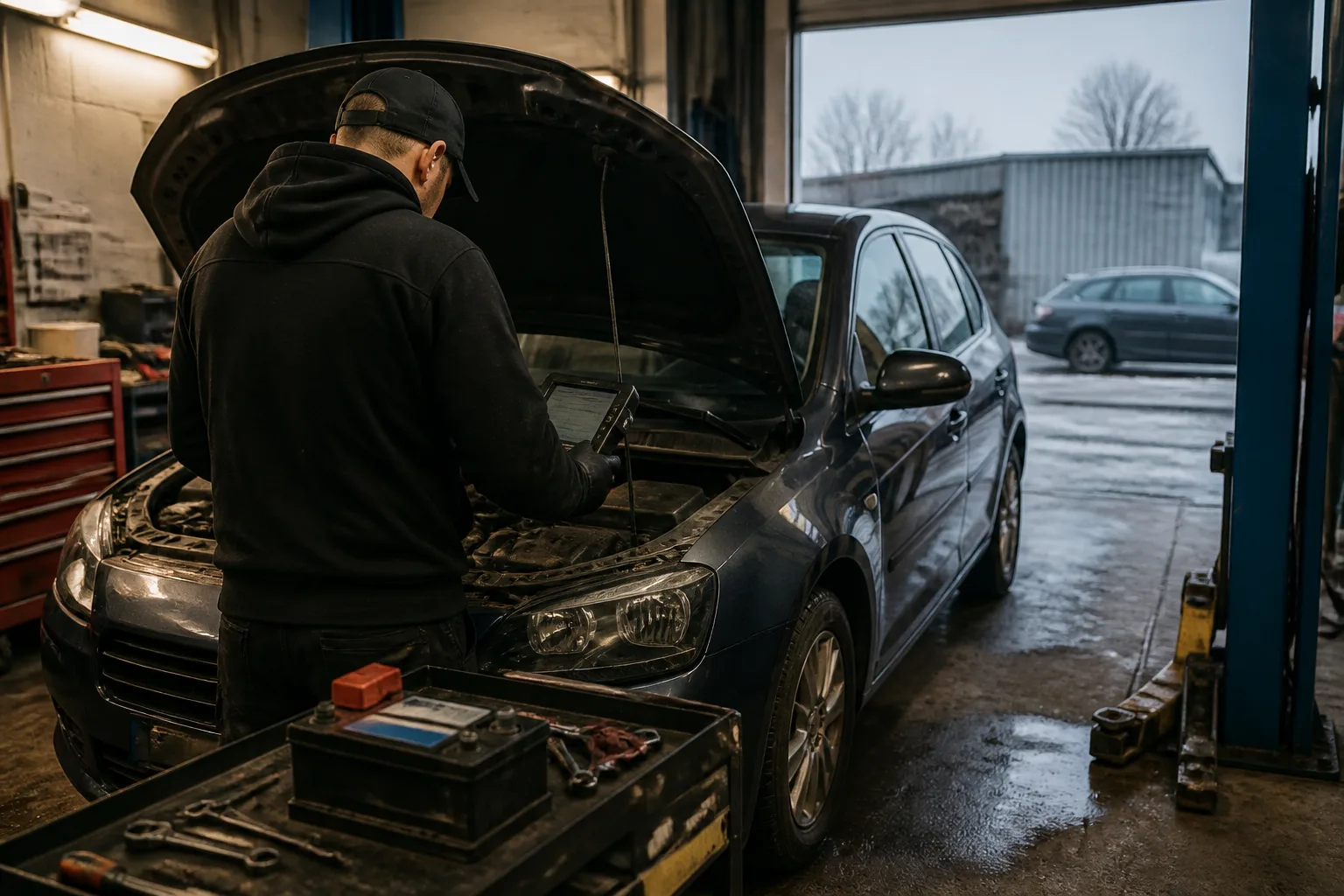
When a car starts roughly on a cold morning, it may shudder, hesitate, run unevenly or feel as though it might stall for the first few seconds. This can be more noticeable in winter because low temperatures make starting more demanding and can expose faults that are less obvious in warmer weather.
There is no single answer to the question, what causes rough starting in cold weather? The most likely cause depends on whether the engine turns slowly, cranks at its normal speed but runs unevenly, or starts and then cuts out. The warning lights on the dashboard, the vehicle’s fuel type and whether the problem improves as the engine warms up are also useful clues.
Why cold weather makes starting harder
A cold engine needs a carefully controlled mixture of fuel and air to start and run properly. Engine oil also becomes more resistant to movement at low temperatures, while the battery has less available starting performance in the cold. This means a marginal component can become noticeable during winter even if the car seemed to start normally in milder weather.
Modern engines use sensors and an engine control unit to adjust fuelling and ignition as conditions change. Diesel engines also use glow plugs to assist cold starting. If any part of this system is not working correctly, the engine may start but run roughly until temperature begins to rise.
Common causes of rough cold starting
A weak or ageing battery
A battery that is losing capacity may struggle to turn the engine quickly enough on a cold morning. You may hear slower cranking, notice the interior lights dim while starting, or find that the problem is worse after the car has been parked overnight. Repeated short journeys can also leave a battery insufficiently charged.
If the engine barely turns, clicks repeatedly or does not crank at all, the battery or its connections become more likely possibilities. However, a battery that starts the engine does not automatically prove that it is healthy. The charging system and starter motor can also affect starting performance.
There is more information about related symptoms in our guide to why a car battery keeps going flat and our explanation of how long a car battery lasts.
Glow plug problems in a diesel
Diesel engines generally rely on glow plugs to help create the heat needed for a cold start. If one or more glow plugs, or the control system that operates them, is not working as intended, a diesel may be difficult to start and run unevenly for a short time afterwards. White or grey exhaust smoke can sometimes accompany incomplete combustion, but smoke colour alone cannot identify the fault.
A glow plug warning light that stays on, flashes or behaves differently from normal should be checked rather than ignored. Other diesel starting faults, including fuel delivery or electrical problems, can produce similar symptoms.
Worn spark plugs or an ignition fault in a petrol car
Petrol engines need a strong, correctly timed spark to ignite the mixture. Worn spark plugs, damaged ignition coils or a problem with the associated wiring can cause a misfire, which means one or more cylinders are not burning the mixture properly. This can feel like shaking, stumbling or a repeated hesitation after starting.
A misfire may be more obvious when the engine is cold, then become less noticeable as it warms. That does not mean the underlying fault has gone away. Continuing to drive with a persistent misfire can affect engine operation and, depending on the cause, may damage the catalytic converter.
Temperature or air-flow sensor issues
The engine control system uses information from sensors to decide how much fuel is needed. A coolant temperature sensor that reports an incorrect engine temperature, or an air-flow sensor that gives inaccurate readings, can contribute to poor cold running. A sensor fault may also cause difficult starting, increased fuel consumption, uneven idling or an engine management warning light.
These symptoms can overlap with air leaks, throttle body problems and other fuelling faults. A diagnostic scan can identify stored fault codes, but a code is not always a complete diagnosis. The affected circuit still needs to be interpreted alongside the vehicle’s symptoms and test results.
Fuel delivery or fuel quality problems
Restricted fuel flow, an issue with the fuel pump or a blocked filter can make starting and running difficult. In a petrol car, an injector problem may cause an uneven idle. In a diesel, fuel system faults can also affect cold starting. Water or contamination in the fuel system is another possibility, although it should not be assumed without proper testing.
These faults are less suitable for guesswork because replacing parts without finding the cause can be expensive and may not solve the problem.
Air leaks and intake problems
An unintended air leak in the intake system can upset the air and fuel balance, particularly when the engine is cold. Split hoses, loose connections or a problem with the intake system may cause rough idle, hesitation or a hissing sound. Do not remove components or carry out improvised repairs around the engine bay while the engine is running.
Simple checks you can make safely
Before arranging an inspection, note what happens when you turn the key or press the start button. Does the engine crank slowly, crank normally but run roughly, or start and then stall? Record whether the issue happens only after an overnight stop and whether any warning light remains illuminated.
You can also check that the battery terminals appear secure and free from obvious heavy corrosion, without dismantling them. Make sure the fuel level is sufficient and consider whether the problem began immediately after refuelling. Avoid repeatedly cranking the engine for long periods, as this can drain the battery and place additional strain on the starter system.
Do not use starting fluids, bypass electrical safety systems or carry out fuel, ignition or glow plug repairs without the correct knowledge and equipment. If the engine management light is flashing, the vehicle is shaking severely, there is a strong fuel smell, or the engine repeatedly stalls, switch it off when safe and arrange professional advice.
When should rough starting be inspected?
An occasional slightly uneven start may be linked to low temperature, but a recurring problem should not be treated as normal winter behaviour. Arrange an inspection if the car needs several attempts to start, the issue is getting worse, the battery goes flat, or the engine continues to run roughly after warming up.
Stop driving as soon as it is safe to do so if the vehicle loses power in traffic, the engine is misfiring severely, warning lights indicate a serious fault, or you notice smoke, a strong fuel smell or other signs of a possible fire risk. If the car will not start, our guide to why a car may not start covers some of the different symptoms to note. A car that cranks but does not fire has a different set of likely causes, explained in why a car can crank but not start.
How a garage can find the cause
A proper assessment may include checking the battery’s condition and charging system, reading fault codes, inspecting ignition or glow plug operation, and examining relevant intake and fuel system components. The exact checks depend on the vehicle and the symptoms. Reproducing the fault from cold can be helpful, so tell the garage how long the car was parked and how the starting behaviour changes as it warms.
At Ashton’s Garage, we can investigate persistent cold-starting and rough-running problems without assuming that the first suspected component is automatically at fault. If your car is starting roughly or becoming unreliable, you can find out more about our car repairs in Salisbury and contact the garage to discuss the symptoms. A clear description of what happens on a cold start will help us suggest the most appropriate next step.
Frequently asked questions
Why does my car start rough but then run normally?
Cold-start fuelling, ignition or glow plug problems can be more noticeable before the engine reaches operating temperature. A weak battery, air leak or sensor fault may also cause this pattern. If it keeps happening, the vehicle should be assessed rather than treated as normal.
Can cold weather damage my car battery?
Low temperatures can reduce a battery’s available starting performance and expose an existing loss of capacity. Cold weather is not necessarily the original cause of a weak battery, but it can make the problem apparent.
Why does my diesel start roughly in winter?
Glow plug faults are one possibility, but a diesel can also have battery, fuel delivery, sensor or air intake problems. A warning light, slow cranking or prolonged starting should be noted for a proper diagnosis.
Is it safe to drive with a rough-running engine?
It depends on the severity and the warning signs. Avoid driving if the engine is shaking badly, repeatedly stalls, loses power, has a flashing warning light, or there is smoke or a strong fuel smell. Stop safely and arrange professional assistance.
Should I keep trying if my car will not start in the cold?
Avoid repeated long cranking attempts because they can drain the battery and strain the starter. Note whether the engine turns slowly or normally, then arrange suitable assistance if it will not start.
Related advice
Why Does My Engine Make a Knocking Noise?
An engine knocking noise can come from anything from combustion problems to low oil or a loose exhaust part. Learn what the sound may mean, what you can safely check and when to stop driving.
Why Does My Engine Make a Ticking Noise?
A ticking engine can be harmless, but it may also point to an oil, exhaust, valve or timing problem. Learn what the sound could mean and when to arrange a professional inspection.
Why Does My Heater Blow Cold Air When the Engine Is Hot?
A car heater that blows cold air while the engine seems hot can point to low coolant, trapped air, a circulation problem or a fault inside the heating system. Here is what the symptoms may mean and when to arrange a professional inspection.