Why Does My Car Battery Keep Going Flat?
A car battery that repeatedly goes flat may be old, undercharged, affected by cold weather or being drained by an electrical fault. Here is how to narrow down the likely cause safely.
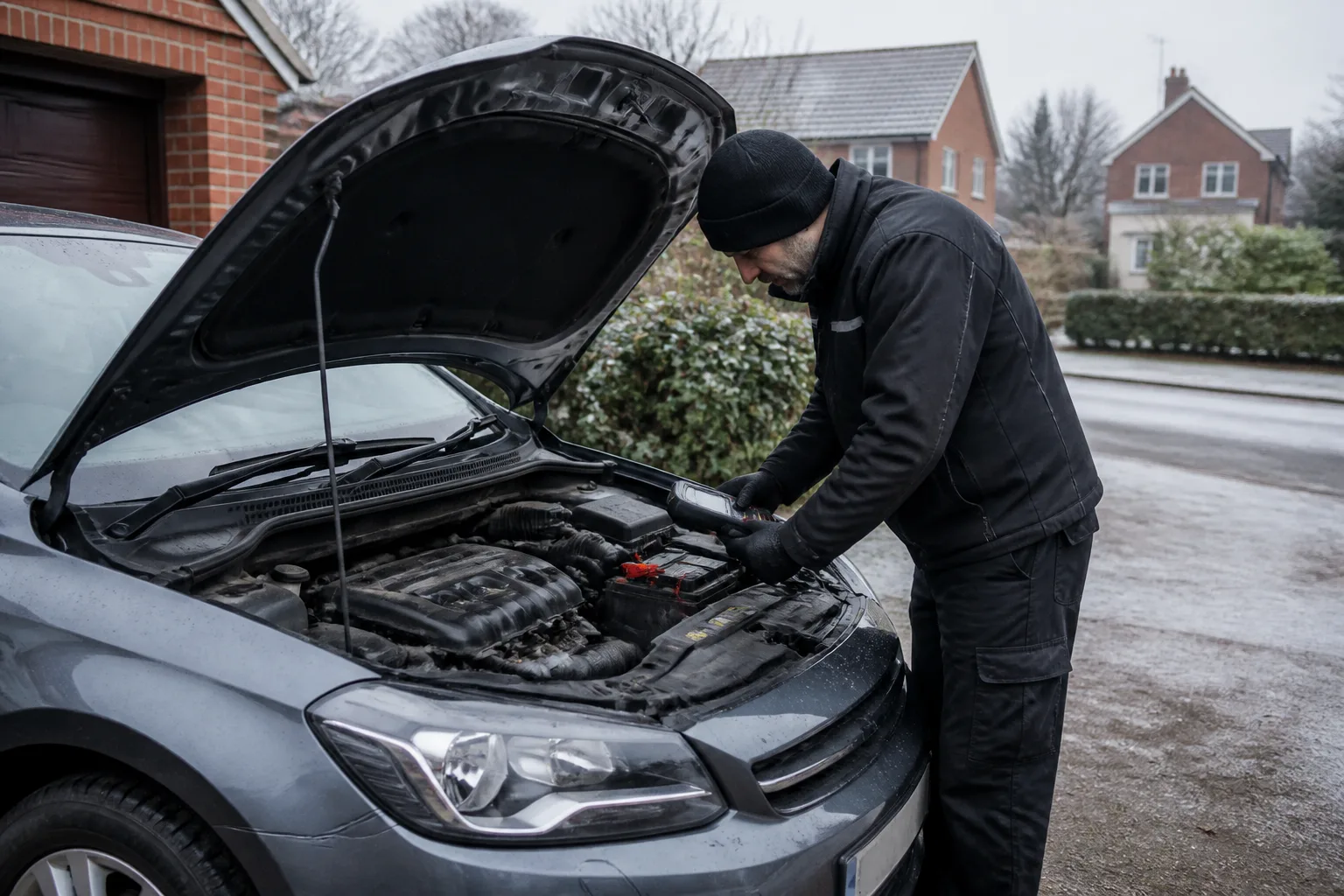
If your car battery keeps going flat, the battery itself may not be the only problem. A worn battery is one possibility, but repeated flat starts can also be linked to short journeys, cold weather, a charging fault or an electrical system that continues using power when the car is parked.
A single flat battery does not always mean the battery needs replacing. However, if it happens more than once, it is worth finding out why rather than repeatedly jump-starting the car. Repeatedly fitting replacement batteries without checking the charging system or looking for an unwanted electrical drain can leave the underlying fault unresolved.
Common reasons a car battery keeps going flat
The battery is old or losing capacity
Car batteries gradually lose their ability to store and deliver energy. Eventually, the battery may still appear to work after a long drive or a recharge, but it may not hold enough charge to start the engine reliably after the car has been parked.
Battery condition can be affected by its age, the vehicle’s usage and the temperatures it has experienced. Cold weather makes it harder for a battery to deliver starting power, while heat can contribute to the battery deteriorating over time. A battery that is already weakened may therefore show its problems more clearly during winter.
Warning signs can include slower engine cranking, dimming lights when starting, repeated need for a jump start and electrical features behaving less consistently than usual. These signs are not proof that the battery is the cause, but they are useful information for a proper test.
Repeated short journeys are not fully recharging it
Starting the engine uses a significant amount of the battery’s stored energy. The alternator then replaces that energy while the engine is running, but a very short journey may not give it enough time to do so fully.
If most of your driving consists of brief trips, especially with lights, heating, heated screens or other electrical equipment in use, the battery can gradually become undercharged. It may start the car several times before there is not enough power left for the next start.
This is particularly easy to notice when a car is used infrequently or is driven mainly for short errands. A longer drive may temporarily improve the situation, but it will not repair a battery that has lost capacity or solve a charging fault.
Cold weather is exposing an existing weakness
Low temperatures can reduce the amount of power a battery can provide, while the engine may need more effort to turn over. A battery that copes reasonably well in mild conditions can therefore struggle when the temperature drops.
Cold weather is often the trigger rather than the original cause. If the battery is already ageing or undercharged, winter conditions can reveal the problem. The same applies if the car has been left unused for several days.
The alternator is not charging correctly
The alternator charges the battery while the engine is running and supplies electricity to the vehicle’s systems. If it is not producing the correct output, the battery may gradually run down even if the battery itself is in good condition.
A problem with the alternator, its drive belt, wiring or associated charging components can produce similar symptoms to a failing battery. A battery warning light may appear, but its absence does not rule out a charging issue. Testing both the battery and the charging system is more reliable than replacing parts based only on the starting symptoms.
If electrical equipment becomes unusually dim, warning lights appear or the engine stops running after a battery-related problem, avoid assuming that a jump start has fixed the issue. The car may not continue running safely or reliably if the charging system is faulty.
Something is draining power while the car is parked
An electrical drain, sometimes called a parasitic drain, happens when a vehicle continues using more power than expected after it has been switched off and locked. Some systems need a small amount of power while the car is parked, but an abnormal drain can flatten the battery over time.
Possible sources can include a light that stays on, an accessory that has been left connected, an aftermarket alarm or stereo, a dash camera, or a fault within one of the vehicle’s electronic modules. The cause is not always obvious from outside the car, so a technician may need to carry out a current-draw test after the vehicle has gone into its normal parked state.
How to work out whether the battery is at fault
Start by noting when the problem occurs. Does the car go flat overnight, after several days parked, or only after a series of short journeys? Does the engine crank slowly, or is there no response at all? Has any accessory, warning light or recent electrical work been involved?
These details can help separate likely causes, but they cannot confirm a diagnosis on their own. A battery can show a reasonable voltage and still lack the capacity to start the engine. Equally, a new battery can go flat if the alternator is not charging it or another circuit is draining it.
A proper check may include testing the battery’s condition and starting performance, checking the alternator’s charging output, inspecting relevant connections and looking for an abnormal drain when the vehicle is switched off. Some newer vehicles may also need the replacement battery to be correctly matched or registered with the vehicle’s battery management system.
What should you do after a flat battery?
If you need to start the car using a jump pack or another vehicle, follow the instructions in the vehicle handbook and the equipment manufacturer’s guidance. Incorrect connection can damage electrical components and create a safety risk. Do not attempt a jump start if the battery is visibly damaged, leaking, swollen or frozen.
After the car starts, do not treat a successful journey as proof that the problem is solved. It may have restored enough charge for the moment, but the battery could still be weak or the charging system could still have a fault. If the car repeatedly goes flat, arrange a battery and charging-system inspection.
If the battery problem is accompanied by burning smells, damaged wiring, smoke, a warning light that remains on, or signs that the engine is losing power, stop in a safe place and seek professional advice. If the vehicle cannot be relied on to start or continue running safely, do not drive it to a garage without appropriate assistance.
Can a longer drive prevent the battery going flat?
A longer journey can help replace some of the energy used during starting, provided the charging system is working correctly. It is not a guaranteed cure. A battery with reduced capacity may still go flat again, and frequent short journeys may continue to leave it undercharged.
It is also worth switching off lights, heated screens, fans and other electrical equipment when they are not needed, and checking that the vehicle is fully locked with no interior or boot light left on. These simple checks may prevent avoidable drain, but they will not resolve an electrical fault.
When should a garage inspect the car?
Professional testing is sensible whenever the battery has gone flat more than once, particularly if the battery is not obviously old or the issue returns soon after charging. The aim should be to identify whether the cause is battery condition, charging performance, usage pattern or an unwanted electrical drain.
Ashton's Garage can investigate battery and starting problems in Salisbury and help identify the likely cause before parts are replaced. You can find the relevant repair information at Ashton's Garage car repairs.
For related symptoms, see why your car may not start, why a car can crank but not start, and our guides to how long a car battery lasts and signs of a failing battery.
Frequently asked questions
Why does my car battery go flat overnight?
A battery that goes flat overnight may have lost capacity, may not have been charged properly, or may be affected by an electrical drain while the car is parked. A battery and current-draw test can help distinguish between these possibilities.
Can short journeys flatten a car battery?
Yes. Starting the engine uses energy, and very short journeys may not give the alternator enough running time to replace it. This can gradually leave the battery undercharged, especially when several short trips are combined with cold weather or heavy use of electrical equipment.
Will driving recharge a flat car battery?
Driving may restore some charge if the alternator is working correctly, but it may not fully recharge a deeply discharged or damaged battery. If the battery keeps going flat, the battery and charging system should be tested rather than relying on longer drives alone.
Should I replace the battery if my car needs a jump start?
Not necessarily. A jump start can be needed because of an old battery, short journeys, cold conditions, a charging fault or an electrical drain. Testing the battery and vehicle systems first helps avoid replacing a battery when another fault is responsible.
Related advice
Why Is My Engine Overheating?
Find out why an engine may overheat, what the warning signs mean and what to do safely if the temperature rises while you are driving.