Why Is My Exhaust Smoking More in Cold Weather?
A visible white cloud from your exhaust can be normal on a cold morning, but persistent smoke or a change in colour may point to a fault. Here is how to tell the difference and when to arrange an inspection.
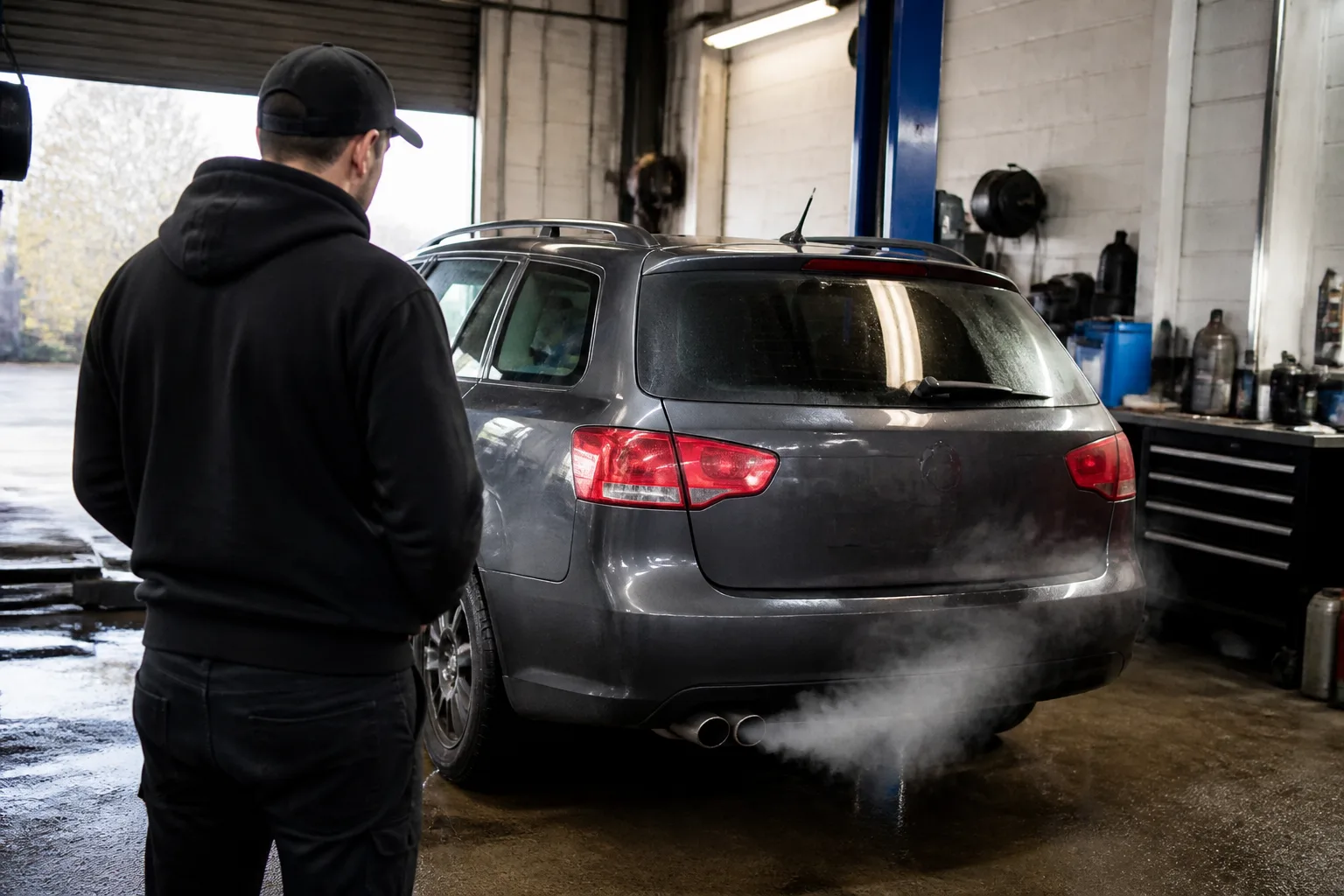
Seeing more vapour from your exhaust in winter can be worrying, especially when the cloud looks thick in the cold air. In many cases, it is simply water vapour made more visible by low temperatures. However, smoke that continues after the engine has warmed up, changes colour or comes with other symptoms should not be ignored.
So, if you are asking, why is my exhaust smoking more in cold weather, the first thing to consider is the colour, smell and duration of the exhaust. These clues can help separate normal condensation from a problem that needs professional attention.
Why cold weather makes exhaust vapour more noticeable
Fuel combustion produces water vapour as well as exhaust gases. When the exhaust system is cold, that vapour can condense into tiny droplets. In cold outside air, the droplets remain visible for longer, creating a white cloud behind the car.
This is particularly noticeable during a cold start. Water can also collect inside the exhaust system while the vehicle is parked. As the exhaust warms, the water evaporates and leaves as vapour. It may be more obvious on damp, frosty or still mornings than on a mild day.
Normal condensation usually has a few recognisable features:
- It is thin white vapour rather than dense smoke.
- It is most noticeable shortly after starting the engine.
- It gradually reduces as the exhaust reaches operating temperature.
- There is no unusual smell, warning light or noticeable change in how the engine runs.
Short journeys can make the effect more persistent because the exhaust may not become hot enough to dry out all the moisture inside it. Repeated short trips can also allow condensation to build up, although visible vapour alone does not prove that the exhaust is damaged.
What different exhaust colours can mean
Colour is useful, but it is not a definite diagnosis. Lighting, moisture and the condition of the exhaust can affect what you see. If the smoke looks unusual or does not clear, a garage can check the vehicle properly rather than relying on appearance alone.
Thin white vapour
Thin white vapour that disappears as the engine warms is commonly caused by condensation. This is usually normal, particularly in cold weather. It should not normally be accompanied by a sweet smell, overheating or a falling coolant level.
Thick white smoke that continues
Dense white smoke that continues once the engine is warm can indicate that coolant is entering the combustion process. Possible causes include a problem with the head gasket or another part of the engine cooling system, but the smoke alone cannot identify the fault.
Other signs that make this more concerning include a sweet-smelling exhaust, repeated overheating, a noticeable loss of coolant, poor running or a warning light. If the temperature gauge rises, a coolant warning appears or the engine is overheating, stop somewhere safe and switch off the engine. Continuing to drive an overheating vehicle can cause further damage and may leave you in an unsafe position.
Blue or blue-grey smoke
Blue or blue-grey smoke can indicate that the engine is burning oil. This may be linked to worn or damaged engine components, a fault with the turbocharger on a turbocharged vehicle or another oil-control problem. The exact cause requires inspection.
Check the oil level only when the car is parked safely on level ground and the engine has cooled sufficiently for a safe check. Do not continue driving if the oil warning light is illuminated, the oil level is dangerously low or the engine is making unusual noises. Arrange professional advice instead.
Black or very dark smoke
Black smoke can suggest that the engine is receiving more fuel than it can burn cleanly, or not enough air for the fuel being supplied. Possible causes include an air intake issue, an injector problem or a fault with the engine management system. Diesel vehicles may produce a brief darker puff under some conditions, but persistent black smoke should be investigated.
If your car is also losing power, running unevenly or showing an engine management warning light, avoid assuming that the cold weather is the only cause. A diagnostic check may be needed to identify the underlying fault.
When should you be concerned about exhaust smoke?
Arrange an inspection if the exhaust smoke:
- continues after the engine has fully warmed up;
- becomes thicker or more frequent over time;
- is blue, blue-grey, black or unusually dense white;
- has a strong fuel, oil or sweet coolant-like smell;
- appears alongside coolant or oil loss;
- comes with overheating, poor running, loss of power or warning lights; or
- is accompanied by a misfire or unusual engine noise.
A small amount of vapour on a cold morning is different from a heavy cloud that follows the car once it is warm. If you are unsure, note the colour, when it appears and whether it clears after normal driving. Do not remove hot components or open a pressurised coolant reservoir, as hot coolant and steam can cause serious burns.
Can a cold start cause damage?
Cold starts put extra demands on the engine, battery and fluids, but visible condensation is not, by itself, evidence of damage. The exhaust system is designed to deal with water produced during combustion. Problems are more likely when an underlying fault causes oil, fuel or coolant to enter the exhaust stream, or when the vehicle is not reaching its normal operating temperature.
If your vehicle is difficult to start in cold weather, it may be useful to read our guide to why a car will not start. Where the engine cranks but fails to run, our explanation of why a car can crank but not start covers some of the possible systems involved.
Repeated short journeys can also place extra demand on the battery. If the vehicle is slow to turn over or the battery repeatedly goes flat, see our advice on why a car battery keeps going flat. These issues may occur alongside cold weather, but they are separate from normal white exhaust vapour.
How a garage checks persistent exhaust smoke
A technician will usually start by confirming when the smoke appears and whether the engine is cold or warm. They may inspect the oil and coolant levels, look for visible leaks, check warning lights and assess the condition of the exhaust system.
Depending on the symptoms, further checks may include electronic diagnostics, cooling-system tests, inspection of the air intake and fuel systems, or checks for signs that oil or coolant is entering the engine. The appropriate checks depend on the vehicle and the symptoms, so there is no single test that applies to every smoky exhaust.
At Ashton's Garage, we can help investigate persistent or unusual exhaust smoke for motorists in Salisbury and the surrounding area. If the vapour does not clear when warm, or you have noticed overheating, fluid loss or a change in smoke colour, you can find information about our car repair service and contact the garage for sensible next steps.
In summary
More visible exhaust vapour in cold weather is often normal condensation, especially when it is thin, white and disappears as the vehicle warms up. Persistent smoke, unusual colours, strong smells, fluid loss, warning lights or overheating are different and should be checked.
There is no reliable way to diagnose the cause from the exhaust cloud alone. If the vehicle is overheating or showing signs of a serious engine fault, stop driving when it is safe to do so and arrange professional assistance.
Frequently asked questions
Is white smoke from an exhaust normal in cold weather?
Thin white vapour that appears on a cold start and fades as the engine and exhaust warm up is often normal condensation. Thick white smoke that continues when the engine is warm needs professional investigation.
How long should exhaust vapour last after starting?
There is no fixed time because it depends on temperature, humidity, the journey and the vehicle. It should generally reduce as the exhaust reaches operating temperature. Vapour that remains heavy throughout a normal drive is more concerning.
What does blue smoke from a car exhaust mean?
Blue or blue-grey smoke can mean the engine is burning oil. Possible causes include worn engine components or a turbocharger-related fault, but an inspection is needed to establish the actual cause.
Can exhaust smoke mean my car is overheating?
Persistent white smoke can be linked to a cooling-system or engine problem, while steam from under the bonnet may indicate overheating. If the temperature rises or a warning light appears, stop safely, switch off the engine and seek professional assistance.
Related advice
Why Does My Engine Make a Knocking Noise?
An engine knocking noise can come from anything from combustion problems to low oil or a loose exhaust part. Learn what the sound may mean, what you can safely check and when to stop driving.
Why Does My Engine Make a Ticking Noise?
A ticking engine can be harmless, but it may also point to an oil, exhaust, valve or timing problem. Learn what the sound could mean and when to arrange a professional inspection.
Why Does My Heater Blow Cold Air When the Engine Is Hot?
A car heater that blows cold air while the engine seems hot can point to low coolant, trapped air, a circulation problem or a fault inside the heating system. Here is what the symptoms may mean and when to arrange a professional inspection.