
How Long Does a Car Battery Last?
Most car batteries last around three to five years, but driving habits, weather, electrical demand and charging faults can shorten their life. Here is how to spot a tired battery and when to arrange a professional check.
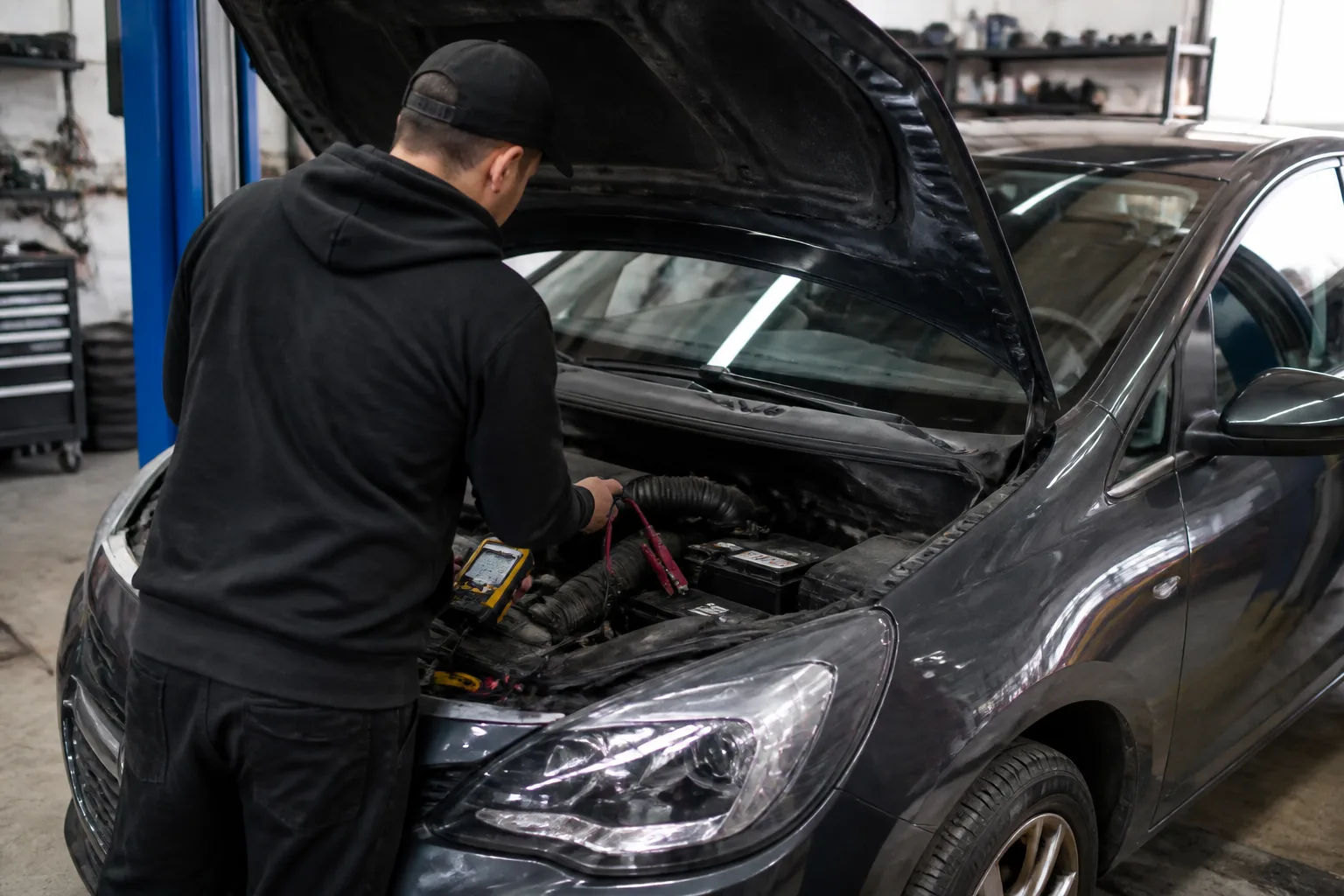
Most car batteries last around three to five years, although some last longer and others need replacing sooner. There is no fixed expiry date because battery life depends on the vehicle, how it is driven, the weather and the condition of the charging system.
A battery can appear to work normally for months and then struggle on a cold morning. That is why it is useful to understand the warning signs rather than waiting until the engine will not start. If you are trying to work out whether the battery is responsible for a starting problem, our guide to why a car will not start covers other possible causes as well.
How long should a car battery last?
As a general guide, a conventional 12-volt car battery may last about three to five years. This is only an average working life, not a guarantee. A battery used in a car that makes regular longer journeys may remain healthy for longer than one fitted to a vehicle used mainly for short trips.
Modern cars can place greater demands on the battery. They may have stop-start systems, heated screens, electric seats, driver assistance systems, alarms and other equipment that needs power. Batteries designed for stop-start vehicles, such as AGM or EFB types, are built for different demands and should be replaced with a suitable specification when required.
Battery age is therefore a useful clue, but it should not be the only reason for replacement. A proper test can give a better indication of the battery's condition and its ability to start the engine.
What affects car battery life?
Short journeys
Starting the engine uses a considerable amount of electrical energy. The alternator, which charges the battery while the engine is running, needs time to put that energy back. Frequent short journeys may not allow enough time for a full recharge, particularly when the lights, heater, heated windows and wipers are also being used.
This does not mean that every short trip will damage the battery. However, a pattern of repeated short journeys can gradually leave it undercharged. An undercharged battery is more likely to struggle when temperatures fall or when it has aged.
Cold weather
Low temperatures reduce a battery's ability to deliver starting power, while the engine can require more effort to turn over. A battery that seemed acceptable during warmer weather may therefore show its weakness in winter. Cold weather may expose an existing problem rather than being the sole cause of the failure.
Heat and battery age
Heat can also contribute to battery wear. High temperatures can speed up chemical deterioration inside the battery, even though cold weather is often when drivers notice starting trouble. As a battery gets older, its capacity and starting performance gradually decline.
Electrical equipment and parasitic drain
Accessories such as dash cameras, phone chargers or aftermarket equipment can use power when the car is parked, depending on how they are installed. A faulty light, alarm, control module or other electrical circuit can also continue drawing power after the vehicle is switched off. This is sometimes called a parasitic drain.
If a relatively new battery repeatedly goes flat, replacing the battery alone may not solve the problem. The cause could be an electrical drain, a charging fault or another issue. Our related guide explains some common reasons a car battery keeps going flat.
Signs that a car battery may be failing
A weak battery does not always fail without warning. Possible signs include:
- the engine turns over more slowly than usual when starting;
- the interior or dashboard lights appear dim during start-up;
- the vehicle needs a jump start after being parked;
- electrical equipment behaves inconsistently;
- the battery warning light appears while the engine is running; or
- the battery case looks swollen, cracked or damaged.
These symptoms do not prove that the battery is at fault. Slow cranking can also be linked to poor electrical connections, a starter motor problem or an engine issue. A battery warning light may relate to the charging system rather than the battery itself. You can read more about the signs of a failing car battery, but a test is normally needed to separate the possible causes.
Can a car battery be tested?
Yes. A battery test can assess its state of charge and its ability to provide starting power. The charging system can also be checked to see whether the alternator is supplying the correct charge while the engine is running. These checks are important because a new battery may go flat again if the underlying problem is elsewhere.
There are a few safe observations you can make yourself. Check whether the battery has an obvious crack or swelling, and note whether the vehicle has recently needed a jump start. Look for loose-looking or badly corroded connections, but do not dismantle electrical components or attempt repairs if you are unsure. Never continue using a battery that appears damaged or is leaking.
A garage can match the replacement battery to the vehicle's specification, including its size, capacity and starting performance. Some vehicles also require battery registration or configuration after replacement. This allows the charging system and energy management system to recognise the new battery. The exact requirement depends on the vehicle.
Should you replace a battery before it fails?
Not necessarily. Replacing a battery solely because it has reached a particular age may waste money if it is still testing correctly. On the other hand, an older battery that is showing slow starting or has already needed assistance deserves attention before it leaves you stranded.
It is sensible to arrange a check if the battery is several years old, the vehicle is used mainly for short journeys, or starting performance has changed. If the car repeatedly goes flat, ask for the battery and charging system to be assessed together rather than simply fitting another battery.
What should you do if the car will not start?
First, make sure the vehicle is in a safe position and that you are not exposed to moving traffic. Avoid repeatedly trying to start the engine, as this can further reduce the battery's charge. If you use jump leads or a booster device, follow the vehicle manufacturer's instructions and do not attempt this if the battery is visibly damaged, leaking or frozen.
If the engine starts but the battery warning light remains illuminated, or electrical functions are failing while you are driving, the vehicle may have a charging fault. Find a safe place to stop and arrange professional advice rather than assuming that continued driving will recharge the battery. If you are unsure whether the issue is the battery, starter motor or charging system, a garage can investigate safely. Ashton's Garage can check battery and starting-related faults in Salisbury and explain the findings before recommending suitable work.
Keeping a car battery healthy
- Keep the battery and its connections clean and in good condition, without carrying out electrical work you are not qualified to do.
- Where practical, avoid using the car only for very short journeys.
- Switch off lights and accessories before leaving the vehicle.
- Have repeated flat-battery problems investigated rather than relying on jump starts.
- Follow the vehicle handbook when using a battery charger or maintaining a vehicle that is parked for long periods.
In short, a car battery commonly lasts around three to five years, but its actual life depends on its use and the condition of the vehicle's electrical system. Slow starting, repeated flat batteries and warning lights are reasons to arrange a proper assessment, not automatic proof that the battery needs replacing.
Frequently asked questions
How often should a car battery be replaced?
There is no universal replacement interval. Many car batteries last around three to five years, but testing, symptoms and the vehicle's usage are better guides than age alone.
Can short journeys ruin a car battery?
Regular short journeys can leave the battery undercharged because the alternator may not have enough time to replace the energy used during starting. They do not automatically ruin a healthy battery, but the pattern can shorten its useful life.
Does a new battery need to be programmed?
Some modern vehicles need a replacement battery to be registered or configured through the vehicle's energy management system. The requirement depends on the make, model and battery type.
Why does my car battery keep going flat after replacement?
Possible causes include an alternator or charging fault, an electrical drain while the car is parked, unsuitable battery specification or a problem elsewhere in the starting system. The battery and vehicle should be tested together.
Is it safe to drive with the battery warning light on?
The warning light may indicate a charging-system fault, so the battery may not be recharging while you drive. Move to a safe place and arrange professional advice rather than continuing until the vehicle stops.
Related advice
What Causes Rough Starting in Cold Weather?
Cold weather can expose a weak battery, worn spark plugs, fuel system fault or sensor problem. Here is what rough starting may mean and when to arrange a garage inspection.
Why Is My Exhaust Smoking More in Cold Weather?
A visible white cloud from your exhaust can be normal on a cold morning, but persistent smoke or a change in colour may point to a fault. Here is how to tell the difference and when to arrange an inspection.
Why Does My Car Smell of Fuel?
A fuel smell should not be ignored. Learn what may cause it, when it could be harmless, and when to stop driving and arrange a professional inspection.