
Why Does My Car Crank but Not Start?
If your engine turns over but does not fire, the battery is not necessarily the main problem. Here are the common causes of a crank-no-start fault and when to arrange a professional inspection.
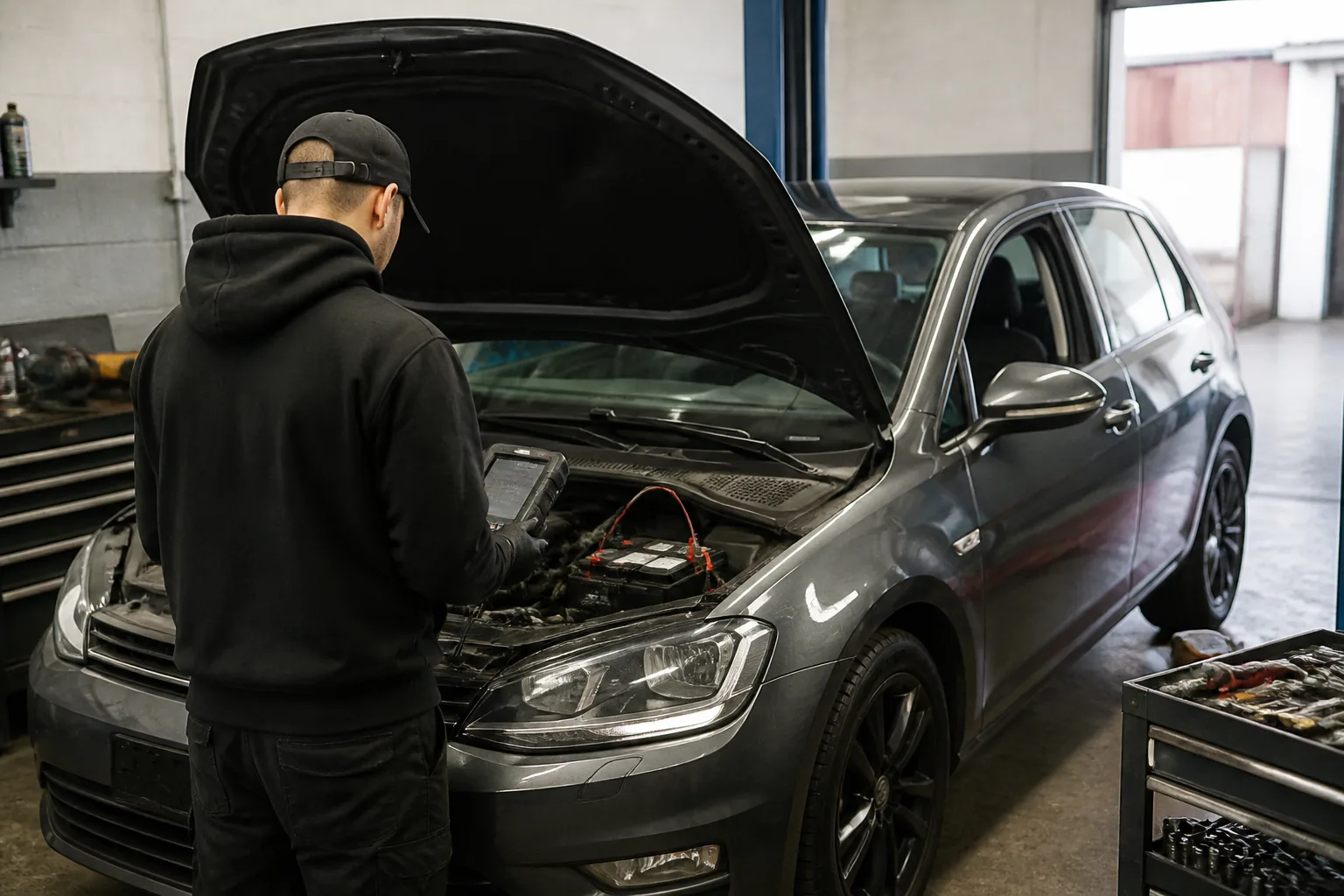
If your car makes a steady cranking noise but the engine does not fire, you have a different problem from a car that does not turn over at all. Cranking means the starter motor is rotating the engine. Starting means the engine has the fuel, air, electrical spark or compression it needs to run.
There are several possible reasons why a car will crank but not start, and the symptoms can overlap. A flat battery is less likely to be the only cause if the engine is turning at a normal speed, although a weak battery can still cause problems if the cranking speed or voltage drops too far. A proper diagnosis is usually more useful than replacing parts based on guesswork.
What does “cranking but not starting” mean?
When you turn the key or press the start button, the starter motor should turn the engine. You may hear a repeated whirring or churning sound. If the engine never catches and runs by itself, it is described as a crank-no-start condition.
This is different from a no-crank fault, where you hear a click, a series of clicks or nothing at all and the engine does not turn. No-crank problems are often associated with the battery, starter motor, connections or starting control system. If you are unsure which situation you have, our guide to why a car will not start explains the difference in more detail.
Common reasons a car cranks but will not start
1. A fuel supply problem
The engine needs the correct amount of fuel at the correct pressure. A failed fuel pump, blocked filter, faulty relay or electrical supply problem can prevent fuel from reaching the injectors. On some cars, the pump can be heard briefly when the ignition is switched on, but this sound alone does not prove that the fuel system is working correctly.
Running out of fuel is an obvious possibility, especially if the gauge is unreliable or the car has been parked on a slope. If the vehicle has recently been refuelled, contaminated or incorrect fuel may also need to be considered. Do not keep trying to start the car if you can smell a strong petrol or diesel smell. Switch it off, keep away from naked flames and arrange professional advice.
2. An ignition or spark fault
Petrol engines need an electrical spark to ignite the air and fuel mixture. A failed ignition coil, damaged wiring, faulty crankshaft or camshaft sensor, or a problem with the engine control system can stop the spark from being produced at the right time.
Modern vehicles use sensors to tell the engine computer where the engine is in its rotation. If a key sensor stops sending a reliable signal, the engine may crank normally but the computer may not operate the injectors or ignition correctly. A warning light is not guaranteed, so the absence of a dashboard message does not rule out an electronic fault.
3. A weak battery or poor electrical connection
A car can sometimes crank and still fail to start because the battery voltage falls too low while the starter is operating. The starter may use most of the available power, leaving insufficient voltage for the engine management system, injectors or ignition components.
Corroded battery terminals, a poor earth connection or a charging system fault can produce similar symptoms. If the battery has recently gone flat, it is worth considering why rather than assuming that a jump start has fixed the underlying issue. Our related guide to why a car battery keeps going flat covers some of the common possibilities.
4. Immobiliser or key recognition fault
The immobiliser is designed to prevent the engine running without an authorised key. If the car does not recognise the key, it may crank without starting, or it may start briefly and then stop. An immobiliser warning symbol may appear, but the exact indication varies between manufacturers.
Safe basic checks include trying the spare key if one is available and checking that the key fob battery is not obviously flat. Do not assume that replacing the fob battery will cure a fault with the vehicle’s immobiliser receiver or wiring.
5. Air intake or engine timing problem
The engine also needs a suitable supply of air and correct mechanical timing. A major intake problem, a failed airflow sensor or a stuck throttle component can affect starting. More seriously, a broken timing belt or a timing chain problem can leave the engine cranking unusually quickly or with a different sound from normal.
Do not remove covers or dismantle components to investigate this yourself. Timing system repairs are safety-critical to the engine and, depending on the design, a failure can cause extensive internal damage. A change in cranking speed or noise is useful information for a technician, so make a note of it.
6. Low compression or another mechanical fault
Compression is the pressure created inside the cylinders as the engine turns. Without enough compression, the fuel and air mixture cannot burn properly. Valve damage, internal engine wear or timing failure can all contribute to low compression.
This is not something that can be confirmed reliably by listening from outside the car. It requires suitable testing equipment and an understanding of the engine’s normal readings.
Checks you can make safely
Before arranging recovery or a garage inspection, you can make a few basic observations without dismantling anything:
- Check that there is enough fuel and that the fuel warning light or gauge is behaving normally.
- Note whether the engine is cranking at its usual speed or noticeably faster or slower.
- Look for warning lights or an immobiliser symbol on the dashboard.
- Try the spare key if the vehicle has one.
- Check that the gear selector is in Park or Neutral, or that the clutch is fully depressed where required.
- Pay attention to unusual smells, smoke, leaks or new noises.
Avoid repeatedly cranking the engine for long periods. It can discharge the battery, overheat the starter motor and, on some vehicles, allow unburnt fuel to enter the exhaust system. Avoid spraying fuel or starting fluid into the intake, and do not bypass the immobiliser or electrical safety systems.
When should you stop trying to start the car?
Stop and seek professional help if you notice a strong fuel smell, smoke, leaking fluid, damaged wiring, a burning smell or a sudden change in engine noise. You should also avoid driving the vehicle if it starts but runs very roughly, loses power, produces heavy smoke or shows a serious warning message.
A crank-no-start fault is not usually a braking or steering emergency, but repeated attempts can make the fault harder to assess and may cause secondary damage. If the car is in an unsafe location, contact a breakdown provider or arrange recovery rather than working around moving traffic.
How a garage finds the cause
A technician will normally begin by confirming the symptom and checking the battery voltage, cranking speed, diagnostic fault codes and basic engine signals. Depending on the findings, further checks may involve fuel pressure, injector operation, ignition output, sensor signals, compression or engine timing.
Diagnostic codes are useful clues, but they do not always identify the failed part directly. For example, a sensor-related code may be caused by the sensor, its wiring, a power supply problem or a mechanical timing issue. Testing the system helps avoid unnecessary parts replacement.
If your car is stranded or repeatedly cranks without starting, Ashton’s Garage can inspect the fault and explain the sensible next step. If battery condition is part of the concern, you may also find our guide to the signs of a failing car battery useful before arranging an inspection.
In summary
When a car cranks but will not start, the engine is turning but one or more of its essential requirements is missing. Fuel delivery, ignition, battery voltage, immobiliser operation, engine sensors, timing and compression are all possible areas to investigate.
Simple observations can help describe the fault, but they rarely prove the cause. Avoid unsafe dismantling or repeated starting attempts, and arrange a professional diagnosis if the vehicle does not start promptly or shows unusual smells, noises or warning lights.
Frequently asked questions
Can a weak battery make a car crank but not start?
Yes. A battery may have enough power to turn the starter motor but not enough voltage to support the engine management, ignition or fuel systems correctly. Battery terminals, earth connections and the charging system can also be involved.
Why does my car crank but not start after getting fuel?
Possible causes include incorrect or contaminated fuel, a fuel pump problem, an electrical fault or an unrelated issue that happened at the same time. If there is a strong fuel smell, stop trying to start the vehicle and seek advice.
Can an immobiliser stop a car from starting while it still cranks?
Yes. If the vehicle does not recognise the key, the immobiliser may prevent the engine from running even though the starter turns it. Trying the spare key can be a safe basic check, but the vehicle may need specialist diagnosis.
Should I keep trying to start a car that will not fire?
No. Repeated or prolonged cranking can flatten the battery, overheat the starter and potentially create further problems. Stop if you notice fuel smells, smoke, unusual noises, warning messages or damaged wiring.
Related advice
What Causes Rough Starting in Cold Weather?
Cold weather can expose a weak battery, worn spark plugs, fuel system fault or sensor problem. Here is what rough starting may mean and when to arrange a garage inspection.
Why Is My Exhaust Smoking More in Cold Weather?
A visible white cloud from your exhaust can be normal on a cold morning, but persistent smoke or a change in colour may point to a fault. Here is how to tell the difference and when to arrange an inspection.
Why Does My Car Smell of Fuel?
A fuel smell should not be ignored. Learn what may cause it, when it could be harmless, and when to stop driving and arrange a professional inspection.