
Why Does the Steering Wheel Shake When Braking?
A steering wheel that shakes under braking can have several causes, from uneven brake discs to worn suspension or tyre problems. Here is what the symptom may mean and when to stop driving.
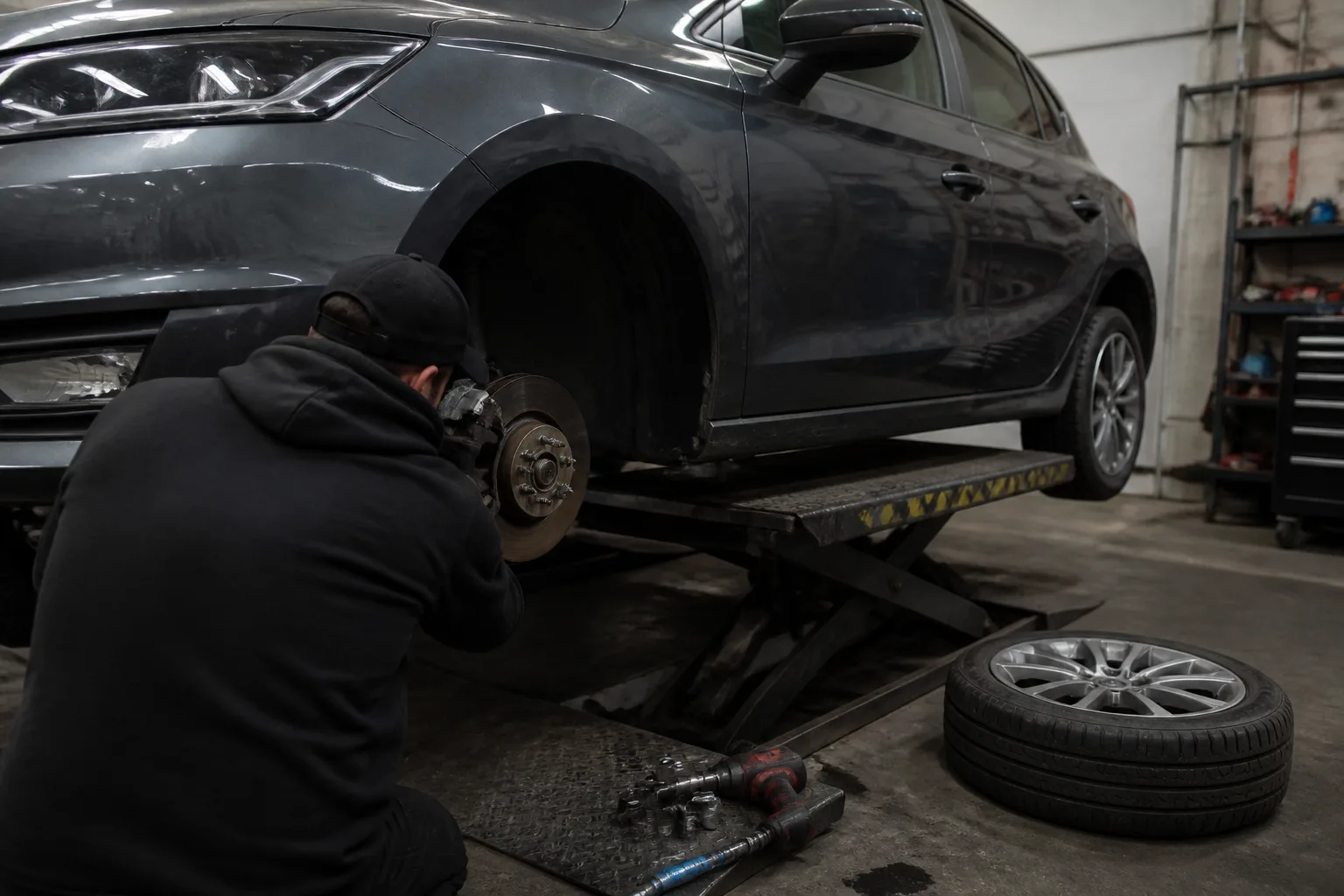
If the steering wheel shakes when you brake, it is a sign that something in the braking, wheel or suspension system needs checking. The sensation may be a light vibration through the wheel, a repeated pulsing, or a more noticeable judder that gets stronger as you slow down.
There is no single fault that explains every case. Brake discs are often blamed, but uneven braking surfaces, a sticking brake calliper, worn suspension components, wheel problems and tyre defects can all contribute. The speed at which the vibration appears, whether the brake pedal pulses and whether the car pulls to one side can help a technician narrow down the possibilities.
Because braking is safety-critical, a shaking steering wheel should not be ignored. If the vibration is severe, the car pulls sharply, the brakes feel weak, a wheel becomes unusually hot, or you hear grinding, stop in a safe place and arrange professional help rather than continuing to drive.
What can cause the steering wheel to shake under braking?
Uneven brake disc surfaces
Brake discs, sometimes called rotors, provide the flat surfaces that the brake pads clamp against. If the disc surface develops uneven friction areas or variation in thickness, the braking force can change as the disc rotates. You may feel this as a repeated vibration through the steering wheel, particularly when braking from higher speeds.
This is commonly described as warped discs, although that wording can oversimplify what is happening. Uneven wear, localised heat effects, corrosion or changes in the disc surface can all affect how smoothly the pads contact it. A visual check through the wheel may show scoring or a pronounced lip, but the appearance alone does not confirm the cause.
A sticking brake calliper
A calliper presses the brake pads against the disc. If a calliper or its sliding mechanism does not move correctly, one pad may remain in contact with the disc or braking force may be uneven between the two sides. This can create vibration, pulling, accelerated pad wear and excess heat.
A sticking brake can also leave one wheel hotter than the others after a journey. Do not touch a wheel or brake component to check this, as it may be hot enough to cause burns. A burning smell, smoke or a car that feels reluctant to roll are reasons to stop and seek assistance.
Worn steering or suspension components
Brake force transfers through the steering and suspension assembly. Worn bushes, ball joints, track rod ends or other components can allow unwanted movement when the car slows down. In these cases, the vibration may be more noticeable over bumps or when changing direction as well as under braking.
Suspension wear can affect how securely the wheel is held against the road. It is not something to dismiss as a comfort issue, especially if you also notice knocking noises, vague steering, uneven tyre wear or a change in the car’s handling.
Tyre or wheel problems
A damaged tyre, buckled wheel, incorrect wheel balance or uneven tyre wear can cause vibration even when you are not braking. Braking may make the sensation more obvious because the front of the vehicle is loaded as it slows.
Check the tyres for obvious bulges, cuts, exposed cords or a significant loss of pressure. Do not attempt to drive on a tyre with structural damage. A wheel that has struck a pothole or kerb may also need inspection, even if the damage is not immediately visible.
Loose or incorrectly fitted wheel components
Wheel fasteners that are loose or not tightened correctly can create serious instability. This is less common than ordinary brake wear, but it carries a high risk. If the vibration began after a wheel change, tyre replacement or brake work, stop driving and have the wheel and its fasteners checked promptly.
When does the vibration happen?
The timing of the symptom can provide useful information, although it cannot replace an inspection.
- Only when braking: the brake discs, pads, callipers or related suspension parts may need checking.
- Under braking from higher speeds: brake vibration may become more noticeable as the braking load increases.
- At most speeds, even off the brakes: tyre, wheel, balance, alignment or suspension issues may be involved.
- With a pulsing brake pedal: the braking surfaces may not be applying consistently as the wheel rotates.
- With the car pulling to one side: braking force may not be even, or there may be a steering, suspension or tyre issue.
Make a note of when the vibration occurs and whether it is getting worse. This information can help the garage, but avoid repeatedly testing the brakes at speed to reproduce the problem.
Is it safe to drive if the steering wheel shakes when braking?
It depends on the severity and the cause, which cannot be confirmed remotely. A mild vibration may still allow a short, careful journey to a garage, but it should be assessed rather than left until the next routine service. Keep speeds low, leave extra stopping distance and avoid unnecessary driving if you do need to reach an inspection appointment.
Do not continue driving if the brake pedal feels soft, the vehicle pulls significantly, braking performance has reduced, the steering feels loose, a tyre is damaged, there is smoke or a strong burning smell, or the vibration is severe. In those situations, stop safely and arrange recovery or professional advice.
What will a garage check?
A technician will normally consider the complete system rather than replacing parts based only on the steering wheel symptom. Checks may include the condition and thickness of the brake discs and pads, calliper operation, signs of overheating, wheel security, tyre condition, wheel balance and relevant steering and suspension components.
The technician may also road test the vehicle where it is safe to do so. This helps establish whether the vibration occurs only under braking, at a particular speed or alongside another handling problem. Any recommended repair should address the cause, not just the sensation felt through the wheel.
Brake components are safety-critical, so detailed dismantling or adjustment is not a sensible home repair for most motorists. If your car needs a closer look, Ashton's Garage can inspect braking, steering and suspension concerns and explain the findings in straightforward terms.
How can brake vibration be prevented?
Regular servicing helps identify wear before it develops into a more serious handling problem. Keep tyres at the recommended pressures, check them for visible damage and have unusual noises or changes in steering investigated. Avoid holding the brake pedal down unnecessarily after heavy braking, as excessive heat can affect braking components, but do not rely on driving habits to solve an existing vibration.
It can also help to understand normal brake wear. Our guide to how long brake pads last explains why pad life varies between vehicles and driving conditions. If you have noticed thin pads, a warning noise or reduced braking confidence, see the signs that your brake pads may need replacing.
Related braking symptoms
A shaking steering wheel is not the only sign that braking components or wheel control may need attention. If the car moves to one side when slowing down, our guide to why a car pulls to one side when braking covers some of the possible causes. Squealing does not always mean the same thing either, so it is worth reading about why brakes squeak if noise is part of the problem.
In summary
A steering wheel that shakes when braking can point to uneven brake surfaces, a sticking calliper, worn suspension, tyre damage, a wheel issue or another fault affecting how the car slows down. The symptom does not identify the failed part by itself, and continuing to drive may be unsafe if the vibration is severe or accompanied by poor braking, pulling, heat or damaged tyres.
Treat the change seriously, avoid unsafe testing and arrange an inspection so the cause can be identified before it develops into a larger braking or handling problem.
Frequently asked questions
Can worn brake pads make the steering wheel shake?
They can contribute to braking problems, but steering wheel vibration is not proof that the pads are worn. Uneven discs, a sticking calliper, suspension wear, tyre damage or a wheel problem may also be involved, so the complete braking system should be checked.
Why does the steering wheel shake only when I brake at higher speeds?
Higher-speed braking places greater load on the front brakes and can make uneven braking surfaces or worn components more noticeable. A tyre or wheel issue may also become clearer at speed. Avoid repeatedly testing the symptom and arrange an inspection.
Is it safe to drive with a shaking steering wheel?
A mild vibration should still be checked promptly, but severe shaking, poor braking, strong pulling, a soft pedal, smoke, burning smells, loose steering or tyre damage mean you should stop safely and arrange professional help.
Do brake discs always need replacing if the steering wheel shakes?
No. Brake discs may be involved, but the cause could also be a calliper, pad, suspension component, tyre, wheel or wheel fitting issue. A proper inspection is needed before deciding which parts, if any, require replacement.
Related advice
When Does Wheel Alignment Need Checking?
Wheel alignment may need checking after a pothole impact, kerb strike, suspension work or unusual tyre wear. Learn the warning signs and when professional inspection is sensible.
What Does a Broken Coil Spring Feel Like?
A broken coil spring can cause a clunk, uneven ride height, poor handling or tyre contact. Here is what to look for and when professional inspection is needed.
What Causes a Knocking Noise Over Bumps?
A knocking noise over bumps can come from worn suspension parts, loose trim or something moving in the boot. Here are the common causes, what to check safely and when to arrange a professional inspection.