How Long Do Brake Pads Last?
Brake pads do not have a fixed replacement interval. Find out what affects their lifespan, how to check for wear and when professional inspection is needed.
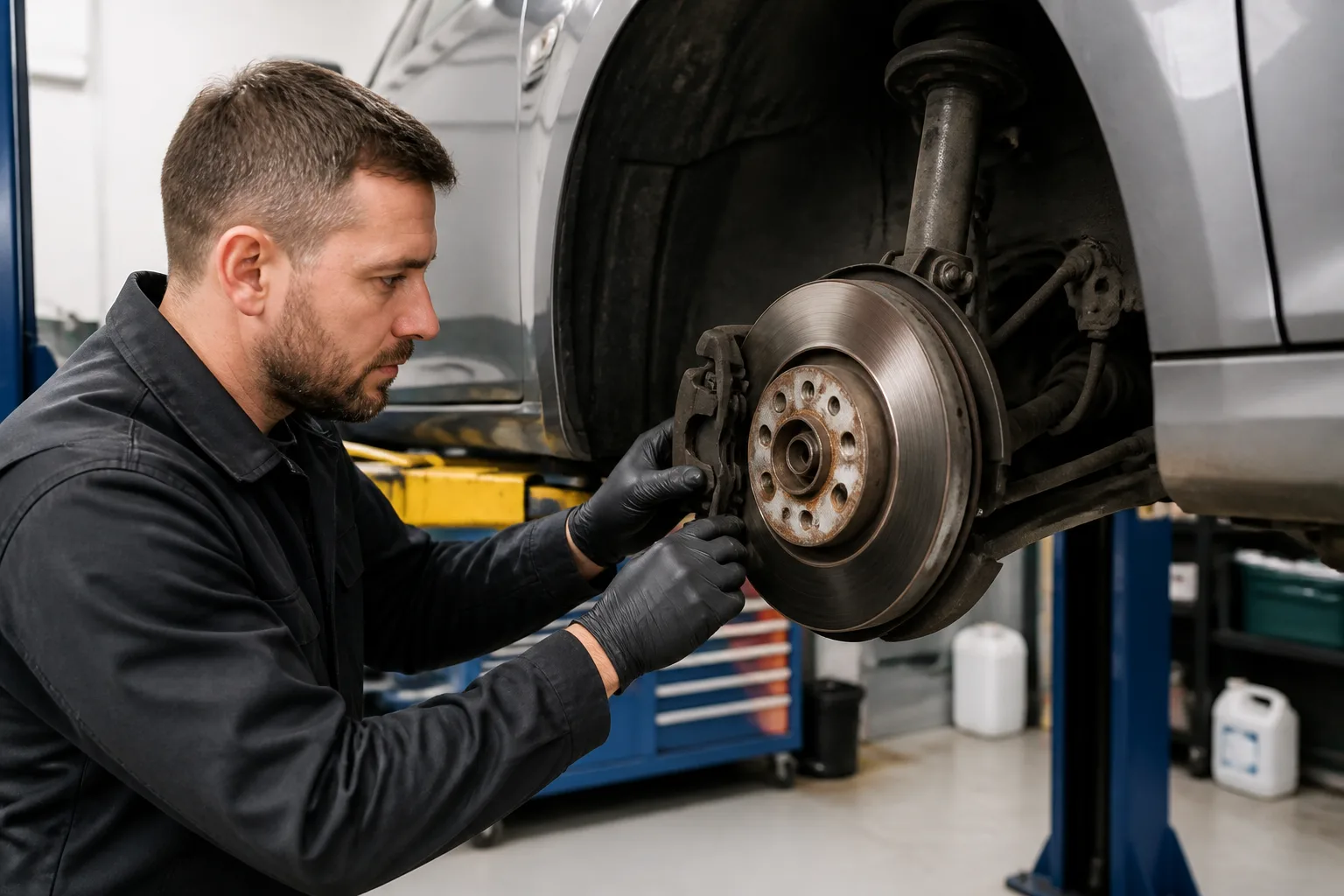
There is no fixed answer to the question, “how long do brake pads last?” Some pads may remain in good condition for many miles, while others wear much sooner. Their lifespan depends on how and where the vehicle is driven, the vehicle’s weight, the quality of the components and the condition of the rest of the braking system.
For that reason, brake pads should not be replaced based on mileage alone. Their actual condition and remaining friction material matter more than the number on the odometer. Regular servicing, inspection and attention to warning signs are the safest ways to judge when replacement is needed.
What do brake pads do?
Brake pads are friction components fitted inside a disc brake calliper. When you press the brake pedal, the calliper pushes the pads against a rotating brake disc. The friction between the pads and disc slows the wheel and brings the vehicle to a stop.
This process creates heat and gradually wears the friction material away. Once the material becomes too thin, braking performance can be affected and the metal backing of the pad may damage the disc. Brake pads are designed to wear, so replacement is a normal part of vehicle maintenance rather than a sign that something has necessarily gone wrong.
How long should brake pads last?
Brake pad life varies too much between vehicles and drivers to give one reliable mileage figure. A car used mainly on open roads may put less demand on its brakes than the same car used for short urban journeys. Likewise, a driver who regularly carries heavy loads or travels in hilly areas may use the brakes more heavily.
The front pads often do more work than the rear pads because weight transfers towards the front of the vehicle during braking. However, this is not a rule that can be used to predict replacement times. Some vehicles have different braking systems, and electronic systems such as brake force distribution can affect how quickly each axle wears.
The best answer is that brake pads last until their friction material approaches the vehicle manufacturer’s minimum safe thickness, or until damage or uneven wear means they need replacing earlier. A garage can check this during a service, MOT-related inspection or brake inspection.
What affects brake pad wear?
Driving style
Frequent heavy braking creates more heat and uses more friction material. Smooth anticipation and allowing enough space to slow down can reduce unnecessary brake use. This does not mean delaying braking when you need to stop. Safety always comes first.
Type of journeys
Stop-start traffic, repeated short journeys and steep roads usually involve more braking than steady motorway or dual-carriageway driving. A vehicle used in busy town traffic may therefore need more frequent brake checks than one that spends most of its time travelling at a steady speed.
Vehicle load and towing
Passengers, luggage and towing all increase the weight that the brakes must control. The brakes may need to work harder and produce more heat, particularly on gradients or during repeated stops.
Brake component condition
Brake pads do not work in isolation. A sticking calliper, seized guide pin, worn disc or problem with the hydraulic system can cause uneven or accelerated wear. If one pad is much thinner than its partner on the same wheel, the cause should be investigated rather than simply fitting new pads.
Pad material and vehicle design
Different vehicles use different pad materials and braking systems. Some pad compounds prioritise quiet operation, others are designed for particular performance or operating conditions. The correct replacement parts should match the vehicle and its braking system.
How can you tell when brake pads need replacing?
Some vehicles have a dashboard warning light or a wear sensor that alerts the driver when the pads are approaching the replacement point. Not every vehicle has a sensor, and a warning light does not replace a physical inspection.
Possible signs of worn or damaged brake pads include:
- a high-pitched squeal or warning noise when braking
- grinding or harsh scraping sounds
- a brake warning message or warning light
- the vehicle pulling to one side under braking
- vibration through the steering wheel or brake pedal
- a change in pedal feel or braking response
- visible wear when the pads can be safely viewed through the wheel
These symptoms do not prove that the brake pads are the cause. Noise, pulling and vibration can also be linked to discs, callipers, suspension components, tyres or other faults. You can read more about signs your brake pads need replacing, but a remote description cannot confirm the condition of your car.
Do noisy brakes always need new pads?
No. A squeak can sometimes be caused by surface contamination, pad material, moisture or normal contact between brake components. On the other hand, persistent squealing can indicate wear or another brake problem. Grinding is more concerning because it may mean the friction material has become very thin or has gone, allowing metal contact.
If your car pulls to one side when braking, the brakes should be checked promptly. Uneven braking can affect control and may have several possible causes. Our guide to why a car pulls to one side when braking explains some of the possibilities without assuming a diagnosis.
Can you check brake pad thickness yourself?
Sometimes part of the pad is visible through the wheel, but this is not a dependable inspection method for every vehicle. The visible pad may not be wearing at the same rate as the pad on the inner side of the disc. Wheel design, access and lighting can also make the remaining material difficult to judge.
A proper check should consider both pads on each wheel, the condition of the discs, whether the callipers move correctly and whether wear is even. A garage may also look for heat damage, corrosion, fluid leaks and other faults that cannot be confirmed from outside the vehicle.
Should brake pads be replaced in pairs?
Brake pads are normally replaced on both sides of the same axle. Replacing only one side could leave the vehicle with unequal braking characteristics. The exact repair depends on the fault and the vehicle, so a technician should assess the system before parts are ordered.
New pads may also require attention to the discs. If a disc is below its permitted thickness, badly scored, cracked or uneven, fitting new pads alone may not provide the expected result. The correct repair is based on inspection rather than on a fixed package of parts.
When is it unsafe to keep driving?
Do not ignore grinding brakes, a brake pedal that feels unusually soft or hard, a serious loss of braking performance, a brake warning light, fluid leakage, strong pulling or severe vibration. These symptoms can indicate a roadworthiness or safety problem, although the exact cause cannot be diagnosed without examining the vehicle.
If braking feels unsafe, stop in a safe place and avoid continuing to drive. Arrange professional advice or recovery where necessary. If the brakes still operate normally but you have noticed a new noise or warning, arrange an inspection promptly and avoid treating the vehicle as safe simply because it can still be driven.
How often should brake pads be checked?
Brake pads should be checked during routine servicing and whenever there is a change in braking performance, noise or pedal feel. They may also be inspected when wheels are removed or when a vehicle is being prepared for an MOT. An MOT is not a substitute for ongoing brake maintenance, and passing an inspection does not predict how long the pads will last afterwards.
There is no need to replace brake pads just because they have reached an arbitrary age or mileage if they remain within safe limits. Equally, waiting for a warning light is not sensible if the vehicle has already developed symptoms. If you are unsure about the condition of your brakes in Salisbury, Ashton's Garage can inspect the braking system and explain what needs attention without assuming that every noise means a full brake replacement.
Brake pad lifespan in summary
Brake pads last for different lengths of time because driving conditions, vehicle design and brake condition all vary. Mileage can provide a rough prompt for a check, but it cannot confirm how much useful friction material remains.
Regular inspections are the practical way to monitor wear. Take new noises, warning lights, pulling, vibration or changes in pedal feel seriously, and stop driving if braking performance appears unsafe. That approach helps identify worn pads before they damage other components and, more importantly, helps keep the vehicle controllable when you need to stop.
Frequently asked questions
Can brake pads last 100,000 miles?
It is not sensible to use a mileage figure as a guarantee. Brake pad life depends on the vehicle, driving conditions, load and brake system. Their condition should be checked rather than judged by mileage alone.
What happens if I do not replace worn brake pads?
Very thin pads can reduce braking performance and may allow the backing plate to damage the brake disc. Continuing to drive with grinding, poor braking or other serious symptoms may be unsafe, so arrange professional inspection or recovery.
Do front or rear brake pads wear faster?
Front pads often do more braking work because weight transfers forwards when the vehicle slows. However, braking systems vary, so the wear pattern on a particular car must be confirmed by inspection.
Can I replace brake pads without replacing the discs?
Sometimes. If the discs are within their permitted limits and in suitable condition, pads may be replaced on their own. Discs that are damaged, too thin or uneven may also need replacing.
Related advice
Why Are My Tyres Wearing Unevenly?
Uneven tyre wear can point to incorrect pressures, wheel alignment problems, worn suspension parts or other issues. Here is what different wear patterns may mean and when to arrange an inspection.