
What Causes a Car to Wander on the Road?
If your car needs constant steering correction or seems to drift across the road, several faults could be responsible. Here are the common causes and when to arrange a professional inspection.
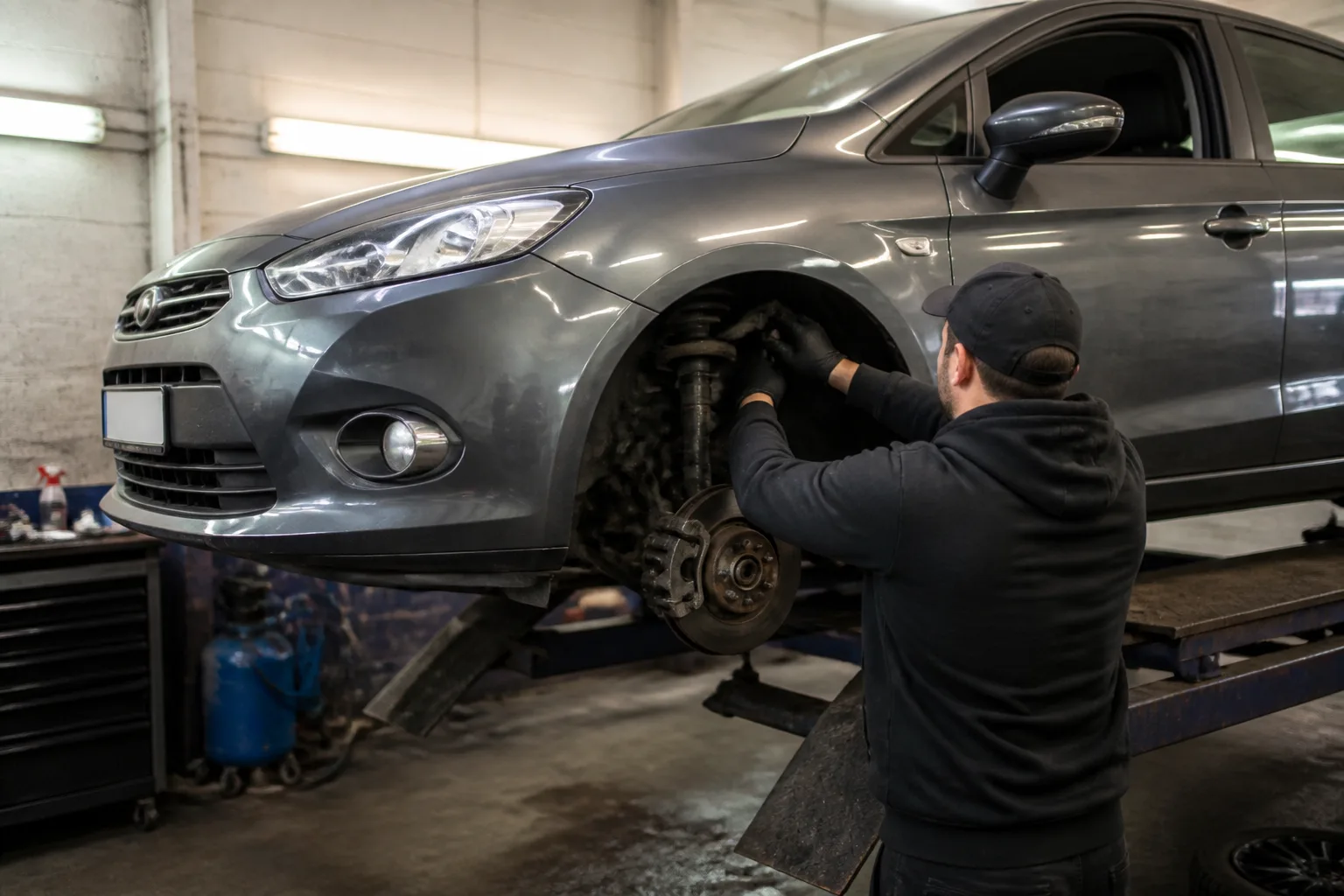
A car should generally hold a steady line on a reasonably even road without constant steering correction. If it feels as though the vehicle is wandering, drifting or following the contours of the road more than usual, it is worth taking the change seriously.
There are several possible causes, ranging from an incorrect tyre pressure to worn steering or suspension components. It is not possible to identify the exact fault from the symptom alone, but the way the car wanders can offer useful clues. Because the steering, tyres and suspension all affect control, a professional inspection is sensible if the behaviour is new, getting worse or accompanied by noise, vibration or uneven tyre wear.
What does it mean when a car wanders?
Drivers use the word “wandering” to describe slightly different problems. The car may drift gently to one side, feel nervous on a straight road, move around when passing larger vehicles, or need frequent small steering inputs to stay in position. It may also feel as though the front wheels are following grooves or uneven surfaces in the road.
Some roads are naturally rutted, sloped for drainage or affected by worn surfaces. A vehicle may move slightly towards the edge of the carriageway on these roads without having a mechanical fault. However, a noticeable change in the way your car tracks should not simply be ignored, particularly if it happens on several different roads.
Common causes of a car wandering on the road
Incorrect or uneven tyre pressures
Tyres with pressures that are too low, too high or different from one another can affect the car’s stability and steering response. A significant difference between the left and right tyres on the same axle may make the car pull or drift. Incorrect pressure can also make the vehicle feel less settled, especially at higher speeds.
Check the pressures when the tyres are cold and use the vehicle manufacturer’s recommended figures. These are usually found in the handbook, on a label inside the vehicle or near the driver’s door area. Do not rely on the maximum pressure moulded into the tyre sidewall, as this is not necessarily the correct setting for your car.
Uneven or damaged tyres
A tyre may have uneven tread wear, a bulge, a cut or internal damage that affects the way it behaves. Cupped or scalloped wear, where the tread has developed a pattern of raised and lower sections, can sometimes be linked with wheel balance or suspension problems. A tyre that has worn more heavily on one edge may point towards an alignment or component issue.
Look over the visible parts of each tyre for obvious damage and check that the tread is wearing evenly. If you see a bulge, exposed cords, a deep cut or another serious defect, avoid driving further than necessary. Tyre damage can worsen under load or speed, so arrange professional advice rather than attempting to judge its safety from appearance alone.
Wheel alignment problems
Wheel alignment describes the angles at which the wheels sit in relation to the road and to one another. If those angles are outside the vehicle manufacturer’s intended range, the car may pull to one side, feel unsettled or wear its tyres unevenly.
Alignment can be affected by hitting a pothole or kerb, but it may also change alongside wear in a steering or suspension component. A steering wheel that is no longer centred when the car is travelling straight is another possible sign. Alignment adjustment may correct the issue, but the underlying cause should be checked if the settings will not hold.
Worn suspension components
Suspension components help keep the tyres in contact with the road while controlling the movement of the body. Worn bushes, ball joints, dampers or other parts can make the car feel vague, floaty or less predictable. You may also notice knocking over bumps, uneven tyre wear or excessive body movement when cornering.
Suspension wear is not always obvious from the driver’s seat, and some parts can be difficult to assess without lifting the vehicle. If the car wanders together with knocking, poor handling or a change in ride height, it should be inspected by a qualified technician.
Steering component wear
The steering system contains joints and linkages that transfer movement from the steering wheel to the road wheels. Wear or looseness in one of these parts can create a delay between turning the wheel and the car responding. This may feel like a lack of precision or a need to keep correcting the direction.
Unusual steering play, a clunk when turning, or a change in the steering’s self-centring should be treated as a reason for prompt assessment. Do not assume that a recent wheel alignment has solved the problem if the vehicle still feels loose or unstable.
Braking problems
If the car wanders mainly when you apply the brakes, the braking system needs to be considered. Uneven braking force from side to side can make the vehicle pull, while a sticking brake component may create heat, smell or a tendency to veer.
A car that pulls sharply under braking, has a soft or unusual pedal, or shows signs of overheating at a wheel should not be driven unnecessarily. For more information about related symptoms, see our guide to why a car pulls to one side when braking. You may also find our articles on signs that brake pads need replacing and steering wheel shaking when braking useful.
Could the road itself be causing the sensation?
Yes. Camber is the slight angle built into many roads to help water drain away, and it can make a car feel as though it is moving towards the kerb. Grooves made by repeated traffic can also influence the steering. Crosswinds and the air pressure created by passing lorries may produce a brief movement, particularly in taller vehicles.
These effects should usually be consistent with the road and manageable with normal steering. If the car wanders on level, familiar roads, or the sensation has appeared recently, the vehicle should not be blamed on the road surface without further checks.
Safe checks you can make at home
You can check the tyre pressures, inspect the tread and look for obvious damage without dismantling anything. Notice whether the steering wheel sits straight, whether the car pulls during normal driving or braking, and whether the issue changes with speed. It can also be useful to note any recent pothole or kerb impact.
Do not jack up the vehicle, remove wheels or investigate steering and suspension parts yourself unless you have the proper equipment, training and safe working conditions. These systems are safety-critical, and a fault that looks minor may affect the car’s roadworthiness.
When should you stop driving?
Stop in a safe place and seek professional advice if the steering suddenly becomes difficult to control, the car pulls strongly, a tyre has visible structural damage, or you hear a severe knocking or grinding noise. The same applies if braking causes a sharp change of direction, a warning light appears with handling symptoms, or the vehicle feels unsafe at normal speed.
If the wandering is mild but persistent, arrange an inspection soon rather than waiting for the next service. An experienced garage can assess the tyres, check for play or wear in steering and suspension components, and measure the alignment where appropriate. Ashton’s Garage can help investigate these symptoms and explain what needs attention without assuming that every wandering car has the same fault. You can find the relevant service information on our car repairs page.
How to reduce the chance of handling problems
Check tyre pressures regularly, inspect the tread before longer journeys and take pothole or kerb impacts seriously if the vehicle’s behaviour changes afterwards. Keeping servicing and inspections up to date can also help identify worn components before they develop into a more obvious handling problem.
There is no single answer to what causes a car to wander on the road. Tyres, alignment, suspension, steering and brakes can all play a part, and more than one issue may be present. The important point is that a change in directional stability deserves a careful check, not a guess based only on how the car feels for a few minutes.
Frequently asked questions
Is it safe to drive a car that wanders?
It depends on the severity and cause. A mild, consistent effect on a strongly cambered road may be normal, but sudden or strong wandering, loose steering, damaged tyres or pulling under braking can be unsafe. Stop somewhere safe and arrange professional advice if any of these symptoms occur.
Can low tyre pressure make a car drift?
Yes. Low or uneven tyre pressures can affect steering response and may make the vehicle pull or feel less stable. Check the pressures cold using the manufacturer’s recommended figures, but arrange an inspection if the problem remains.
Will wheel alignment fix a car that wanders?
It may help if the alignment angles are incorrect, particularly after a pothole or kerb impact. However, worn steering or suspension parts, damaged tyres or brake faults can create similar symptoms, so those should be checked before assuming alignment is the only issue.
Why does my car wander more when braking?
A braking fault can cause the car to pull if braking force is uneven between the sides. Suspension, tyre and alignment problems may also become more noticeable under braking. Strong pulling, an unusual pedal or signs of heat around a wheel should be treated as reasons for prompt professional inspection.
Related advice
What Causes a Humming Noise From a Wheel?
A humming noise from a wheel can come from a wheel bearing, uneven tyre wear, a damaged tyre or a brake problem. Here is how the noise may change, what you can safely check and when professional inspection is sensible.
Why Does My Car Bounce After Going Over a Bump?
If your car keeps bouncing after a speed bump or pothole, the suspension may not be controlling the movement properly. Here are the likely causes, safe checks and signs that it needs professional inspection.
Why Does My Steering Feel Loose?
Loose steering can be caused by tyre problems, wheel alignment or wear in steering and suspension components. Here is what the change may mean, what you can safely check and when professional inspection is important.