Why Do My Brakes Squeak?
Brake squeal is often caused by vibration, surface contamination or worn components, but the sound should not be ignored. Here is what it may mean and when to arrange an inspection.
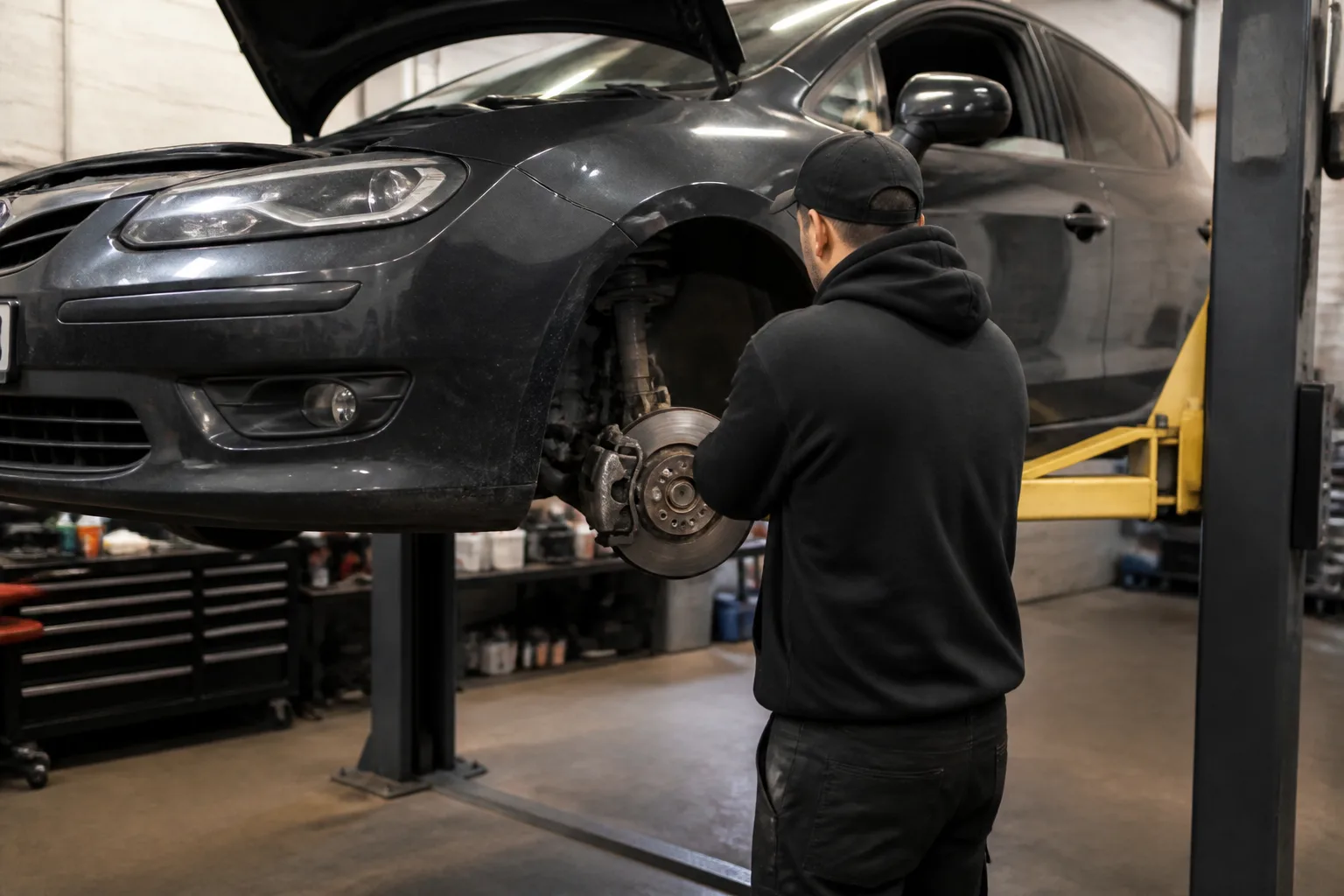
Hearing your brakes squeak can be irritating, especially when the noise appears every time you slow down. The good news is that a squeak does not automatically mean your brakes are about to fail. Brake noise can have several causes, ranging from temporary moisture on the discs to worn or incorrectly fitted components.
However, it is not possible to identify the cause reliably from the sound alone. Brakes are safety-critical, so a new, persistent or worsening noise deserves attention, particularly if it comes with changes in how the car stops.
What causes brake squeaking?
Brake squeal is usually created by a high-frequency vibration between the brake pad and the disc, sometimes called a rotor. The vibration may be too slight to feel through the car, but it can produce a noticeable squeak.
Common possibilities include:
- Moisture or light surface rust: Overnight condensation, rain or a period of parked storage can leave a thin film on the discs. This may cause a brief scraping or squeaking noise which disappears after normal braking.
- Brake dust or road contamination: Dust and dirt can collect around the pad and disc. Salt, grit and other road debris may also affect the contact between the components.
- Brake pads nearing the end of their service life: Some pads have a wear indicator designed to make a warning noise when the friction material is getting low. This is one reason a new squeak should not simply be dismissed.
- Glazed pads or discs: Repeated light braking, heavy use or excessive heat can alter the surface of the friction material. A hardened, smooth surface may produce noise and can affect braking performance.
- New or recently replaced brake parts: Pads and discs can make some noise while their surfaces settle together. Persistent noise after replacement still needs checking, as correct fitment and the condition of related parts matter.
- Caliper or hardware problems: A brake caliper that does not release correctly, or missing, damaged or incorrectly fitted pad hardware, can allow noise and uneven wear. This is not something that can be confirmed safely by listening alone.
Why do my brakes squeak when braking slowly?
Low-speed braking often makes brake noise easier to hear. At higher speeds, road and engine noise can mask a squeak, while gentle braking can allow the pad and disc to vibrate in a way that produces a sharper sound.
This does not necessarily mean low-speed squeaking is harmless. If the noise is new, happens on most journeys or is accompanied by a longer stopping distance, pulling, juddering or a change in pedal feel, arrange a professional inspection rather than assuming it is normal.
Why do my brakes squeak in the morning or after rain?
A short-lived squeak after the car has been parked in damp conditions is often linked to moisture or a light layer of surface rust on the discs. It may clear as the brakes are used normally.
Do not repeatedly brake harshly in an attempt to remove the noise. Drive cautiously and allow the brakes to operate normally where conditions are safe. If the sound continues after the car has been used, returns on every journey or is accompanied by grinding, vibration or poor braking, the vehicle should be checked.
Is squeaking the same as grinding?
No. A high-pitched squeak can have relatively minor causes, but a harsh grinding or metal-on-metal sound is more concerning. It may indicate that friction material has become severely worn or that another brake component is damaged.
If you hear grinding, or if the car is not stopping as it normally does, avoid continuing to drive unless moving the vehicle is necessary to get it out of immediate danger. Stop in a safe place and arrange professional assistance. Driving with a serious brake fault can put you and other road users at risk.
What other signs should I look for?
The noise itself is only one part of the picture. Pay attention to any change in braking behaviour, including:
- the car pulling to one side when braking
- a steering wheel or brake pedal that shakes or pulses
- a soft, sinking or unusually firm pedal
- the need to press the pedal further than usual
- a burning smell or one wheel becoming noticeably hotter
- a brake warning light on the dashboard
- visible damage, heavy scoring or unusual wear if the braking components can be seen without dismantling anything.
These symptoms can have different causes, so they should not be used to make a remote diagnosis. Pulling and steering-wheel vibration are covered in more detail in our guides to why a car pulls to one side when braking and why the steering wheel shakes when braking.
Can I stop brake squeaking myself?
There are a few safe checks you can make without dismantling the braking system. Note when the noise occurs, whether it is present from cold, and whether it disappears after the first few applications of the brakes. Look for warning lights and consider whether the car has recently had new pads or discs fitted.
Avoid spraying lubricant or cleaning products onto the brake disc or pad. These are friction surfaces, and contamination can seriously reduce braking effectiveness. Do not remove brake components or attempt to file, sand or modify pads without the correct knowledge, equipment and safety controls.
If the noise is persistent, a garage can inspect the pads, discs, calipers and associated hardware. That assessment can establish whether the issue is wear, contamination, surface condition, fitment or another fault. Our guide to signs your brake pads need replacing may also help you understand what a technician is checking.
When should I book a brake inspection?
Arrange an inspection if the squeak continues, becomes louder, starts after work on the brakes or is accompanied by any change in braking performance. It is also sensible to have the brakes checked if you cannot tell whether the sound is coming from a brake or another part of the wheel and suspension area.
An inspection does not necessarily mean that parts need replacing. The appropriate outcome may be confirmation that the noise is temporary, cleaning and servicing of suitable components, or replacement of worn parts. The important point is to establish the cause before it develops into a more serious or expensive problem.
As an independent garage, Ashton’s Garage can assess brake noise and explain what has been found in plain language. If your brakes are squeaking and you would like the cause checked, you can contact Ashton’s Garage about a brake inspection or repair.
Related brake guides
Frequently asked questions
Are squeaky brakes dangerous?
Not always. Moisture or light surface rust can cause a temporary squeak, but persistent noise may indicate worn pads, glazing, contamination or a caliper or hardware issue. If braking performance changes, arrange an inspection promptly.
Why do my brakes squeak after new pads are fitted?
New pads can make some noise while their surfaces settle, but persistent squeaking can also relate to pad material, surface condition, fitment or associated hardware. The fitting should be checked if the noise does not settle.
Can brake dust cause squeaking?
Brake dust and road contamination can contribute to vibration and noise, although they are not the only possible causes. Cleaning or further work should be carried out correctly because brake friction surfaces must not be contaminated with lubricant.
Should I drive with squeaky brakes?
A brief squeak after rain may clear with normal use, but persistent squeaking should be inspected. Do not continue driving if there is grinding, poor braking, a soft pedal, pulling, severe vibration, a burning smell or a brake warning light.
Related advice
When Does Wheel Alignment Need Checking?
Wheel alignment may need checking after a pothole impact, kerb strike, suspension work or unusual tyre wear. Learn the warning signs and when professional inspection is sensible.
Why Does My Car Pull to One Side While Driving?
If your car drifts or pulls to one side, the cause could be as simple as tyre pressure or as serious as a brake, steering or suspension fault. Here is what to check and when to seek professional help.
Why Does the Steering Wheel Shake When Braking?
A steering wheel that shakes under braking can have several causes, from uneven brake discs to worn suspension or tyre problems. Here is what the symptom may mean and when to stop driving.