
Why Does My Car Pull to One Side When Braking?
If your car moves left or right when you brake, it may have an uneven braking, tyre, suspension or steering fault. Find out what it could mean and when to stop driving.
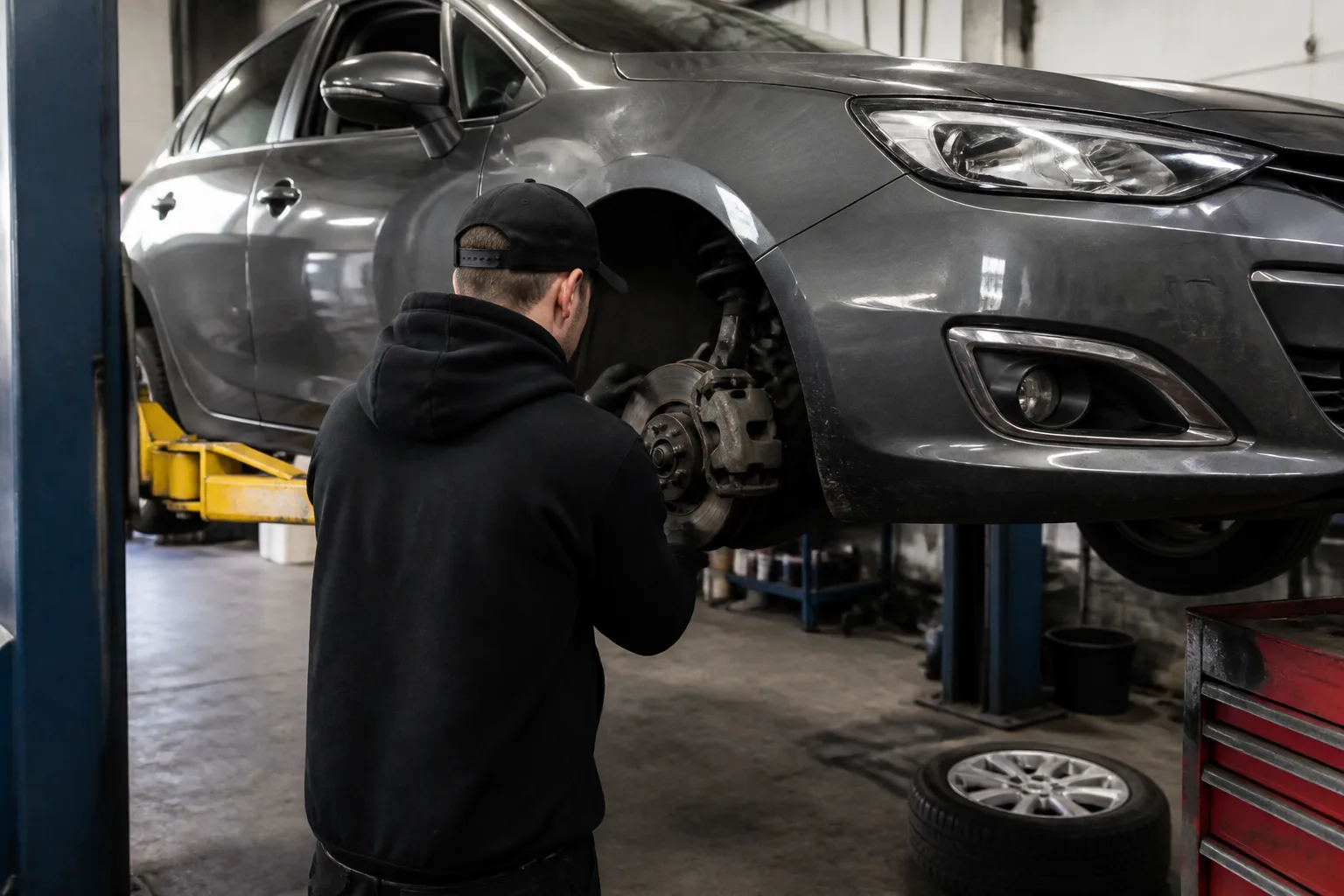
If your car pulls to one side when braking, do not ignore it. A small movement can sometimes be influenced by the road surface, but a noticeable or sudden pull may indicate that the brakes are not working evenly or that a tyre, suspension or steering component needs attention.
It is not possible to identify the exact fault without inspecting the vehicle. Braking problems can also worsen quickly, so treat a strong pull, changes in pedal feel or any sign of a damaged tyre as a safety concern rather than something to monitor indefinitely.
What does pulling under braking mean?
When you press the brake pedal, the braking force should be shared predictably between the wheels. If one side produces more braking force than the other, the car can move towards the side that is slowing more strongly. If a wheel is not braking properly, the car may move away from that side instead.
The direction of the pull alone does not reliably identify the failed part. That is why replacing a component based only on which way the car moves can be misleading. A proper inspection should consider the brake system, tyres, steering and suspension together.
Common reasons a car pulls to one side when braking
Uneven braking force
A brake caliper, which presses the pads against the disc, can become stiff or seize partially. This may stop one brake from applying or releasing correctly. A worn, contaminated or incorrectly seated brake pad can also affect braking on one wheel.
Other possibilities include a problem with the hydraulic part of the brake system, such as restricted fluid flow or a fault affecting pressure. These issues are not suitable for remote diagnosis. A garage may need to compare braking performance across the axle and inspect the components for wear, damage or overheating.
A sticking brake or overheating wheel
If a brake is failing to release fully, the vehicle may feel reluctant to roll, and the affected wheel may become unusually hot. You might also notice a burning smell, smoke or a change in the way the car drives. Do not touch the wheel or brake components to check their temperature, as they can become extremely hot.
Continuing to drive with an overheating brake can cause further damage and may reduce braking performance. Stop somewhere safe and arrange professional assistance if you notice these symptoms.
Tyre pressure, damage or uneven wear
A tyre with incorrect pressure can affect the way the car responds under braking. Uneven tread wear, a damaged sidewall or an internal tyre fault can also reduce stability. Check the pressures when the tyres are cold, using the vehicle manufacturer's recommended figures rather than the maximum pressure printed on the tyre.
A basic visual check can look for obvious cuts, bulges, exposed cords or a tyre that appears noticeably deflated. Do not continue driving on a damaged tyre. If you are unsure whether a mark is safe, have it inspected by a tyre or vehicle professional.
Wheel alignment or suspension problems
Incorrect wheel alignment can make a car drift or steer unevenly, sometimes becoming more obvious when the brakes are applied. A worn suspension bush, ball joint or track rod component may also allow the wheel to move when braking. These parts help control the position of the wheel, so a fault can affect both handling and braking stability.
Alignment may be affected after hitting a pothole or kerb, although a pull does not prove that alignment is the cause. A suspension or steering inspection is important if the car also wanders, the steering wheel is no longer centred, the tyres are wearing unevenly or there are knocks over bumps.
Road camber and surface conditions
UK roads are generally shaped to help water drain away, and the slope of a road can make a car drift slightly. Strong wind, standing water, loose surfaces and grooves made by heavy traffic can have a similar effect. This should not be used to dismiss a braking fault, particularly if the pull is new, sharp or present on different roads.
There is an important difference between a car that gently follows a road surface and one that changes direction decisively as soon as the brake pedal is pressed. The latter needs professional assessment.
Is it safe to drive if the car pulls when braking?
A noticeable pull while braking can make it harder to keep the car under control, especially in an emergency or on a wet or uneven road. If the pull is strong, sudden or getting worse, stop in a safe place and arrange an inspection or recovery rather than driving to a garage.
You should also avoid driving if the brake pedal feels unusually soft, sinks towards the floor or becomes hard to press. Brake warning lights, grinding noises, smoke, a burning smell, fluid leaking near a wheel or visible tyre damage are further reasons to stop and seek professional help.
If the movement is slight and there are no other symptoms, you can make safe basic checks such as confirming the tyre pressures and looking for obvious tyre damage. Do not remove wheels, dismantle brakes or carry out a roadside test that involves deliberately heavy braking. A braking fault needs the right equipment and a controlled inspection.
What will a garage check?
A technician will normally begin by asking when the pull happens and whether it is accompanied by noise, vibration, warning lights or changes in pedal feel. They may inspect the tyres, wheels, brake discs, pads, calipers and visible hydraulic components. The steering and suspension will also need consideration, particularly if there has been an impact or the car has other handling symptoms.
Depending on the findings, the vehicle may need a controlled braking assessment or brake performance test. This helps identify whether braking force is uneven and supports a more accurate diagnosis. The cause may be straightforward, but it should be established before parts are replaced.
For more information about related brake symptoms, read our guides to how long brake pads last and the signs that brake pads need replacing. If the steering wheel shakes rather than the car pulling, our guide to steering wheel vibration when braking explains why that can point to a different set of possible causes.
How to describe the problem to a garage
Useful details include whether the car pulls left or right, whether it happens only under braking, and whether it is worse from higher speeds. Mention any recent pothole or kerb impact, tyre change, brake work or warning light. Also report smells, noises, vibration, changes to the pedal and whether the vehicle feels reluctant to move.
These details do not replace an inspection, but they can help the technician approach the problem efficiently. If your car is pulling to one side when braking, Ashton's Garage can inspect the braking, tyre, steering and suspension systems and explain what needs attention before you decide on any repair.
Summary
A car that pulls to one side under braking may have uneven brake operation, a sticking caliper, tyre trouble, wheel alignment issues or a steering or suspension fault. Road camber can cause a slight drift, but it should not be assumed to be the explanation for a strong or new pull.
Because braking and steering faults affect roadworthiness and control, professional inspection is the sensible next step. If the symptom is severe or accompanied by heat, smoke, fluid, warning lights, damaged tyres or an abnormal pedal, stop driving and arrange assistance.
Frequently asked questions
Why does my car pull left when I brake?
It may be caused by uneven braking force, a sticking brake, tyre pressure or damage, wheel alignment, or a steering or suspension fault. The direction of the pull does not identify the cause reliably, so the vehicle should be inspected.
Can low tyre pressure make a car pull when braking?
Yes. Unequal tyre pressures can affect stability and steering response, particularly under braking. Check the pressures when the tyres are cold using the figures in the vehicle handbook or on the manufacturer's pressure label.
Can I drive to a garage if my car pulls under braking?
If the pull is strong, sudden or worsening, do not drive it to the garage. Stop safely and arrange professional assistance. A very slight and repeatable drift with no other symptoms still deserves an inspection as soon as practical.
What other symptoms suggest a brake problem?
Warning lights, a soft or sinking pedal, grinding, burning smells, smoke, fluid near a wheel, unusual heat or reduced braking performance are all reasons to stop driving and seek professional help.
Could road camber cause a car to drift to one side?
A road's slope can cause a slight drift, but it should not be assumed to explain a sharp or new pull when braking. If the symptom is noticeable on different roads or is getting worse, arrange an inspection.
Related advice
When Does Wheel Alignment Need Checking?
Wheel alignment may need checking after a pothole impact, kerb strike, suspension work or unusual tyre wear. Learn the warning signs and when professional inspection is sensible.
What Does a Broken Coil Spring Feel Like?
A broken coil spring can cause a clunk, uneven ride height, poor handling or tyre contact. Here is what to look for and when professional inspection is needed.
What Causes a Knocking Noise Over Bumps?
A knocking noise over bumps can come from worn suspension parts, loose trim or something moving in the boot. Here are the common causes, what to check safely and when to arrange a professional inspection.