Signs Your Brake Pads Need Replacing
Learn the common signs of worn brake pads, what different brake noises and sensations may mean, and when your car needs a professional inspection.
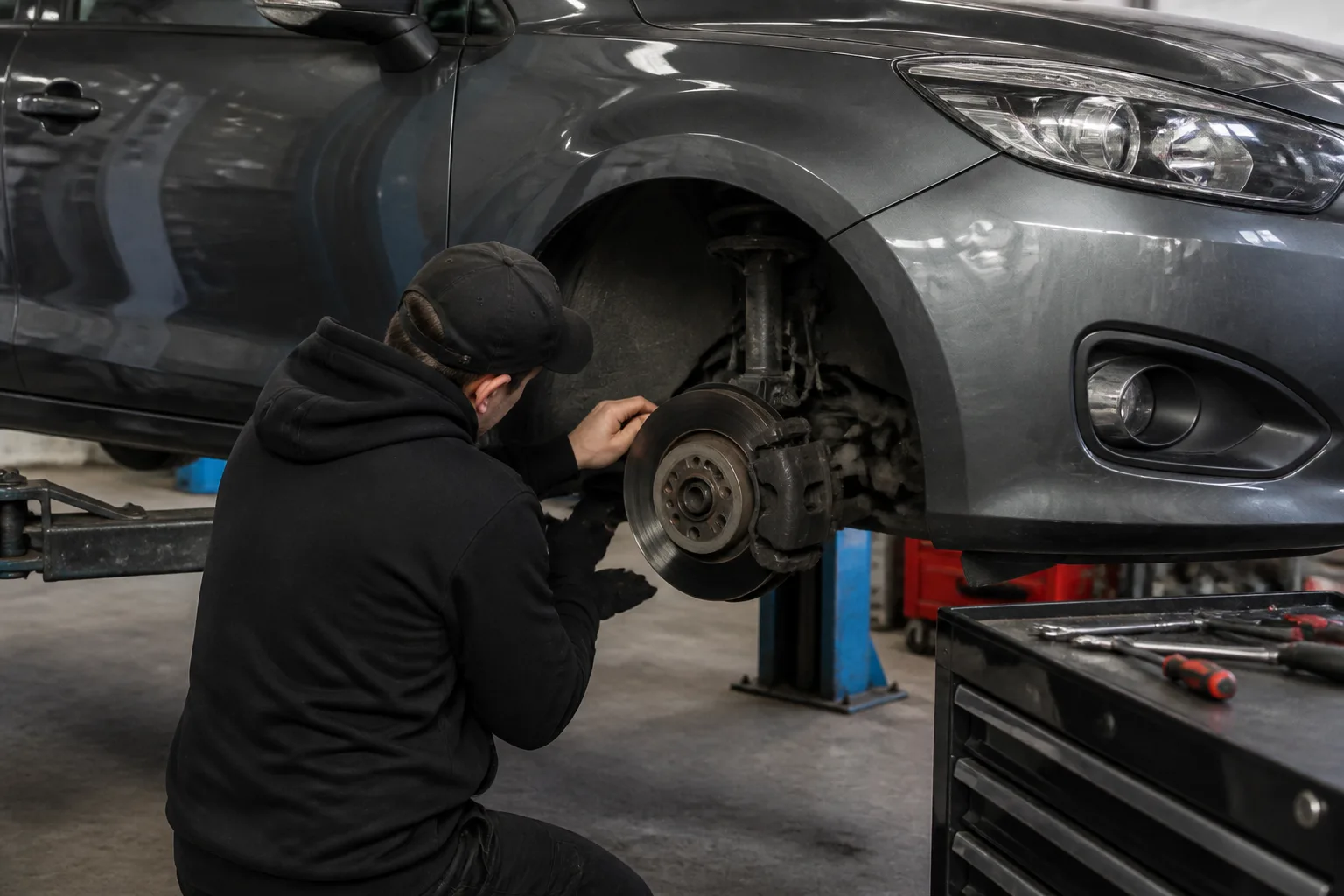
Brake pads are a service item that gradually wears down as they press against the brake discs to slow your car. Because the process is usually gradual, it is not always obvious when they need replacing. Knowing the common signs your brake pads need replacing can help you deal with a developing problem before braking performance is affected.
Some symptoms are relatively minor and should be checked at your convenience. Others, such as grinding, a soft brake pedal or a noticeable loss of braking performance, can make the car unsafe to drive. A noise does not confirm that the brake pads are worn, so the safest approach is to treat warning signs as a reason for an inspection rather than trying to diagnose the fault from the driver’s seat.
Common signs of worn brake pads
A high-pitched squeal when braking
A sharp squeal from the brakes is one of the most recognisable warnings. Some brake pads have a small metal wear indicator designed to make a noise when the friction material has become thin. This is intended to alert the driver before the pad is completely worn.
However, squealing does not always mean the pads have reached the end of their usable life. Moisture, surface corrosion after the car has been parked, brake dust, pad material and the condition of the discs can all contribute to noise. If the squeal is persistent or becoming more frequent, arrange a brake check rather than assuming it will clear on its own. Our guide to why brakes squeak explains some of the other possible causes.
Grinding or harsh metal-on-metal noise
A grinding sound is more concerning than a light squeal. It may indicate that the friction material has worn away and the metal backing plate is contacting the brake disc. This can damage the disc and may reduce braking performance.
If your brakes are grinding, avoid continuing to drive unless it is necessary to move the vehicle to a safe place. Do not make a longer journey to see whether the noise improves. Arrange a professional inspection, and use recovery assistance if the car cannot be moved safely.
A brake warning light or pad wear warning
Some vehicles have an electronic brake pad wear sensor or a dashboard warning message. If a brake-related warning light appears, check the handbook for its meaning and have the car assessed. A warning light may relate to pad wear, but it can also indicate another issue, such as low brake fluid or a fault in the braking system.
Do not ignore a red brake warning light, particularly if it appears with a change in pedal feel or braking performance. Warning systems vary between vehicles, so the exact cause cannot be confirmed without an inspection.
The car pulls to one side when braking
If the car veers left or right as you brake, the cause may be uneven pad wear, a sticking brake calliper or another braking fault. Tyre condition, wheel alignment and suspension components can also affect how the car behaves.
Pulling under braking should not be treated as a normal characteristic. It can make the vehicle harder to control, especially during an emergency stop or on a wet road. If the pull is strong or has appeared suddenly, stop driving when it is safe to do so and arrange professional help. You can read more about the possible causes in why a car pulls to one side when braking.
Vibration through the steering wheel or brake pedal
A vibration when braking is often associated with a brake disc problem rather than the pads alone. Discs can develop uneven friction surfaces or become damaged, while a sticking calliper can create uneven wear. Steering or suspension issues may produce similar sensations.
Pay attention to where the vibration is felt. A shake through the steering wheel may suggest an issue affecting the front brakes or steering, while a pulsing brake pedal can point towards an uneven braking surface. Either way, a professional check is needed to identify the source. Our related guide covers why the steering wheel may shake when braking.
Other symptoms that should not be ignored
Worn brake pads do not always make a noise. You may notice that the brake pedal feels different, the car takes longer to slow down, or you need to press the pedal further than usual. These symptoms can have several causes, including air or a leak in the hydraulic system, low brake fluid, a sticking calliper or a problem elsewhere in the braking system.
A soft or spongy pedal, a pedal that sinks unusually far, or a sudden reduction in braking performance should be treated as a safety concern. Stop in a safe place and seek professional assistance rather than continuing to drive normally.
Can you check brake pads yourself?
You may be able to see part of a brake pad through the wheel, but this is not a reliable inspection on every vehicle. Wheel design, dust shields and the position of the calliper can hide the pad. The inner and outer pads can also wear at different rates, so seeing one pad does not necessarily show the condition of the other.
A safe basic check is to look for obvious warning signs, such as a damaged wheel, a fluid leak, smoke or an unusually hot wheel after a short journey. Do not touch a brake component that may be hot, and do not remove wheels or dismantle brake parts unless you have the appropriate training and equipment. Brake work is safety-critical, and a proper inspection should include the pads, discs, callipers and the wider braking system.
How long can you drive with worn brake pads?
There is no dependable distance or time that applies to every car. Pad life depends on driving style, traffic, vehicle weight, terrain and the type of pads fitted. Frequent stop-start driving and steep hills can increase brake use, while a car used mainly on open roads may experience a different wear pattern.
If a garage has advised that the pads are approaching their wear limit, arrange the work rather than waiting for a noise to appear. If you have grinding, a major change in pedal feel, severe pulling or reduced braking performance, do not continue driving simply because the vehicle still moves. Contact a garage for advice and inspection. Ashton’s Garage can assess brake pad wear and related braking concerns through its car repairs service in Salisbury.
What happens during a brake inspection?
A technician will assess the condition and remaining thickness of the brake pads where accessible, while also checking the discs, callipers and signs of uneven wear. They may investigate the brake fluid, warning sensors and the condition of related components if your symptoms suggest a wider fault.
The result may be that the pads need replacing, that the discs also need attention, or that the noise or sensation is coming from another part of the vehicle. This is why replacing pads based on a sound alone is not always the right answer. A proper assessment helps identify the actual cause and avoids overlooking a problem that could affect roadworthiness.
When should you arrange a brake check?
Arrange an inspection if you hear persistent squealing, notice a warning light, see uneven wear or feel a change in braking behaviour. Seek prompt professional help if there is grinding, a soft pedal, a strong pull, smoke, a burning smell or a clear loss of braking performance.
Brake pad wear is a normal part of vehicle maintenance, but the braking system is too important to leave to guesswork. If you are unsure whether a noise or change in feel is safe, explain the symptoms to a qualified garage before continuing your journey.
Frequently asked questions
What noise do worn brake pads make?
Worn pads may produce a persistent high-pitched squeal if a wear indicator is contacting the disc. A grinding or harsh metal-on-metal noise is more serious and may mean the friction material has worn away. Noise can have other causes, so an inspection is needed.
Can brake pads wear out without making a noise?
Yes. Some pads become thin without an obvious sound. Changes in braking performance, uneven wear, warning lights or a different pedal feel can also indicate a problem.
Can I drive with a brake pad warning light on?
Do not assume it is safe to continue driving. Check the vehicle handbook and arrange an inspection. If the light is accompanied by a soft pedal, reduced braking, pulling or another serious symptom, stop when safe and seek professional assistance.
Do new brake pads always require new discs?
Not necessarily. The discs need to be assessed for condition, wear, damage and an appropriate contact surface. A technician can advise whether the discs remain suitable or also need replacing.
Related advice
When Does Wheel Alignment Need Checking?
Wheel alignment may need checking after a pothole impact, kerb strike, suspension work or unusual tyre wear. Learn the warning signs and when professional inspection is sensible.
What Does a Broken Coil Spring Feel Like?
A broken coil spring can cause a clunk, uneven ride height, poor handling or tyre contact. Here is what to look for and when professional inspection is needed.
What Causes a Knocking Noise Over Bumps?
A knocking noise over bumps can come from worn suspension parts, loose trim or something moving in the boot. Here are the common causes, what to check safely and when to arrange a professional inspection.