
Why Does My Car Bounce After Going Over a Bump?
If your car keeps bouncing after a speed bump or pothole, the suspension may not be controlling the movement properly. Here are the likely causes, safe checks and signs that it needs professional inspection.
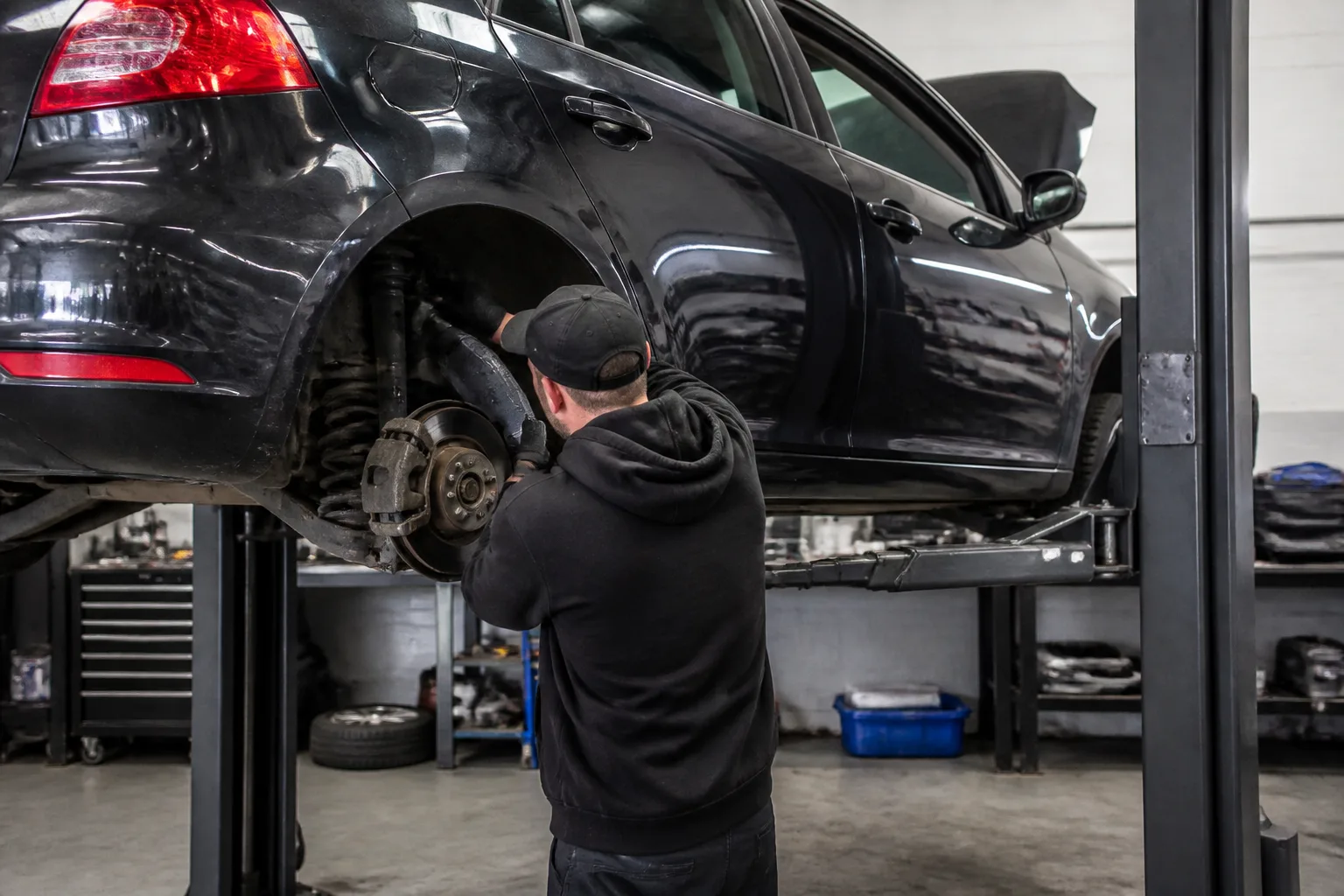
Most cars will move slightly after going over a bump. The suspension compresses as the wheel rises, then extends again as the wheel returns to the road. It should settle quickly, though. If the car continues to bounce, feels unsettled or seems to float after the bump, something may be affecting the suspension or tyre contact with the road.
There are several possible causes, and the symptom alone is not enough to identify a failed component. Worn shock absorbers, a damaged spring, a tyre problem or another suspension fault can all produce similar behaviour. The safest approach is to note when it happens and arrange an inspection rather than continuing to guess at the cause.
What should happen when a car goes over a bump?
Your car's suspension has to do two jobs at once. Springs support the vehicle and allow the wheels to move over uneven surfaces. Shock absorbers, also called dampers, control that movement so the body does not keep rising and falling after every bump.
When the suspension is working properly, you may feel the car compress and then settle within a short distance. It should remain reasonably stable and the tyres should stay in contact with the road. A car that bounces several times, feels light at one corner or continues to move after a bump may not be controlling its suspension movement correctly.
Common reasons a car keeps bouncing after a bump
Worn or damaged shock absorbers
Shock absorbers gradually lose effectiveness. They can also become damaged or develop a fluid leak. When this happens, the spring may still support the car, but the suspension movement is not controlled as well. The result can be repeated bouncing, a floaty feeling or extra body movement when braking, accelerating or cornering.
Wear is not always obvious from the driver's seat. A car may pass over familiar roads without causing concern, yet feel unsettled on larger bumps or uneven bends. A visual inspection can help, but a small amount of dampness around a damper does not by itself confirm the full condition of the component. Proper assessment may require the suspension and its mounting points to be checked together.
A broken or weakened suspension spring
Springs can weaken with age or break, particularly around their ends where damage may be less obvious. A broken spring can leave one corner of the vehicle sitting lower than the others. You may also hear a clunk, notice a change in ride height or find that the car feels different on one side.
A damaged spring can create a roadworthiness concern, especially if a broken section could move out of position or interfere with a tyre. Do not try to secure or remove a spring yourself. If the car is visibly leaning, making a sharp metallic noise or showing a broken spring, it should be inspected before normal driving continues.
Tyre pressure or tyre damage
Incorrect tyre pressures can change how a car responds to bumps. A tyre with too much pressure may feel harsh, while an under-inflated tyre can feel less precise and allow more sidewall movement. Tyres should be checked when cold and inflated to the vehicle manufacturer's recommended pressures, usually shown on a label inside the driver's door area or in the handbook.
Also look for obvious damage such as a bulge, cut or exposed cord. A tyre that has been damaged by a pothole can affect the car's behaviour even if it is not completely flat. Do not continue driving on a tyre with a bulge or serious damage. It needs prompt professional attention.
Loose or worn suspension components
Suspension arms, bushes, ball joints and mounting points help keep each wheel in the correct position. Wear or looseness can cause knocking, wandering, uneven tyre wear or a feeling that the car is not settled after a bump. These parts work as a system, so replacing one item without checking the surrounding components may not resolve the underlying problem.
A clunk over bumps does not automatically mean that a particular part has failed. Brakes, exhaust components and undertrays can sometimes make similar noises. This is one reason a garage inspection is more useful than replacing parts based only on a sound.
Is it safe to drive a car that keeps bouncing?
A car that bounces repeatedly may have reduced grip and less predictable handling, particularly during braking, cornering or on wet roads. Suspension problems can also affect tyre contact with the road and may contribute to uneven tyre wear.
If the bouncing is pronounced, started suddenly, follows a pothole impact, or is accompanied by pulling, steering changes, a warning light, a loud knock, a fluid leak, a low corner or visible tyre damage, avoid driving it unless necessary to reach immediate professional help. If you are unsure whether the vehicle is safe, stop in a safe place and arrange recovery or advice from a qualified garage.
For less severe symptoms, drive only as necessary and avoid high speeds, heavy loads and rough roads until the vehicle has been checked. This is general guidance rather than a remote diagnosis. The risk depends on which component is affected and how badly it has deteriorated.
Safe checks you can make at home
You can gather useful information without dismantling anything or getting underneath the vehicle. Check whether one corner appears lower than the others, look for visible tyre damage and confirm that the tyre pressures match the manufacturer's recommendations. Note whether the symptom happens at one corner or across the whole vehicle, and whether you hear a knock or scrape.
It is also useful to notice whether the car bounces after every bump or only after a particularly sharp impact. Check whether the steering feels normal and whether the car remains stable when braking gently in a suitable, safe location. Do not deliberately test the vehicle at speed or carry out a roadside experiment if the handling already feels unsafe.
These checks can help a technician understand what you have experienced, but they cannot confirm the condition of shock absorbers, springs or suspension joints. Avoid jacking the car up or attempting suspension repairs unless you have the correct equipment, training and safe working environment.
What will a garage inspect?
A technician will normally consider the symptom alongside the vehicle's mileage, recent pothole impacts, tyre condition and service history. The inspection may include the dampers, springs, suspension bushes, joints, mounting points, wheel and tyre condition, and any signs of movement or leakage.
The garage may also look for related faults that can be mistaken for bouncing, such as a loose exhaust heat shield or an underbody component. If a suspension part is replaced, the condition of the other parts and the vehicle's wheel alignment may also need consideration. You can read more about related braking symptoms in our guides to how long brake pads last and why a car may pull to one side when braking.
When to ask Ashton's Garage for help
If your car is repeatedly bouncing after bumps, or you have noticed a change in ride height, handling or tyre wear, a suspension inspection is sensible. Ashton's Garage can assess the vehicle rather than assuming that the shock absorbers are the only possible cause. If you are in the Salisbury area, you can contact Ashton's Garage about car repairs and explain what you have noticed before arranging the appropriate next step.
In short, a single movement after a bump can be normal. Repeated bouncing, instability, unusual noises or visible damage are not symptoms to ignore. A professional check gives you a clearer answer and helps ensure the vehicle remains safe and predictable on UK roads.
Frequently asked questions
How many times should a car bounce after a bump?
There is no universal number that applies to every vehicle, but the suspension should settle promptly rather than continuing to rise and fall. Repeated bouncing or a floaty feeling is worth having inspected.
Can low tyre pressure make a car bounce?
Incorrect tyre pressure can change the way a car responds to bumps and can make it feel less controlled. Check the pressures against the manufacturer's recommendations, and arrange an inspection if the handling has changed or the tyre is damaged.
Can a broken spring cause bouncing after a bump?
It can. A broken or weakened spring may alter the vehicle's ride height and handling, and may be accompanied by a clunk or visible lean. Do not attempt to repair it yourself, and avoid normal driving until it has been assessed.
Will a car fail its MOT because it bounces?
Bouncing alone does not identify the exact fault or predict an MOT result. The relevant suspension, tyre and structural components would need to be assessed for their condition and operation. A noticeable change in handling should be checked rather than left until the MOT.
Related advice
What Causes a Humming Noise From a Wheel?
A humming noise from a wheel can come from a wheel bearing, uneven tyre wear, a damaged tyre or a brake problem. Here is how the noise may change, what you can safely check and when professional inspection is sensible.
What Causes a Car to Wander on the Road?
If your car needs constant steering correction or seems to drift across the road, several faults could be responsible. Here are the common causes and when to arrange a professional inspection.
Why Does My Steering Feel Loose?
Loose steering can be caused by tyre problems, wheel alignment or wear in steering and suspension components. Here is what the change may mean, what you can safely check and when professional inspection is important.