
Why Does My Steering Feel Loose?
Loose steering can be caused by tyre problems, wheel alignment or wear in steering and suspension components. Here is what the change may mean, what you can safely check and when professional inspection is important.
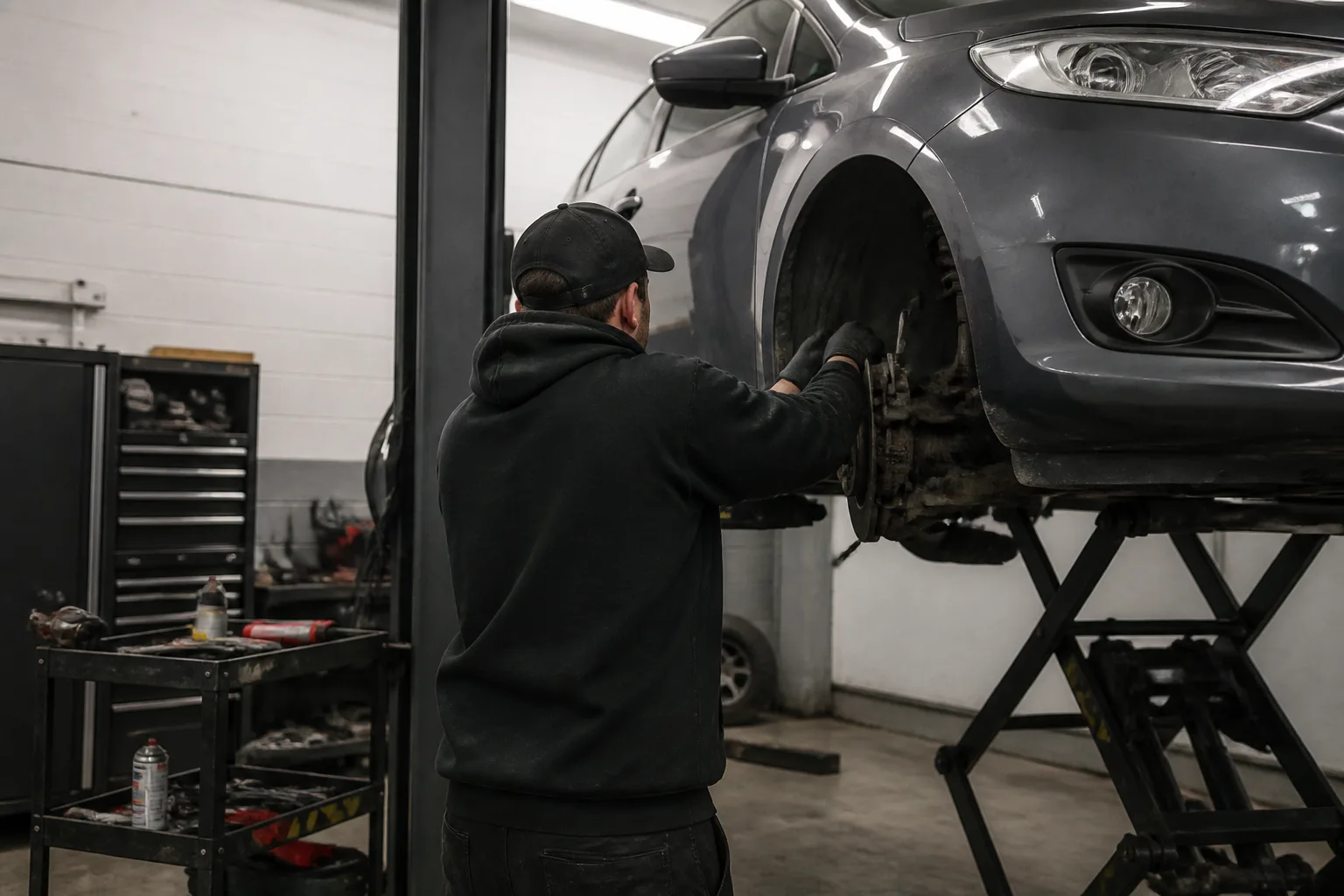
If your steering feels loose, vague or less precise than usual, it is worth taking seriously. You may notice that the car needs small corrections to stay in a straight line, responds slowly when you turn the wheel or seems to wander on uneven roads. Some drivers describe it as feeling as though there is a delay between moving the steering wheel and the car changing direction.
There is no single fault that explains every case. Loose-feeling steering can be linked to tyre pressures, wheel alignment, worn steering or suspension parts, a wheel bearing issue or an electrical or hydraulic steering fault. The symptoms can overlap, so a road test and inspection are normally needed before anyone can identify the cause reliably.
What does loose steering feel like?
Steering that feels loose does not always mean that a component is visibly damaged. It can show itself in several ways, including:
- More movement of the steering wheel than usual before the car changes direction
- A vague or light feeling around the straight-ahead position
- The need to make frequent corrections when travelling on a straight road
- The car wandering or following grooves and cambers in the road
- Clunks, knocks or creaks when turning or travelling over bumps
- Uneven tyre wear, vibration or a steering wheel that no longer sits straight
Some of these symptoms can also be caused by road surface, strong crosswinds or a change in tyre characteristics. The important point is whether the steering has changed from how your car normally feels, particularly if the change was sudden.
Common reasons steering can feel loose
Incorrect tyre pressures or damaged tyres
Tyres are the only parts of the car in contact with the road, so their condition has a direct effect on steering response. A tyre that is underinflated can make the car feel less precise and more reluctant to follow steering inputs. Uneven pressures from side to side can also make the vehicle pull or wander.
Check the pressures against the figures specified for your vehicle, usually found in the handbook or on a label fitted to the car. A basic visual check can also identify obvious damage, bulges or a noticeably low tyre. Do not continue driving on a damaged or rapidly deflating tyre. If you are unsure about its condition, arrange a professional inspection.
Wheel alignment problems
Wheel alignment describes the angles at which the wheels meet the road. Kerbing, potholes and impacts can alter those angles. A car with alignment problems may pull to one side, feel unsettled or require constant steering corrections. Uneven wear on the inner or outer edge of a tyre can be a useful clue.
Alignment is not normally something that can be judged accurately by looking at the steering wheel alone. A steering wheel that is off-centre may be related, but it does not prove that alignment is the only problem. Worn components should be checked before or alongside any alignment adjustment.
Wear in steering or suspension components
Steering and suspension systems contain several joints and linkages that allow the wheels to turn and move with the road. Depending on the vehicle, these can include track rod ends, track rods, ball joints, suspension bushes and other connecting parts. Wear or looseness in one of these areas can create play, knocking or imprecise steering.
Play means unwanted movement in a component or joint. It is not something that can be assessed safely or accurately from inside the driver’s seat. Finding the source usually requires the vehicle to be inspected using appropriate workshop equipment. This is one reason not to treat vague steering as merely a comfort issue.
Wheel bearing or wheel-related faults
A worn wheel bearing can sometimes cause humming or rumbling that changes with road speed, but it may also contribute to movement at a wheel. Problems involving a wheel, tyre or its fitting can affect how the car tracks and responds. If the steering becomes loose after a wheel change, tyre replacement or impact, have it checked rather than assuming it will settle down.
Power steering faults
Power-assisted steering helps reduce the effort needed to turn the wheel. Depending on the car, assistance may be hydraulic, electric or electro-hydraulic. A fault in the system can make steering unusually heavy, inconsistent or different when turning in one direction.
Power steering problems do not always feel like looseness. They may instead cause a warning light, uneven assistance or a change in steering effort. If a warning appears or the steering behaviour changes noticeably, professional assessment is the sensible next step.
What can you safely check yourself?
There are a few basic checks that do not involve dismantling anything:
- Compare all tyre pressures with the vehicle manufacturer’s recommended figures.
- Look for visible cuts, bulges, exposed cords or a tyre that appears unusually low.
- Check whether the steering wheel is off-centre when the car is travelling straight on a suitable, quiet road.
- Pay attention to when the problem happens, such as during braking, cornering, acceleration or over bumps.
- Note any warning lights, unusual noises, vibration or changes after a pothole or kerb impact.
Avoid trying to remove steering or suspension parts, adjust tracking yourself or investigate underneath a car supported only by a jack. These systems are safety-critical, and a visual check cannot rule out hidden wear. If braking also feels abnormal, our guide to why a car can pull to one side when braking may help you separate the symptoms, although it should not replace an inspection.
When should you stop driving?
Stop somewhere safe and seek professional advice if the steering suddenly becomes much looser, the car is difficult to keep in its lane or the steering wheel moves without a corresponding change in direction. You should also avoid continued driving if there is a serious knock, visible tyre damage, a wheel that appears out of position, severe vibration or a steering warning light accompanied by unusual behaviour.
If the vehicle can be driven safely for a short distance, keep the journey limited and avoid high speeds until it has been checked. If you cannot control the car confidently, do not drive it to a garage. Recovery may be the safer option.
How a garage investigates loose steering
A technician will usually start by discussing when the symptom occurs and whether it followed an impact, tyre change or other work. A road test may help confirm whether the concern is wandering, play, vibration or a change in steering assistance. The vehicle can then be inspected for tyre condition, alignment clues, looseness, damage and wear in relevant steering and suspension components.
That process matters because replacing a single part without finding the underlying reason may not resolve the problem. For example, alignment concerns can be connected with worn parts, while a tyre issue can make a perfectly serviceable steering system feel imprecise.
If your car has vague steering, clunks or uneven tyre wear, Ashton’s Garage can inspect the vehicle and advise on the appropriate repair without assuming the cause in advance. If your concern is accompanied by brake vibration, you can also read about why the steering wheel may shake when braking and the related checks that may be needed.
The sensible next step
Loose steering is sometimes caused by a straightforward tyre or alignment issue, but it can also indicate wear or damage in a safety-critical system. Check the tyres and note the symptoms, but do not rely on a basic check to rule out a fault. Prompt professional inspection is the sensible choice when the change is new, worsening or accompanied by noise, vibration, warning lights or difficulty controlling the vehicle.
For further context, our guides to brake pad service life and signs that brake pads may need replacing cover related braking concerns. They are separate from steering faults, but unusual braking and steering symptoms can sometimes occur together and should be explained when arranging an inspection.
Frequently asked questions
Can low tyre pressure make steering feel loose?
Yes. Incorrect or uneven tyre pressures can make a car feel vague, wander or respond less precisely. Check pressures against the vehicle manufacturer’s recommendations, and inspect for visible damage or rapid loss of pressure.
Is loose steering always caused by wheel alignment?
No. Alignment can affect tracking and steering response, but loose-feeling steering may also involve tyres, steering joints, suspension components, wheel bearings or power assistance. An inspection is needed to distinguish between these possibilities.
Is it safe to drive with loose steering?
It depends on how severe and sudden the change is. If the vehicle is difficult to control, has serious noise or vibration, visible tyre damage, a warning light or significant steering play, stop safely and seek professional advice rather than continuing to drive.
Why does my car wander on straight roads?
Wandering can be associated with tyre pressures, road surface, wheel alignment or wear in steering and suspension components. Because these causes can overlap, a garage should inspect the vehicle if the behaviour is new or persistent.
Can a pothole cause loose steering?
A pothole or kerb impact can damage a tyre or wheel and may affect alignment or steering and suspension components. If the steering changes after an impact, arrange an inspection, particularly if there is pulling, vibration, noise or visible damage.
Related advice
What Causes a Humming Noise From a Wheel?
A humming noise from a wheel can come from a wheel bearing, uneven tyre wear, a damaged tyre or a brake problem. Here is how the noise may change, what you can safely check and when professional inspection is sensible.
Why Does My Car Bounce After Going Over a Bump?
If your car keeps bouncing after a speed bump or pothole, the suspension may not be controlling the movement properly. Here are the likely causes, safe checks and signs that it needs professional inspection.
What Causes a Car to Wander on the Road?
If your car needs constant steering correction or seems to drift across the road, several faults could be responsible. Here are the common causes and when to arrange a professional inspection.