
Why Does My Car Vibrate at Motorway Speeds?
A vibration that appears at motorway speeds can come from the tyres, wheels, brakes, steering or suspension. Here is how the symptoms can help point to the likely area, and when your car should be inspected.
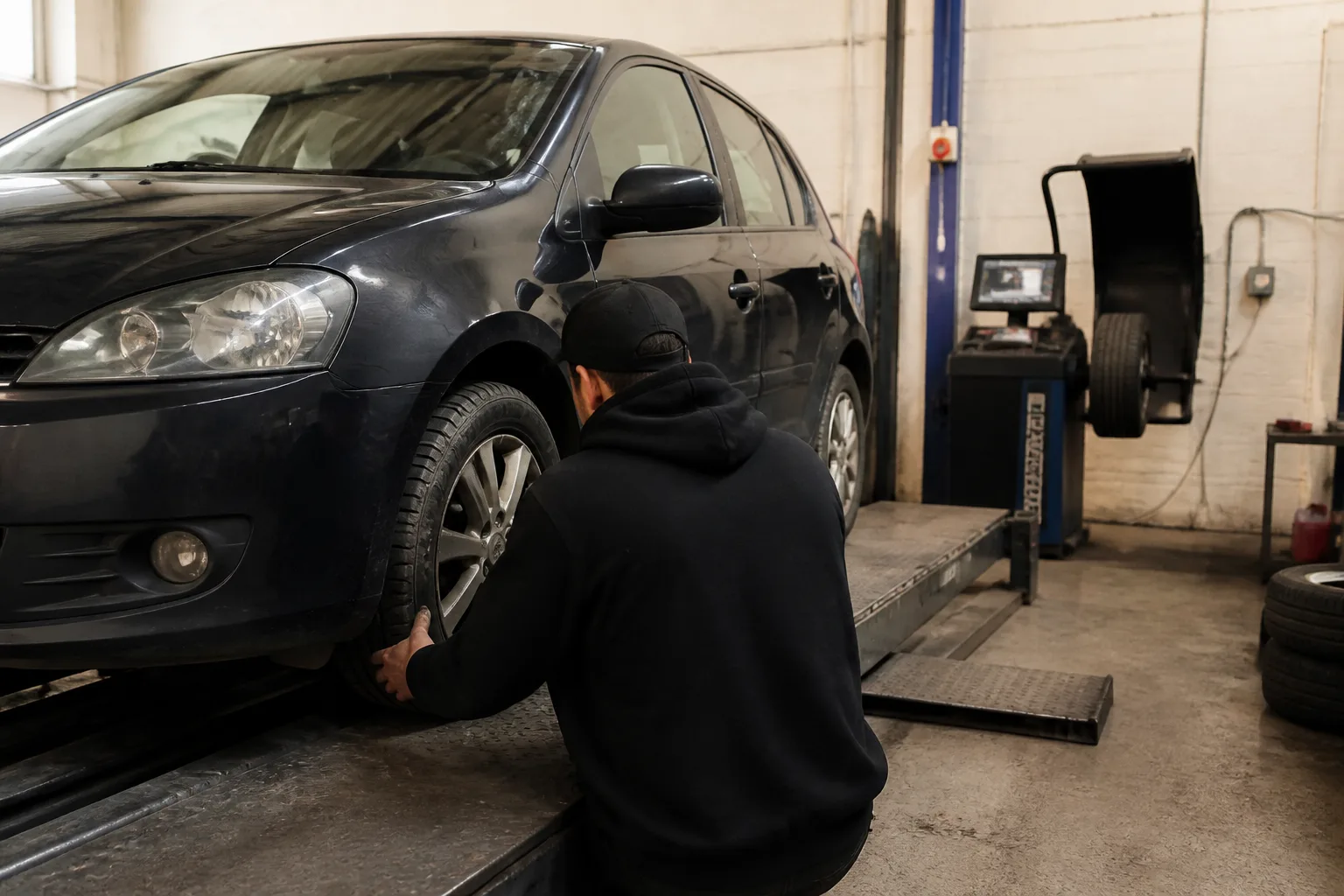
If your car feels smooth around town but starts to vibrate at motorway speeds, it is worth taking seriously rather than simply turning the radio up. A high-speed vibration may be caused by something relatively straightforward, such as a wheel that needs balancing, but it can also be linked to tyre damage, worn suspension or a braking fault.
It is not possible to identify the exact cause without checking the vehicle. The location of the vibration, the speed at which it begins and whether it changes under braking can give useful clues, however.
What does the vibration feel like?
Pay attention to where you feel the vibration and when it happens. This can help a technician focus the inspection, although it should not be treated as a definite diagnosis.
- Steering wheel vibration: this can point towards a problem affecting a front wheel or tyre, wheel balance, steering component or front suspension.
- Vibration through the seat or vehicle floor: this may be associated with a rear wheel or tyre, the exhaust, drivetrain or another component further back in the car.
- Vibration mainly when braking: this can be linked to the brake discs, callipers or other braking components. It needs attention because braking faults can affect control and stopping performance.
- Vibration that follows engine speed: if it happens while stationary or changes when you gently increase the engine speed, the cause may be related to the engine or its mounts rather than road speed.
Common reasons a car vibrates at motorway speeds
Wheel imbalance
A wheel and tyre assembly needs to rotate evenly. If its balance is outside the correct range, the vibration may become noticeable at a particular road speed and then reduce or change as your speed changes. This can happen after a wheel has lost a balance weight, or following a tyre change.
Wheel balancing is different from wheel alignment. Balancing corrects how evenly the wheel rotates, while alignment concerns the direction and angles of the wheels. Both may need checking if a vibration has appeared.
Tyre damage, wear or pressure problems
Tyres can develop damage after striking a pothole, kerb or other road hazard. A bulge, cut, exposed cord, separated tread or uneven wear can make the car vibrate and may create a serious safety risk. Incorrect pressure can also affect how the tyre sits and behaves on the road.
Before driving any further, look at the tyres for obvious damage and check their pressures when cold, using the pressures listed in the vehicle handbook or on the car's information label. Do not rely on appearance alone. Some tyre problems are not visible from the outside and require professional equipment to identify.
Wheel alignment
Incorrect alignment may follow a pothole strike or kerb impact. It can cause uneven tyre wear, a steering wheel that is no longer centred and the car pulling to one side. Alignment does not always cause a vibration on its own, but it can contribute to poor handling and may quickly damage a tyre.
If your car has started pulling to one side, you can read more about why a car may pull to one side when braking, particularly if the problem is most obvious during braking.
Brake problems
A vibration that appears or becomes worse when you press the brake pedal should be checked promptly. It may be associated with uneven braking surfaces, a sticking calliper or another fault in the braking system. You may also notice a pulsing brake pedal, the vehicle pulling to one side, unusual noises or a burning smell.
These symptoms should not be ignored. Our guide to why the steering wheel can shake when braking explains the distinction between a vibration linked to road speed and one that is mainly linked to brake use.
Worn suspension or steering components
Suspension and steering parts help keep the tyres in contact with the road and control the car's direction. Worn bushes, ball joints, track rod ends, dampers or wheel bearings can contribute to vibration, wandering, knocking noises or uneven tyre wear.
A wheel bearing fault may produce a humming or rumbling noise that changes as the car turns. A worn steering or suspension component may not always produce an obvious noise, so a proper inspection is important when the car feels unsettled at speed.
Driveshaft or drivetrain faults
On some cars, a worn driveshaft joint, propshaft or related drivetrain component can cause vibration when accelerating. This type of vibration may be more noticeable under load than when coasting. The symptoms can overlap with wheel and tyre problems, so replacing parts based on the sensation alone is not sensible.
Why does it happen at one particular speed?
A vibration can become more noticeable when the rotating speed of a wheel, tyre or drivetrain component reaches a point where a small imbalance or wear becomes easier to feel. This is why a vehicle may feel fine at 30 or 40 mph but vibrate at motorway speeds.
The fact that the vibration starts at a particular speed does not prove that the cause is wheel balancing. Tyre condition, wheel damage, alignment, suspension and drivetrain components can produce similar symptoms. A garage will normally consider the tyres and wheels first, then investigate other areas based on the vehicle's condition and the reported symptoms.
Safe checks you can make at home
There are a few sensible checks you can make without dismantling anything:
- Check all four tyre pressures when the tyres are cold.
- Look for cuts, bulges, exposed cords, trapped objects or unusual tread wear.
- Notice whether the vibration is through the steering wheel, seat, brake pedal or whole vehicle.
- Think about whether it began after a pothole, kerb impact, tyre change or wheel removal.
- Check whether it happens during acceleration, cruising, coasting or braking.
Do not jack up the vehicle, remove wheels or inspect safety-critical components unless you have the correct equipment, knowledge and safe working conditions. A visual check cannot confirm that a wheel, tyre, brake or suspension component is sound.
When should you stop driving?
Stop in a safe place and arrange professional help if the vibration is severe, suddenly appears or is accompanied by a tyre bulge, loss of pressure, steering difficulty, pulling, clunking, grinding, smoke or a burning smell. You should also avoid motorway driving if the vehicle feels unstable or the steering does not respond normally.
If the vibration is mild but persistent, arrange an inspection rather than continuing to test it at higher speeds. A garage can check the tyres and wheels, assess balance and alignment, and inspect the brakes, steering, suspension and drivetrain where appropriate. Ashton’s Garage can help investigate persistent vibration in Salisbury through its car repairs service, with the inspection based on the symptoms and condition of your particular vehicle.
Can a vibration cause more damage?
It can. Continuing to drive with a damaged tyre, loose wheel, worn bearing or steering fault may worsen the problem and may affect the vehicle's stability or braking. Even when the original fault is only a balance issue, prolonged vibration can make tyres wear unevenly and place additional strain on other components.
The safest approach is to note exactly when the vibration occurs, carry out only the basic checks that can be done safely, and seek a professional assessment if it continues. It is better to identify the cause before the next long journey than to discover that a minor-feeling vibration has become a roadworthiness problem.
Related advice
If you are also noticing brake noise or changes in braking performance, you may find our guides on how long brake pads last and signs your brake pads need replacing useful.
Frequently asked questions
Is it safe to drive a car that vibrates at motorway speeds?
It depends on the cause, which cannot be confirmed remotely. If the vibration is severe, sudden, or comes with tyre damage, steering problems, pulling, grinding, smoke or a burning smell, stop driving and arrange professional help. A persistent mild vibration should still be inspected before a long or high-speed journey.
Why does my steering wheel shake but the car feels smooth at lower speeds?
A front wheel or tyre balance issue is one possibility, particularly when the vibration appears within a particular speed range. Tyre damage, alignment, steering and suspension faults can feel similar, so the wheels and related components should be checked rather than assuming balancing is the only answer.
Why does my car vibrate only when I brake?
A vibration that is mainly linked to braking may involve the brake discs, callipers or another braking component. If the brake pedal pulses, the car pulls to one side or braking performance changes, have the vehicle inspected promptly and avoid driving if it does not feel safe.
Can low tyre pressure cause a motorway-speed vibration?
Incorrect tyre pressure can affect the way a tyre sits and behaves, and it may contribute to poor handling or vibration. Check pressures when the tyres are cold using the vehicle manufacturer's recommended figures, but remember that pressure checks will not identify every form of tyre damage.
Related advice
Can You Drive With a Bulge in a Tyre?
A bulge or bubble in a tyre sidewall is a warning of internal damage. Find out why it happens, whether it is safe to drive and what to do next.
What Causes Tyre Sidewall Cracks?
Tyre sidewall cracks can be caused by age, sunlight, low pressure, impact or chemical damage. Learn what the cracks may mean and when professional inspection is needed.
What Are Wheel Bearings and How Do They Fail?
Wheel bearings help your wheels rotate smoothly and support the vehicle’s weight. Learn what they do, how they fail, the warning signs to watch for and when professional inspection is sensible.