Why Does My Car Keep Losing Tyre Pressure?
Repeated tyre pressure loss usually points to a puncture, leaking valve, damaged wheel or problem where the tyre seals against the rim. Here is what to check safely and when professional inspection is needed.
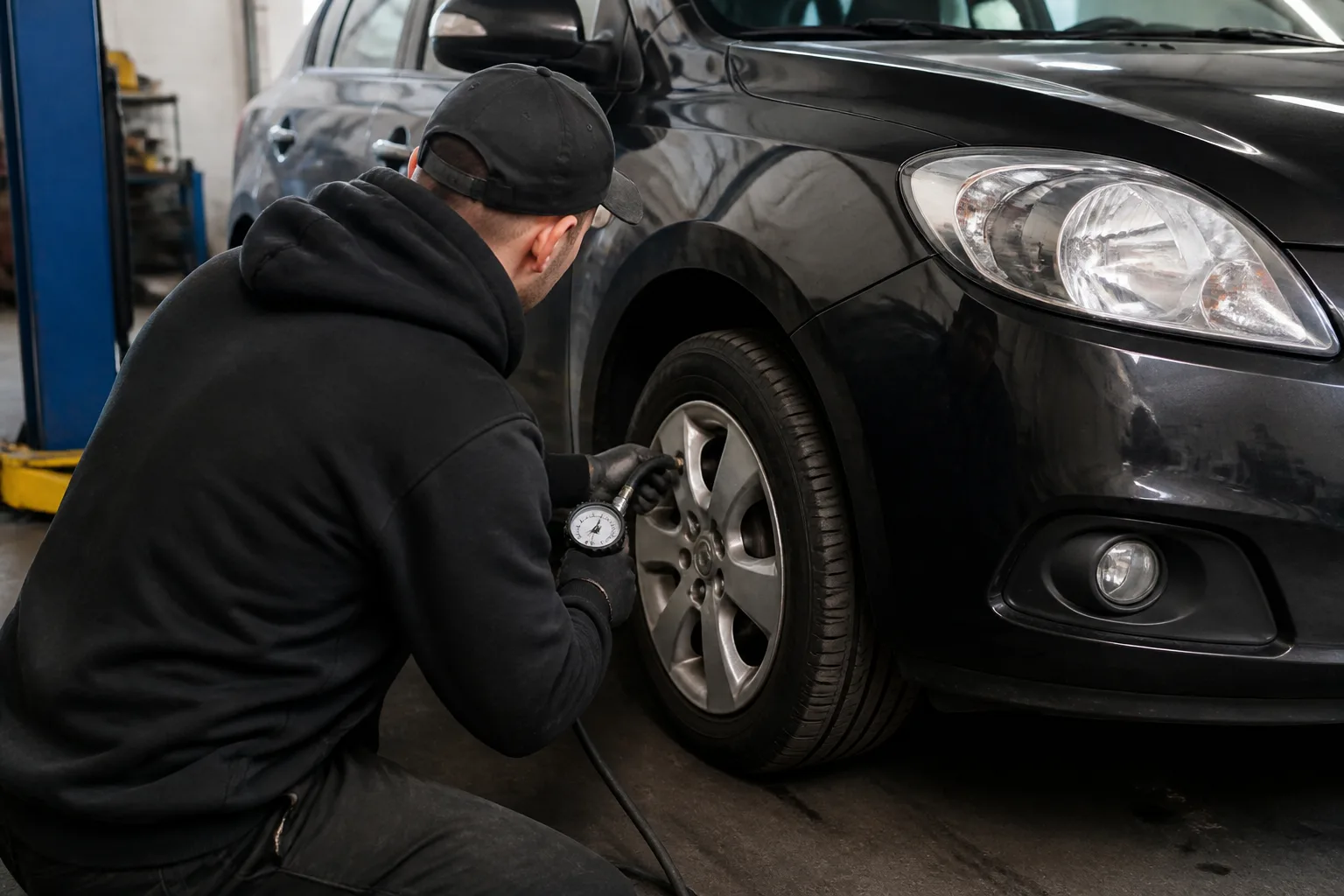
If you keep asking, “why does my car keep losing tyre pressure?”, it is worth treating the problem as more than a routine top-up. Tyres naturally lose a small amount of air over time, and colder weather can make the pressure reading drop. However, one tyre that repeatedly needs attention may have a slow puncture, a leaking valve, damage to the wheel or a sealing problem between the tyre and rim.
Tyre pressure affects grip, braking, steering and fuel consumption. A tyre that is significantly underinflated can also build up more heat as it rolls. The cause is not always visible from the outside, so repeatedly adding air without finding the reason may leave an unsafe fault unresolved.
Common reasons a tyre keeps losing pressure
A slow puncture
A small nail, screw or other sharp object can remain embedded in the tread and allow air to escape gradually. You may not notice a flat tyre straight away. Instead, the pressure warning may return after a few days, or one tyre may be noticeably lower whenever you check it.
Some punctures are not suitable for a repair. The location and size of the damage, the condition of the tyre and whether it has been driven while underinflated all matter. A proper inspection is needed before anyone can say whether a tyre is repairable or needs replacing.
A leaking tyre valve
The valve is the small component used to inflate the tyre. Its internal seal can deteriorate, or the valve body can become damaged. The valve may leak more when it is moved, which can make the problem intermittent.
Valve caps help keep dirt away from the valve but do not normally fix a faulty seal. If the tyre itself appears undamaged yet continues to lose pressure, the valve should be considered as one possible cause.
A damaged or corroded wheel
The tyre must seal tightly against the wheel rim. A kerb strike or pothole can bend the rim, while corrosion around the bead seat can affect the seal. The bead is the reinforced edge of the tyre that sits against the rim.
Wheel damage may not be obvious with the tyre fitted. You might notice repeated pressure loss, a vibration, or a tyre that loses air more quickly after a particular impact. Do not assume that a small-looking mark on the wheel is harmless if the pressure keeps falling.
A problem at the bead seal
The bead seal can leak if the tyre has not seated correctly, if the rim is damaged or corroded, or if dirt has become trapped where the tyre meets the wheel. This type of leak is often difficult to identify through a quick visual check.
A bead leak may become more noticeable in wet or cold conditions, but weather is not necessarily the root cause. It can simply make an existing sealing problem easier to notice.
Changes in temperature
Air pressure changes as temperature changes. A cold morning can produce a lower reading than a warmer afternoon, even though no air has escaped. This is why pressures should be checked when the tyres are cold, following the vehicle manufacturer’s recommended figures.
Temperature change can explain a modest difference across several tyres. It is less likely to explain one tyre repeatedly becoming much lower than the others. If the same tyre needs frequent inflation, arrange an inspection rather than treating seasonal changes as the complete explanation.
Tyre damage, age or deterioration
Cracks, cuts, bulges and damage to the sidewall can affect the tyre’s ability to hold air. A tyre may also have suffered internal damage after being driven while significantly underinflated. Damage can be difficult to assess from a photograph or from looking at the tread alone.
Do not continue driving on a tyre with a bulge, deep cut, exposed material or other serious damage. These are roadworthiness concerns and need professional attention.
What can you safely check yourself?
There are a few sensible checks you can make without attempting a repair:
- Check all four tyre pressures, and the spare if your vehicle has one, using the figures in the handbook or on the vehicle’s information label.
- Take readings when the tyres are cold, before a journey or after the car has been parked for a suitable period.
- Compare the readings and note whether the same tyre is repeatedly lower.
- Look for obvious nails, screws, cuts, bulges or objects lodged in the tread, without removing anything that may be stopping air escaping.
- Check whether the tyre pressure monitoring system warning returns after the pressures have been corrected.
These checks can help describe the problem, but they do not confirm the cause. Avoid putting your hands close to a damaged tyre or trying to remove a puncturing object. Do not dismantle the tyre, attempt a bead repair or use a temporary fix as a substitute for inspection.
When is it unsafe to keep driving?
Stop in a safe place and seek professional advice if a tyre is visibly flat, losing air quickly, badly damaged or causing the vehicle to handle differently. A car that pulls, feels unstable, vibrates unusually or makes a repeated noise may need attention beyond a simple pressure adjustment.
If a tyre is only slightly below its recommended pressure and there are no signs of damage, you may be able to inflate it correctly before travelling to a garage. That does not remove the need to find out why the pressure fell. If the pressure drops again, avoid making a longer journey on it.
Driving on an underinflated tyre can damage its internal structure, even if the outside does not look severely affected. If the tyre has become very hot, has been driven while flat or shows sidewall damage, professional inspection is the safer option.
Why a pressure warning may remain on
Some vehicles use direct pressure sensors in the wheels, while others estimate pressure changes through the anti-lock braking system. The exact system varies by vehicle. A warning may need to be reset or recalibrated after pressures are corrected, according to the manufacturer’s instructions.
However, resetting a warning does not repair a leak. If it returns, or if one tyre continues to lose air, the vehicle needs a proper check. The sensor itself can also be faulty, but that should be considered only after the tyre, valve, wheel and seal have been inspected.
What will a garage inspect?
A technician can check the tyre’s tread and sidewalls, look for signs of a puncture, test the valve and examine the contact between the tyre bead and wheel. The wheel can also be checked for impact damage or corrosion. Depending on the findings, the outcome may be a suitable puncture repair, a replacement valve, a wheel repair or replacement, or a new tyre.
Tyre-related faults can overlap with other handling problems. If your car also pulls to one side when braking, our guide to why a car pulls to one side when braking may help you understand why an inspection is important. You can also read about steering wheel shaking when braking if vibration is part of the symptoms.
For wider context on related braking and wheel-area checks, see our guides to how long brake pads last and signs that brake pads need replacing. These are separate issues, but unusual handling or vibration should not be dismissed as a tyre pressure problem without checking the vehicle.
Getting a recurring pressure loss checked
A tyre that needs regular inflation has a reason for losing air, even when the cause is not immediately visible. Keep a note of which tyre is affected, how quickly the pressure drops and whether the problem followed a pothole or kerb impact. That information can help a technician investigate efficiently.
If you are in or around Salisbury and the same tyre keeps losing pressure, Ashton’s Garage can inspect the tyre, valve and wheel and explain the sensible next step. You can find the relevant car repair service here. If the tyre is flat, badly damaged or losing air rapidly, do not drive it to the garage without professional advice.
Frequently asked questions
How often should I check my tyre pressures?
Check them regularly when the tyres are cold, and before longer journeys. Use the pressure figures provided by the vehicle manufacturer rather than a generic figure printed on the tyre.
Can cold weather make a tyre lose pressure?
Cold air can make the pressure reading fall, even when the tyre has not developed a leak. If one tyre repeatedly drops more than the others, temperature alone is unlikely to explain the problem.
Can I drive with a slow puncture?
It depends on the pressure, the damage and how quickly air is escaping. A tyre that is visibly flat, badly damaged or losing air rapidly should not be driven on. Seek professional advice instead.
Why does my tyre lose pressure but have no visible puncture?
Air may be escaping through the valve, the bead seal or a small puncture that is difficult to see. A bent or corroded wheel can also prevent the tyre sealing correctly.
Will inflating the tyre fix the problem?
Inflating it restores pressure temporarily but does not identify or repair the cause. If the same tyre needs frequent top-ups, arrange an inspection.
Related advice
When Does Wheel Alignment Need Checking?
Wheel alignment may need checking after a pothole impact, kerb strike, suspension work or unusual tyre wear. Learn the warning signs and when professional inspection is sensible.
Why Does My Car Pull to One Side While Driving?
If your car drifts or pulls to one side, the cause could be as simple as tyre pressure or as serious as a brake, steering or suspension fault. Here is what to check and when to seek professional help.
Why Does the Steering Wheel Shake When Braking?
A steering wheel that shakes under braking can have several causes, from uneven brake discs to worn suspension or tyre problems. Here is what the symptom may mean and when to stop driving.