Why Does My Brake Pedal Feel Soft?
A soft or spongy brake pedal should not be ignored. Learn what may cause it, which checks are safe to make and when your car needs professional inspection.
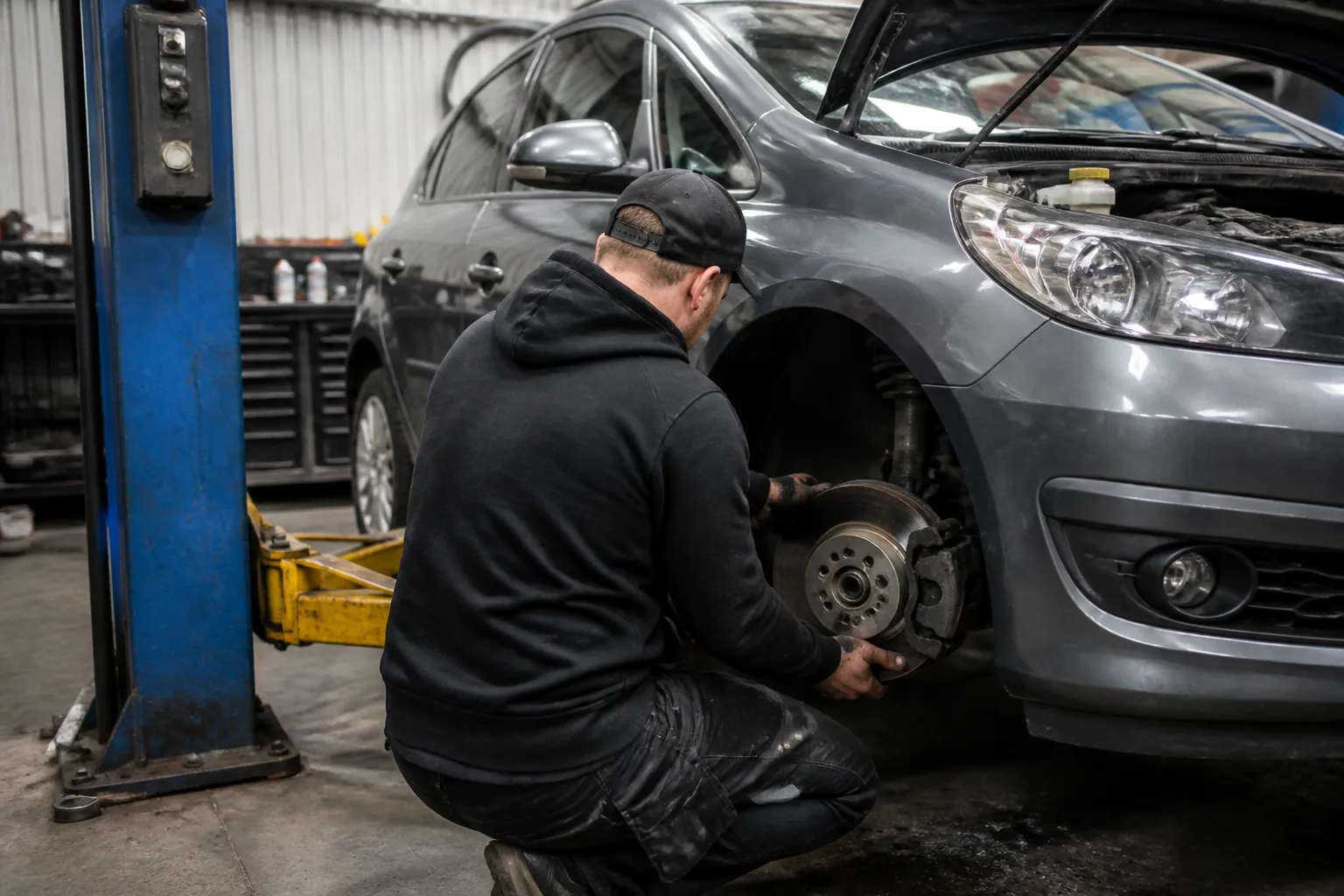
If your brake pedal feels soft, spongy or lower than usual, it is worth treating the change seriously. Brakes should give a firm, predictable response when you press the pedal. A soft pedal can have several possible causes, from air or moisture in the hydraulic system to a fluid leak or a problem with a brake component.
It is not possible to confirm the exact fault without inspecting the vehicle. However, the way the pedal feels can help explain why professional checks may be needed. If the pedal suddenly becomes soft, sinks towards the floor or braking performance has changed, avoid continuing to drive unless a suitably qualified professional has confirmed that it is safe.
What does a soft brake pedal feel like?
Motorists use words such as soft, spongy, low or sinking to describe different brake problems. A soft pedal may travel further than normal before the brakes begin to work. A spongy pedal can feel springy under your foot, as though there is air in the system. In some cases, the pedal may gradually move closer to the floor while you keep steady pressure on it.
These symptoms are different from a brake pedal that feels firm but requires more effort than usual. A change in pedal firmness, travel or braking response is still worth having checked, particularly if it has appeared quickly or is accompanied by a dashboard warning light.
Why does my brake pedal feel soft?
Air in the braking system
Most modern car braking systems use hydraulic fluid to transfer pressure from the pedal to the brakes at each wheel. Air can compress more easily than brake fluid. If air is present in the system, some of the pedal movement is used compressing the air rather than applying pressure to the brakes, which can make the pedal feel spongy.
Air may enter after brake work if the system has not been properly bled, or it may be associated with a leak that has allowed fluid level or pressure to fall. Simply treating the symptom without finding the reason for it may leave the vehicle unsafe.
Low or leaking brake fluid
Brake fluid can become low if there is a leak, although the level may also change as brake components wear. A leak could be found around a brake caliper, a flexible hose, a rigid pipe, the master cylinder or another part of the hydraulic system. The fluid may not always leave an obvious puddle, so the absence of a visible mark does not rule out a problem.
Low fluid or a fluid warning light should be treated as a safety concern. Do not assume that topping up the reservoir solves the issue, because the underlying cause still needs to be identified. Brake fluid can also damage paintwork and should not be handled casually.
Flexible brake hoses
Flexible hoses connect the fixed brake pipes to components that move with the wheels. With age, a hose may deteriorate internally or expand slightly under pressure. That expansion can contribute to a less firm pedal and may affect braking performance.
Hoses can also be damaged by corrosion, rubbing or external impact. Their condition is not always easy to assess accurately from above the wheel, which is one reason a proper inspection is preferable to relying only on a quick visual check.
A problem with the master cylinder
The master cylinder converts pedal movement into hydraulic pressure. If its internal seals are worn, it may not maintain pressure properly. One possible sign is a pedal that slowly sinks while you hold it down, although other faults can produce similar symptoms.
This is a safety-critical component and should not be dismantled or repaired as a home diagnosis. A garage can inspect the braking system and test the possible causes in a controlled way.
Brake component or adjustment issues
Problems at the wheels can sometimes affect pedal travel. Depending on the vehicle, worn or sticking components, excessive movement or an issue with a rear braking mechanism may contribute to a low or unusual pedal. This does not mean that a soft pedal is simply a sign that the brake pads need replacing.
Brake pad wear can cause other symptoms, such as grinding, squealing or reduced braking performance. For more information, see our guides to how long brake pads last and the signs your brake pads need replacing.
Is it safe to drive with a soft brake pedal?
A soft brake pedal can indicate a fault that may reduce braking performance or worsen without warning. If the pedal reaches close to the floor, the car takes longer to stop, the vehicle pulls to one side, a brake warning light is on, or you can see fluid around a wheel or beneath the car, do not drive it on the road. Arrange professional assistance instead.
If the change is mild but noticeable, it is still sensible to have the vehicle inspected promptly. Leave plenty of space around the car and avoid testing the brakes at speed. A stationary check may tell you that the pedal feels different, but it cannot confirm that the braking system is safe for normal driving.
Safe checks you can make
Without removing any parts, you can note whether the pedal feels different when the engine is running, whether it sinks while held, and whether any warning lights are displayed. You can also look at the brake fluid reservoir if it is clearly accessible, checking whether the level appears below its marked range. Do not touch the system or continue driving if there are signs of leakage or damage.
Pay attention to other symptoms too. Pulling while braking may point to a separate or related braking issue, while shaking through the steering wheel can have different possible causes. Our guides explain why a car may pull to one side when braking and why the steering wheel may shake when braking.
How a garage investigates a soft pedal
A professional inspection can include checking the fluid level and condition, looking for leaks, examining pipes and hoses, assessing the brake assemblies and testing whether the system maintains hydraulic pressure. The exact checks depend on the symptoms and the vehicle.
The important point is that a soft pedal is a symptom, not a diagnosis. Replacing one visible part without checking the rest of the system may fail to resolve the problem. At Ashton’s Garage, we can inspect the braking system and explain what needs attention before recommending suitable repairs. If you are in Salisbury or the surrounding area, you can find the relevant service information on our car repairs page.
In summary
A soft or spongy brake pedal may be caused by air, low or leaking brake fluid, a damaged hose, a master cylinder issue or another braking fault. Because these possibilities include safety-critical problems, a noticeable change should not be ignored or diagnosed by guesswork.
If the pedal is very low, continues sinking, braking feels weak or a warning light is showing, stop driving and arrange a professional inspection. It is better to have a brake fault checked promptly than to discover the problem when you need to stop quickly.
Frequently asked questions
Can low brake fluid make the pedal feel soft?
Yes, low brake fluid can be associated with a soft pedal, particularly if the level has fallen because of a leak. The cause should be identified rather than treating the reservoir level as the complete solution.
Why does my brake pedal sink when I hold it down?
A pedal that gradually sinks under steady pressure may indicate that the braking system is not maintaining hydraulic pressure. Possible causes include a master cylinder problem or a leak, so professional inspection is recommended.
Can I bleed my own brakes if the pedal feels spongy?
Brake bleeding is safety-critical work and a spongy pedal may have an underlying cause that bleeding alone will not fix. It is safer to have the system inspected and serviced by a qualified technician.
Is a soft brake pedal an MOT failure?
A soft pedal can indicate a braking defect, but the outcome of an MOT cannot be predicted from one symptom alone. If the pedal has changed or braking performance is reduced, arrange an inspection rather than waiting for the next MOT.
Related advice
When Does Wheel Alignment Need Checking?
Wheel alignment may need checking after a pothole impact, kerb strike, suspension work or unusual tyre wear. Learn the warning signs and when professional inspection is sensible.
Why Does My Car Pull to One Side While Driving?
If your car drifts or pulls to one side, the cause could be as simple as tyre pressure or as serious as a brake, steering or suspension fault. Here is what to check and when to seek professional help.
Why Does the Steering Wheel Shake When Braking?
A steering wheel that shakes under braking can have several causes, from uneven brake discs to worn suspension or tyre problems. Here is what the symptom may mean and when to stop driving.