Why Does My Brake Pedal Feel Hard?
A hard brake pedal can mean the braking assistance is not working properly. Learn what may cause it, what you can safely check and when to stop driving.
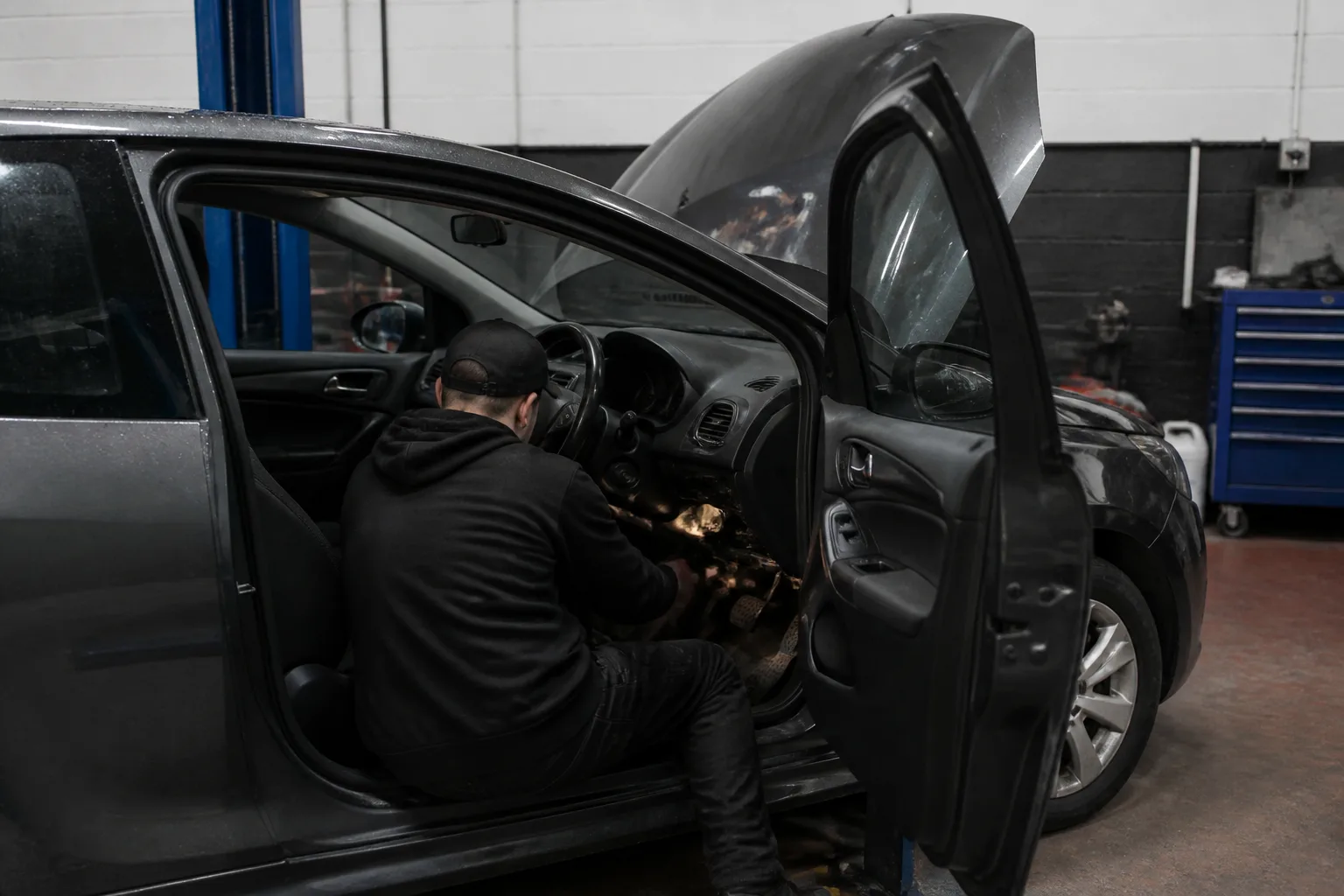
If your brake pedal feels unusually hard, it is worth taking seriously. A firm pedal is not always a sign of a major fault, particularly if the engine is switched off, but a sudden change in pedal feel can mean the braking assistance is not working as it should.
Most modern cars use a brake servo, also called a brake booster, to reduce the effort needed to apply the brakes. If that assistance is lost, the brakes may still work, but you may need considerably more force on the pedal and the car may take longer to stop. That makes this a safety issue rather than a comfort issue.
What should a normal brake pedal feel like?
With the engine running, a normal brake pedal should feel firm and controlled, with enough travel to apply the brakes progressively. It should not feel like you need to stand on it to slow the car. The exact pedal feel varies between vehicles, but you should pay attention to changes from what is normal for your car.
It is normal for a brake pedal to become hard if you press it repeatedly with the engine switched off. This uses up the vacuum or stored assistance in the servo. When the engine is started, the pedal should usually move down slightly as assistance returns. This simple observation can suggest that the servo system is operating, but it cannot rule out every brake fault.
Why does my brake pedal feel hard?
1. The brake servo is not receiving assistance
The most common explanation for a hard pedal is a problem with the brake servo assistance. Depending on the vehicle, the servo may use vacuum from the engine or an electric vacuum pump. A fault with the servo, pump or related control system can leave the pedal feeling much harder than usual.
On a petrol car, the vacuum is often supplied through a hose and controlled by a non-return valve. A split hose, loose connection or faulty valve can allow the assistance to escape. Diesel cars and many newer vehicles may use a vacuum pump or electronically controlled system, so the possible causes differ between models.
2. A vacuum hose or one-way valve is damaged
A damaged vacuum hose can sometimes produce a hissing noise, particularly when the brake pedal is pressed. You might also notice a change in engine idle speed or other signs that the engine is drawing air where it should not. However, the absence of a noise does not prove that the hose and valve are sound.
These components can be difficult to assess reliably without the correct test equipment. Replacing parts based only on a symptom can miss the underlying fault, especially where an electric pump or sensor is involved.
3. The engine has stopped or is not providing assistance
If the engine stalls, the brake pedal may become harder after one or more applications because the available assistance is gradually used. This can also happen if there is an engine-management fault affecting a vacuum pump or related system.
A stalled engine creates more than a brake problem. Steering assistance may also be reduced, depending on the vehicle, and the car should be brought to a safe stop. Do not continue a journey simply because the engine restarts and the pedal feels temporarily better.
4. There is a fault in the pedal or hydraulic braking system
Less common possibilities include a problem with the pedal linkage, a restriction in the hydraulic system, incorrectly fitted components or a fault affecting the braking system control unit. Brake calipers or other brake components can also develop faults, although these do not all produce the same pedal symptoms.
A hard pedal accompanied by poor braking, a brake warning light, unusual noises, pulling or a burning smell needs professional assessment. It is not possible to identify the faulty part safely from pedal feel alone.
Can I drive with a hard brake pedal?
If the pedal has suddenly become hard, braking performance feels reduced or you need much more effort to stop, do not treat the car as safe to drive normally. Pull over somewhere safe if you are already on the road, avoid further driving and arrange professional assistance or inspection.
If the pedal is hard only after repeatedly pressing it with the engine off, then returns to its usual feel once the engine starts, that may be normal. Even so, if the change is new, returns during driving or is accompanied by a warning light or unusual noise, it should be checked.
Do not test the brakes by driving quickly or deliberately creating a situation that requires heavy braking. A basic stationary check can provide useful information, but it is not a substitute for a proper inspection.
What can I safely check?
Without removing any parts, you can note whether the pedal is hard with the engine off and whether it changes slightly when the engine starts. Check whether any brake, ABS or engine warning lights are illuminated, and look for obvious fluid leaks around the wheels or beneath the vehicle. Do not put yourself underneath a car supported only by a jack.
Pay attention to when the problem occurs. Does it happen immediately after starting, only after the engine has stalled, or throughout a journey? Has the vehicle recently had brake, engine or electrical work? This information can help a technician, but avoid dismantling the servo, vacuum system or brake hydraulics yourself.
A hard pedal is different from a soft or spongy pedal. A soft pedal can be linked to air, fluid loss or other hydraulic concerns, while a hard pedal more often suggests a loss of assistance or a mechanical restriction. Both symptoms need care, and neither should be ignored. For related information, see our guides to how long brake pads last and signs your brake pads need replacing.
How a garage checks the fault
A technician will normally begin by confirming the symptom and checking the vehicle's warning lights, brake operation and engine performance. They may inspect vacuum supply, hoses, valves, the servo, pump operation and relevant electronic fault information. The brake hydraulics and mechanical components also need to be considered rather than assuming the servo is at fault.
The safest repair depends on the vehicle and the test results. If your car is in Salisbury or the surrounding area and the pedal remains unusually hard, Ashton's Garage can inspect the braking system and explain the next sensible step. If there is any doubt about whether the car can be driven safely, ask about recovery rather than taking the risk.
Related brake symptoms
Summary
A brake pedal that feels hard with the engine off can be normal after repeated presses. A hard pedal while driving, or one that suddenly needs much more effort, may indicate lost brake assistance or another braking fault. Because the symptom affects stopping control, avoid continued driving if braking performance is reduced and arrange a professional inspection.
Frequently asked questions
Is a hard brake pedal always dangerous?
Not always. A pedal can become hard after repeated presses with the engine switched off because the available brake assistance has been used. A hard pedal while driving, a sudden change in feel or reduced braking performance should be treated as a possible safety-critical fault.
Why does my brake pedal go hard when the engine is off?
The brake servo assistance is normally available while the engine or its electric assistance system is operating. Repeatedly pressing the pedal with the engine off can use up the stored assistance, making the pedal feel hard.
Can low brake fluid cause a hard brake pedal?
Low brake fluid is more commonly associated with increased pedal travel or a soft pedal, but any brake fluid warning or suspected leak needs prompt attention. Do not rely on pedal feel alone to rule out a braking fault.
Should I drive to a garage with a hard brake pedal?
If the pedal became hard suddenly, braking is less effective or warning lights are on, do not drive normally to the garage. Stop safely and arrange professional advice or recovery. A technician can confirm whether the vehicle is safe to move.
Related advice
When Does Wheel Alignment Need Checking?
Wheel alignment may need checking after a pothole impact, kerb strike, suspension work or unusual tyre wear. Learn the warning signs and when professional inspection is sensible.
Why Does My Car Pull to One Side While Driving?
If your car drifts or pulls to one side, the cause could be as simple as tyre pressure or as serious as a brake, steering or suspension fault. Here is what to check and when to seek professional help.
Why Does the Steering Wheel Shake When Braking?
A steering wheel that shakes under braking can have several causes, from uneven brake discs to worn suspension or tyre problems. Here is what the symptom may mean and when to stop driving.