Why Are My Tyres Wearing Unevenly?
Uneven tyre wear can point to incorrect pressures, wheel alignment problems, worn suspension parts or other issues. Here is what different wear patterns may mean and when to arrange an inspection.
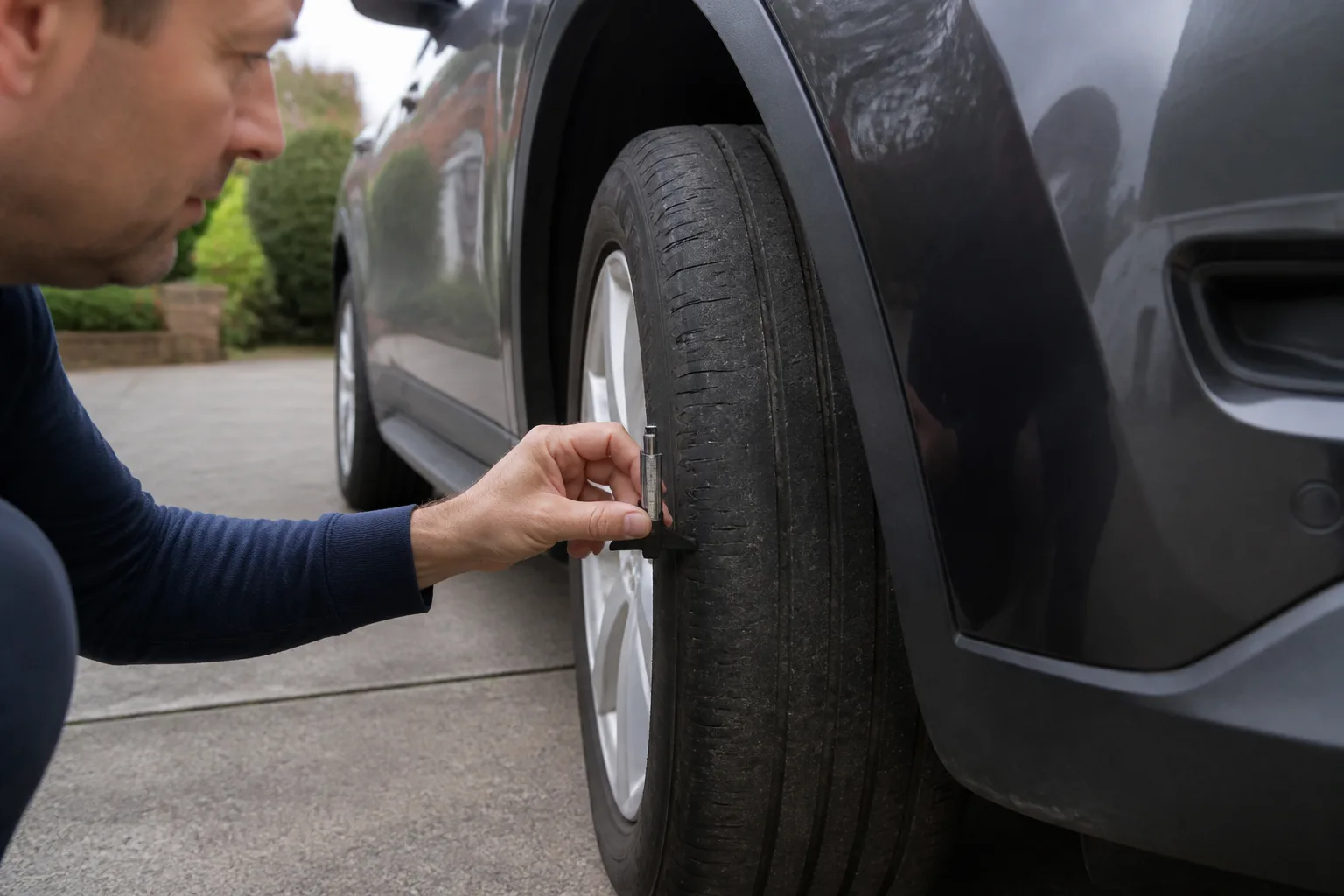
Uneven tyre wear is usually a sign that a tyre is not meeting the road evenly, or that one part of it is working harder than the rest. Sometimes the cause is as simple as an incorrect tyre pressure. In other cases, uneven wear can point to wheel alignment, suspension or steering problems.
Checking the tread regularly is worthwhile because tyre wear can develop gradually. You may notice it before the car starts pulling to one side or the steering feels different. However, a wear pattern can suggest a possible cause, rather than prove a diagnosis. Several faults can produce similar symptoms, so a proper inspection may be needed.
What does uneven tyre wear look like?
Run your hand carefully across the tread and look at the tyre from different angles. Do not rely only on the visible tread in the middle, as the inner or outer edge can wear more quickly and may be harder to see.
Common patterns include:
- Both shoulders worn: the edges of the tread are more worn than the centre.
- Centre of the tread worn: the middle is more worn than both shoulders.
- One edge worn: either the inner or outer shoulder is noticeably more worn.
- Patchy or scalloped wear: the tread has a series of uneven dips or raised sections.
- One tyre wearing much faster: a single tyre is deteriorating more quickly than the others.
Low tyre pressure can wear both shoulders
When a tyre is underinflated, its shoulders can carry more of the load. This may cause the outer edges of the tread to wear faster than the centre. Low pressure can also make a tyre run hotter and may affect steering response, braking and fuel consumption.
Pressure should be checked when the tyres are cold, using the vehicle manufacturer's recommended figures. These are usually found in the handbook, on a label inside the driver's door frame or on the fuel flap. The recommended pressure may vary depending on the load being carried, so use the correct figure rather than the maximum pressure printed on the tyre sidewall.
Do not assume that a tyre pressure warning light means every tyre is correctly inflated. Check the pressures manually where possible, and inspect the tyres for damage at the same time.
Overinflation can wear the centre of the tread
If a tyre is inflated above the recommended pressure, the centre of the tread may press more heavily against the road. This can lead to faster wear down the middle while the shoulders appear less worn.
A small variation in pressure does not automatically mean there is a serious fault, but regularly running at the wrong pressure can shorten tyre life and affect the way the car handles. Check all four tyres, including the spare if your vehicle has one, because pressures can change with temperature and over time.
Wheel alignment problems can wear one edge
If just the inner or outer edge of a tyre is wearing, wheel alignment is one possible explanation. Alignment refers to the angles at which the wheels sit in relation to the road and to one another. If those angles are outside the intended range, the tyre can scrub against the road instead of rolling evenly.
Alignment can be disturbed by hitting a pothole or kerb. It can also change if steering or suspension components become worn, or after certain repair work. Other possible clues include the car drifting or pulling to one side, a steering wheel that is no longer centred when travelling straight, or tyres that have worn despite having the correct pressures.
Wheel alignment is different from wheel balancing. Balancing deals with the distribution of weight around a wheel and tyre, and an imbalance is more commonly associated with vibration at particular speeds. Both may be checked during an inspection, but balancing will not correct an alignment problem.
Worn suspension parts can cause patchy wear
Patchy, scalloped or cupped wear can be associated with a wheel that is not being kept firmly and consistently in contact with the road. Worn shock absorbers, bushes, ball joints or other suspension components may contribute, although the exact cause cannot be confirmed from the tread pattern alone.
You may also notice a bouncy ride, knocking noises over uneven roads, reduced stability when cornering or uneven wear that returns soon after a tyre is replaced. Those symptoms deserve attention because the suspension affects how the vehicle steers, brakes and maintains contact with the road.
If a suspension or steering fault is suspected, replacing the tyre alone may only hide the symptom temporarily. The underlying issue should be identified before fitting new tyres where possible.
Could braking problems cause uneven tyre wear?
Uneven tyre wear is not usually a direct sign of worn brake pads, but braking faults can sometimes affect how a vehicle behaves. For example, a sticking brake may create heat at one wheel, while a braking or steering problem may cause the car to pull to one side.
Do not continue driving if a wheel becomes unusually hot, the car pulls sharply, the brakes feel abnormal, or you notice smoke, a burning smell or serious vibration. Stop somewhere safe and arrange professional assistance. For related information, see how long brake pads last and the signs your brake pads need replacing.
What should you do if your tyres are wearing unevenly?
- Check the pressures: adjust them to the vehicle manufacturer's recommended figures.
- Inspect the whole tyre: look at the inner and outer edges, not just the visible centre tread.
- Check for damage: look for cuts, cracks, bulges, exposed cords or objects embedded in the tyre.
- Compare tyres on the same axle: a clear difference between left and right may be useful information for a technician.
- Arrange an inspection: if the wear is significant, returns after correcting the pressure, or comes with handling changes.
Do not try to even out the wear by swapping tyres around without checking the vehicle and tyre manufacturer's guidance. Some tyres are directional, some vehicles use different sizes front and rear, and moving a problem tyre will not fix the cause.
If you can see exposed cords, a bulge, a deep cut or serious damage, do not drive on the tyre. The same applies if the car is difficult to control, pulls strongly, or develops a major steering or braking problem. Stop safely and seek professional advice.
When should uneven tyre wear be inspected?
Arrange a check if one tyre is wearing faster than its partner, the inside edge is difficult to see but appears worn, or the tread has a patchy pattern. An inspection can include tyre condition, pressures, wheel alignment, steering and suspension components, and brake operation where relevant.
If your car is in the Salisbury area and you are unsure whether the wear is normal, Ashton's Garage can inspect the relevant components and explain the likely cause. That does not necessarily mean a tyre needs replacing immediately, but finding the reason early may help prevent further damage and avoid fitting a new tyre only for the same pattern to return.
Uneven wear is best treated as useful information rather than something to ignore. Regular pressure checks and visual inspections can catch problems early, while changes in steering, braking or ride quality should be dealt with promptly. For further reading, you may also find why a car may pull to one side when braking and why the steering wheel may shake when braking helpful.
Frequently asked questions
Is uneven tyre wear dangerous?
It can be, depending on the amount of wear and the underlying cause. A worn edge, damaged sidewall, exposed cords, major handling change or suspected steering, suspension or braking fault should be professionally inspected. Do not drive on a tyre with a bulge, deep cut or exposed cords.
Can incorrect tyre pressure cause uneven wear?
Yes. Underinflation can encourage wear on both shoulders, while overinflation can wear the centre of the tread. Check pressures when the tyres are cold and use the vehicle manufacturer's recommended figures.
What causes one side of a tyre to wear?
Possible causes include wheel alignment being outside specification, a worn steering or suspension component, or damage from a pothole or kerb. The wear pattern can suggest a direction for investigation but cannot confirm the fault by itself.
Does wheel balancing fix uneven tyre wear?
Not usually. Balancing corrects uneven weight distribution in a wheel and tyre, while alignment concerns the angles of the wheels. Both may need checking, but balancing will not normally correct a tyre worn on one edge.
Should I replace a tyre that is wearing unevenly?
A replacement may be needed if the tread or structure is unsafe, but the cause should also be investigated. Otherwise, a new tyre may develop the same wear. A technician can assess the tyre and check related steering, suspension, alignment and brake components.
Related advice
How Long Do Brake Pads Last?
Brake pads do not have a fixed replacement interval. Find out what affects their lifespan, how to check for wear and when professional inspection is needed.