When Does Wheel Alignment Need Checking?
Wheel alignment may need checking after a pothole impact, kerb strike, suspension work or unusual tyre wear. Learn the warning signs and when professional inspection is sensible.
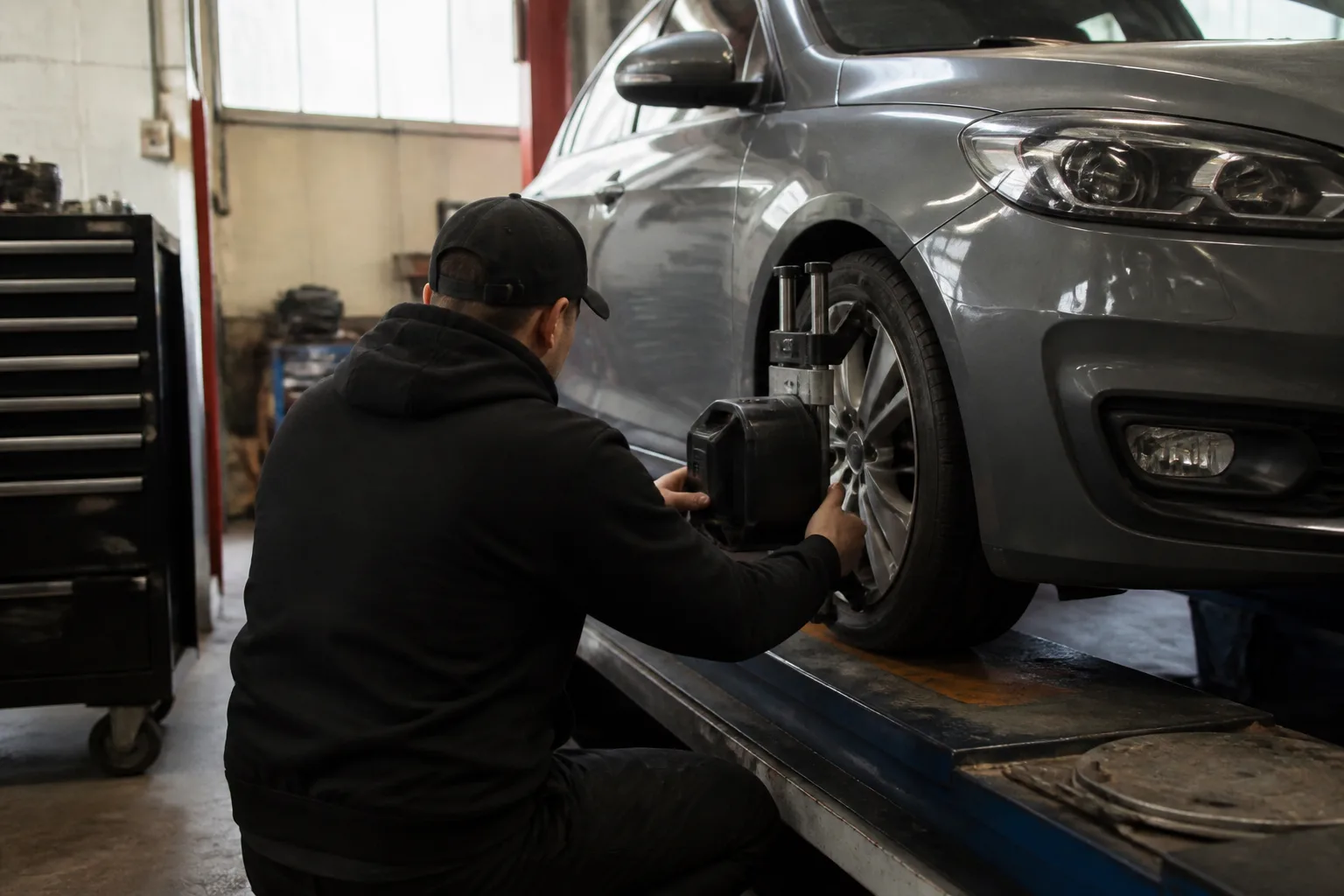
Wheel alignment is worth checking whenever your car no longer feels quite right on the road, particularly after hitting a pothole or kerb. Correct alignment helps the tyres meet the road properly and allows the vehicle to track in a predictable direction.
It is not something that usually needs adjusting at fixed intervals on every vehicle. Alignment can remain within specification for a long time, but it can also change after an impact or when a steering or suspension component has become worn. Some alignment problems are obvious from the way the car drives, while others first appear as uneven tyre wear.
What does wheel alignment mean?
Wheel alignment describes the angles at which the wheels sit in relation to one another and to the road. A garage uses alignment equipment to measure these angles against the vehicle manufacturer's specifications. Depending on the vehicle, the check may include the front wheels, rear wheels or both.
The technical terms include camber, caster and toe. You do not need to remember the definitions, but it is useful to know that alignment is more than simply pointing the front wheels straight ahead. The steering and suspension geometry needs to work as a set.
Wheel alignment is also different from wheel balancing. Balancing addresses the distribution of weight around a wheel and tyre, which can cause vibration if it is incorrect. Alignment concerns the direction and angle of the wheels. A car can need one service, the other, or both.
When does wheel alignment need checking?
After hitting a pothole or kerb
A significant impact can alter the alignment or damage a tyre, wheel, steering part or suspension component. You may notice a new pull to one side, a crooked steering wheel or a change in how the car responds. Even if the vehicle appears to be driving normally, an impact followed by unusual tyre wear is a good reason to have it inspected.
Not every bump will cause a problem, and an alignment check cannot by itself rule out other damage. The condition of the tyre, wheel and suspension should be considered as part of the inspection.
When the steering wheel is no longer centred
On a reasonably straight, suitable road, the steering wheel should normally sit close to its usual centred position while the car travels straight. If it suddenly sits noticeably to one side, alignment may be one possibility.
However, road surfaces are not perfectly level and many roads have a natural slope to help water drain away. A brief check on one road is therefore not enough to diagnose a fault. A persistent change in steering position, especially after an impact or repair, deserves professional assessment.
If the car pulls to one side
A vehicle that consistently drifts or pulls left or right may have an alignment issue, but there are other possible causes. Unequal tyre pressures, tyre construction, a sticking brake or a worn steering or suspension component can produce similar behaviour.
Check that the tyre pressures match the vehicle manufacturer's recommendations. If the pull is strong, appeared suddenly, or is accompanied by braking problems, do not keep driving in the hope that it will correct itself. A suitable inspection is safer than trying to identify the cause from the steering feel alone. For more on one particular braking symptom, see why a car may pull to one side when braking.
When the tyres are wearing unevenly
Look at the tread across the width of each tyre rather than only checking the centre section. Wear concentrated on one edge, a noticeable difference between the inner and outer shoulder, or a pattern of raised and worn patches may indicate an alignment, inflation, suspension or tyre problem.
Some inner-edge wear can be difficult to see without turning the steering or having the vehicle raised safely. Do not put yourself under a vehicle to inspect it. If a tyre has reached its legal or manufacturer's wear limit, has damage, or shows a serious uneven pattern, arrange a professional check before relying on the car for normal journeys.
After steering or suspension repairs
Work involving components such as track rods, steering joints, suspension arms or other geometry-related parts can affect wheel alignment. The correct next step depends on the repair and the vehicle, so ask the garage whether an alignment measurement is required as part of the job.
Wheel alignment will not repair a worn or bent component. If a measurement shows that the angles cannot be brought within the required range, further investigation may be needed rather than simply adjusting the settings.
Are there other signs to watch for?
- The car feels nervous or less settled when travelling straight.
- The steering does not return towards centre as it normally does after a turn.
- The tyres are wearing faster than expected or differently from one another.
- There is a new rubbing or scraping noise near a wheel.
- The car's handling changed after a wheel, tyre, steering or suspension repair.
These signs are not proof of an alignment fault. They are reasons to check the vehicle rather than assume that a simple adjustment will solve the problem. A technician will normally consider tyre pressures, wheel and tyre condition, steering and suspension components, and the alignment readings together.
How often should alignment be checked?
There is no single checking interval that suits every car and every type of driving. It is sensible to ask for alignment to be checked when symptoms appear, after a significant pothole or kerb impact, or following relevant steering and suspension work. It may also be included as part of a broader tyre or suspension inspection if uneven wear has been noticed.
Regular tyre pressure checks and looking over the tread can help you spot changes early, but they do not replace an alignment measurement. Use the pressure information for your vehicle, usually found in the handbook or on the vehicle's information label, rather than relying on a general figure.
Can you still drive with an alignment problem?
A minor alignment issue may not produce an immediate dramatic symptom, but continued driving can contribute to uneven tyre wear and may affect how the car responds. More importantly, a suspected alignment problem may actually be a damaged tyre, wheel, brake, steering part or suspension component.
Stop and seek professional advice if the steering becomes difficult to control, the vehicle pulls sharply, a tyre has visible damage, there is a new grinding or clunking noise, or the car feels unsafe. Do not treat an alignment check as a substitute for investigating a possible roadworthiness fault.
What happens during a professional check?
A garage should first consider the vehicle's general condition rather than immediately promise an adjustment. This can include checking the tyres, pressures, wheels and relevant steering or suspension parts. Alignment equipment can then measure the wheel angles and show whether they are within the manufacturer's specified range.
If adjustment is appropriate, the technician should explain what has been measured and whether any additional work is needed. If you have noticed a pull, uneven wear or a steering change, tell the garage when it started and whether it followed an impact or repair. That information can help focus the inspection.
If your car has developed uneven tyre wear, a crooked steering wheel or a persistent pull, Ashton's Garage can inspect the related steering, suspension, tyre and alignment concerns and explain the sensible next step. You do not need to diagnose the cause before asking for advice.
Related advice
Uneven braking symptoms can sometimes feel similar to an alignment concern. You may also find our guides to how long brake pads last, signs that brake pads need replacing and why a steering wheel can shake when braking useful.
Frequently asked questions
How do I know if my wheel alignment is out?
Possible signs include a persistent pull to one side, a steering wheel that sits off-centre, or uneven wear across a tyre. These symptoms can also have other causes, so a professional inspection is needed to confirm the problem.
Does hitting a pothole affect wheel alignment?
A strong pothole impact can affect alignment and may also damage a tyre, wheel, steering part or suspension component. If the car feels different afterwards, arrange an inspection rather than assuming it only needs an adjustment.
Is wheel alignment the same as wheel balancing?
No. Alignment concerns the angles and direction of the wheels, while balancing corrects uneven weight distribution around a wheel and tyre. Different symptoms can point towards either issue, or both.
Can uneven tyre wear be caused by something other than alignment?
Yes. Incorrect tyre pressure, worn suspension parts, tyre damage and other mechanical issues can cause uneven wear. The tyres and related components should be checked before deciding that alignment alone is responsible.
Related advice
Why Does My Car Pull to One Side While Driving?
If your car drifts or pulls to one side, the cause could be as simple as tyre pressure or as serious as a brake, steering or suspension fault. Here is what to check and when to seek professional help.
Why Does the Steering Wheel Shake When Braking?
A steering wheel that shakes under braking can have several causes, from uneven brake discs to worn suspension or tyre problems. Here is what the symptom may mean and when to stop driving.
Signs Your Brake Pads Need Replacing
Learn the common signs of worn brake pads, what different brake noises and sensations may mean, and when your car needs a professional inspection.