What to Check After Hitting a Pothole
Hitting a pothole can affect a tyre, wheel, steering or suspension even when the damage is not immediately obvious. Here is what to check and when to arrange a professional inspection.
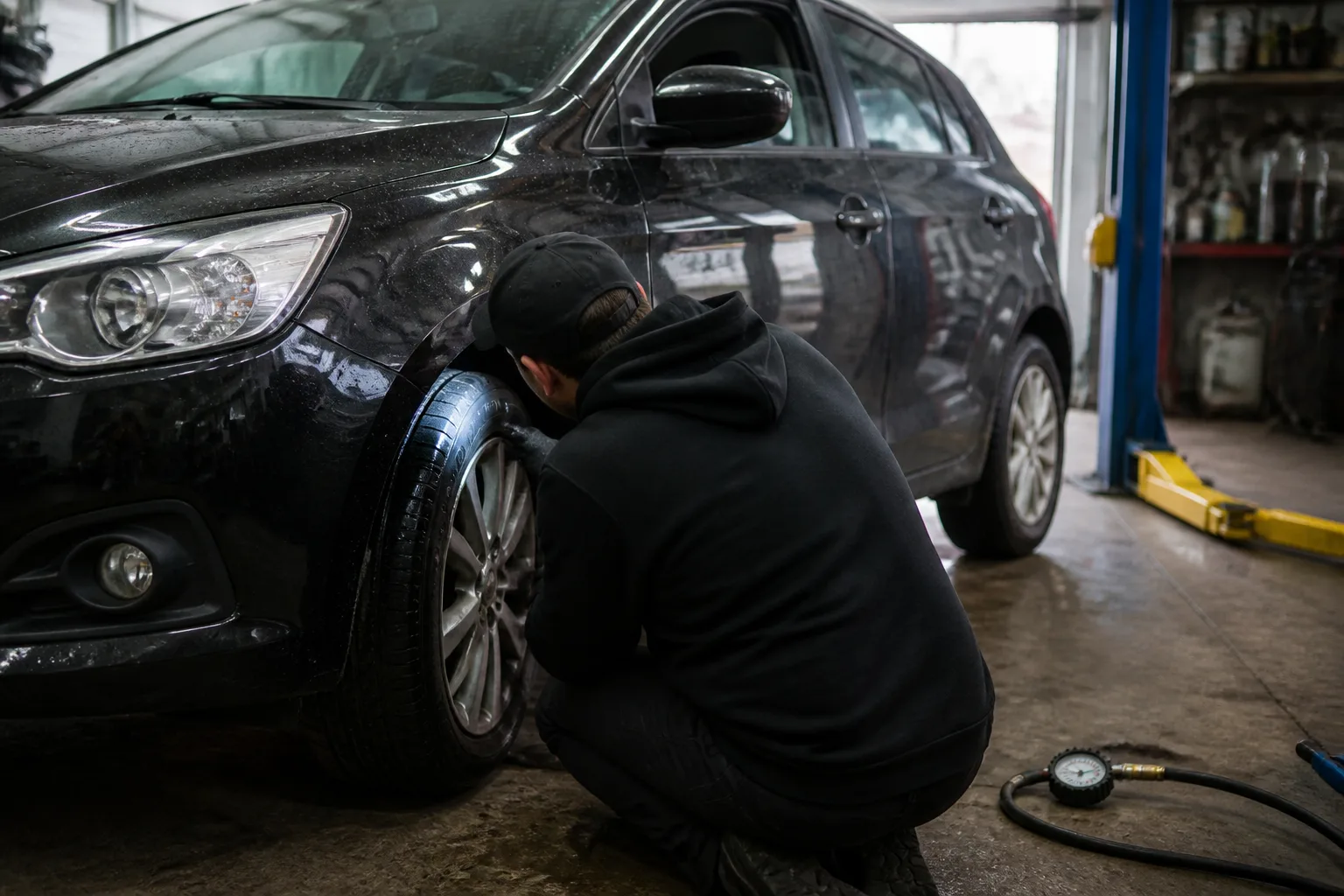
Knowing what to check after hitting a pothole can help you spot damage before it develops into a more serious problem. A heavy impact may affect the tyre, wheel, steering, suspension or wheel alignment. Sometimes the car will feel different straight away. In other cases, the first sign may appear later as a slow puncture, vibration or uneven tyre wear.
Not every pothole strike causes damage, and it is not always possible to judge the condition of a vehicle from the noise alone. A sensible visual check is useful, but it should not replace a professional inspection where the impact was severe or the car no longer feels normal.
First, make sure it is safe to stop
If you have just hit a pothole, avoid braking sharply or swerving to inspect the car. Find a safe place away from moving traffic before getting out. On a fast or busy road, it may be safer to continue only far enough to reach a suitable safe stopping point, provided the vehicle remains controllable and there are no serious warning signs.
Stop as soon as it is safe to do so if the car is pulling strongly to one side, the steering wheel is no longer sitting normally, the vehicle is difficult to control, or you can hear repeated knocking or scraping. A tyre that is losing air, has a visible bulge or cut, or appears to be coming away from the wheel should not be treated as suitable for continued driving.
What to check after hitting a pothole
1. Look closely at the affected tyre
Inspect the tyre sidewall and tread for obvious damage. Look for cuts, splits, exposed cords, a section of rubber that appears pushed outwards, or a change in the tyre's shape. A sidewall bulge is particularly important because it can indicate internal damage that is not safely repaired with a puncture kit or by simply adding air.
Also check whether the tyre is visibly low. If you have a tyre pressure gauge or a suitable monitoring system, compare the reading with the vehicle manufacturer's recommended pressure. The correct figures are normally shown in the handbook, on a label in the door shut or in another manufacturer-approved location. Do not use the maximum pressure moulded into the tyre sidewall as the vehicle's normal setting.
A pressure reading can look acceptable immediately after an impact and then fall later if the wheel or tyre has been damaged. If one tyre is losing pressure, arrange an inspection rather than repeatedly topping it up and carrying on.
2. Check the wheel for dents or cracks
A pothole can bend an alloy wheel or damage a steel wheel. From the outside, you may see a dent in the rim, a crack, fresh scuffing or a section where the tyre no longer appears to sit evenly. Damage on the inner edge can be difficult to see without removing the wheel, so an apparently sound outer face does not prove that the wheel is undamaged.
A damaged wheel may contribute to a slow loss of pressure or a vibration that becomes more noticeable as speed increases. Do not attempt to straighten or repair a wheel yourself. It needs to be assessed using the appropriate equipment, with the tyre condition checked at the same time.
3. Pay attention to steering changes
On a safe, quiet stretch of road, notice whether the vehicle still feels as it did before the impact. Signs that warrant attention include pulling left or right, a steering wheel that sits off-centre when travelling straight, delayed response to steering input, or a need to correct the direction more than usual.
These symptoms can be associated with altered wheel alignment, but they can also indicate damage to a steering or suspension component. It is not possible to identify the cause reliably from the symptom alone. If steering feels loose, unstable or unusually heavy, do not continue driving to see whether it improves.
4. Listen for new noises
Make a note of any sound that was not present before the pothole. A new vibration, knocking noise, metallic scrape, humming sound or repeated thump may come from the wheel, tyre, brake area or suspension. The timing can provide useful information, such as whether the noise happens over bumps, while turning, under braking or as road speed increases.
Noise by itself does not confirm a particular fault. For example, a knock could have more than one possible cause, and a quiet car can still have damage. If the noise is accompanied by poor handling, a warning light or visible tyre damage, treat it as a safety concern and arrange professional help.
5. Check for warning lights and fluid leaks
After the impact, check the dashboard for warning lights that were not present before. A tyre pressure warning may take some time to appear, depending on the vehicle and the nature of the pressure loss. Other warnings should not be ignored simply because the car still starts and moves.
Once parked safely, look around the affected corner without placing any part of your body underneath the vehicle. Fresh fluid on the ground or visible damage around the wheel area needs further investigation. Do not assume that a small mark is harmless, particularly if the vehicle is also braking, steering or riding differently.
Why wheel alignment may need checking
A pothole impact can alter the relationship between the wheels and the road. Wheel alignment describes the angles at which the wheels sit and point. If those angles change, the car may pull to one side, the steering wheel may no longer be centred, or a tyre may begin wearing more quickly on one edge.
Alignment adjustment is not a substitute for checking the underlying parts. If a component is bent or damaged, simply correcting the alignment figures may not solve the problem. A garage can inspect the tyre, wheel, suspension and steering components before deciding whether an alignment check is appropriate.
Uneven tyre wear can take time to become visible. If you notice the car behaving differently after an impact, it is better to have it assessed before the tread pattern provides a more obvious warning.
When should you arrange a garage inspection?
Professional inspection is sensible if the pothole was hit at speed, the impact was hard enough to cause a loud bang, a tyre has lost pressure, or you notice any change in steering, handling, ride quality or noise. It is also advisable if the wheel has visible damage or if the car has a tyre pressure monitoring warning that does not clear after the pressure has been checked correctly.
Where the vehicle remains stable and there are no visible concerns, you may be able to travel carefully to a garage for assessment. Keep the journey as short as practical and stop if new symptoms appear. If the car is difficult to control, a tyre is damaged or deflating, or there is a concern about braking or steering, do not drive it to an inspection. Contact a suitable breakdown provider or garage for advice instead.
If you are unsure what the symptoms mean, our guide to when to book a garage diagnostic explains why a proper assessment is often more useful than guessing from one noise or warning light. It can also help to record when the symptom happens. Our advice on what information to give a mechanic when reporting a fault covers the details that may help the inspection.
How a garage can assess pothole damage
An inspection normally starts with the tyre and wheel, followed by checks of the steering and suspension around the affected corner. Depending on the symptoms, the technician may also assess wheel alignment, braking components and the underside for signs of contact or damage. The exact checks depend on the vehicle and what happened during the impact.
It is helpful to tell the garage which wheel hit the pothole, the approximate speed, whether the tyre pressure changed, and what you noticed afterwards. A clear description does not diagnose the fault, but it gives the technician a useful starting point. If the vehicle has developed a new noise, noting whether it occurs while turning, braking or travelling over uneven roads can also help.
For more detail on what to expect, see our guide to what happens during a garage inspection. If the main symptom is a noise, our advice on describing a strange car noise to a mechanic may help you prepare.
A sensible next step
A quick check of the tyre, wheel, steering feel and dashboard is worthwhile after a pothole strike, but some damage is hidden from view. If anything feels different, or you are concerned about the tyre or wheel, contact Ashton's Garage to discuss an inspection. We can help establish what needs checking and whether the vehicle is safe to continue using.
Frequently asked questions
Can a pothole damage a tyre without causing an immediate puncture?
Yes. An impact can cause internal tyre damage or a sidewall bulge that may not lose air straight away. Check the tyre after the impact and arrange an inspection if its shape has changed, pressure falls or the car feels different.
Is it safe to drive after hitting a pothole?
It depends on the vehicle's condition. If there is no visible damage and the steering, handling, braking and tyre pressure remain normal, a careful journey for assessment may be possible. Do not continue driving if the car is unstable, a tyre is damaged or deflating, or steering or braking feels abnormal.
Why does my car pull to one side after hitting a pothole?
Possible causes include changed wheel alignment or damage to a steering, suspension, tyre or wheel component. Pulling should not be assumed to be a simple alignment issue without checking the affected parts.
Should I check wheel alignment after a pothole?
An alignment check may be appropriate if the steering wheel is off-centre, the car pulls, or tyre wear becomes uneven. The wheel, tyre, steering and suspension should also be checked because alignment adjustment cannot correct a bent or damaged component.
Related advice
What to Do If Your Car Breaks Down Away From Home
Find out what to do if your car breaks down away from home, including how to stay safe, call for help and explain the problem to a recovery service or garage.
Car Maintenance for Rural Driving: A Practical Guide
Rural roads can place extra demands on your car. Learn which checks matter most, how to spot developing problems and when professional inspection is sensible.
What Happens During a Garage Inspection?
A garage inspection is more than a quick look under the bonnet. Here is what a mechanic may check, how findings are assessed and what you can expect from the process.