What Information Should You Give a Mechanic When Reporting a Fault?
Clear, accurate information helps a mechanic understand a vehicle fault more efficiently. Here is what to record and explain when contacting a garage.
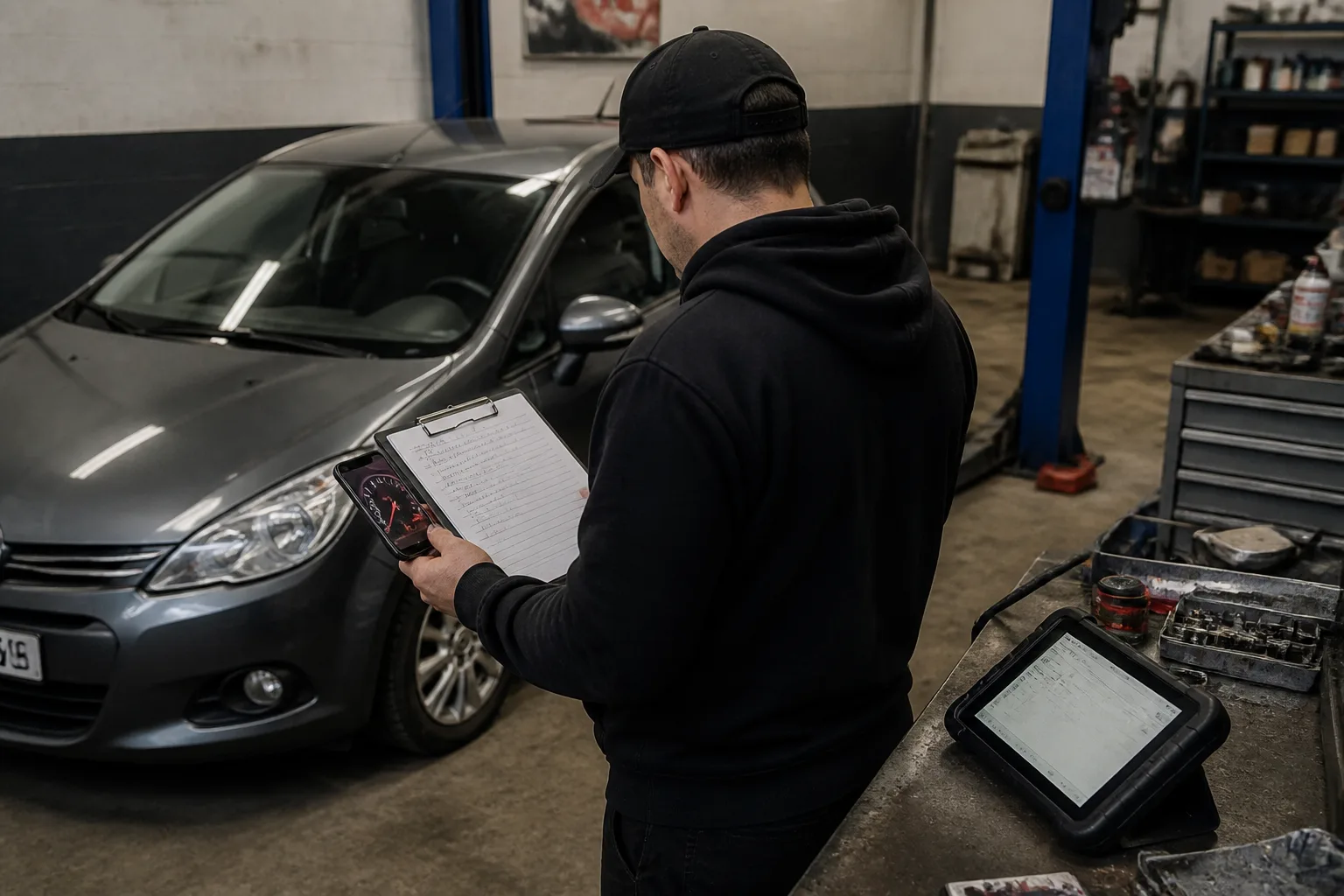
When your car develops a fault, it can be difficult to know what to tell a mechanic. You may not know the name of the component involved, and you should not be expected to diagnose the problem yourself. However, a clear description of what has happened can help a garage assess the issue, plan an inspection and decide whether the vehicle is safe to drive in.
The most useful information is usually practical rather than technical. Explain what you noticed, when it started, the conditions in which it happens and whether the vehicle can still be driven normally. Avoid guessing the failed part unless a mechanic has already identified it. A symptom such as a noise, vibration or warning light can have several possible causes.
Start with the basic vehicle details
Give the garage the vehicle’s registration number, make, model, engine type if known and approximate mileage. The registration number is particularly useful because it can help the garage identify the correct vehicle details and check its service history if this is available to them.
Also mention whether the car is manual, automatic, electric or hybrid if that is not clear from the registration details. Tell the mechanic whether it is used mainly for short trips, motorway driving, towing or heavier loads. The way a vehicle is used can provide useful context, although it will not by itself identify the fault.
Describe exactly what you noticed
Try to describe the symptom in plain language. For example, you might say that the car hesitates when pulling away, the steering wheel shakes while braking, or a warning light appears after the engine has warmed up. These descriptions are more useful than simply saying that the car “does not feel right”.
Include the following details where relevant:
- What the vehicle is doing, such as losing power, stalling, pulling to one side or struggling to start.
- Whether the issue is constant, occasional or getting worse.
- Whether it happens when starting, accelerating, braking, cornering, reversing or cruising.
- Whether the engine is cold or warm when the problem occurs.
- Whether the fault appears at a particular speed, engine speed or road condition.
- Whether you can feel anything through the steering wheel, pedals, seat or body of the car.
If you are reporting a sound, it can help to use familiar descriptions such as clicking, knocking, scraping, squealing, humming or buzzing. You can read more about recording and describing unusual noises in our guide to how to describe a strange car noise to a mechanic.
Record warning lights and messages accurately
Tell the mechanic which warning light appeared and what colour it was, if you know. If the dashboard displayed a written message, quote the wording as accurately as possible. A photo can be useful, particularly if the message disappears after the engine is switched off.
Do not rely only on the colour or shape of a symbol if you are unsure. Taking a clear photograph of the dashboard can prevent confusion. It is also helpful to say whether the warning light stayed on, flashed, appeared briefly or returned after the vehicle was restarted.
A warning light is an indication that further checks may be needed, not a diagnosis in itself. Even if the vehicle still seems to drive normally, explain the warning to the garage rather than assuming it can be ignored. If a warning relates to braking, steering, overheating or another safety-critical system, ask for advice before continuing to drive.
Explain when the fault began
Tell the mechanic when you first noticed the problem and whether anything happened shortly beforehand. Useful details might include a recent service, repair, battery replacement, puncture, impact with a pothole, very cold weather or a long journey.
Mention if the fault appeared immediately after work was carried out, but avoid assuming that the previous work caused it. The timing may be relevant to the inspection, while the actual cause still needs to be established properly.
If the issue has happened more than once, make a note of the dates or circumstances. Intermittent faults can be harder to reproduce, so details such as the journey length, weather, traffic conditions and whether the vehicle had been parked overnight may be helpful.
Say what has already been checked
Tell the garage about any checks or actions already taken. This could include checking fluid levels, fitting a spare wheel, charging the battery, using a tyre inflator or having a diagnostic scan carried out elsewhere.
Give the mechanic any scan report or fault code rather than relying on memory. A fault code can point towards a system that needs testing, but it does not always identify the failed component. It is better to pass on the exact information and allow the garage to confirm the cause.
Also mention whether the vehicle has been modified, for example with aftermarket wheels, suspension parts, lighting, a towbar or electrical accessories. Non-standard equipment can be relevant when investigating certain symptoms.
Use photos or video when the fault is intermittent
A short recording may help when a noise, dashboard message or visible symptom disappears before the vehicle reaches the garage. Record only when it is safe to do so. Do not use a phone while driving, and never put yourself or another road user at risk to capture evidence.
Photographs can also show a damaged tyre, fluid leak, warning message or visible part that has moved out of position. Take images from a safe location and do not crawl underneath a vehicle or remove covers to investigate it yourself.
For more information about deciding whether a scan or inspection is appropriate, see our guide to when you should book a garage diagnostic.
Be clear about how the vehicle behaves now
When contacting the garage, explain whether the vehicle is currently driveable and whether its behaviour has changed. Say if it starts reliably, reaches normal speed, brakes normally and can be steered without unusual effort. These details help the garage consider how the vehicle should be brought in.
Do not continue driving if you have serious concerns about braking, steering, tyre damage, overheating, smoke, a strong burning smell or a major loss of control. Pull over somewhere safe if possible, switch the engine off where appropriate and seek professional advice. A mechanic can then advise whether recovery or an inspection is needed.
For less serious symptoms, such as an occasional rattle or a minor dashboard message, the vehicle may still need checking even if it appears usable. The important point is to describe the symptom honestly rather than downplaying it or assuming that a vehicle is safe simply because it still moves.
Tell the garage what you need
Explain whether you want an initial assessment, a diagnostic investigation, a repair or advice about whether the vehicle is safe to use. If you have a journey planned or need the car for work, mention any practical timing requirements, but allow the garage to explain what checks are necessary.
Ask what information or documents to bring, including service records, previous reports and details of recent repairs. If the fault is likely to be intermittent, ask whether the mechanic would prefer you to provide a written record of when it occurs.
It is also reasonable to ask the garage to contact you before carrying out additional work if the inspection identifies a separate issue. A clear conversation at the start helps avoid misunderstandings and gives you a better explanation of the findings.
A simple fault-reporting checklist
Before contacting a garage, make a short note covering:
- The vehicle registration, model and current mileage.
- The main symptom in your own words.
- When it happens and how often.
- Any warning lights or messages.
- Any unusual noise, smell, vibration, leak or change in performance.
- Recent servicing, repairs, damage or changes to the vehicle.
- Any fault codes, photographs or safe recordings.
- Whether the vehicle is currently safe and practical to drive.
This information will not replace a proper inspection, but it gives the mechanic a useful starting point. The garage may still need to reproduce the fault, carry out testing or inspect related systems before explaining the cause and recommended repair. Our guide to what happens during a garage inspection explains why that process can involve more than a quick visual check.
If you are unsure what to report or whether your car should be driven to the garage, you can contact Ashton's Garage with the details you have. We can help you understand the next sensible step without expecting you to diagnose the vehicle yourself.
Frequently asked questions
Should I try to diagnose the fault before contacting a mechanic?
No. You do not need to identify the failed component. Describe what you noticed, when it happens and how the vehicle behaves. A mechanic can then carry out the appropriate checks and explain the likely cause.
What if the warning light goes out before I reach the garage?
Tell the garage that it appeared and explain what the symbol or message looked like. A photograph, saved message or fault-code report may also help. A warning disappearing does not necessarily mean the underlying issue has been resolved.
Can I send a video of a noise to a mechanic?
Yes, a short recording can be useful for an intermittent noise or dashboard message. Only record from a safe, stationary position or have a passenger do it. Do not handle a phone while driving.
What should I do if the fault could make the car unsafe?
If you suspect a braking, steering, tyre, overheating or major control problem, stop somewhere safe if possible and seek professional advice before continuing. The garage can help determine whether the vehicle should be recovered or inspected.
Why does a mechanic need to know about recent repairs?
Recent work, damage or modifications can provide useful context and may affect which systems need to be checked. It does not prove that the previous work caused the fault, so the vehicle still needs a proper assessment.
Related advice
What to Do If Your Car Breaks Down Away From Home
Find out what to do if your car breaks down away from home, including how to stay safe, call for help and explain the problem to a recovery service or garage.
Car Maintenance for Rural Driving: A Practical Guide
Rural roads can place extra demands on your car. Learn which checks matter most, how to spot developing problems and when professional inspection is sensible.
What Happens During a Garage Inspection?
A garage inspection is more than a quick look under the bonnet. Here is what a mechanic may check, how findings are assessed and what you can expect from the process.