When Should You Stop Driving and Call a Garage?
Some car problems can wait for a planned inspection, while others make continued driving unsafe. Learn which warning signs mean you should stop, what safe checks you can make, and when to contact a garage.
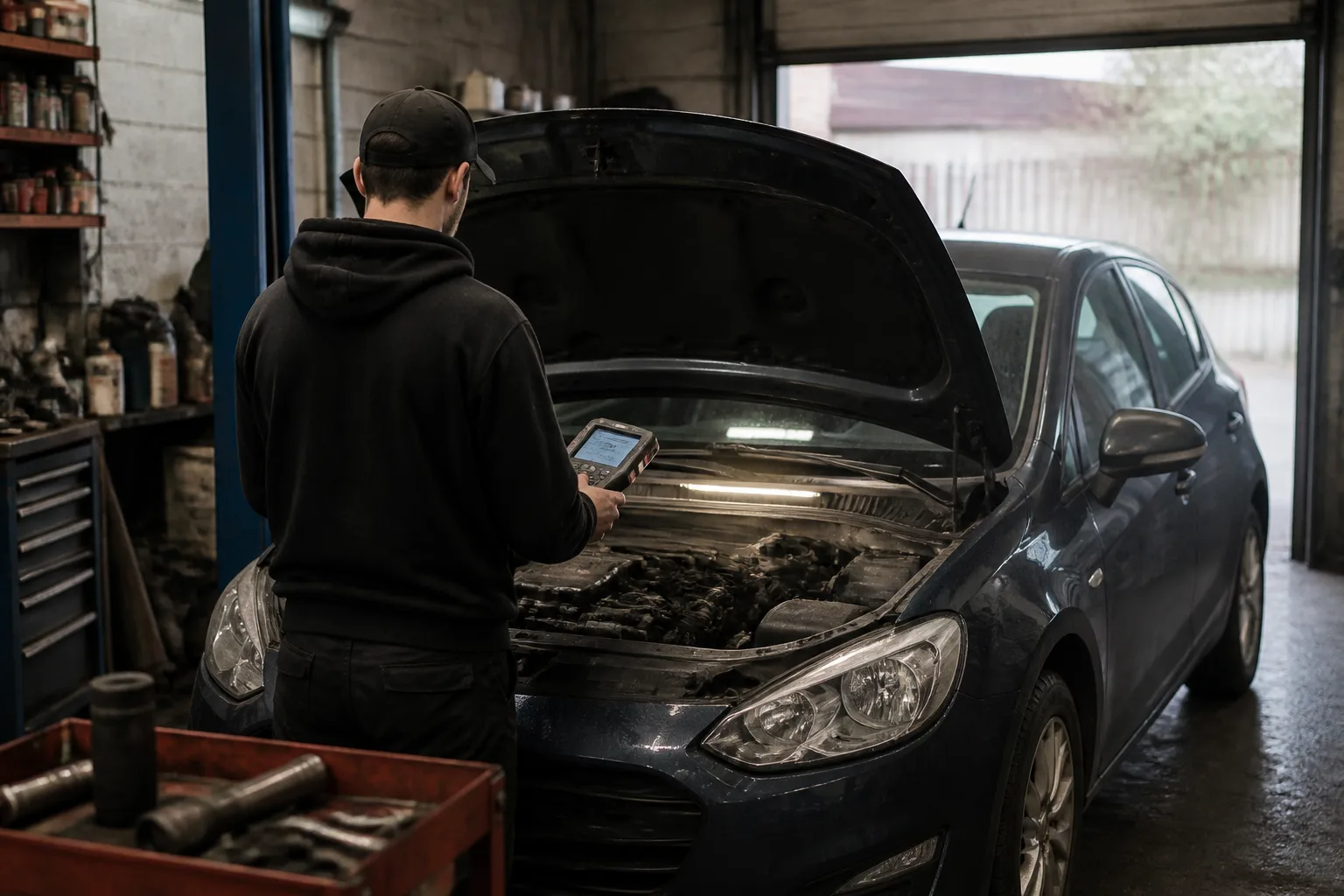
Knowing when should you stop driving and call a garage is an important part of looking after your car. Not every warning light or unusual noise means you need to stop immediately, but some symptoms can point to a braking, steering, tyre, overheating or other roadworthiness problem.
The difficulty is that the same symptom can have several possible causes. A burning smell might come from a harmless spill, or it could indicate an overheating brake or an electrical fault. A warning light may be caused by a sensor, but it may also be alerting you to a problem that could worsen quickly. Without inspecting the vehicle, it is not possible to identify the cause with certainty.
This guide explains the situations where stopping is the safer choice, the limited checks you can make without dismantling anything, and how to give a garage useful information about the fault.
Stop driving immediately if the car may not be safe to control
Find a safe place to pull over as soon as it is practical if you notice a serious change in how the car brakes, steers or stays on the road. This includes a brake pedal that feels unusually soft or sinks towards the floor, severe pulling under braking, grinding accompanied by poor braking performance, or a steering wheel that suddenly becomes very heavy, loose or difficult to control.
You should also stop if a tyre is visibly damaged, losing air quickly, has a bulge in the sidewall, or is making the vehicle unstable. Do not assume that a short journey is acceptable simply because the tyre still appears to be holding some pressure. A damaged tyre can deteriorate further while driving.
If the car is vibrating severely, a wheel appears loose, or a suspension component seems to have failed, avoid continuing. Pull over safely and arrange professional help. Problems affecting the wheels, tyres, steering or suspension can change the car's handling without much warning.
Warning signs of overheating or a serious fluid problem
Stop driving and switch off the engine if the temperature warning light comes on, the temperature gauge reaches the hot zone, or steam is coming from under the bonnet. Continuing to drive an overheating engine can cause more extensive damage.
After stopping, keep away from escaping steam and do not remove a hot coolant cap. The cooling system may be under pressure, and hot coolant can cause serious burns. Wait for the vehicle to cool and arrange an inspection rather than attempting to continue on the assumption that the problem has resolved.
A large or rapidly growing puddle beneath the vehicle is another reason to stop and investigate professionally. Fluid colour alone is not a reliable way to identify a leak, and a loss of brake fluid, coolant, engine oil or another important fluid may affect safety or cause damage. If a fluid is leaking near a wheel, if the brake pedal feels different, or if the engine is showing signs of overheating, do not drive on.
When warning lights mean you should not carry on
Some dashboard warnings need prompt attention but do not always mean the car must stop at once. The colour, symbol, accompanying symptoms and the vehicle manufacturer's instructions all matter. A red warning generally deserves more immediate attention than an amber advisory, but colour is not a substitute for understanding what the symbol means.
Stop as soon as it is safe if a red brake warning appears, particularly if it is accompanied by a change in pedal feel, reduced braking or a message about the braking system. A red oil pressure warning, charging system warning with other symptoms, or temperature warning should also be treated seriously. Continuing to drive with low oil pressure or overheating can turn a manageable fault into major engine damage.
An engine management light that is steady, with the car otherwise behaving normally, may not require an emergency stop, but it should not be ignored indefinitely. If the light flashes, the engine is misfiring, the car is losing power, or there is smoke, a strong smell or unusual noise, stop when safe and seek advice. A flashing warning can indicate a fault that may damage the emissions system or affect how the vehicle runs.
Smoke, burning smells and unusual noises
Smoke is a reason to stop and assess the situation, especially if it comes from the engine bay, a wheel or inside the cabin. Move away from traffic if possible, switch off the engine and do not open the bonnet if there is a risk of fire. If flames are visible or the smoke is increasing, leave the vehicle and contact the emergency services when safe to do so.
A burning smell should not be dismissed because the car still drives normally. It may be linked to overheated brakes, a slipping clutch, an electrical fault, a fluid contacting a hot engine part, or another issue. A smell that returns, becomes stronger or is accompanied by smoke, warning lights or changes in performance warrants professional inspection.
New metallic grinding, loud knocking, repeated clunking or a rapidly worsening whine also deserves prompt attention. Noise alone does not identify the failed part, so avoid making a long journey based on a guess about its cause. If you need help explaining what you heard, our guide to describing a strange car noise to a mechanic can help you record the useful details.
Symptoms that may allow a short journey, but still need advice
Some faults are less immediately alarming. For example, an intermittent warning light, a minor new vibration at a particular speed, a small change in fuel economy or a non-critical electrical problem may allow the vehicle to be driven to a garage. That depends on the exact symptoms and whether the car remains stable, controllable and free from overheating or fluid loss.
If you are unsure, reduce the risk by avoiding unnecessary driving, heavy loads and high speeds while arranging an inspection. Do not use a short distance as proof that the vehicle is safe. Faults can change, and some problems are more noticeable only when the car is hot, under braking or travelling at speed.
If the issue is intermittent, make a note of when it happens. Record whether the engine was cold or warm, whether the road was level, what speed you were travelling at, and whether braking, steering or acceleration changed the symptom. You can find more guidance in what information to give a mechanic when reporting a fault.
Safe checks you can make after stopping
Once the vehicle is parked somewhere safe and the engine is off, you can look for obvious issues without dismantling anything. Check whether a tyre appears flat or damaged, whether there is fresh fluid on the ground, and whether a warning light remains displayed. You can also check the vehicle handbook for the meaning of a warning symbol.
Do not crawl underneath the car, touch hot components, remove pressurised caps, loosen wheel fasteners or attempt repairs at the roadside unless you are in a safe, suitable environment and are qualified to do so. A visual check cannot confirm that the brakes, steering, suspension or engine are safe.
When you contact a garage, explain what happened, which warning lights appeared, whether the vehicle remains driveable, and where it is located. If you believe driving would be unsafe, say so clearly and ask about the safest way to arrange an inspection. Our guide to what happens during a garage inspection explains why a technician may need to carry out checks before recommending any repair.
When to contact Ashton's Garage
There is no need to wait for a minor concern to become a breakdown. If a new symptom is persistent, worsening or difficult to explain, an inspection can establish what needs attention and what does not. As an independent garage, Ashton's Garage can discuss the symptoms with you and advise on the next sensible step without pretending to diagnose the vehicle from a brief description.
For a warning light, unusual noise, fluid leak or change in braking, steering or handling, you can contact Ashton's Garage about arranging an inspection. If the vehicle is not safe to drive, make that clear when you get in touch so that driving it to the garage is not assumed.
The simple rule
Stop driving if the car is overheating, losing an important fluid, smoking, developing a serious brake or steering problem, has a damaged tyre, or is no longer behaving predictably. For less serious or intermittent symptoms, limit driving and seek advice promptly. When in doubt, prioritise your safety and the safety of other road users over completing the journey.
Frequently asked questions
Can I drive with an engine warning light on?
It depends on the light and the vehicle's symptoms. A steady engine warning light with normal performance may allow a short journey to a garage, but a flashing light, misfire, smoke, loss of power or strong smell means you should stop when safe and seek professional advice.
Should I drive with a brake warning light on?
A brake warning light should be treated seriously, especially if the pedal feels soft, braking is reduced or the car pulls to one side. Stop somewhere safe and arrange professional inspection rather than assuming the vehicle is safe to drive.
Is it safe to drive if my car is overheating?
No. If the temperature warning appears, the gauge reaches the hot zone or steam is visible, stop safely, switch off the engine and allow it to cool without opening a hot coolant cap. Arrange an inspection before driving again.
What should I do if my tyre is damaged but not completely flat?
Do not rely on the tyre continuing to hold air. A bulge, sidewall cut, exposed cord or rapid pressure loss can make the vehicle unsafe. Stop if possible and arrange suitable professional assistance.
What information should I give the garage?
Explain when the problem started, what the vehicle was doing, any warning lights, unusual smells or noises, and whether braking, steering, power or temperature changed. Tell the garage where the vehicle is and whether you believe it is unsafe to drive.
Related advice
What to Do If Your Car Breaks Down Away From Home
Find out what to do if your car breaks down away from home, including how to stay safe, call for help and explain the problem to a recovery service or garage.
Car Maintenance for Rural Driving: A Practical Guide
Rural roads can place extra demands on your car. Learn which checks matter most, how to spot developing problems and when professional inspection is sensible.
What Happens During a Garage Inspection?
A garage inspection is more than a quick look under the bonnet. Here is what a mechanic may check, how findings are assessed and what you can expect from the process.