How to Describe a Strange Car Noise to a Mechanic
A useful car-noise description can help a mechanic understand what to inspect first. Learn what details to note, which sounds need urgent attention and how to report them clearly.
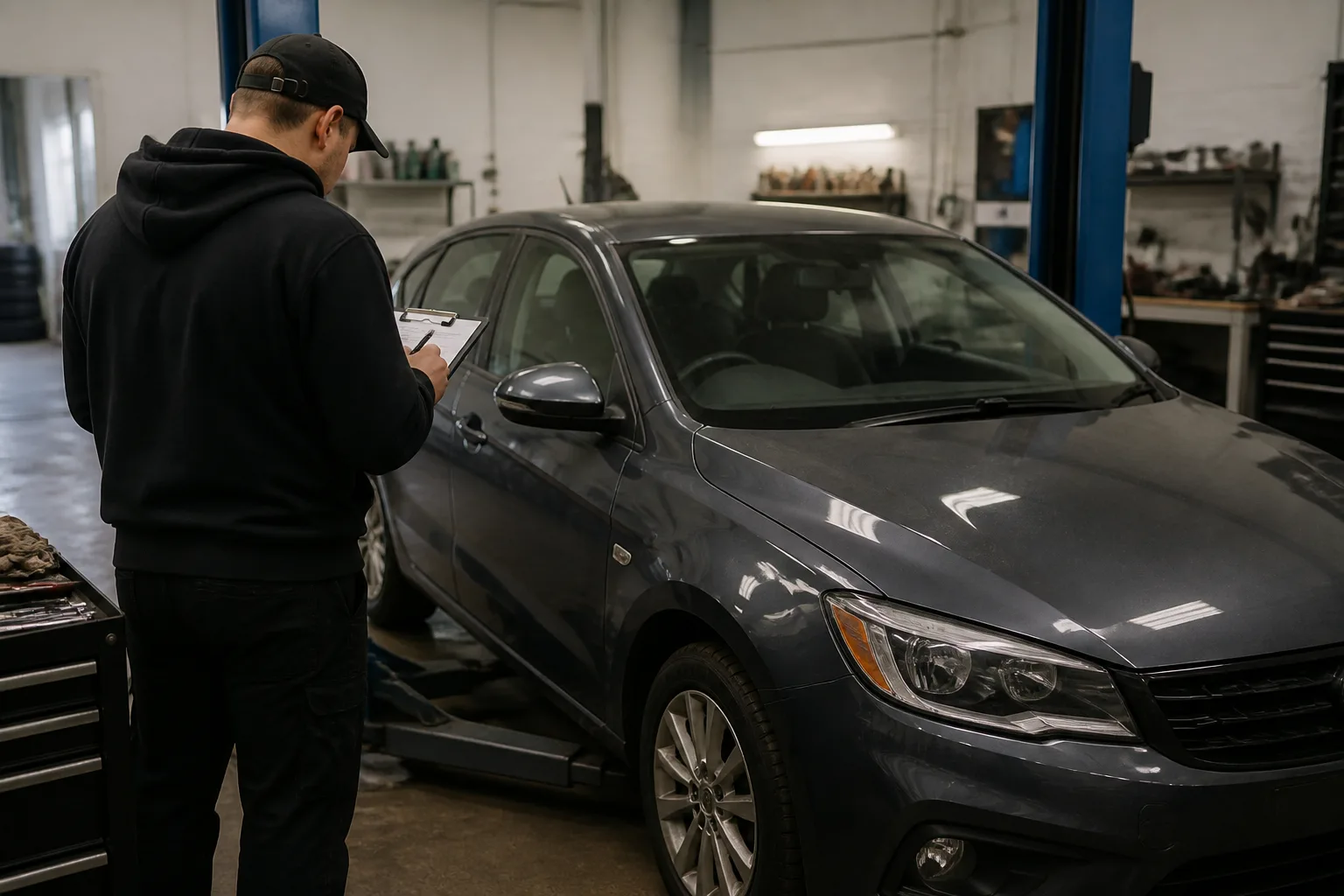
A strange noise is often the first sign that something on a car needs checking. However, describing it as simply “a funny sound” gives a mechanic very little to work with. The useful details are when the noise happens, where it seems to come from, what makes it change and whether anything else feels different.
You do not need to identify the failed component yourself. In fact, guessing the diagnosis can sometimes distract from the symptoms. A clear description helps a garage reproduce the noise safely and decide which areas need inspecting first.
Start with when the noise happens
Think about the exact situation in which you hear the sound. Does it happen:
- When starting the engine, including from cold or after the car has been driven?
- At idle while the car is stationary?
- When accelerating, lifting off the accelerator or changing gear?
- When braking, steering or driving over bumps?
- At a particular road speed, regardless of engine speed?
- Only in reverse, on hills or during tight turns?
This distinction matters because a noise linked to engine speed may have a different set of possible causes from one linked to road speed. Similarly, a sound that changes when the steering wheel is turned is useful information, even if the noise appears to come from elsewhere.
Describe the sound in ordinary words
Try comparing the noise with a familiar sound rather than searching for a technical term. You might describe it as a squeal, scrape, click, knock, hum, rumble, rattle, whine, hiss or clunk. Explain whether it is high-pitched or low-pitched, sharp or dull, regular or intermittent.
Also note whether the sound is:
- A single knock or a repeated noise
- Constant while the trigger is present or only occasional
- Getting louder, faster or more frequent
- Present immediately or appearing after the car has warmed up
- Audible inside the cabin, outside the car or both
It can help to write down the description in your own words before contacting the garage. There is no need to make it sound technical. “A metallic scraping from the front left when braking gently” is more useful than trying to name a part when you are not certain.
Say where you think it is coming from
Give the most specific location you can, but make clear that it is only your impression. For example, you may hear it from the front, rear, one side, underneath the car or from the engine bay. Sounds can travel through the body and suspension, so the apparent location is not always the actual source.
It is also worth saying whether the noise changes when the car is loaded, when passengers are present or when the boot is full. Loose items in a door pocket, boot or under a seat can create rattles, but do not assume that an interior noise is harmless without checking the wider symptoms.
Explain what makes it change
A mechanic will usually want to know what happens when the driving conditions change. Note whether the sound responds to:
- Increasing or reducing engine speed
- Increasing road speed
- Braking pressure
- Steering left or right
- Going over a bump or uneven surface
- Using the clutch, accelerator, heater, air conditioning or other controls
For safety, do not deliberately recreate a worrying noise by driving aggressively, repeatedly braking hard or continuing to drive when the car feels unstable. If a brief, normal-speed observation is not enough, leave reproduction of the symptom to a professional.
Include any other changes
A noise is more useful to a garage when it is considered alongside other symptoms. Mention warning lights, vibrations, pulling to one side, changes in steering feel, reduced braking performance, fluid leaks, burning smells, smoke, loss of power or changes in temperature.
Tell the mechanic if any work was carried out recently, including a service, tyre change, brake work, exhaust repair or bodywork. Also mention whether the noise started after hitting a pothole, kerb or other object. The timing may be relevant, but it does not prove that a particular component is at fault.
If the vehicle has recently passed an MOT, that does not rule out a new fault. An MOT is a test of certain safety and environmental items at the time of the test, rather than a guarantee that every part of the vehicle is free from wear or future problems.
Use a short, structured report
When contacting a garage, you can organise the information in this order:
- The noise: “It sounds like a rhythmic humming.”
- The location: “I notice it near the front of the car, although I am not certain.”
- The trigger: “It appears above a certain road speed and is not obviously linked to engine revs.”
- What changes it: “It becomes quieter when I lift off the accelerator, but does not disappear.”
- Other symptoms: “There is no warning light, but I have noticed a vibration through the floor.”
- When it began: “It started recently and seems more noticeable than it was at first.”
Include the vehicle registration, make, model, engine type if known and approximate mileage when booking or making an enquiry. This helps the garage understand which vehicle is involved, while the symptom description helps them plan the inspection.
When a car noise may be unsafe
Some noises should not be treated as a minor irritation. Stop somewhere safe and seek professional advice before continuing if the noise is accompanied by weak or abnormal braking, a steering change, severe vibration, a loose or damaged tyre, overheating, smoke, a strong burning smell or a loud change from the wheel, suspension or exhaust area.
A sharp grinding sound during braking, a heavy knock from the steering or suspension, or a noise followed by a warning light could indicate a problem that affects roadworthiness. It is not possible to confirm the cause remotely, and carrying on may increase the risk or damage.
If the car is making an unfamiliar noise but still appears to drive normally, avoid unnecessary journeys and arrange an inspection rather than ignoring a sound that is getting worse. You can read more about when to book a garage diagnostic if you are unsure whether the symptom needs diagnostic testing.
What happens after you report the noise?
A mechanic may ask follow-up questions, inspect the vehicle and, where appropriate, carry out a controlled road test. They may not be able to confirm the cause from the description alone. A noise can require checking several related systems before the source is established.
If the sound cannot be reproduced, a recording made from a safe, stationary position may help. Do not hold a phone while driving or ask somebody else to record from an unsafe position. A note of the time, road conditions, vehicle speed and controls being used can be just as useful as audio.
It is also sensible to explain what you would like from the visit. You might ask the garage to investigate the noise and contact you with their findings before any chargeable repair work is undertaken. For related guidance, see what information to give a mechanic when reporting a fault.
A well-described symptom does not replace an inspection, but it gives the mechanic a clearer starting point. If your car is making a noise you cannot explain, contact Ashton's Garage with the details you have noted. The team can advise on the next sensible step and inspect the vehicle where appropriate, without expecting you to diagnose it yourself.
Frequently asked questions
Should I record a strange car noise for the mechanic?
A recording can help if the noise is intermittent, but only make one while the vehicle is safely stationary or have a passenger record from a safe position. A written note covering speed, road surface and what controls were being used can also be useful.
Can a mechanic diagnose a car noise from a description alone?
Usually not with certainty. A description helps narrow the inspection, but the vehicle may need a visual check, mechanical assessment or controlled road test before the cause can be confirmed.
Is a squealing or grinding noise always caused by the brakes?
No. Brakes are one possibility, but other components can produce similar sounds. If the noise occurs during braking or comes with reduced braking performance, arrange a professional inspection and avoid driving if the car feels unsafe.
What should I do if the noise disappears before my appointment?
Keep the appointment if the noise was persistent, worsening or linked to another symptom. Tell the mechanic what happened, when it stopped and under which conditions it had been occurring. Intermittent faults can still need investigation.
Related advice
What to Do If Your Car Breaks Down Away From Home
Find out what to do if your car breaks down away from home, including how to stay safe, call for help and explain the problem to a recovery service or garage.
Car Maintenance for Rural Driving: A Practical Guide
Rural roads can place extra demands on your car. Learn which checks matter most, how to spot developing problems and when professional inspection is sensible.
What Happens During a Garage Inspection?
A garage inspection is more than a quick look under the bonnet. Here is what a mechanic may check, how findings are assessed and what you can expect from the process.