What to Ask Before Approving a Car Repair
Before approving a car repair, make sure you understand the fault, the proposed work, the likely cost and what happens if further problems are found. These practical questions can help you make a confident decision.
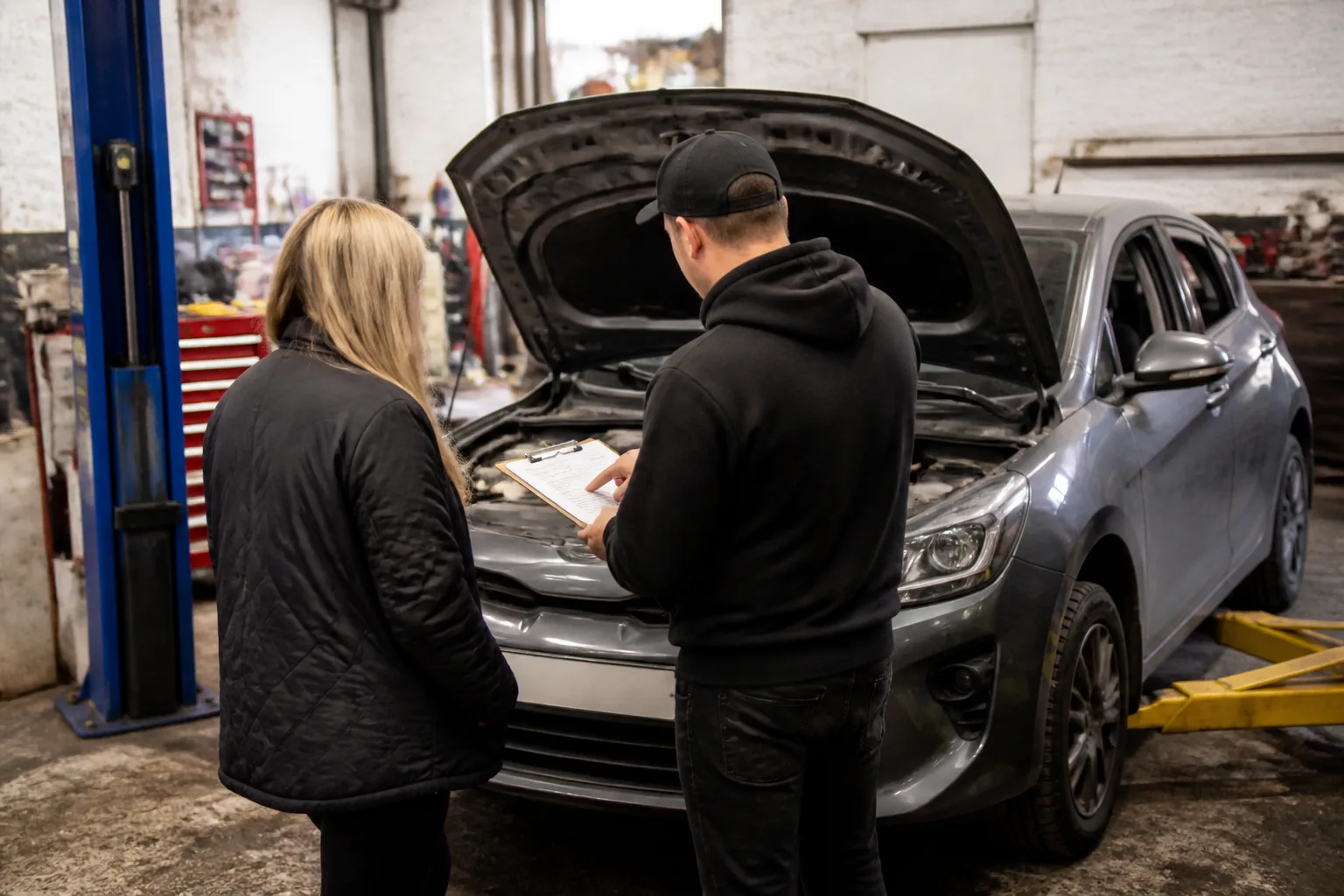
When a garage identifies a fault with your car, it is reasonable to want clear information before approving the repair. You do not need to understand every mechanical detail, but you should know what has been found, what needs doing and how the work is expected to solve the problem.
That is particularly important when the repair has not been planned, or when an initial inspection has revealed a more complicated issue. Asking a few straightforward questions can prevent misunderstandings and help you compare the options sensibly.
Ask what fault has actually been found
Start by asking the garage to explain the problem in plain English. A warning light, unusual noise or failed component may have several possible causes, so the first explanation should distinguish between a confirmed fault and a likely cause.
Useful questions include:
- What component or system has been checked?
- What evidence shows that this part is faulty?
- Has the fault been confirmed, or is this the most likely explanation so far?
- Are there any other possible causes?
For example, a battery warning light does not automatically mean that the battery itself needs replacing. The charging system, wiring or alternator may also need checking. Similarly, a noise from one area of a vehicle does not always identify the failed part by itself.
A trustworthy explanation may include test results, inspection findings or a description of how the symptom relates to the proposed repair. If you are not sure what a term means, ask. A good garage should be able to explain it without making you feel uncomfortable for asking.
Ask what repair is being recommended and why
Once the fault has been explained, ask exactly what work is being proposed. This should cover the parts being replaced or repaired and any associated work that is needed to complete the job properly.
It is also worth asking what may happen if the repair is not carried out. Some faults affect convenience or comfort, while others can affect braking, steering, visibility, engine temperature or the car’s ability to remain roadworthy. Understanding the difference helps you make a properly informed decision.
Do not be afraid to ask whether the repair is:
- Essential for safe or reliable use of the car.
- Advisable because it may prevent further damage.
- Related to an MOT requirement.
- Optional maintenance or a comfort-related improvement.
These categories should not be used to pressure you. They are a practical way to understand the order in which work may need to be considered.
Ask whether the car is safe to drive
If the vehicle has a fault, ask directly whether it is safe to drive before the repair. This is especially important if the problem involves brakes, steering, tyres, suspension, overheating, fuel leaks, significant warning lights or possible structural damage.
If the garage cannot confirm that continued driving is safe, follow its advice. A car that pulls sharply, has poor braking performance, loses coolant, shows signs of overheating or has damaged tyres may need to be stopped and inspected rather than driven home. If a problem develops while you are on the road, move to a safe place when possible and seek appropriate assistance.
Remote advice cannot establish the condition of a particular vehicle. The seriousness of a symptom depends on the car, the fault and what an inspection finds.
Ask for a clear estimate
Before approving work, ask for an estimate or written breakdown of the expected cost. It should be clear whether the figure includes parts, labour, diagnostic time, consumables and any applicable VAT.
You can ask:
- What is the estimated total?
- Which parts and labour are included?
- Is any further diagnostic work likely to be needed?
- Will you contact me before carrying out additional work?
An estimate is not always the same as a fixed price. Some faults cannot be fully assessed until a component has been removed or a hidden area has been inspected. If that applies, the garage should explain the uncertainty and agree how additional costs will be handled.
A sensible arrangement is to set an approval limit. This means the garage can complete agreed work up to a specified amount but must contact you before exceeding it. Make sure you understand whether the limit includes VAT and any inspection or diagnostic charges.
Ask about parts and the proposed repair method
There may be more than one suitable type of replacement part. Depending on the vehicle and repair, a garage may discuss original equipment, aftermarket or remanufactured parts. These terms can mean different things, so ask what is being offered and whether it is appropriate for your car.
You can also ask whether the repair includes related items that should be replaced at the same time. For instance, some jobs involve seals, fixings or fluids that are not the main component but are necessary for a proper repair. This is not a reason to approve extra work automatically. It is a reason to understand what each item is for.
Ask whether the garage expects the repair to resolve the reported symptom and whether any follow-up checks will be carried out. No repair can guarantee that a separate fault will not appear later, but the proposed outcome should be explained clearly.
Ask what happens if more work is needed
Sometimes an inspection reveals additional faults, or the first repair shows that another part of the system also needs attention. Before work starts, ask how the garage will deal with that situation.
Questions to consider include:
- Will you be contacted before additional work is carried out?
- Can the vehicle be left safely while you decide?
- Will any inspection charge still apply if you do not proceed?
- What information will be provided if the original repair does not resolve the symptom?
This is also a good time to ask whether the vehicle may need a road test after the repair. A road test should be carried out safely and only when appropriate for the vehicle’s condition.
If you want more detail about the type of information that helps a technician investigate a problem, our guide on what to tell a mechanic when reporting a fault may be useful. If the issue is an unusual sound, you can also read how to describe a strange car noise to a mechanic.
Ask about timing without assuming a quick fix
Ask how long the repair is expected to take and whether the estimate depends on parts availability or further diagnosis. A simple replacement and a fault requiring testing, seized components or additional dismantling may have very different time requirements.
It is reasonable to ask when the garage expects to start work and when it is likely to be completed. Bear in mind that an honest answer may be a range rather than an exact time, particularly when the underlying fault has not been fully confirmed.
Ask what checks are carried out after the repair
Find out what the garage will check once the work is complete. Depending on the job, this could include clearing and retesting a fault code, checking fluid levels, confirming that a warning light has gone out or carrying out a suitable road test.
Ask whether any old parts will be available for you to see and whether there is any advice for monitoring the vehicle afterwards. If a warning light returns or the original symptom remains, contact the garage promptly and explain what has happened. Continuing to drive may not be appropriate if the issue involves a safety-critical system.
Keep a record of what you approved
Before the work begins, make a note of the agreed repair, estimated cost, approval limit and any important advice about driving the car. Written communication can be useful, particularly when a fault develops over more than one visit.
For a general explanation of how a garage inspection may be carried out, see what happens during a garage inspection. If you are unsure whether testing is the right next step, our guide to when to book a garage diagnostic covers some common situations.
Making a confident decision
You do not have to approve a repair simply because a component has been mentioned. You should have enough information to understand the fault, the purpose of the proposed work, the likely cost and the risks of delaying it.
At Ashton’s Garage, we aim to explain inspection findings and repair options in straightforward terms, including where further checks are needed before a firm conclusion can be reached. If you would like to discuss a repair recommendation or arrange an inspection, you can contact Ashton’s Garage with the vehicle details and the symptoms you have noticed.
Frequently asked questions
Should I approve a car repair if the fault has not been fully confirmed?
Ask what has been tested, what evidence supports the recommendation and whether other causes are possible. Some repairs can be proposed with reasonable confidence, while others need further diagnosis before a part is replaced.
What should a car repair estimate include?
Ask whether the estimate includes parts, labour, diagnostic time, consumables and VAT. You should also clarify whether it is a fixed price or an estimate that may change if further faults are found.
Can I ask a garage to contact me before doing extra work?
Yes. You can agree that the garage must contact you before exceeding a stated approval limit or carrying out work that was not originally authorised.
What if my car has a brake or steering problem?
Ask whether it is safe to drive. If braking or steering performance is affected, or the garage cannot confirm that continued driving is safe, stop using the vehicle and arrange professional assistance or inspection.
What should I ask after the repair is completed?
Ask what checks were carried out, whether the original symptom has been confirmed as resolved and whether there is anything you should monitor. Report a returning warning light or symptom promptly.
Related advice
What to Do If Your Car Breaks Down Away From Home
Find out what to do if your car breaks down away from home, including how to stay safe, call for help and explain the problem to a recovery service or garage.
Car Maintenance for Rural Driving: A Practical Guide
Rural roads can place extra demands on your car. Learn which checks matter most, how to spot developing problems and when professional inspection is sensible.
What Happens During a Garage Inspection?
A garage inspection is more than a quick look under the bonnet. Here is what a mechanic may check, how findings are assessed and what you can expect from the process.