What Causes Steering Wheel Vibration?
Steering wheel vibration can come from wheel balance, tyres, brakes, steering or suspension. Learn what different patterns may mean and when your car should be inspected.
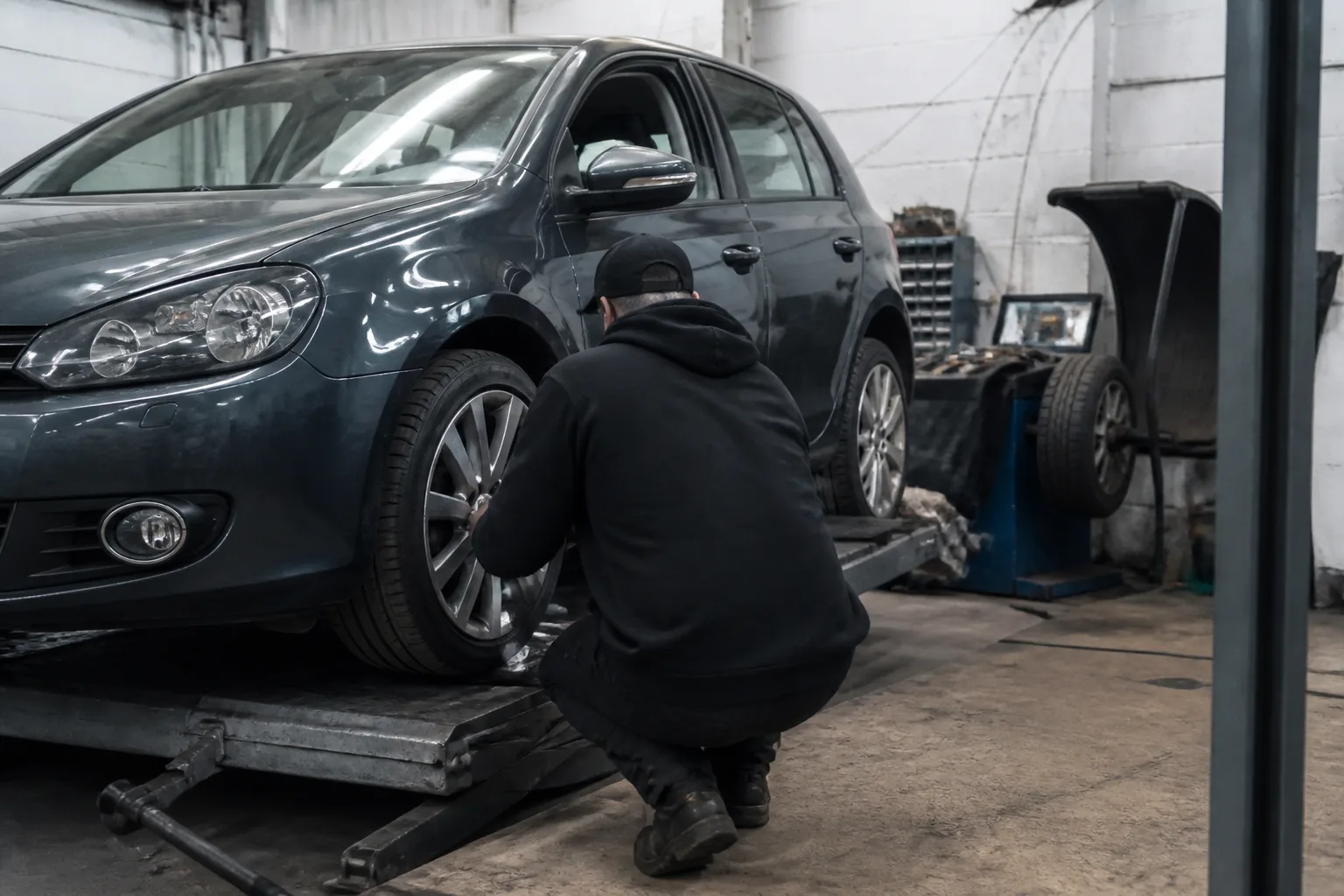
Steering wheel vibration is a sign that something in the wheel, tyre, braking, steering or suspension system may not be working as it should. Sometimes the cause is relatively simple, such as a wheel that has lost a balancing weight. In other cases, vibration can point to a damaged tyre, worn steering component or brake problem that should not be ignored.
The pattern of the vibration can provide a useful clue, but it cannot confirm the fault without inspecting the vehicle. If the steering feels loose, the car pulls to one side, a tyre appears damaged, or the vibration is severe or suddenly worse, reduce your speed and arrange professional help. Continuing to drive may be unsafe if the problem affects steering control, braking or the condition of a tyre.
Common causes of steering wheel vibration
Wheel imbalance
Wheels and tyres are balanced by fitting small weights so they rotate smoothly. If a balancing weight comes off, or the balance changes after a tyre is repaired or replaced, you may feel a rhythmic vibration through the steering wheel. This is often more noticeable at certain road speeds and may become less obvious when you slow down, although that does not mean the issue has gone away.
A wheel that has picked up mud, stones or other debris around its inner surface can also rotate unevenly. A garage can check the wheel and tyre assembly and confirm whether balancing is required.
Tyre damage, wear or pressure problems
Tyres are one of the first things to consider because they are the only part of the car in contact with the road. Uneven wear, a bulge, a flat spot, a damaged sidewall or a tyre that is not seated correctly on the wheel can all contribute to vibration.
Check the tyre pressures against the vehicle manufacturer's recommended figures, usually found in the handbook, on a door-frame label or inside the fuel flap. Pressure alone is unlikely to explain every vibration, but incorrect pressures can affect handling and may make an existing issue more noticeable. Look for cuts, bulges, exposed cords or unusual wear. Do not continue driving on a tyre that appears damaged.
Wheel damage or a bent rim
Hitting a pothole, kerb or other road hazard can bend a wheel or damage the tyre. The damage may not always be obvious when viewed from the outside. A distorted wheel can cause vibration, a slow loss of pressure or difficulty balancing the assembly.
UK roads can be harsh on wheels and tyres, particularly where potholes are present. If the vibration began after an impact, have the affected wheel and tyre checked rather than assuming it only needs balancing.
Brake-related vibration
If the steering wheel shakes mainly when you apply the brakes, the braking system should be investigated. A brake disc that is not running true, uneven friction between the pads and disc, or a sticking brake calliper can cause vibration during braking. The exact cause cannot be identified reliably from the steering wheel sensation alone.
Brake vibration may occur alongside pulling to one side, unusual noises, a burning smell or a brake pedal that feels different. These symptoms warrant prompt attention. Our guide to why the steering wheel shakes when braking explains the pattern in more detail. You may also find our advice on signs your brake pads need replacing useful if there are other braking symptoms.
Wheel alignment
Incorrect wheel alignment can follow an impact or develop alongside uneven tyre wear. Alignment refers to the angles at which the wheels meet the road. If those angles are outside the manufacturer's intended range, the car may pull to one side, the steering wheel may sit off-centre, and the tyres may wear unevenly.
Alignment problems do not always create a vibration by themselves. However, they can contribute to handling concerns and may be found at the same time as tyre or suspension faults.
Worn steering or suspension components
Components such as track rod ends, ball joints, suspension bushes and wheel bearings help keep the wheel in the correct position and allow it to move in a controlled way. Wear or damage in these areas can produce vibration, knocking, wandering or a less precise steering feel.
These are safety-related parts and are not suitable for a remote diagnosis or casual adjustment. If the steering feels vague, the vehicle wanders, or you hear a repeated knock over bumps, arrange an inspection. A mechanic will need to assess the relevant components with the vehicle safely supported and examine how the wheel and suspension behave.
When does steering wheel vibration happen?
When you notice the vibration can help a technician narrow down the possibilities:
- At a particular road speed: wheel balance, tyre condition or wheel damage may be involved.
- Only while braking: the brake discs, pads, callipers or related components need checking.
- When accelerating: a drive shaft, constant velocity joint or engine mounting issue may be possible, particularly if there is also a clicking or knocking noise.
- Over bumps: steering or suspension wear may be contributing.
- At all speeds, or with a loose steering feel: stop driving if control feels affected and seek professional advice.
These patterns are clues rather than diagnoses. Several faults can feel similar from the driver's seat, and one problem can sometimes cause another, such as a damaged tyre following an impact.
What should you check safely?
Before arranging an inspection, you can make a few basic observations without removing any parts. Check the tyre pressures when the tyres are cold, look for visible damage, and note whether the vibration happens while braking, accelerating, turning or travelling at a particular speed. Check whether the steering wheel is centred when the car is travelling straight on a suitable, safe road.
Do not jack up the vehicle, remove wheels or work on the brakes or steering unless you have the correct equipment, knowledge and safe working arrangements. A visual check cannot rule out hidden damage. If you are unsure whether a tyre or steering component is safe, it is better not to drive the car.
How a garage investigates the problem
A professional inspection normally starts by discussing when the vibration occurs and whether it followed a pothole strike, kerb impact, tyre change or braking problem. The technician can then assess the tyres and wheels, check for visible damage and uneven wear, and examine balance and alignment where appropriate.
The braking system, wheel bearings, steering joints and suspension components may also need checking. The appropriate inspection depends on the symptoms. This avoids replacing parts based only on a general description of vibration and helps identify whether the issue is connected to the wheels, tyres, brakes or another part of the vehicle.
If your steering wheel is vibrating and you are not confident about the cause, Ashton's Garage can inspect the vehicle and explain the sensible next step. If the vibration is severe, follows an impact, or comes with a damaged tyre, poor braking or loose steering, do not continue driving until its safety has been assessed.
Related advice
For further guidance, see how long brake pads last and why a car may pull to one side when braking. These symptoms can overlap with steering wheel vibration, but each still needs to be assessed in context.
Frequently asked questions
Can low tyre pressure cause steering wheel vibration?
Low tyre pressure can affect handling and may make an existing vibration more noticeable, but it is not the only possible cause. Check the pressures against the vehicle manufacturer's figures and inspect the tyres for damage. Do not drive on a tyre with a bulge, cut or other serious defect.
Why does my steering wheel vibrate only when braking?
Vibration that appears during braking may be linked to the brake discs, pads, callipers or another braking component. It should be inspected, particularly if the car pulls to one side, the pedal feels unusual or braking performance has changed.
Is it safe to drive with a vibrating steering wheel?
It depends on the cause and severity, which cannot be confirmed remotely. A mild, recently noticed vibration still deserves an inspection. Stop driving and seek professional advice if the vibration is severe or sudden, or if there is loose steering, poor braking, tyre damage, a strong pull or unusual noise.
Can wheel alignment cause steering wheel vibration?
Incorrect alignment is more commonly associated with pulling, an off-centre steering wheel or uneven tyre wear. It can occur alongside wheel, tyre or suspension problems that do cause vibration, so the complete wheel and steering system may need checking.
Related advice
When Does Wheel Alignment Need Checking?
Wheel alignment may need checking after a pothole impact, kerb strike, suspension work or unusual tyre wear. Learn the warning signs and when professional inspection is sensible.
Why Does My Car Pull to One Side While Driving?
If your car drifts or pulls to one side, the cause could be as simple as tyre pressure or as serious as a brake, steering or suspension fault. Here is what to check and when to seek professional help.
Why Does the Steering Wheel Shake When Braking?
A steering wheel that shakes under braking can have several causes, from uneven brake discs to worn suspension or tyre problems. Here is what the symptom may mean and when to stop driving.