What Causes Brake Judder?
Brake judder can cause a pulsing brake pedal, steering wheel vibration or shaking through the car. Learn the likely causes, what the symptoms mean and when professional inspection is needed.
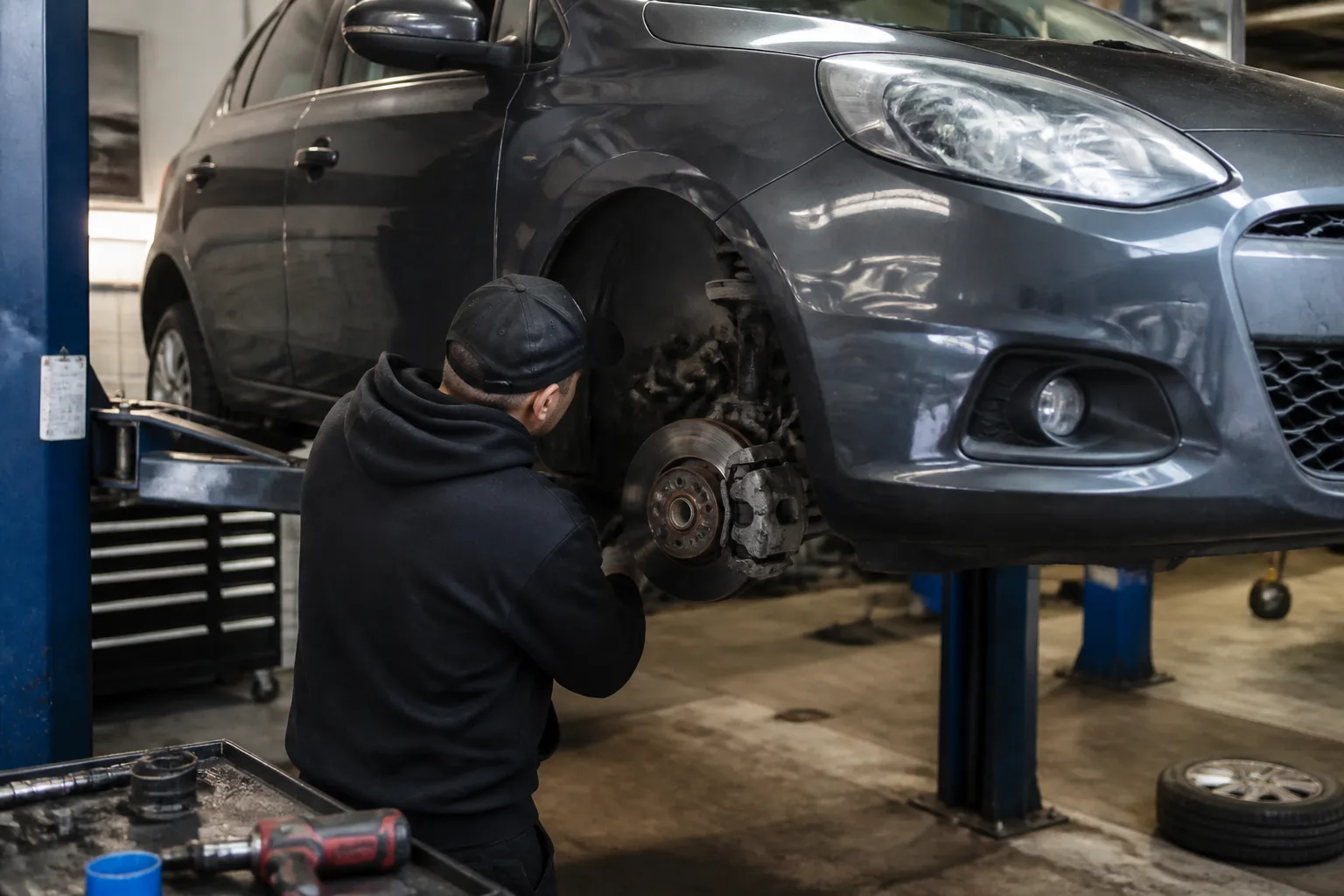
Brake judder is the name commonly given to a pulsing, shaking or vibrating sensation when you apply the brakes. You may feel it through the brake pedal, steering wheel, body of the car or, in some cases, all three. It can be more noticeable when braking from higher speeds, although it may also appear during ordinary town driving.
There is no single cause of brake judder. The braking system, wheel hub, suspension and steering components all work together, so a vibration under braking needs to be assessed rather than automatically blamed on one worn part. A garage can inspect the system and identify whether the issue is related to the discs, pads, calipers, wheel fitment or another component.
What does brake judder feel like?
The symptoms can vary depending on where the underlying problem is located. Common signs include:
- A brake pedal that pulses up and down under steady pressure
- A steering wheel that shakes or trembles when braking
- Vibration through the seat or floor of the vehicle
- Judder that becomes more obvious from faster speeds
- Uneven braking or a feeling that the brakes are not operating smoothly
A brief pulsing through the brake pedal when the anti-lock braking system, or ABS, activates during hard braking is different. ABS deliberately releases and reapplies brake pressure to help prevent the wheels locking. That sensation should stop once the system is no longer operating. If the pedal pulses during normal, gentle braking, it should be checked.
Common causes of brake judder
Disc thickness variation or uneven disc surfaces
Brake discs, sometimes called rotors, should provide a consistent surface for the brake pads to clamp against. If the disc thickness varies around its circumference, the pads can be pushed back slightly as the disc rotates. This may create a repeating change in brake pressure, which the driver feels as pedal pulsation or vibration.
People often describe this as warped brake discs. In practice, the problem may involve genuine distortion, uneven wear, run-out or variation in disc thickness. The important point is that the braking surface is no longer working evenly. A visual inspection alone may not be enough to confirm the cause.
Uneven pad material deposited on the disc
Brake pads operate at high temperatures. Under certain conditions, material from the pad can transfer unevenly to the disc surface. This can happen after repeated heavy braking, prolonged braking on steep roads or when the brakes have become excessively hot. The uneven areas can alter the friction between the pad and disc and produce judder.
This is one reason why judder does not always mean that the disc is visibly bent. The braking surfaces may look reasonably normal while still producing an inconsistent braking effect.
Worn or contaminated brake pads
Brake pads wear over time and can develop uneven contact with the disc. Contamination from grease or another substance can also affect friction, although the source needs to be found rather than simply cleaned away. Pads that are badly worn, damaged or wearing at an angle should not be ignored.
For background on normal pad wear, see our guide to how long brake pads last and the common signs that brake pads need replacing.
A sticking brake caliper
The caliper holds the brake pads and applies them to the disc. If a caliper piston or sliding mechanism is sticking, one pad may remain in contact with the disc when it should release. This can cause uneven wear, excess heat and a vibration that becomes worse as the brakes warm up.
A sticking caliper may also cause the car to pull to one side, a hot wheel, a burning smell or unusual wear on one side of an axle. These symptoms can affect braking performance and should be professionally inspected. Do not continue driving if a wheel is becoming very hot, smoke is present or the car is difficult to control.
Wheel hub corrosion or run-out
The brake disc sits against the wheel hub. Rust, dirt or corrosion between the mating surfaces can prevent the disc from sitting squarely. This can create run-out, meaning the disc moves slightly from side to side as it rotates. A damaged hub or incorrect wheel fitting can produce a similar result.
This is not usually something a driver can confirm safely at the roadside. It requires the wheel and brake assembly to be inspected, with the relevant components checked for correct fitment and movement.
Suspension or steering wear
Brake judder can sometimes be made worse by worn suspension or steering components. Excessive movement in a bush, ball joint, track rod end or another part may allow the wheel to move when braking. The result can feel similar to a brake problem, particularly as weight transfers towards the front of the car.
If the steering wheel shakes specifically while braking, the cause may still be within the front braking system, but it should not be assumed. If the car also pulls, knocks, feels loose or changes direction unexpectedly, arrange an inspection promptly. Our guide to why the steering wheel shakes when braking explains this symptom in more detail.
Can wheel balancing cause brake judder?
A wheel imbalance usually causes vibration at particular road speeds, whether or not you are braking. It may be felt through the steering wheel or body of the car and can sometimes be mistaken for brake judder. If the vibration is only present, or is clearly much worse, when the brake pedal is pressed, the braking system becomes more likely as the source.
There can be overlap between faults, so a proper inspection should consider the wheels, tyres, brakes, suspension and steering rather than relying on the timing of the symptom alone.
Is it safe to drive with brake judder?
Brake judder should not be ignored because braking is a safety-critical function. A mild vibration may be caused by a developing fault, but it is not possible to judge the condition of the braking system reliably from the sensation alone.
Stop driving and seek professional advice if the car pulls sharply, the brake pedal feels soft, braking performance has reduced, a wheel becomes unusually hot, there is smoke or a burning smell, warning lights appear, or the vibration is severe. If the vehicle remains controllable and the braking response feels normal, drive only as necessary and arrange an inspection as soon as practical. If you are unsure, recovery is safer than continuing on the road.
How a garage checks brake judder
An inspection may include checking the condition and wear of the pads and discs, looking for heat damage, measuring disc run-out or thickness variation, and checking that the calipers operate and release correctly. The wheel hub faces, wheel fitment, tyres, suspension and steering components may also need attention.
It is important to identify the cause rather than replacing parts without checking why the judder developed. For example, replacing discs and pads may not resolve the problem if a sticking caliper, contaminated hub face or worn suspension component is left untreated.
If your car is juddering under braking, Ashton's Garage can inspect the braking system and advise on the appropriate repair. You can also read about why a car may pull to one side when braking, as this can sometimes occur alongside uneven braking problems.
Key points to remember
- Brake judder can be felt through the pedal, steering wheel or vehicle body.
- Likely causes include uneven disc surfaces, pad deposits, sticking calipers, hub run-out and worn suspension or steering parts.
- ABS pulsing during an emergency stop is different from judder during ordinary braking.
- Severe vibration, pulling, reduced braking, overheating or smoke means you should stop and seek professional help.
- A garage inspection is the safest way to establish the cause before parts are replaced.
Frequently asked questions
Why does my brake pedal pulse when I slow down?
A pulsing brake pedal during normal braking can be linked to disc thickness variation, uneven pad material on the disc, hub run-out or another fault in the braking system. ABS pulsing during an emergency stop is different. A garage inspection is needed to identify the cause.
Can worn brake pads cause judder?
Yes. Pads that are worn unevenly, damaged or contaminated can make braking inconsistent and may contribute to vibration. The condition of the discs and caliper should also be checked rather than replacing pads in isolation.
Why does my car shake only when braking from high speed?
Judder that is more noticeable from higher speeds can be associated with uneven disc surfaces or run-out, although wheel, tyre, suspension and steering faults can feel similar. The symptom should be assessed rather than diagnosed remotely.
Can I drive with brake judder?
It depends on the severity and any accompanying symptoms, but brake judder should be inspected promptly. Stop driving if braking is reduced, the car pulls sharply, the pedal feels soft, a wheel is very hot, smoke or a burning smell is present, or the vibration is severe.
Related advice
When Does Wheel Alignment Need Checking?
Wheel alignment may need checking after a pothole impact, kerb strike, suspension work or unusual tyre wear. Learn the warning signs and when professional inspection is sensible.
Why Does My Car Pull to One Side While Driving?
If your car drifts or pulls to one side, the cause could be as simple as tyre pressure or as serious as a brake, steering or suspension fault. Here is what to check and when to seek professional help.
Why Does the Steering Wheel Shake When Braking?
A steering wheel that shakes under braking can have several causes, from uneven brake discs to worn suspension or tyre problems. Here is what the symptom may mean and when to stop driving.