What Causes a Knocking Noise Over Bumps?
A knocking noise over bumps can come from worn suspension parts, loose trim or something moving in the boot. Here are the common causes, what to check safely and when to arrange a professional inspection.
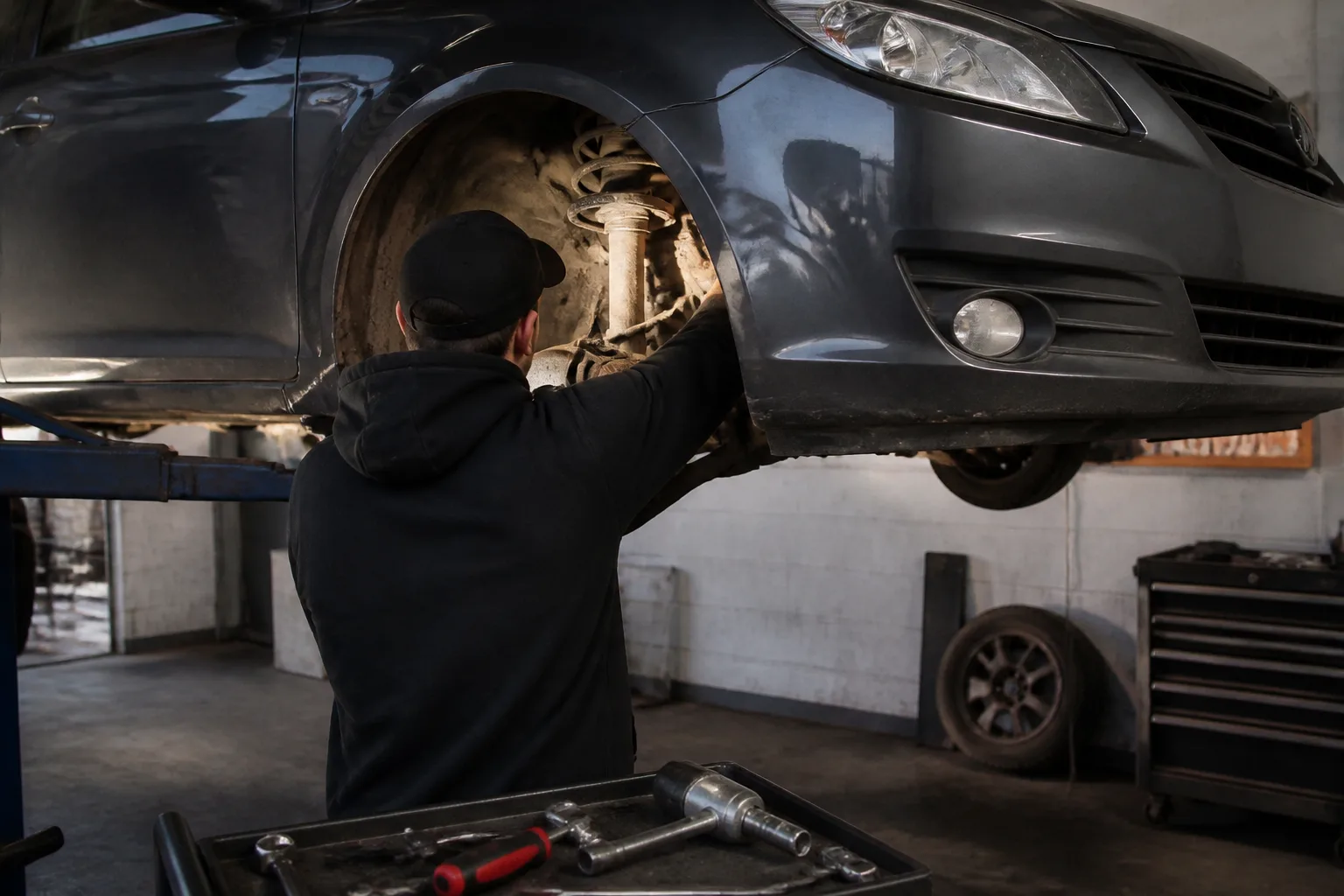
A knocking noise over bumps is usually a sign that something is moving when it should be held firmly in place. The sound may come from the suspension, steering, brakes, exhaust or even a loose item inside the vehicle. It is not possible to identify the exact cause from the noise alone, but the timing and location of the knock can provide useful clues.
Some causes are relatively minor, such as equipment moving in the boot. Others involve components that help control the car, including ball joints, suspension bushes or shock absorber mountings. If the noise is getting worse, is accompanied by a change in steering or handling, or appears alongside a warning light, arrange a professional inspection rather than assuming it will settle down.
Common causes of a knocking noise over bumps
Worn anti-roll bar drop links or bushes
Anti-roll bar drop links connect the suspension to the anti-roll bar, which helps reduce body roll when the car corners. They contain joints that can wear and develop play. When this happens, a light or repetitive knocking sound may be heard over small bumps, potholes or uneven surfaces.
The rubber bushes that hold the anti-roll bar in position can also deteriorate. This may create a dull knock from the front or rear of the vehicle, depending on the suspension design. These parts are common sources of suspension noise, but the sound can be similar to several other faults, so an inspection is needed to confirm the cause.
Worn suspension bushes
Suspension bushes are flexible components that allow controlled movement between metal parts. They also help reduce noise and vibration. Over time, rubber can crack, soften or separate, allowing more movement than intended.
Worn wishbone or control-arm bushes can cause a knock over speed humps and rough roads. You may also notice vague steering, uneven tyre wear or the car feeling less settled under braking. These symptoms are not proof of a bush failure, but they make a suspension inspection more important.
Ball joints and steering components
Ball joints allow suspension and steering components to move as the wheels turn and travel up and down. If a ball joint or another steering joint develops excessive play, it may knock when the wheel drops into a pothole or crosses a bump.
Because these components affect how the vehicle steers, a suspected problem should not be ignored. If the car wanders, feels loose, pulls unexpectedly or the steering position has changed, avoid unnecessary driving and seek professional advice. A component that is significantly worn can become a roadworthiness and safety concern.
Shock absorbers or their mountings
Shock absorbers control the movement of the springs and help keep the tyres in contact with the road. A worn shock absorber may leak, but it can also become noisy internally or allow excessive suspension movement. The mounting at the top or bottom of the unit can also wear and create a knock.
Other possible signs include repeated bouncing after a bump, uneven tyre wear, a less controlled ride or fluid visible around a shock absorber. Do not rely on a bounce test alone to judge its condition. A garage can inspect the assembly and check whether other suspension parts are contributing to the noise.
Loose brake components
Brake pads are designed to move slightly within their carriers, but worn or missing retaining hardware can allow excessive movement. This may produce a light rattle or knock when travelling over uneven ground, sometimes disappearing when the brake pedal is lightly pressed.
A noise that changes when braking deserves attention, particularly if it comes with vibration, pulling, grinding or a change in pedal feel. For more information about brake wear, see our guides to signs your brake pads need replacing and how long brake pads last.
Loose exhaust, heat shield or underbody panel
Not every bump is caused by suspension. An exhaust bracket, heat shield, engine undertray or wheel-arch liner can become loose and tap against nearby metalwork. These noises are often more noticeable on rough roads and may sound as though they are coming from underneath the centre or rear of the vehicle.
Loose trim can sometimes be identified without tools, but do not crawl underneath a vehicle supported only by a jack and do not touch exhaust components while they are hot. A garage can raise the vehicle safely and check for movement, contact marks and damaged fixings.
Loose items inside the car
Before arranging repairs, remove loose items from the boot, door pockets and glovebox. Check that the spare wheel, tool kit and luggage compartment cover are secure. A loose jack or wheel brace can create a surprisingly convincing knock over speed humps.
This simple check is worthwhile, but it should not be used to dismiss a noise that continues when the car is empty. If the sound remains, note where it seems to come from and under what conditions it occurs.
What can the pattern of the noise tell you?
The pattern can help a technician reproduce the concern, although it cannot provide a definite diagnosis by itself.
- Small, repeated knocks over rough surfaces: these can be associated with drop links, bushes, loose brake hardware or a loose underbody component.
- A heavier knock over larger bumps: this may point towards movement in a suspension joint, mounting or another larger component.
- A knock when turning into a driveway: the change in body movement may reveal play in suspension or steering components.
- A noise that changes when braking: brake hardware, wheel movement or suspension components may need checking.
- A noise from the rear with luggage onboard: check the boot, spare wheel and tool kit before assuming a suspension fault.
Try to notice whether the knock comes from the front or rear, one side or both, and whether it occurs during braking, steering or acceleration as well as over bumps. Do not deliberately drive over potholes or speed humps at speed to reproduce it.
Can you keep driving with a knocking noise?
That depends on the cause and on any other symptoms. A loose boot item or heat shield may not affect vehicle control, while a worn steering or suspension joint could be more serious. Remote advice cannot establish the difference safely.
Stop driving and arrange professional assistance if the vehicle develops loose or heavy steering, pulls to one side, feels unstable, shows unusual tyre wear, makes a loud metal-on-metal noise or has a wheel that appears to sit incorrectly. The same applies if a warning light appears, braking performance changes or the noise follows an impact with a pothole or kerb.
If the car still feels normal and the noise is mild, arrange an inspection soon rather than waiting for the next service. A technician can check the suspension and steering for play, inspect brakes and underbody components, and road test the vehicle where appropriate.
How a garage investigates the noise
An inspection normally starts with questions about when the noise occurs, followed by a visual and physical check of accessible components. The vehicle may be road tested to reproduce the sound, then inspected safely on suitable equipment. This can include checking suspension joints and bushes, shock absorber mountings, brake hardware, wheel security and exhaust fixings.
It is useful to describe the conditions accurately rather than trying to name the failed part. Tell the technician whether the sound is a knock, click, rattle or clunk, and whether it is affected by steering or braking. If you have noticed a related handling change, mention that too.
Ashton's Garage can investigate suspension, steering, brake and underbody noises for motorists in Salisbury and the surrounding area. If the noise is persistent or accompanied by a handling concern, you can contact the garage about a vehicle repair inspection and explain what you have noticed.
Related brake and steering symptoms
A knocking noise is only one type of warning sign. If your vehicle also pulls to one side under braking, our guide to why a car pulls to one side when braking may help you understand the possible causes. Steering wheel vibration under braking is covered in why the steering wheel shakes when braking.
The main point is simple: a knock over bumps is a symptom, not a diagnosis. It may be harmless loose equipment, but it may also indicate wear in a component that affects handling. Safe basic checks are reasonable, but continuing to drive with changes in steering, braking or stability is not.
Frequently asked questions
Is a knocking noise over bumps always a suspension problem?
No. It can come from suspension or steering components, but loose brake hardware, an exhaust heat shield, an underbody panel or items in the boot can also knock over uneven roads.
Why does my car only knock over small bumps?
Small, repeated movements can make play in parts such as anti-roll bar links, bushes or brake hardware more noticeable. The exact cause still needs to be confirmed by inspection.
Can a worn suspension bush be dangerous?
It can become a safety concern if wear allows excessive movement or affects steering, braking, tyre contact or vehicle stability. Arrange an inspection if the car feels different as well as making a noise.
Should I drive to a garage with a knocking noise?
If the car has normal steering, braking and handling and the noise is mild, arrange an inspection promptly. Do not continue driving if it feels unstable, pulls, has loose steering, shows tyre damage or makes a heavy metal-on-metal noise.
Related advice
When Does Wheel Alignment Need Checking?
Wheel alignment may need checking after a pothole impact, kerb strike, suspension work or unusual tyre wear. Learn the warning signs and when professional inspection is sensible.
Why Does My Car Pull to One Side While Driving?
If your car drifts or pulls to one side, the cause could be as simple as tyre pressure or as serious as a brake, steering or suspension fault. Here is what to check and when to seek professional help.
Why Does the Steering Wheel Shake When Braking?
A steering wheel that shakes under braking can have several causes, from uneven brake discs to worn suspension or tyre problems. Here is what the symptom may mean and when to stop driving.