How Long Do Brake Discs Last?
Brake discs do not have a fixed replacement interval. Find out what affects their lifespan, which warning signs matter and when a professional inspection is sensible.
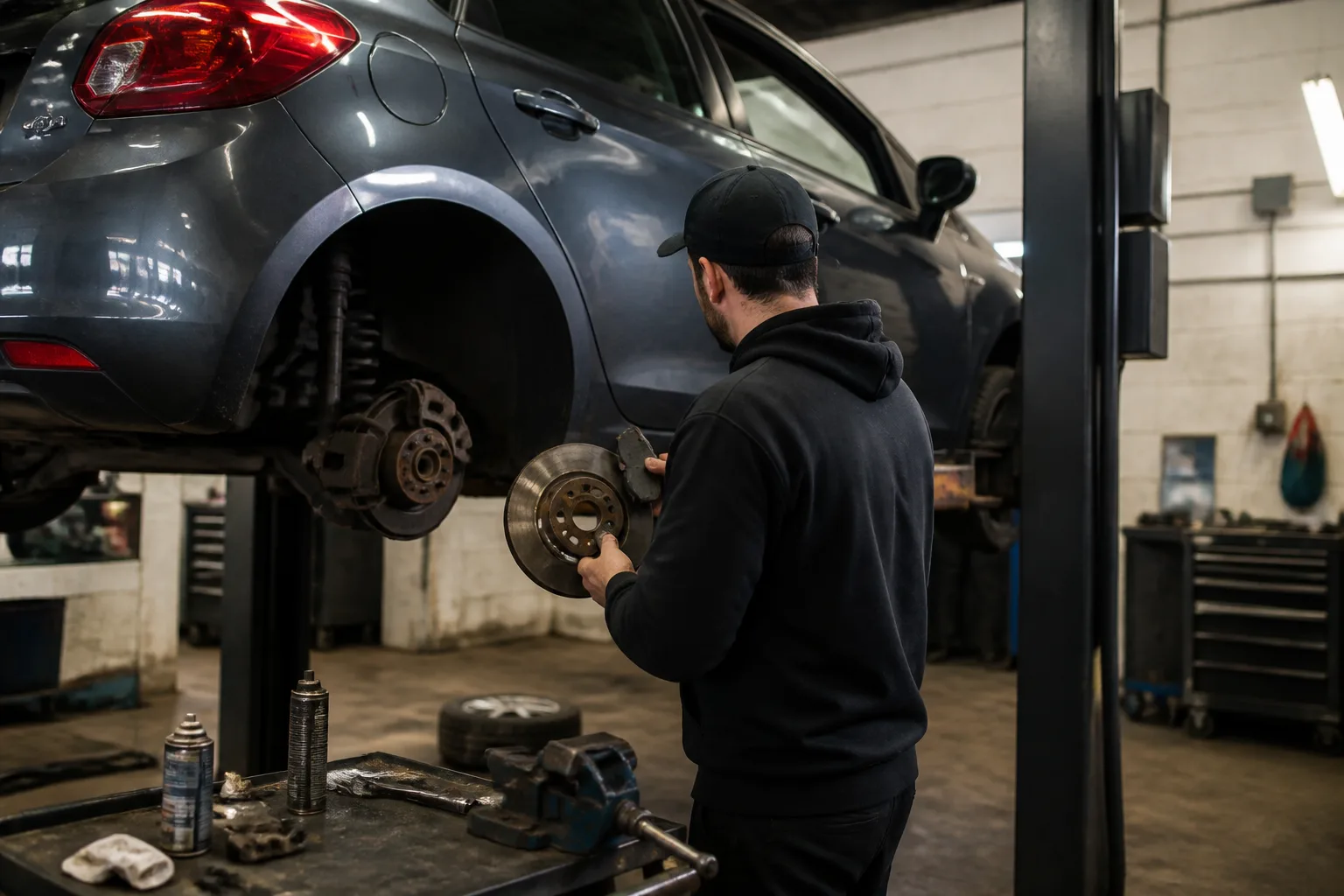
There is no single answer to how long do brake discs last. Some discs may remain in good condition for many years, while others need replacing sooner because of driving style, mileage, corrosion, vehicle weight or a fault elsewhere in the braking system.
Brake discs, sometimes called rotors, are the flat metal components that the brake pads clamp against. That friction slows the car, but it also gradually wears the disc and creates heat. A disc can look reasonably clean from the outside and still be close to its permitted thickness, so replacement should be based on inspection rather than age alone.
How long should brake discs normally last?
Brake disc life varies too much for a reliable universal mileage figure. A car used mainly on open roads may put less demand on its brakes than one used for short urban journeys, repeated stop-start traffic or hilly routes. The same model can also have different disc sizes and braking systems depending on its engine, trim level and equipment.
As a broad guide, brake discs often last longer than brake pads, but they are still wear components. Their condition should be checked during routine servicing, when brake pads are replaced and whenever you notice a change in braking performance. The important question is whether the disc remains above the vehicle maker's minimum thickness and is free from damage or unacceptable surface deterioration.
What affects brake disc lifespan?
Driving conditions
Frequent braking in traffic creates more heat and wear than steady driving on clear roads. Regular journeys through steep areas, towing, carrying heavy loads or driving with a full car can also increase the work the brakes have to do.
Corrosion and lack of use
Brake discs are exposed to water, road salt and general contamination. Light surface rust after a car has been parked is common and may clear during normal braking. However, a vehicle that is used infrequently or stored outside can develop deeper corrosion, particularly on the rear discs. Corrosion may leave pitting or an uneven braking surface that cannot be treated as ordinary cosmetic rust.
Brake pad condition
Brake pads and discs work as a pair. A worn, damaged or unsuitable pad can affect the disc surface, while a disc with grooves or corrosion can contribute to uneven pad wear. This is why a garage should assess both components rather than replacing one automatically without checking the other.
Caliper and braking system faults
A brake caliper that does not release correctly can keep a pad in contact with the disc. This may cause excess heat, rapid wear and damage to the disc. A sticking caliper is not something that can be confirmed from a dashboard warning or a brief visual check, so professional inspection is appropriate if one wheel becomes unusually hot, the car pulls or there is a burning smell.
Signs that brake discs may need attention
Brake disc problems can produce symptoms that overlap with faults elsewhere in the braking, steering or suspension systems. The following signs do not prove that the discs are the cause, but they should not be ignored:
- Vibration or judder when braking: this may be associated with disc thickness variation, run-out or another issue affecting the wheel or suspension. It is often described as a pulsing brake pedal or a shaking steering wheel.
- Deep grooves or heavy scoring: some surface marks are normal, but pronounced grooves can indicate that the disc or pad is worn or contaminated.
- A pronounced outer lip: a raised edge around the disc can form as the braking surface wears. It is not, on its own, a safe way to decide whether replacement is required, because the disc still needs to be assessed against its specification.
- Blue or dark heat marks: discolouration can indicate that the disc has been exposed to excessive heat. The reason for that heat needs to be investigated rather than simply treating the appearance.
- Grinding or persistent scraping: this can mean friction material has worn away or that another component is contacting the disc. Continued driving may damage more parts and reduce braking performance.
- Reduced braking performance, pulling or a warning light: these symptoms can involve the discs, pads, hydraulics, tyres, calipers or electronic systems. They need a proper assessment rather than a remote diagnosis.
For related guidance, see our articles on how long brake pads last and the signs your brake pads may need replacing.
Can you check brake discs at home?
A basic visual check can sometimes identify an obvious concern. With the car parked safely and the brakes cool, you may be able to look through the wheel spokes for heavy corrosion, deep grooves or a visibly damaged surface. Do not touch the disc after driving, as it may remain hot, and do not rely on a phone photograph or a finger check to assess thickness.
Measuring a disc and deciding whether it is suitable for further use requires the correct vehicle specification and appropriate equipment. Removing wheels or dismantling brakes is not a sensible DIY task for someone without the right training, tools and safe support equipment. A disc can also be within its thickness limit but still require investigation because of cracking, severe corrosion, overheating or an underlying caliper fault.
Do brake discs always need replacing with pads?
Not necessarily. A garage should inspect the disc condition, measure it against the manufacturer's minimum thickness and consider how evenly the braking surface is wearing. If the disc is sound and within specification, it may not need replacing when pads are fitted. If it is too thin, badly corroded, cracked, deeply scored or affected by excessive heat, replacement is normally the safer option.
In many cases, discs and pads are replaced together on the same axle so that the new components work together consistently. That decision should follow an inspection of the complete braking system, rather than an assumption based only on the car's mileage.
When should you stop driving?
Brakes are a safety-critical system. If the pedal feels unusually soft, the car is pulling strongly, braking performance has dropped, a wheel is smoking or very hot, there is severe juddering, or you hear persistent grinding, stop somewhere safe and seek professional advice. Do not continue driving if you cannot be confident that the car can be controlled and stopped safely. Recovery may be more appropriate than driving to a garage.
Less serious-looking symptoms can still develop into a roadworthiness problem. If braking feels different, arrange an inspection promptly so the cause can be identified before more damage occurs. Ashton’s Garage can assess discs, pads, calipers and related braking components for motorists in Salisbury and the surrounding area. If you are concerned about braking performance or disc wear, you can find out about our car repair service and explain the symptoms before arranging the next step.
Keeping brake discs in good condition
Regular servicing and sensible attention to changes in braking are the best ways to avoid surprises. Have the brakes checked if the vehicle has been standing for a long period, after repeated heavy braking or when a warning sign appears. Keeping tyres correctly inflated and having faults dealt with early also helps the braking system work as intended.
There is no fixed answer to how long brake discs last. Their lifespan depends on the vehicle, its use and the condition of the complete brake system. Rather than replacing them simply because of age or mileage, arrange a proper inspection when they are due for assessment or when the car shows symptoms.
Related brake advice
Frequently asked questions
How can I tell if my brake discs need replacing?
Possible clues include severe grooves, deep corrosion, blue heat marks, brake judder, persistent scraping or reduced braking performance. These signs can have other causes, so a garage should inspect and measure the discs against the vehicle manufacturer's specification.
Do front or rear brake discs wear faster?
Front discs often do more braking work, but there is no rule that applies to every vehicle. Brake balance, driving conditions, vehicle design, corrosion and the condition of the rear braking system all affect which discs wear first.
Can rusty brake discs be cleaned by driving?
Light surface rust may clear with normal braking, especially after a vehicle has been parked in damp conditions. Heavy rust, pitting or uneven corrosion may not clear and can affect braking, so it should be professionally assessed rather than deliberately tested with harsh driving.
Is brake disc judder dangerous?
Brake judder should not be ignored because it can affect braking control and may be linked to discs, wheels, tyres, steering or suspension. If the vibration is severe or braking performance has changed, stop safely and arrange a professional inspection rather than continuing to drive normally.
Related advice
When Does Wheel Alignment Need Checking?
Wheel alignment may need checking after a pothole impact, kerb strike, suspension work or unusual tyre wear. Learn the warning signs and when professional inspection is sensible.
Why Does My Car Pull to One Side While Driving?
If your car drifts or pulls to one side, the cause could be as simple as tyre pressure or as serious as a brake, steering or suspension fault. Here is what to check and when to seek professional help.
Why Does the Steering Wheel Shake When Braking?
A steering wheel that shakes under braking can have several causes, from uneven brake discs to worn suspension or tyre problems. Here is what the symptom may mean and when to stop driving.