Why Does My Heater Blow Cold Air When the Engine Is Hot?
A car heater that blows cold air while the engine seems hot can point to low coolant, trapped air, a circulation problem or a fault inside the heating system. Here is what the symptoms may mean and when to arrange a professional inspection.
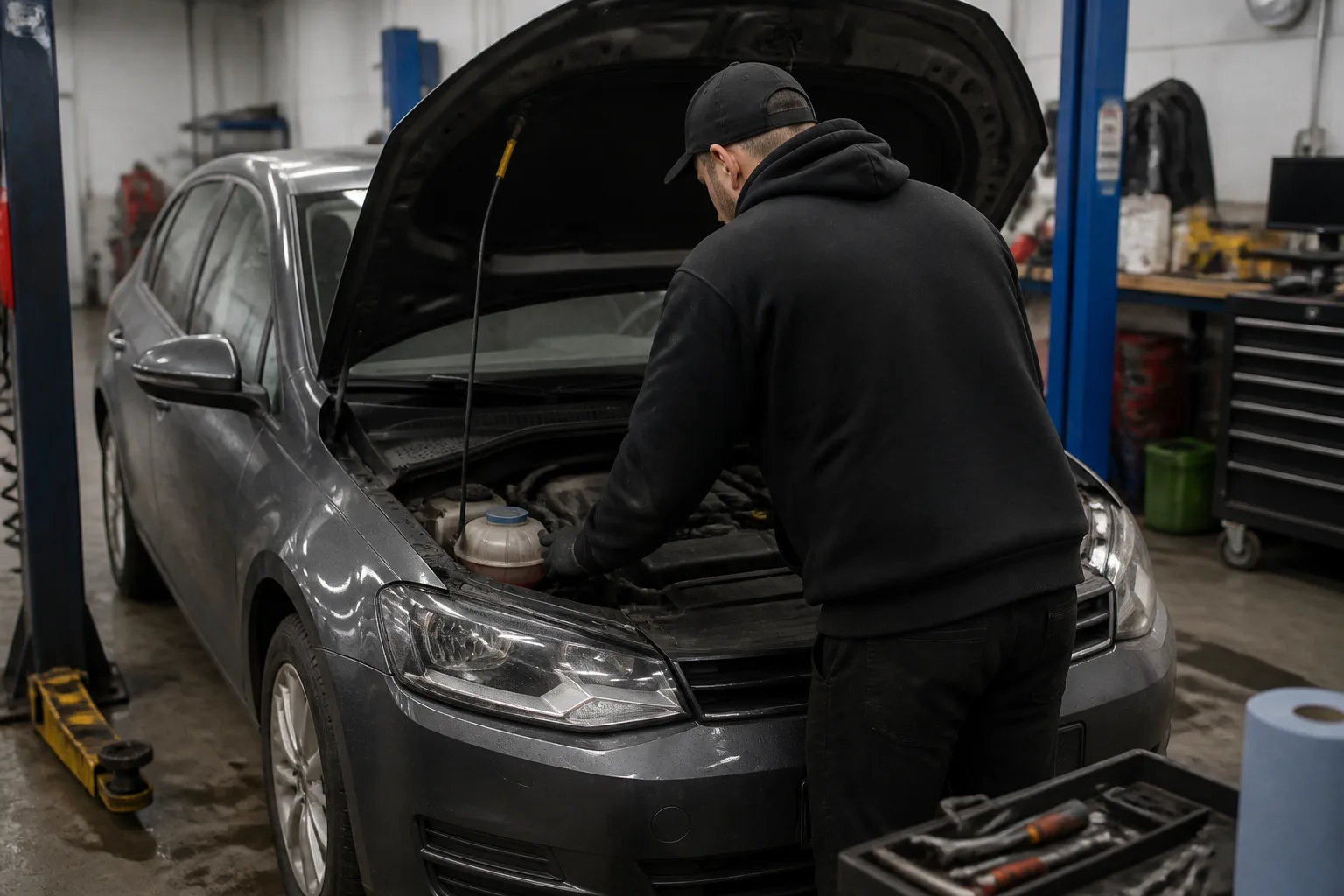
If your car heater is blowing cold air even though the engine has reached its normal temperature, it is understandable to wonder what has gone wrong. The heater normally uses heat from the engine coolant. That warm coolant passes through a small radiator called the heater matrix, while a fan pushes air over it and into the cabin.
When the engine is hot but the cabin air stays cold, heat may not be reaching the heater matrix, or the heating controls may not be directing air through it properly. There are several possible causes, and the symptoms alone are not enough to identify the fault with certainty.
First, check what “hot” means
The temperature gauge on the dashboard is useful, but it does not always tell the complete story. If the gauge is sitting at its usual position, the engine may simply be warm enough to provide cabin heat while the heating system has another fault.
However, if the gauge is higher than normal, a warning light is showing, steam is visible or the engine is overheating, treat the problem as more serious. A cold heater can sometimes occur when coolant is low, because there is not enough coolant circulating through the heater matrix. Continuing to drive an overheating car can cause expensive engine damage and may leave you stopped in an unsafe place.
In that situation, pull over when it is safe, switch the engine off and allow it to cool. Do not remove the coolant expansion tank or radiator cap while the system is hot. The coolant can be under pressure and may cause serious scalding.
Common reasons for cold air from the heater
Low coolant level
Low coolant is one of the more important possibilities to consider. The cooling system needs the correct amount of coolant to carry heat away from the engine and transfer some of that heat into the cabin. If the level falls, the heater matrix may be left partly empty or filled with air, so the fan blows cold or only lukewarm air.
Coolant should not normally disappear. A low level may be linked to a leak from a hose, radiator, water pump, thermostat housing, heater matrix or another part of the system. You may notice a sweet smell, damp patches, staining around components, misting inside the windscreen or wet carpet in the front footwell, although a leak is not always obvious.
Only check the coolant level when the engine is completely cold and follow the markings in the vehicle handbook. A small top-up may get you home in some circumstances, but it does not explain why the level dropped. Repeatedly topping up without finding the cause is not a reliable solution.
Air trapped in the cooling system
Air can enter the cooling system after coolant has been lost or after work has been carried out. An air pocket may prevent hot coolant from flowing properly through the heater matrix. The result can be a heater that changes between hot and cold, stays cold at idle, or becomes warmer when the engine speed rises.
Removing trapped air correctly can require a manufacturer-specific procedure. It is not sensible to open a hot cooling system or attempt unfamiliar work around belts, fans and pressurised coolant. A garage can assess the coolant level and circulation safely, then check why air entered the system.
A blocked heater matrix
The heater matrix has narrow internal passages. Contaminated, old or incorrect coolant can contribute to restricted flow, as can corrosion or debris within the cooling system. If hot coolant cannot pass through the matrix, the blower may work normally but the air coming from the vents will remain cold.
A blocked matrix may also be accompanied by an unusual coolant smell, poor screen demisting or dampness inside the cabin. It can be difficult to distinguish a restriction from other faults without checking the temperatures and coolant flow at the relevant parts of the system.
A thermostat or coolant circulation problem
The thermostat controls when coolant flows through the engine’s main cooling circuit. A thermostat stuck open often causes the engine to take a long time to warm up, with the heater remaining weak or lukewarm. That is slightly different from an engine that is genuinely overheating while the heater blows cold air.
Other circulation problems may involve the water pump, a drive belt or an obstruction in the cooling system. These faults can affect engine temperature as well as cabin heat. If the temperature gauge is moving unpredictably, rising in traffic or falling suddenly, arrange an inspection rather than relying on the heater as a temperature warning.
A problem with the heater controls
Not every cold-air complaint is caused by coolant. Many cars use a blend door, flap or actuator to control how much air passes through the heater matrix. If that mechanism sticks or its electrical control fails, the engine may be at normal temperature while the vents continue to deliver cool air.
Some vehicles also have separate temperature controls for the driver and passenger sides. A fault affecting one side may therefore produce different temperatures from different vents. This type of problem can require electrical and mechanical checks rather than work on the engine cooling system.
Safe checks you can make
There are a few basic observations that can help describe the fault to a garage:
- Note whether the dashboard temperature gauge is normal, low or higher than usual.
- Check whether the fan works at all and whether the air direction controls respond.
- With the engine fully cold, check the coolant level against the markings in the handbook.
- Look for obvious wet patches or fresh staining around the engine bay and beneath the vehicle.
- Notice whether the air becomes warmer when driving, when stationary or when the engine speed changes.
- Check whether the windscreen demists properly, particularly in cold or damp weather.
These checks can provide useful information, but they do not confirm the failed component. Avoid removing hoses, opening a hot coolant system or dismantling dashboard trim as a first step.
Can I keep driving with no cabin heat?
If the engine temperature is normal, there are no warning lights and the windscreen can be kept clear, the problem may not be an immediate breakdown risk. Even so, a heater fault can be an early sign of low coolant or a cooling-system problem, so it should not be ignored.
Do not continue driving if the engine is overheating, the coolant warning light appears, steam is coming from the engine bay, the coolant level is very low, or the windscreen cannot be demisted safely. Stop in a safe place and arrange professional assistance. A loss of cabin heat combined with a rising temperature gauge deserves particular caution.
How a garage can investigate the fault
A technician will usually start by confirming the complaint and checking the engine temperature, coolant level and cooling-system condition. Depending on the symptoms, further checks may include looking for leaks, assessing coolant circulation, comparing temperatures at the heater matrix and checking the heater controls or electrical actuators.
The aim is to identify the underlying reason rather than simply adding coolant or replacing a part based on one symptom. If you are in Salisbury and the heater is cold alongside an unexplained coolant loss or temperature concern, Ashton’s Garage can assess the vehicle and advise on the appropriate repair without assuming the cause in advance.
Related advice
Cooling-system faults can sometimes be confused with wider starting or electrical problems, especially if the car has been difficult to use in cold weather. You may also find our guides useful on why a car will not start, why an engine cranks but does not start and why a car battery keeps going flat.
A heater blowing cold air with a hot engine is not one specific diagnosis. It can be a simple control fault, but it can also indicate low coolant or poor circulation. Checking the symptoms safely and arranging an inspection when the temperature or coolant level is abnormal is the sensible way to protect both the vehicle and its occupants.
Frequently asked questions
Why is my car heater blowing cold air when the engine temperature is normal?
Possible causes include a low coolant level, air trapped in the cooling system, a restricted heater matrix or a fault with the heater flap or temperature control. The dashboard gauge alone cannot identify which component is at fault.
Can low coolant cause the heater to blow cold air?
Yes. If the coolant level is low, there may not be enough warm coolant flowing through the heater matrix. Low coolant usually has an underlying cause, such as a leak, so repeated topping up should not be treated as a permanent fix.
Is it safe to drive when the heater is blowing cold air?
It may be possible if the engine temperature is normal, there are no warning lights and the windscreen remains clear. Stop and seek professional help if the engine overheats, steam appears, the coolant warning light comes on or the windscreen cannot be demisted safely.
Why does the heater become warm when I rev the engine?
This can suggest a coolant circulation issue, trapped air or a low coolant level, because flow may change with engine speed. It is not a definite diagnosis, and the cooling system should be checked if the symptom persists.
Related advice
Why Does My Engine Make a Knocking Noise?
An engine knocking noise can come from anything from combustion problems to low oil or a loose exhaust part. Learn what the sound may mean, what you can safely check and when to stop driving.
Why Does My Engine Make a Ticking Noise?
A ticking engine can be harmless, but it may also point to an oil, exhaust, valve or timing problem. Learn what the sound could mean and when to arrange a professional inspection.
What Causes Rough Starting in Cold Weather?
Cold weather can expose a weak battery, worn spark plugs, fuel system fault or sensor problem. Here is what rough starting may mean and when to arrange a garage inspection.