
Why Does My Car Make a Clunk When Turning?
A clunk when turning can come from the suspension, steering or drivetrain. Here are the common possibilities, safe checks to make and signs your car needs professional inspection.
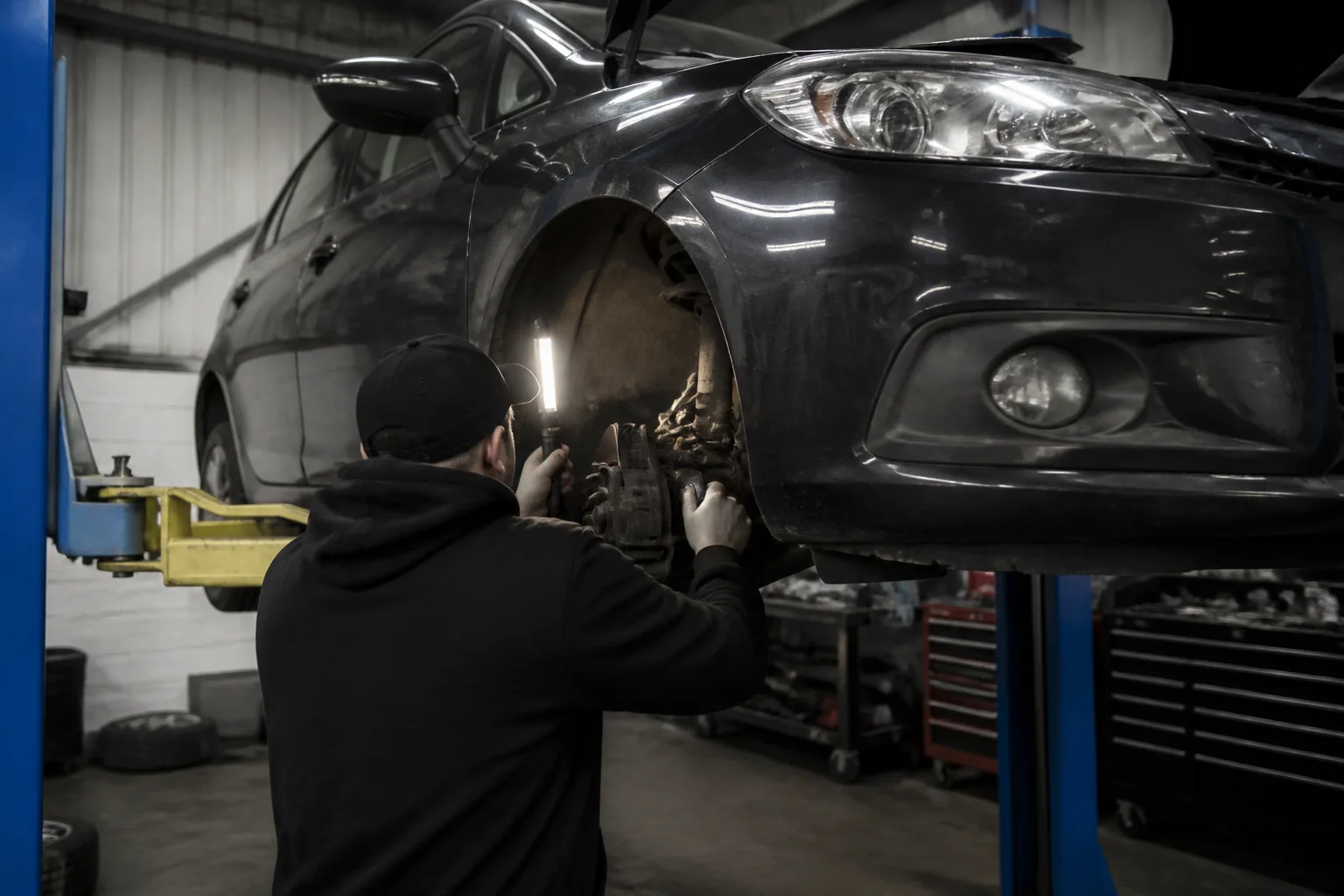
Hearing a clunk when you turn the steering wheel can be unsettling, particularly if the noise has appeared recently or is becoming more frequent. There is no single fault behind this symptom. A clunk may come from the steering system, suspension, driveshafts or, in some cases, a component that is loose or worn.
The sound alone is not enough to identify the problem. The direction of the turn, whether the car is moving, the road surface and any changes in steering feel can all provide useful clues. A vehicle making an occasional noise over a particularly uneven surface may have a different issue from one that clunks every time it is manoeuvred.
Common reasons for a clunk when turning
Worn suspension bushes or ball joints
Suspension bushes are flexible mounts that allow components to move while limiting unwanted movement. Over time, the rubber can deteriorate, split or soften. This may allow a suspension arm to move more than it should, producing a clunk as the steering loads change.
A ball joint allows the suspension and steering to move in different directions while remaining connected. If it becomes worn, you may hear a knock or clunk when turning, driving over a bump or moving away from a kerb. A worn ball joint can affect wheel control, so it is not something to ignore.
Anti-roll bar drop links
Drop links connect the anti-roll bar to the suspension. They work particularly hard when the car leans or one wheel moves differently from the other. Wear in a drop link can cause a knocking or clunking noise, often more noticeable on rough roads, at low speed or while turning into a driveway.
Because several suspension components can make similar noises, replacing a drop link based on sound alone is not a reliable diagnosis. A proper inspection is needed to check for looseness and confirm where the noise is coming from.
Top mounts and steering bearings
At the top of many MacPherson strut suspension systems is a top mount, often with a bearing that allows the strut to turn with the steering. If the mount or bearing becomes worn, the spring and strut may not rotate smoothly. You may hear a clunk, creak or groan as the steering wheel is turned, particularly during slow manoeuvres.
Some faults in this area can also make the steering feel notchy or cause the spring to wind up and release suddenly. That combination needs professional attention rather than repeated turning of the wheel to investigate it.
Track rod ends or other steering joints
Track rod ends connect the steering rack to the front hubs and help the wheels respond to steering input. Wear in a track rod end or an inner steering joint can produce a knock when changing direction. You might also notice vague steering, uneven tyre wear or the car wandering slightly on a straight road.
Steering components are directly related to control of the vehicle. If the clunk is accompanied by excessive play in the steering wheel, a change in direction, or a feeling that the car is not responding normally, avoid driving it until it has been assessed.
Constant velocity joints and driveshafts
A constant velocity joint, commonly called a CV joint, transfers drive to a driven wheel while allowing the suspension and steering to move. A worn outer CV joint more commonly produces repeated clicking or knocking while turning under power, rather than one isolated clunk.
Look for a split rubber CV boot or grease around the inside of a wheel, but do not crawl under the car or attempt to inspect areas that require lifting it. A damaged boot can allow dirt in and lubricant out, accelerating wear in the joint.
A broken coil spring or loose component
A fractured coil spring can move or settle as the steering is turned, sometimes causing a sharp clunk. Other possibilities include a loose wheel, undertray, brake component or suspension fastener. These causes cannot be safely ruled in or out from the noise alone.
If the car has recently had suspension, steering, wheel or brake work, mention this when arranging an inspection. It does not prove that the previous work is connected, but it gives the technician useful context.
What can change the meaning of the noise?
Try to note when the noise occurs without deliberately reproducing it repeatedly. Useful details include:
- whether it happens when turning left, right or both ways;
- whether the car is stationary, moving slowly or accelerating;
- whether it happens over bumps, while braking or when reversing;
- whether the sound is a single clunk, a repeated knock, a click or a creak;
- whether the steering feels heavy, loose, notchy or unchanged; and
- whether you can see a warning light, fluid leak, damaged tyre or anything hanging beneath the car.
A repeated clicking noise on full lock may point towards a different area from a single knock as the vehicle comes off a kerb. Even so, these clues are for describing the symptom, not for confirming the failed part.
Safe checks you can make at home
With the vehicle parked on level ground and the engine switched off, check that the wheel nuts appear present and that the tyres have no obvious bulges, cuts or damage. Look around the wheel area for anything visibly loose or leaking. You can also check whether the noise is present when turning the wheel a small amount while stationary, but do not force the steering against its stop or place any part of your body beneath the vehicle.
Do not jack the car up unless you have the correct equipment, a suitable level surface and the knowledge to do so safely. In most cases, identifying a worn joint or mount requires the vehicle to be raised and inspected properly. That is a job for a trained technician, not a roadside guess.
Is it safe to drive with a clunk when turning?
It depends on the cause and on any accompanying symptoms, which cannot be established remotely. A minor noise from a non-critical mount is different from a loose steering joint, damaged suspension part or insecure wheel.
Stop driving and arrange professional help if the car pulls or wanders, the steering feels loose or stiff, the wheel sits at an unusual angle, a tyre is damaged, the noise becomes severe, or you feel vibration through the steering wheel. You should also stop if a warning light appears or the vehicle has suffered a pothole or kerb impact and now handles differently.
If the car still feels normal and the noise is occasional, drive only as necessary and arrange an inspection promptly. An inspection and repair assessment at Ashton's Garage can help establish whether the sound is coming from the steering, suspension or drivetrain and what needs attention.
How a garage investigates the problem
A technician will usually ask when the noise occurs and may carry out a controlled road test if the vehicle appears safe to drive. The car can then be inspected for worn joints, damaged bushes, spring problems, loose fixings, CV boot damage and signs of movement that should not be present.
The aim is to identify the cause rather than simply replace the most obvious-looking part. This matters because several components can share the same symptoms, and a clunk may be caused by more than one issue. If the inspection finds a steering or suspension fault, the technician should explain its effect on safety and whether the vehicle should remain off the road until repaired.
Related advice
A turning noise can sometimes be confused with a braking or wheel-related problem. You may also find our guides to how long brake pads last, signs your brake pads need replacing and why a car pulls to one side when braking useful if the noise occurs alongside braking symptoms.
Key points to remember
- A clunk when turning can come from steering, suspension, a driveshaft or a loose component.
- The sound is not enough to diagnose the fault safely.
- Note when the noise happens and whether the steering or handling has changed.
- Stop driving if there are signs of looseness, damage, unusual handling or impaired steering control.
- Arrange a professional inspection if the noise persists or is getting worse.
Frequently asked questions
Why does my car clunk when turning at low speed?
Low-speed clunks can come from suspension bushes, ball joints, anti-roll bar drop links, strut top mounts, steering joints or a CV joint. The exact cause depends on whether the noise occurs under power, over bumps or while the steering is turned when stationary.
Can a CV joint cause a clunk when turning?
Yes. A worn CV joint more often makes repeated clicking or knocking while turning under acceleration, but it can sometimes be described as a clunk. A split CV boot or grease around the wheel area is a useful clue, although inspection is needed to confirm the fault.
Is a clunk when turning an MOT failure?
A noise by itself does not determine an MOT result. The result depends on the condition and severity of any underlying steering, suspension, tyre or other defect found during the test. A worrying noise should be assessed rather than waiting for the next MOT.
Can I keep driving if my car makes one clunk?
A single occasional noise does not reveal how serious the cause is. If the steering, handling or tyres appear normal, arrange an inspection promptly and avoid unnecessary journeys. Stop driving and seek professional help if the steering feels loose or stiff, the car pulls, a tyre is damaged or the noise is accompanied by vibration.
Why does the noise happen when I turn the wheel while parked?
A noise while stationary can involve the steering system, strut top mount, steering joint or suspension spring. Turning the steering while parked places load on these parts, but repeatedly forcing the wheel against full lock is not a useful diagnostic test.
Related advice
When Does Wheel Alignment Need Checking?
Wheel alignment may need checking after a pothole impact, kerb strike, suspension work or unusual tyre wear. Learn the warning signs and when professional inspection is sensible.
What Does a Broken Coil Spring Feel Like?
A broken coil spring can cause a clunk, uneven ride height, poor handling or tyre contact. Here is what to look for and when professional inspection is needed.
What Causes a Knocking Noise Over Bumps?
A knocking noise over bumps can come from worn suspension parts, loose trim or something moving in the boot. Here are the common causes, what to check safely and when to arrange a professional inspection.