Why Does My Car Keep Blowing Fuses?
A fuse that blows once may be a simple electrical fault. If the same fuse keeps failing, the cause could be a short circuit, damaged wiring, a faulty component or an overload that needs proper investigation.
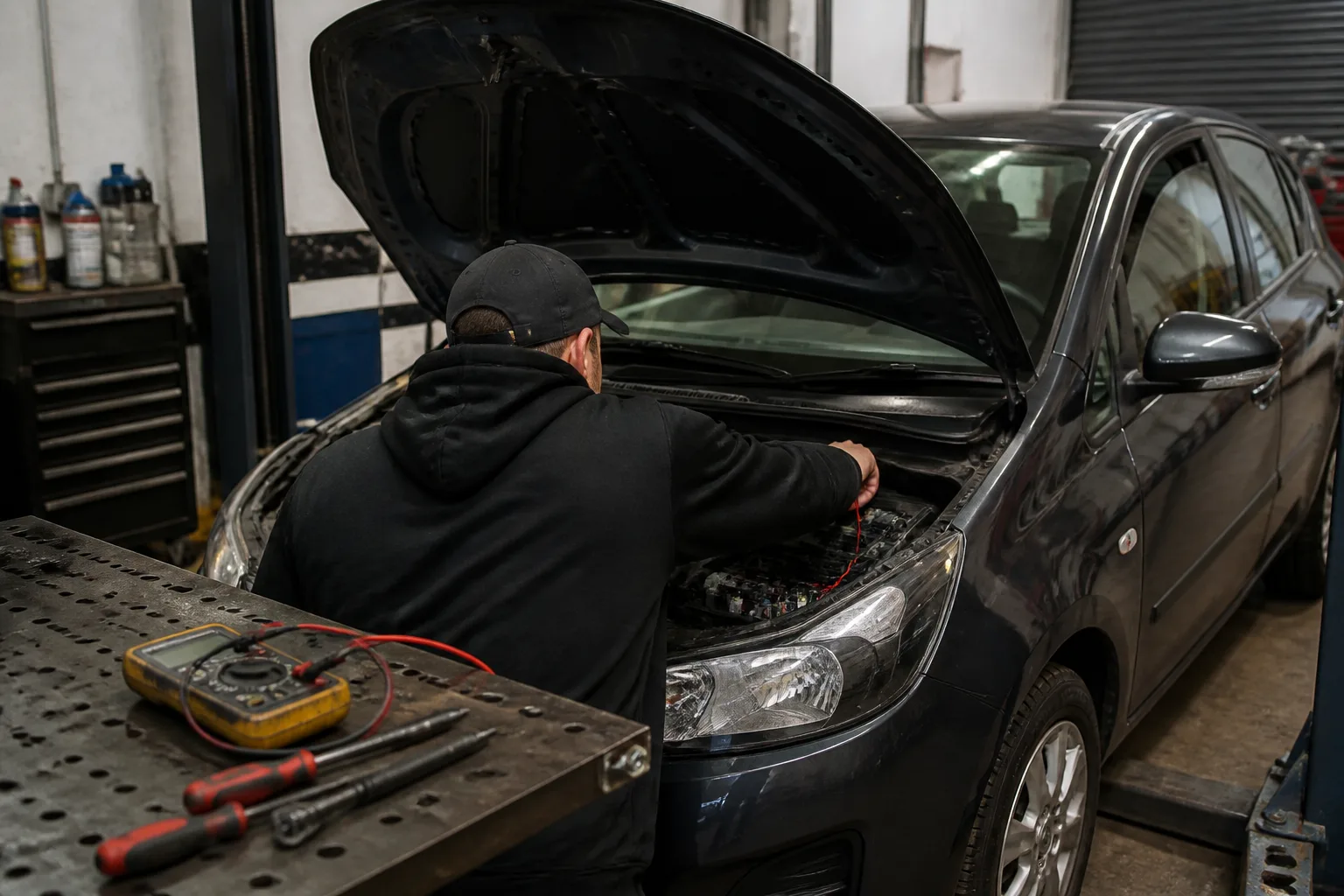
If your car keeps blowing the same fuse, it is usually telling you that something in that electrical circuit is drawing too much current. The fuse is designed to break the circuit before the wiring or an electrical component becomes dangerously hot.
Replacing the fuse may restore the lights, heater fan, radio or another system for a short time, but it does not fix the reason the fuse failed. If the replacement blows again, fitting another one without finding the cause can leave you without an important function and may increase the risk of damaged wiring.
What does a car fuse do?
A fuse is a small protective device containing a section of metal designed to melt when the electrical current becomes too high. Different circuits use fuses with different ratings, measured in amps. The rating is chosen to protect the wiring and equipment on that circuit.
When a fuse blows, the circuit is interrupted. This can be inconvenient, but it is normally preferable to allowing excessive current to continue through the wiring. A blown fuse can therefore be a symptom rather than the main fault.
Common reasons why a car keeps blowing fuses
A short circuit
A short circuit happens when electricity finds an unintended path with very little resistance. This can cause a sudden rise in current and make the fuse fail quickly. Damaged insulation, a loose wire, a connector touching metalwork or water entering a connection can all contribute.
Short circuits can be intermittent. The fuse may blow when the car goes over a bump, when the steering is turned, or when a particular switch or electrical item is used. This can make the problem difficult to locate without testing the circuit.
Damaged or trapped wiring
Wiring can become worn where it passes through a hinge, near a seat rail, around the engine bay or close to a sharp edge. Previous repairs, aftermarket accessories or work carried out elsewhere can also leave a cable poorly routed or insufficiently secured.
Heat, oil, road dirt and moisture may affect wiring over time. A cable that looks acceptable at first glance can still have an internal break or an insulation fault, so repeatedly replacing fuses is not a reliable way to identify the problem.
A faulty electrical component
A motor, relay, switch, heater element, pump or control module may develop an internal fault. For example, a motor that is becoming difficult to turn can draw more current than it should. The fuse then protects the circuit by breaking the supply.
The affected component is not always obvious. One fuse may protect several items, so a fault with one part of the circuit can make other functions stop working too. Your vehicle handbook or the fuse-box cover should identify the systems supplied by each fuse, although this information does not confirm which part has failed.
Water or corrosion in a connection
Moisture can enter connectors, lamp units, fuse boxes or components mounted low on the vehicle. Corrosion can increase resistance, interfere with the connection or create an unwanted route for current. The fault may appear after heavy rain, a vehicle wash or driving through standing water, but it can also develop gradually.
An incorrectly rated fuse
Using the wrong fuse can create problems. A fuse with a lower rating may fail unnecessarily, while one with a higher rating may not protect the wiring as intended. Never replace a fuse with a higher-rated fuse, foil or another improvised substitute.
If the correct replacement fuse blows again, stop treating the fuse as the solution. The underlying circuit needs to be checked.
What can you safely check?
There are a few basic checks you can make without dismantling the vehicle:
- Check which function has stopped working and whether other electrical items are affected.
- Look in the handbook or fuse-box information for the correct fuse rating.
- Consider when the fuse blows. Does it happen as soon as the replacement is fitted, when a switch is used, or only while driving?
- Think about recent events, such as a new accessory being fitted, water entering the vehicle or work being carried out near the affected wiring.
- Look for obvious signs such as a burning smell, melted plastic, smoke, unusual heat or visible water around electrical equipment.
Do not remove trim, probe live wiring or dismantle safety-critical systems unless you have the correct equipment and knowledge. Modern vehicles can have several interconnected control modules, and an incorrect test can create further faults.
Can I keep driving if a fuse keeps blowing?
It depends on which circuit is affected and what caused the fuse to fail. A blown fuse affecting a non-essential accessory may leave the car apparently drivable, but the fault can still worsen or affect another system. A fuse linked to exterior lights, windscreen wipers, engine management, fuel delivery, cooling fans, airbags or other safety-related equipment should be treated more seriously.
Stop driving and arrange professional advice if you notice smoke, a burning smell, melted wiring, repeated fuse failure, electrical arcing or excessive heat. You should also avoid driving if the fault leaves you without lights or wipers when they are needed, or if the engine is overheating because a cooling system fan or related circuit is not operating.
A car that will not start after a fuse has blown may have a wider electrical fault. For related symptoms, our guides on why a car will not start and why a car can crank but not start explain some of the possible causes without assuming a diagnosis.
How a garage investigates repeated fuse failure
A technician will usually begin by identifying the correct circuit and finding out when the fuse fails. They may inspect the relevant wiring, connectors, relays and components, then use appropriate electrical test equipment to establish where excessive current or an unwanted connection is occurring.
The investigation may involve isolating parts of the circuit in a controlled way. This is different from simply fitting a larger fuse or repeatedly replacing the original one. The aim is to find and correct the fault while preserving the protection designed into the vehicle.
It is also useful to mention any recent accessory installation, battery work, water ingress or repairs. If the car has other electrical symptoms, such as a battery that repeatedly goes flat, our guide to why a car battery keeps going flat may help explain how charging and parasitic drain issues can differ from a blown-fuse fault.
When to ask for help
A single blown fuse can happen for several reasons, but repeated failure is a sign that the circuit deserves proper attention. There may be a straightforward wiring or component fault, yet it is not possible to identify the cause accurately without testing the vehicle and checking the circuit.
If your car keeps blowing fuses, Ashton's Garage can investigate the electrical fault and advise on the appropriate repair. You can find the relevant car repair service in Salisbury and contact the garage with details of which fuse is failing, what it supplies and when the problem occurs.
Frequently asked questions
Is it safe to replace a blown car fuse?
You can replace a fuse with the exact same type and rating if the vehicle handbook allows it, but do not fit a higher-rated fuse or an improvised substitute. If the replacement blows again, stop replacing it and arrange an electrical inspection.
Why does a fuse blow as soon as I replace it?
This often suggests a continuing short circuit or a component that is drawing excessive current. The fault may be in the wiring, a connector, a relay or one of the components supplied by that circuit.
Can a flat battery cause a fuse to blow?
A flat battery does not usually explain a repeatedly blown fuse by itself. However, a charging fault, incorrect jump-start procedure, damaged wiring or a separate electrical problem can create symptoms involving both the battery and fuses.
Can a blown fuse stop a car from starting?
Yes. Some vehicles use fuses for systems needed for starting, such as engine management, fuel delivery or the starter control circuit. The exact effect depends on the vehicle and the circuit affected.
Should I disconnect an aftermarket accessory if a fuse keeps blowing?
If an accessory was recently fitted and the problem started afterwards, mention this to a technician and avoid using it until the circuit has been checked. Do not cut or alter its wiring without knowing how it is connected.
Related advice
Why Does My Engine Make a Knocking Noise?
An engine knocking noise can come from anything from combustion problems to low oil or a loose exhaust part. Learn what the sound may mean, what you can safely check and when to stop driving.
Why Does My Engine Make a Ticking Noise?
A ticking engine can be harmless, but it may also point to an oil, exhaust, valve or timing problem. Learn what the sound could mean and when to arrange a professional inspection.
Why Does My Heater Blow Cold Air When the Engine Is Hot?
A car heater that blows cold air while the engine seems hot can point to low coolant, trapped air, a circulation problem or a fault inside the heating system. Here is what the symptoms may mean and when to arrange a professional inspection.