Why Does My Car Click but Not Start?
A clicking sound when you turn the key or press the start button often points to a weak battery, poor electrical connection or a starter motor problem. Here is what the different sounds can mean and when professional help is sensible.
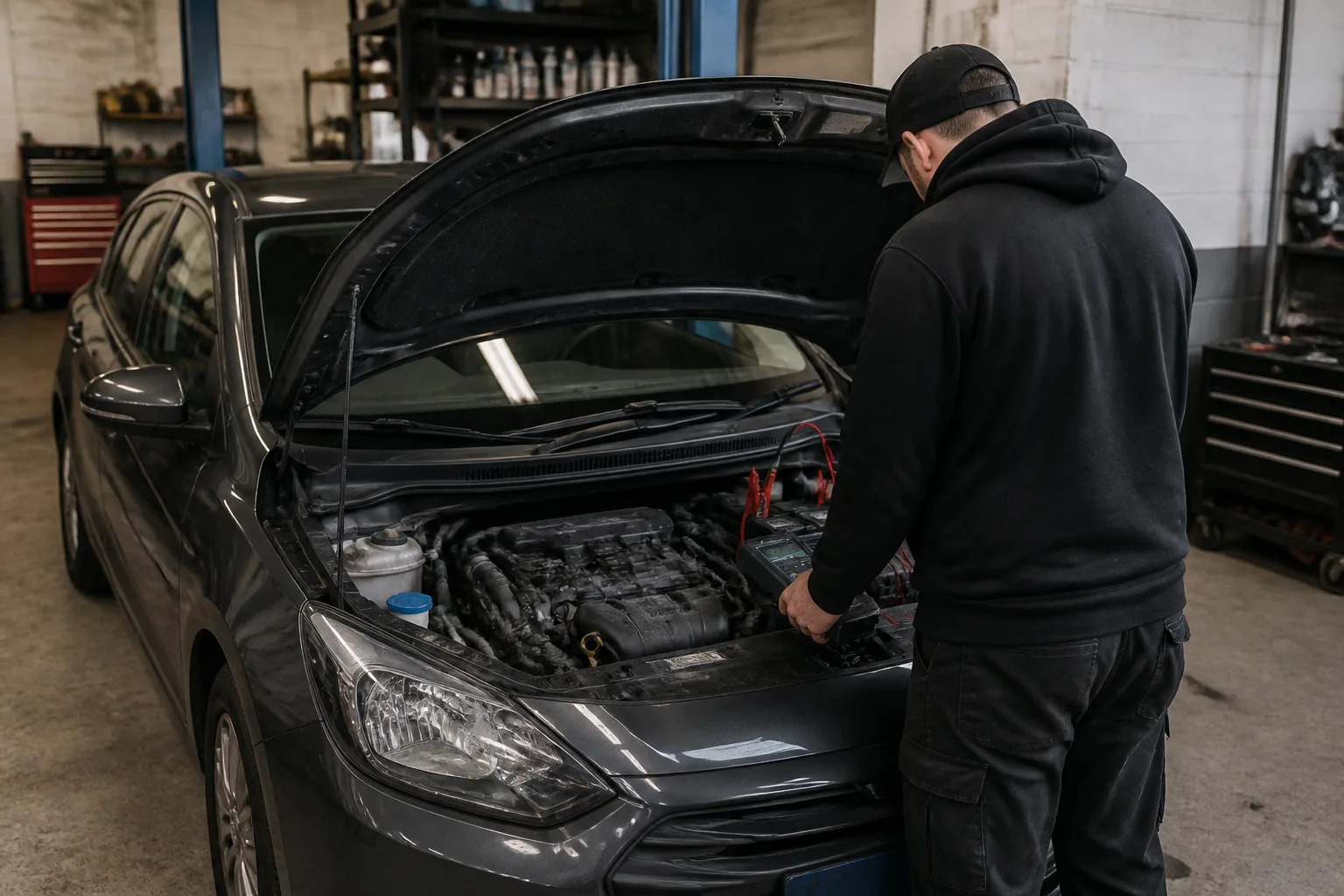
When a car clicks but does not start, the sound is usually coming from the starting circuit. The starter motor is trying to operate, but the engine is not being turned over properly. In many cases the cause is a battery that cannot supply enough power, although a poor connection or a fault with the starter motor can produce similar symptoms.
The exact sound matters. Rapid repeated clicking suggests a different problem from one solid click, and a click followed by normal engine cranking may point in another direction altogether. You cannot confirm the fault from the noise alone, but a few safe observations can help you describe the problem accurately to a garage.
What does the clicking sound mean?
When you turn the key or press the start button, power is sent to a solenoid. This is an electrically operated switch that helps connect the battery to the starter motor. The starter motor then turns the engine so it can run under its own power.
If there is not enough voltage or current available, the solenoid may engage and then drop out repeatedly. This can create a fast clicking or chattering noise. A single click can mean that the solenoid has operated but the starter motor has not turned, although other faults are possible.
Modern vehicles may also have electronic checks involving the immobiliser, clutch pedal or automatic gearbox selector. These systems can prevent the starter from operating, but clicking noises are more commonly associated with the battery, its connections or the starter circuit.
Common reasons a car clicks but will not start
1. A weak or discharged battery
This is one of the most common possibilities, particularly if the car has been unused, the lights have been left on, or the weather has been cold. A battery may still have enough power to operate the dashboard, interior lights and radio, but not enough to turn the starter motor.
Electrical accessories use much less power than the starter motor. As a result, bright dashboard lights do not prove that the battery is healthy. If the lights become noticeably dim when you try to start the car, low battery voltage becomes more likely.
A battery can also lose charge because of an underlying issue, such as a charging fault or an electrical drain while the vehicle is parked. If the car starts after a jump start but the problem returns, replacing the battery without checking the rest of the system may not solve the problem. Our guide to why a car battery keeps going flat covers some of the related possibilities.
2. Loose or corroded battery connections
The battery needs clean, secure connections to deliver current to the starter. Corrosion around a terminal, a loose clamp or a damaged cable can restrict the flow of electricity. This may produce clicking, dim lights or no useful response at all.
You can make a basic visual check with the engine switched off. Look for obvious looseness, heavy white or greenish residue around the terminals, or signs of damaged cabling. Do not dismantle electrical connections or work around the battery if you are unsure, as batteries can deliver very high current and some vehicles have sensitive battery monitoring systems.
3. A starter motor or solenoid fault
If the battery is charged and its connections are sound, the starter motor may be worn or faulty. The starter contains an electric motor and a mechanism that engages with the engine. Wear inside the motor, a sticking solenoid or an internal electrical fault can result in one click without the engine turning.
A starter fault may be intermittent at first. The vehicle might start normally on some occasions and only click on others. Repeatedly trying the key is unlikely to repair the fault and can further flatten the battery.
4. A problem with the starting control circuit
There are several switches, relays and control modules between the key or start button and the starter motor. A fault in this circuit can prevent the starter from receiving the correct signal. On a manual car, the clutch switch may be involved. On an automatic, the vehicle may need to recognise that the selector is in Park or Neutral.
If the dashboard displays an immobiliser warning or a message about the key, follow the vehicle handbook guidance. A flat key-fob battery can affect key recognition on some models, although the symptoms vary. Do not assume that a warning light identifies one definite mechanical fault.
What can you safely check?
Before calling for help, note whether you hear rapid clicking, one click or no sound. Check whether the headlights and dashboard appear unusually dim, and look for warning messages. Make sure a manual car is in neutral with the handbrake applied, or that an automatic is securely in Park. You can also try the spare key if the vehicle may not be recognising the original.
If the battery seems likely to be flat, a correctly rated jump pack or jump lead procedure may get the car moving, but only use equipment and instructions suitable for your vehicle. Some cars have designated jump points or special battery-management requirements. Stop if the battery is swollen, cracked, leaking or smells strongly of sulphur. Do not keep attempting to start the engine for long periods, as this can overheat the starter and discharge the battery further.
A jump start is a temporary measure, not a diagnosis. If the car starts, arrange for the battery and charging system to be checked rather than assuming the issue is finished.
When should the car be inspected?
Professional inspection is sensible when the clicking returns, a jump start only provides a short-term solution, or the vehicle has a history of battery or charging problems. A garage can test the battery under load, check the charging output and inspect the high-current cables and starter circuit. Those checks help separate a weak battery from a starter motor, connection or control-system fault.
If the vehicle is parked somewhere unsafe, avoid repeated attempts and arrange appropriate recovery. A non-starting car is usually inconvenient rather than dangerous, but damaged wiring, a leaking battery or signs of overheating should not be ignored. If you are in Salisbury and the cause is not obvious, you can find out more about car repairs at Ashton's Garage and explain what the car is doing before any work is agreed.
Clicking, cranking and starting are not the same problem
It is useful to distinguish between a clicking car and one that cranks. Clicking means you mainly hear the starter circuit operating, while cranking means the engine is being turned by the starter but has not run. A cranking fault can involve fuel, ignition, engine-management sensors or immobiliser systems, which is a different line of investigation. Our article on why a car cranks but does not start explains that situation separately.
If there is no sound at all, the possibilities can include a flat battery, a control switch, a fuse, an immobiliser issue or a poor connection. For a broader checklist, see why a car will not start.
The sensible next step
A clicking noise most often tells you that the starting system does not have the power or connection it needs, but it does not identify the failed component by itself. Start with safe observations, avoid repeated attempts and arrange a proper test if the issue persists. That approach is more reliable than fitting parts based on the sound alone, and it can prevent a small battery or connection problem from becoming a more expensive starting-system fault.
Frequently asked questions
Why does my car make a rapid clicking noise when I try to start it?
Rapid clicking often indicates that the battery voltage drops too far when the starter tries to operate. A poor battery connection or charging problem can cause similar symptoms, so the battery should be tested rather than replaced automatically.
What does one click mean when a car will not start?
One click can be associated with the starter solenoid, starter motor, battery or a high-current connection. It is not enough to confirm one fault remotely, particularly if the symptom is intermittent.
Can I drive my car after jump-starting it?
If the vehicle starts and appears to run normally, it may be possible to drive it to a safe location or garage, but a jump start does not establish why the battery went flat. Avoid driving if there are warning lights, burning smells, damaged battery components or other unsafe symptoms.
Will a flat battery still turn on the dashboard?
Yes. Dashboard lights, a radio and other accessories need much less power than the starter motor. They can work even when the battery cannot provide enough current to start the engine.
Should I keep trying the key if the car only clicks?
No. Repeated attempts can discharge the battery further and place extra strain on the starter. Make a few sensible checks, then arrange testing or recovery if the car still will not start.
Related advice
Why Does My Engine Make a Knocking Noise?
An engine knocking noise can come from anything from combustion problems to low oil or a loose exhaust part. Learn what the sound may mean, what you can safely check and when to stop driving.
Why Does My Engine Make a Ticking Noise?
A ticking engine can be harmless, but it may also point to an oil, exhaust, valve or timing problem. Learn what the sound could mean and when to arrange a professional inspection.
Why Does My Heater Blow Cold Air When the Engine Is Hot?
A car heater that blows cold air while the engine seems hot can point to low coolant, trapped air, a circulation problem or a fault inside the heating system. Here is what the symptoms may mean and when to arrange a professional inspection.