What Is the Minimum Tyre Tread Depth in the UK?
For cars and light vehicles in the UK, the minimum legal tyre tread depth is 1.6mm across the central three-quarters of the tread and around the full circumference. Here is what that means, how to check it safely and why tread depth is not the only thing that matters.
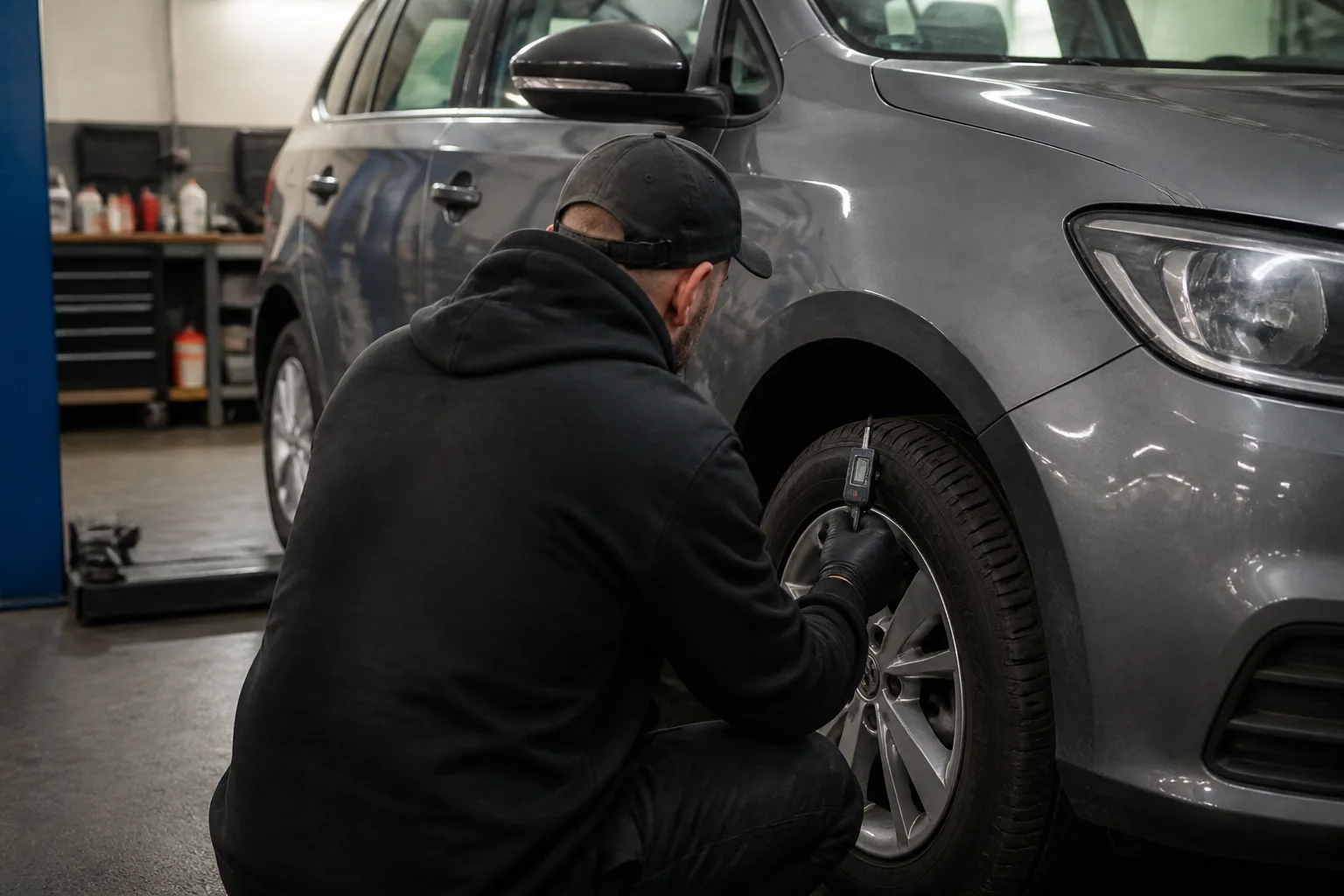
For cars and light vehicles in the UK, the minimum legal tyre tread depth is 1.6mm. This applies across the central three-quarters of the tyre's tread breadth and around the entire circumference of the tyre.
That is the short answer to the question, but there is more to consider than simply finding a number on a tread-depth gauge. Tyres also need to be in a safe condition, with no significant damage or other issue that could affect the vehicle's roadworthiness. A car can have a current MOT and still be the driver's responsibility to keep safe between inspections.
Where does the 1.6mm minimum apply?
The 1.6mm requirement applies to the main grooves in the tread. These are the deeper channels that run around the tyre, rather than every small groove, marking or surface detail.
The measurement must be taken across the central three-quarters of the tread breadth. In simple terms, this is the main area across the width of the tyre that is most important for the legal tread-depth check. The tread must also meet the requirement around the full circumference, not just at one convenient point.
This matters because tyres do not always wear evenly. The outer shoulder, inner shoulder or centre of the tread may wear faster depending on tyre pressures, wheel alignment, suspension condition, driving patterns and the vehicle itself. A tyre that appears acceptable in one place may be much more worn elsewhere.
Does a current MOT mean my tyres are safe?
No. An MOT is a check carried out at a particular time and under the conditions of that inspection. It does not remove the driver's responsibility for the vehicle's condition afterwards.
Tyres can lose tread, develop damage or suffer pressure loss after an MOT. It is therefore sensible to look at them regularly, particularly before a long journey. The legal minimum should be treated as a limit, not as a target for normal maintenance. If a tyre is close to 1.6mm, unevenly worn or showing damage, arranging professional advice before it reaches the limit is the sensible approach.
How can I check my tyre tread depth?
A tread-depth gauge is the clearest way to measure a tyre, provided it is used correctly. Take readings in several places around the tyre and across the tread rather than relying on one measurement. This helps identify uneven wear that may not be obvious from a quick glance.
You should also inspect the tyre visually for:
- Uneven wear across the tread
- Cracks, cuts, bulges or other visible damage
- Objects lodged in the tread or sidewall
- A noticeably soft or under-inflated appearance
- Wear that is concentrated on one edge of the tyre
Some tyres have tread-wear indicators moulded into the main grooves. These can show when the tread is approaching the legal limit, but they do not replace a proper inspection of the whole tyre. They also cannot tell you whether the tyre has a puncture, sidewall damage or an alignment-related wear pattern.
Why can tyres wear unevenly?
Uneven wear can have several possible causes, and it is not always possible to identify the reason from a photograph or a brief description. Incorrect tyre pressures, wheel alignment problems, worn suspension components and braking or steering issues can all affect how a tyre contacts the road.
For example, wear concentrated along one shoulder may suggest that the tyre is not sitting on the road evenly. Wear in the centre or both edges may have different possible explanations. The important point is that replacing one worn tyre without understanding the cause may not prevent the problem from returning.
If your car pulls to one side, particularly under braking, that is a separate safety concern rather than simply a tread-depth question. You can read more about possible causes in our guide to why a car may pull to one side when braking. If the steering feels unstable or braking behaviour has changed, avoid treating the vehicle as normal until it has been checked.
Is the legal minimum the same as a recommended replacement depth?
Not necessarily. The legal minimum is the point at which the tyre no longer meets the stated tread-depth requirement in the relevant area. It does not mean that a tyre close to that limit offers the same margin as a newer tyre, nor does it account for damage, age, pressure or uneven wear.
Tyre replacement decisions should consider the full condition of the tyre and how the vehicle is behaving. A tyre may need attention because of a bulge, cut, puncture, exposed structure or severe uneven wear even if part of its tread still appears deep enough. Conversely, a tread reading on its own cannot confirm that a tyre is safe in every respect.
When checking your tyres, compare the condition of all four rather than focusing only on the tyre that looks most worn. Do not forget the spare wheel if your vehicle has one and it may be used during a journey.
When should I stop driving and seek help?
Do not continue driving as normal if a tyre has a bulge, serious cut, suspected structural damage, rapid pressure loss or an object that may have caused a puncture. These problems can make continued driving unsafe. If you are unsure whether a damaged tyre can be driven on, stop in a safe place and seek professional advice rather than attempting a repair or removal yourself.
It is also important to take changes in steering, handling or braking seriously. A shaking steering wheel, pulling to one side or unusual vibration can have several possible causes, including issues beyond the tyre itself. Our guides to steering wheel shake when braking and signs that brake pads may need replacing explain why these symptoms should not be ignored.
If the tread is close to the legal limit, wear is uneven or you simply cannot judge the condition confidently, an inspection can provide a more reliable answer. Ashton's Garage can check the tyres and related components at our Salisbury garage, with advice based on the condition of the vehicle rather than tread depth alone. You can find the relevant car repair service information if you would like to discuss a tyre or roadworthiness concern.
Key points to remember
- The UK minimum tyre tread depth for cars and light vehicles is 1.6mm.
- The requirement applies across the central three-quarters of the tread breadth.
- The tread must meet the requirement around the entire circumference.
- Check for damage, pressure loss and uneven wear as well as measuring tread.
- A current MOT does not remove the driver's responsibility for roadworthiness.
- Stop and seek professional advice if a tyre is visibly damaged or the vehicle is unsafe to drive.
Frequently asked questions
What is the legal minimum tyre tread depth for a car in the UK?
The minimum is 1.6mm across the central three-quarters of the tyre's tread breadth and around the entire circumference.
Is tyre tread measured at one point only?
No. The requirement applies around the full circumference, so checking several points helps identify uneven wear and gives a more accurate picture of the tyre's condition.
Can I drive with a tyre below 1.6mm tread?
A tyre below the stated minimum does not meet the legal tread-depth requirement for the relevant area. It should be replaced, and you should avoid driving if the tyre is also damaged or its condition makes the vehicle unsafe.
Does a tyre with enough tread still need checking?
Yes. Tread depth alone does not identify every problem. Cuts, bulges, punctures, pressure loss and uneven wear can also affect safety and may require professional inspection.
Does passing an MOT prove that my tyres are safe now?
No. An MOT records the vehicle's condition at the time of the test. The driver remains responsible for checking that the car stays roadworthy afterwards.
Related advice
When Does Wheel Alignment Need Checking?
Wheel alignment may need checking after a pothole impact, kerb strike, suspension work or unusual tyre wear. Learn the warning signs and when professional inspection is sensible.
Why Does My Car Pull to One Side While Driving?
If your car drifts or pulls to one side, the cause could be as simple as tyre pressure or as serious as a brake, steering or suspension fault. Here is what to check and when to seek professional help.
Why Does the Steering Wheel Shake When Braking?
A steering wheel that shakes under braking can have several causes, from uneven brake discs to worn suspension or tyre problems. Here is what the symptom may mean and when to stop driving.