Signs an Alternator Is Failing
Learn the common signs of a failing alternator, how alternator problems differ from a flat battery, and when professional inspection is the sensible next step.
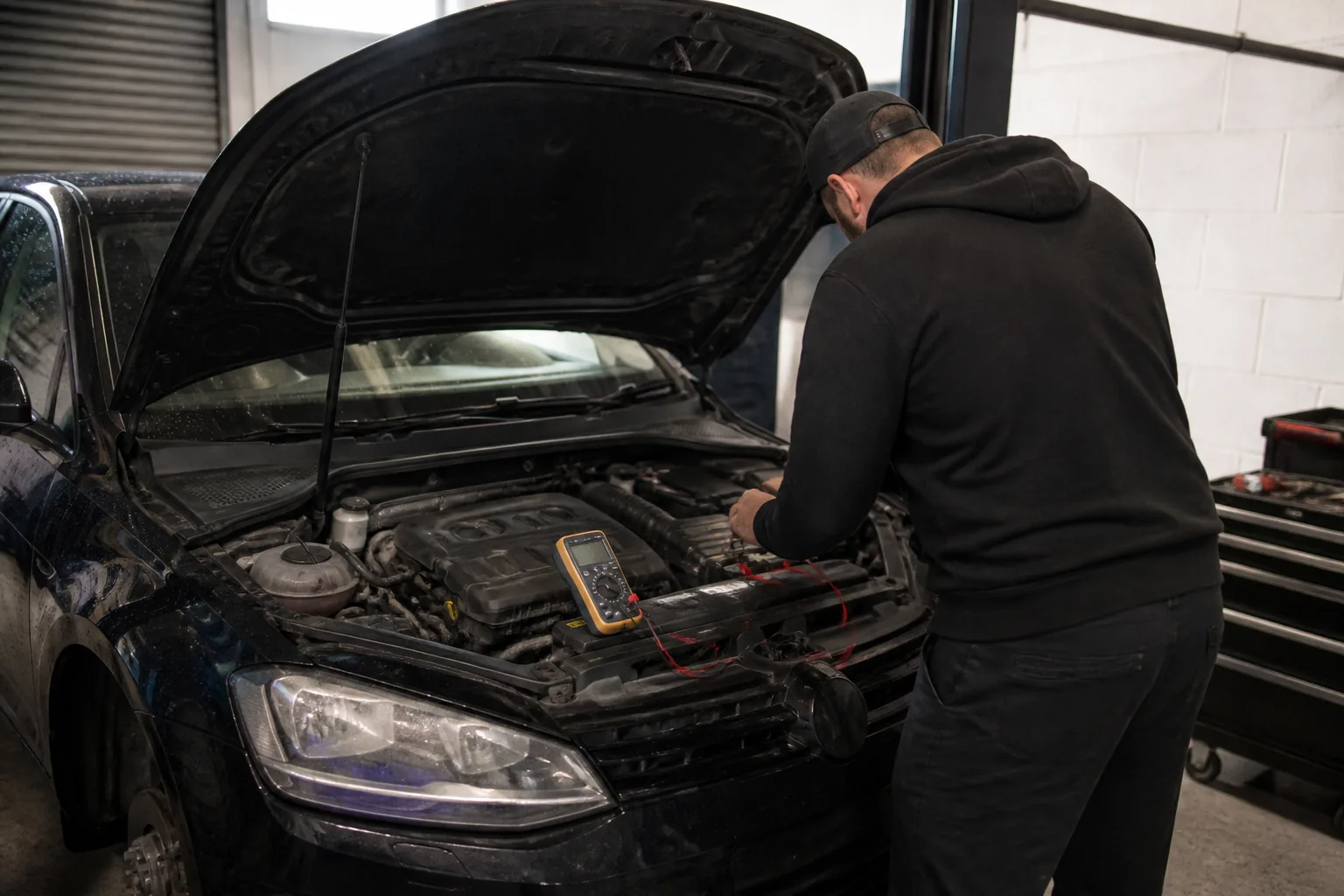
The alternator is an important part of your car’s charging system. It produces electrical power while the engine is running and helps keep the battery charged. It also supplies electricity to systems such as the lights, heater blower, wipers, engine management and infotainment.
When an alternator starts to fail, the symptoms can be easy to mistake for a weak battery or another electrical fault. The car may continue to run normally for a while, but once the battery’s stored power is used up, the engine can stop and may not restart.
Here are the main signs an alternator is failing, along with some sensible checks and guidance on when to arrange a professional inspection.
Common signs an alternator is failing
1. The battery warning light comes on
The battery-shaped warning light on the dashboard is often the clearest indication of a charging system problem. Despite its appearance, it does not usually mean that the battery itself is definitely at fault. It can indicate that the alternator is not charging correctly, or that there is a problem with the wiring, drive belt or another part of the charging circuit.
The light may appear when you start the engine, then go out once the engine is running. That is normally part of the dashboard check. It is more concerning if it stays illuminated, comes on while driving, or appears intermittently.
If this warning light comes on while you are on the road, switch off non-essential electrical equipment where it is safe to do so and arrange professional advice. The car may keep running only until the battery’s remaining charge is exhausted. If the vehicle begins to lose power, the engine starts running poorly, steering assistance changes or other warning lights appear, pull over safely and do not continue driving unless you have been advised that it is safe.
2. Headlights or interior lights become dim or flicker
Lights that are noticeably dimmer than usual, or that brighten and fade with engine speed, can point towards unstable or insufficient charging. You may notice the change most clearly at night, when using the headlights, or when several electrical systems are switched on together.
Flickering lights can have other causes, including a poor connection or an electrical fault, so this symptom does not confirm that the alternator is failing. It does, however, justify having the charging system checked rather than replacing the battery by guesswork.
3. Electrical equipment behaves unusually
A charging problem can affect more than the headlights. The heater fan may run more slowly, the electric windows may seem sluggish, the dashboard display may flicker, or the radio and other equipment may cut out or reset.
Modern vehicles rely on stable voltage for many control modules. Low or fluctuating voltage can therefore create several apparently unrelated symptoms. A warning message, an intermittent electrical fault or a collection of unusual glitches may be caused by the charging system, although a garage will need to test the vehicle to establish the actual cause.
4. The engine is difficult to start after driving
If the car starts normally after a battery charge or jump start but is difficult to start again later, the alternator may not be replenishing the battery properly. The battery could also be old or damaged, or there may be excessive electrical drain when the vehicle is parked.
It is useful to note when the problem occurs. A vehicle that struggles after being left overnight may have a battery or drain issue. One that starts with assistance but then develops warning lights or electrical problems while being driven may have a charging fault.
Our guide to why a car battery keeps going flat explains some of the other possibilities.
5. There is a whining or grinding noise
The alternator contains bearings and other moving parts. A worn bearing can produce a whine, rumble or grinding noise from the front of the engine. The sound may change as engine speed rises.
A slipping or damaged auxiliary drive belt can also squeal. That belt drives the alternator on many vehicles, but its exact layout varies. Do not assume that a belt noise is harmless. A failed belt can leave the alternator unable to charge the battery and, depending on the vehicle’s design, may affect other driven components.
Do not put your hands near belts, pulleys or fans with the engine running. If you hear a new mechanical noise, arrange an inspection rather than attempting to investigate moving parts yourself.
6. A burning smell from the engine bay
A hot rubber smell may be associated with a slipping auxiliary belt. An electrical or overheated component can also produce a sharp smell. Neither symptom should be ignored, particularly if it appears alongside a warning light, smoke, visible belt damage or rising engine temperature.
Stop in a safe place, switch off the engine and allow it to cool if you notice smoke or a strong burning smell. Do not open hot components unnecessarily or continue driving until the cause has been assessed.
Alternator fault or battery problem?
The alternator and battery work together, so their symptoms overlap. The battery stores energy for starting and supports the vehicle when the engine is off. The alternator produces electrical power while the engine runs and restores charge to the battery.
A worn battery may cause slow cranking, repeated starting problems or a flat battery, particularly in cold weather. An alternator fault can cause the same starting symptoms, but it may also produce a battery warning light, dimming lights, electrical glitches or a noise from the belt area.
Replacing the battery without checking the charging system may only provide a temporary improvement. Similarly, an alternator that appears faulty should be assessed alongside the battery, cables, connections and drive belt. A proper diagnosis uses vehicle-specific testing rather than relying on one symptom.
If the car will not start at all, you may also find our guide to why a car will not start useful. For a vehicle that turns over but does not fire, see why a car can crank but not start.
Safe checks you can make
There are a few basic observations that can help a garage, without dismantling anything:
- Note whether the battery warning light stays on or appears only intermittently.
- Check whether the headlights, dashboard or heater fan change when electrical equipment is switched on.
- Listen for new squealing, whining or grinding noises, without reaching into the engine bay.
- Look for obvious signs such as a loose-looking belt, visible belt damage, smoke or fluid contamination, but do not touch moving or hot components.
- Record whether the vehicle has needed jump starting and whether the problem returns soon afterwards.
A multimeter reading can be useful when carried out correctly, but a single voltage reading does not always identify the cause. Charging performance can vary with the vehicle, engine speed, electrical load and battery condition. Avoid carrying out tests near moving belts or exposed electrical connections if you are not familiar with the risks.
Can you drive with a failing alternator?
Sometimes a vehicle with a charging fault will continue to drive for a short time, but this is not something to rely on. Once the battery’s stored power is gone, the engine may stop. Electrical assistance and vehicle systems may also be affected, and a breakdown could occur in an unsafe location.
If the battery warning light is on, arrange inspection as soon as practical and avoid unnecessary journeys. Stop and seek assistance if the vehicle develops multiple warning lights, loses power, stalls, produces smoke or a strong burning smell, or shows signs of overheating. Do not continue driving if you are concerned that the vehicle is no longer roadworthy or safe to control.
How a garage checks the problem
A technician will normally consider the full charging system rather than treating the warning light as proof that the alternator needs replacing. Checks may include the battery’s condition, charging output, electrical connections, earth points, auxiliary belt and relevant fault codes. The alternator may then be assessed under different electrical loads.
This approach helps distinguish an alternator fault from a weak battery, belt problem, damaged cable, poor connection or excessive electrical drain. It also reduces the risk of fitting a new part when another fault is responsible.
If you are seeing several of these symptoms, Ashton’s Garage can inspect the vehicle and explain the likely cause before recommending suitable repairs. You can find more information through our car repairs service in Salisbury.
Summary
The main signs an alternator is failing include a battery warning light, dimming or flickering lights, unusual electrical behaviour, repeated starting problems, belt-area noises and burning smells. These symptoms can have more than one cause, so they should not be treated as a definite diagnosis.
Because a charging fault can leave a car without enough power to keep running, prompt professional inspection is sensible. A garage can test the battery, alternator, belt and wiring together and advise whether the vehicle is safe to drive.
Frequently asked questions
What is the most common sign of a failing alternator?
A battery-shaped warning light that stays on while the engine is running is a common sign of a charging-system fault. Dimming lights, electrical glitches and repeated starting problems can also occur, but none of these symptoms proves that the alternator itself is at fault.
Can a flat battery mean the alternator is failing?
Yes, but it can also be caused by an old battery, an electrical drain, poor connections or infrequent use. If a battery goes flat again after being charged or jump started, the battery and charging system should be tested together.
How long can I drive with the alternator warning light on?
There is no reliable distance or time because it depends on the battery’s remaining charge and the vehicle’s electrical load. The car may stop once that stored power is used. Avoid unnecessary driving and arrange professional advice, stopping safely if power loss, smoke, overheating or other serious symptoms appear.
Can an alternator make a noise?
Yes. Worn alternator bearings can cause whining, rumbling or grinding, while a slipping auxiliary belt may squeal. Other engine components can make similar sounds, so a garage inspection is needed to identify the source.
Does a new battery fix an alternator problem?
Not necessarily. A new battery may temporarily mask a charging fault, but it will not repair an alternator, belt, wiring or connection problem. The charging system should be tested before deciding which parts need attention.
Related advice
Why Does My Engine Make a Knocking Noise?
An engine knocking noise can come from anything from combustion problems to low oil or a loose exhaust part. Learn what the sound may mean, what you can safely check and when to stop driving.
Why Does My Engine Make a Ticking Noise?
A ticking engine can be harmless, but it may also point to an oil, exhaust, valve or timing problem. Learn what the sound could mean and when to arrange a professional inspection.
Why Does My Heater Blow Cold Air When the Engine Is Hot?
A car heater that blows cold air while the engine seems hot can point to low coolant, trapped air, a circulation problem or a fault inside the heating system. Here is what the symptoms may mean and when to arrange a professional inspection.