How to Know Whether a Car Repair Is Urgent
Some car faults can wait for a convenient garage appointment, while others make continued driving unsafe. Here is how to judge the difference without guessing at a diagnosis.
Knowing how to know whether a car repair is urgent is not always straightforward. A new noise, warning light or change in the way your car drives can be caused by something relatively minor, but it can also point to a fault that affects braking, steering, tyres or engine temperature.
The safest approach is not to diagnose the fault yourself from one symptom. Instead, consider what has changed, whether the problem is getting worse and whether it affects the car's ability to stop, steer or remain under control. If you are unsure, a professional inspection is usually the sensible next step.
First, ask whether the car is safe to drive
Some symptoms should be treated as a reason to stop driving as soon as it is safe to do so. This is particularly important where a fault may affect braking, steering, a damaged tyre, engine overheating or the car's structure.
- Braking: a soft or sinking brake pedal, grinding, severe juddering, pulling to one side or a major change in stopping distance needs prompt attention.
- Steering: sudden looseness, heavy steering, unusual movement through the steering wheel or difficulty keeping the car straight should not be ignored.
- Tyres: a puncture, visible bulge, split sidewall, exposed cord or tyre that is losing pressure quickly can make driving unsafe.
- Overheating: a temperature warning, steam, a strong smell of coolant or a temperature gauge rising into the hot zone means you should stop safely and switch the engine off.
- Structural damage: after a collision, hitting a pothole or striking a kerb, do not assume the car is safe because it still moves. Hidden damage to suspension, wheels or steering components may be present.
Do not continue driving simply to reach a garage if the car is difficult to control or one of these safety systems appears to be failing. Move to a safe place where possible, follow any roadside assistance guidance and arrange professional help.
Warning lights: which ones need quick attention?
Warning lights are not all equally urgent, and the exact meaning can vary between makes and models. Your handbook should explain the symbols used in your car. As a general guide, a red warning light usually deserves immediate attention, while an amber light normally indicates that the car needs checking soon. That distinction is not a substitute for reading the handbook or considering how the vehicle is behaving.
A red brake warning light, oil pressure warning light, coolant temperature warning or charging-system warning should not be dismissed. If a warning light appears alongside a change in braking, engine noise, temperature or steering, stop driving when it is safe and seek advice.
An amber engine-management light may not always mean the car will stop immediately, but it should still be investigated. If it is flashing, the engine is misfiring, power has dropped sharply or the car is producing unusual smoke, avoid unnecessary driving. A diagnostic check can identify stored fault information, but a warning light alone does not provide a complete diagnosis.
Signs that a repair is urgent but the car may still move
Some faults do not cause an immediate breakdown but can become more expensive or unsafe if ignored. Arrange an inspection promptly if you notice any of the following:
- a new fluid leak or a growing patch beneath the car;
- repeated loss of coolant, oil or brake fluid;
- persistent knocking, grinding or scraping from a wheel or underneath the vehicle;
- strong vibration through the steering wheel, seat or body;
- the car pulling to one side, especially when braking;
- an engine that repeatedly loses power, stalls or struggles to start;
- a burning smell, smoke or electrical smell;
- an exhaust that has become unusually loud or is visibly damaged;
- a clutch pedal or gear change that has suddenly become difficult;
- repeated tyre-pressure loss without an obvious harmless cause.
Whether you can drive a short distance to a garage depends on the symptom, its severity and the condition of the vehicle. For example, a faint intermittent noise may be less urgent than a rapidly worsening grinding sound, but it is not possible to confirm the cause remotely. If the symptom affects control, stopping or engine temperature, professional recovery or inspection is the safer option.
What can usually wait for a planned appointment?
Not every fault means the car must be taken off the road immediately. Minor cosmetic damage, a failed interior convenience feature or an occasional noise that does not affect the car's handling may be suitable for a planned inspection. Even then, keep monitoring it and make a note of when it happens.
Small problems can also be early signs of a developing fault. A slight vibration may relate to a wheel or tyre issue. A small coolant loss may become overheating. A faint brake noise may change into a more serious braking problem. Booking an assessment before the symptom worsens can make the situation easier to understand and may prevent secondary damage.
If you are unsure what information will help the garage, our guide on what information to give a mechanic when reporting a fault explains the useful details to record. A description of when the symptom occurs, whether the engine is hot or cold, and whether speed or braking changes it can all help with the initial assessment.
Safe checks you can make before contacting a garage
There are a few basic observations that do not involve dismantling anything. Check the dashboard for warning lights, look around the vehicle for obvious tyre damage, and note any fresh fluid beneath the car. You can also check whether a door, bonnet or boot is properly closed and whether the symptom changes when the car is stationary.
Do not get underneath a vehicle supported only by a jack, remove brake or suspension components, open a hot cooling system or attempt a repair that you are not equipped and trained to carry out. Avoid touching leaking fluids if you do not know what they are, and keep clear of traffic while making any roadside checks.
It can also help to record a warning message exactly as it appears and, where safe, note the conditions in which the fault occurs. Our article on describing a strange car noise to a mechanic covers how to explain sounds without having to identify the failed part yourself.
Why an inspection is better than guessing
Several different faults can produce similar symptoms. A vibration might come from a tyre, wheel, brake or suspension component. A warning light could relate to a sensor, wiring, fluid pressure or a wider system fault. Checking the vehicle properly helps separate the symptom from its cause and establishes whether it is safe to continue driving.
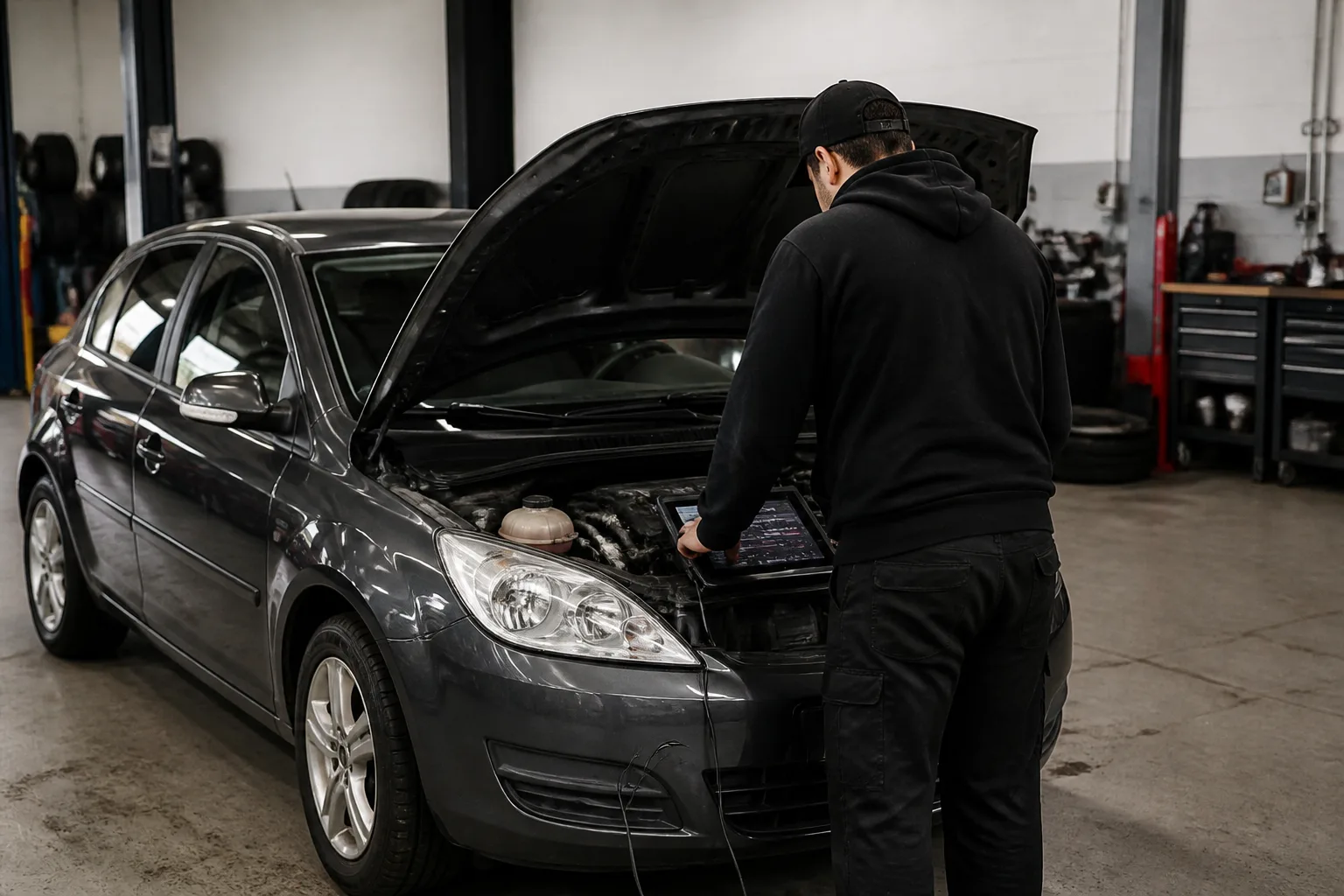
A garage inspection may involve visual checks, a road test where appropriate, measurement and diagnostic equipment. The process should be based on the actual symptoms rather than an assumption made from a dashboard symbol or internet search. You can read more about what happens during a garage inspection if you would like to know what to expect.
When to contact a garage
Contact a garage promptly if a fault is recurring, worsening or affecting how the car stops, steers or performs. Tell the garage what you noticed, when it began and whether any warning lights appeared. If you believe the vehicle may be unsafe to drive, say so when you call and ask about the safest way to arrange an inspection.
Ashton's Garage can discuss the symptoms with you and advise on the appropriate next step without pretending to confirm a diagnosis over the phone. If you are concerned about a developing fault or are unsure whether your car is safe to drive, contact Ashton's Garage to discuss an inspection.
Frequently asked questions
Can I drive to a garage with a warning light on?
It depends on the warning light and how the car is behaving. Check the handbook, but stop driving if there is a red warning light or any change affecting braking, steering, engine temperature or control. An amber light still needs investigation, particularly if it is flashing or accompanied by poor performance.
Is a strange noise from my car an emergency?
Not every noise is an emergency, but a sudden or worsening grinding, knocking, scraping or clunking sound should be checked promptly. Treat it as more urgent if it comes from a wheel, changes when braking or steering, or is accompanied by vibration or difficulty controlling the car.
What should I do if my car starts overheating?
Stop somewhere safe as soon as possible, switch the engine off and allow it to cool. Do not remove a coolant cap while the engine is hot. Arrange professional advice or recovery rather than continuing to drive an overheating vehicle.
Can a small fluid leak wait until my next service?
It depends on the fluid, how much is being lost and whether the leak is getting worse. A fresh or increasing leak should be inspected rather than left until a routine service, especially if it could be oil, coolant or brake fluid.
Related advice
What to Do If Your Car Breaks Down Away From Home
Find out what to do if your car breaks down away from home, including how to stay safe, call for help and explain the problem to a recovery service or garage.
Car Maintenance for Rural Driving: A Practical Guide
Rural roads can place extra demands on your car. Learn which checks matter most, how to spot developing problems and when professional inspection is sensible.
What Happens During a Garage Inspection?
A garage inspection is more than a quick look under the bonnet. Here is what a mechanic may check, how findings are assessed and what you can expect from the process.