How to Check Your Tyre Tread Safely
Learn how to check your tyre tread safely, what the legal minimum means, and which signs of tyre damage should be inspected by a professional.
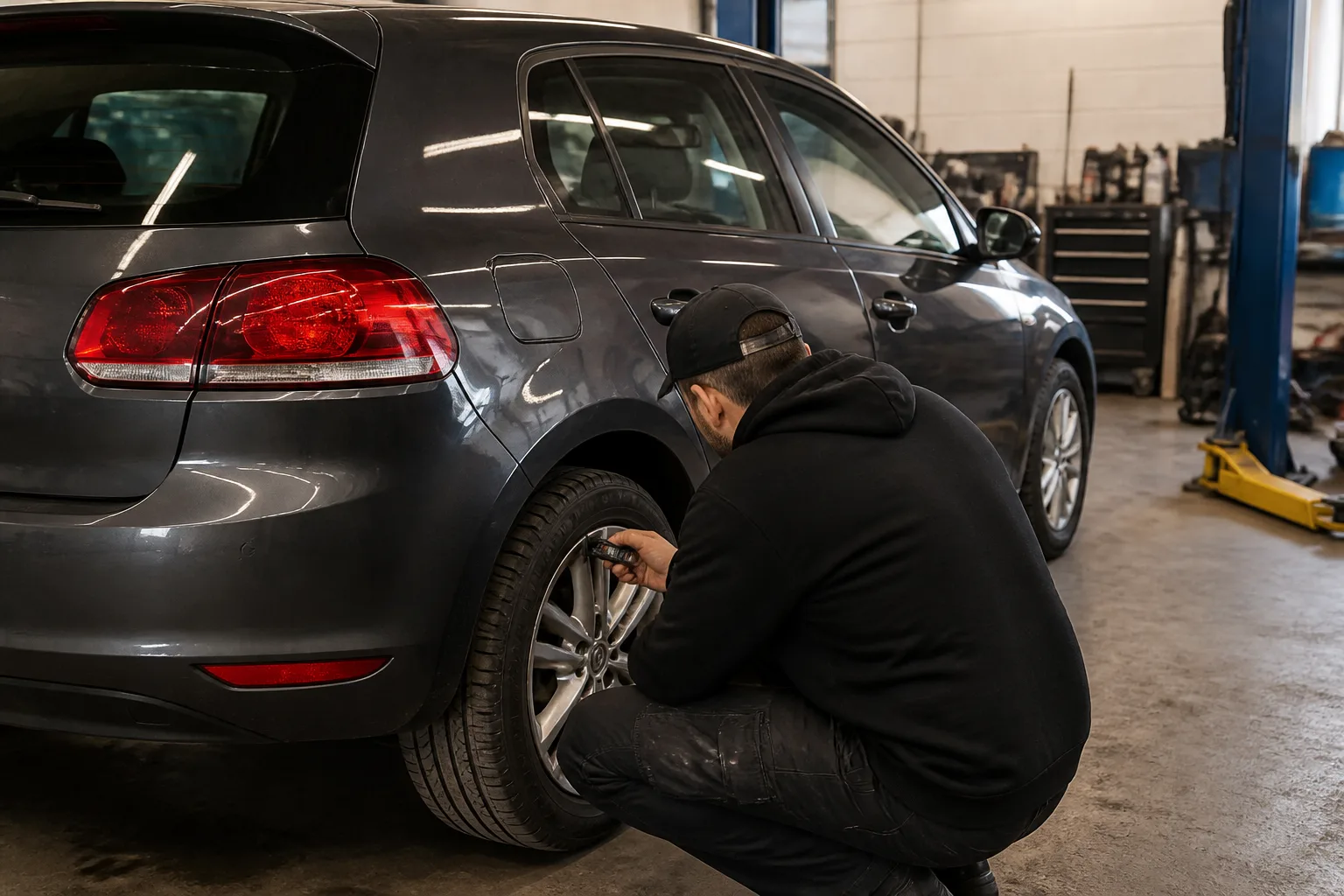
Knowing how to check your tyre tread safely is a useful part of looking after your car. A quick inspection can help you spot tyres that are worn, damaged or wearing unevenly before they become a bigger concern. It is also a sensible check before a long journey, particularly if your car has been sitting unused or you have noticed changes in its handling.
Checking tread depth is only one part of assessing a tyre. The condition of the sidewalls, the way the tread is wearing and the presence of cuts or bulges matter too. If you find serious damage, or you are not confident that a tyre is safe, avoid relying on a home check alone. A tyre professional or garage can inspect it properly.
What tyre tread does
The grooves in a tyre tread help move water away from the contact area between the tyre and the road. As the tread wears down, the tyre may have less ability to clear standing water. This can affect grip, especially in wet conditions.
Tyres also need enough tread to maintain a suitable contact with the road surface as the car brakes, steers and accelerates. Tread depth is therefore important, but it does not tell you everything about the tyre. A tyre with plenty of tread can still be unsuitable if it has a damaged sidewall, has perished with age or is badly underinflated.
How to check your tyre tread safely
1. Park on a level surface
Choose a safe, level place away from moving traffic. Switch off the engine, apply the handbrake and make sure the car is secure before walking around it. Do not place yourself under the vehicle or reach behind a wheel while checking the tyres.
If the car has recently been driven, take care around the wheels and brakes because they may be hot. You do not need to remove the wheel for a basic tread inspection.
2. Look across the whole tyre
Turn the steering slightly if it helps you see the front tyres, but do not force the wheel or put your hands near moving parts. Look across the tread from the outside edge to the inside edge. You may need to move the car a short distance to see the part of the tyre that was resting on the ground. Only do this when it is safe, and secure the car again before continuing.
Check for tread that is worn more on one edge, a smooth strip down the centre, or patches that look different from the rest of the tyre. Uneven wear can have several possible causes, including incorrect inflation, wheel alignment or a suspension issue. A visual check cannot identify the exact cause.
3. Check the tread depth
For cars, the UK legal minimum tread depth is 1.6mm across the central three-quarters of the tread and around the complete circumference of the tyre. This is a minimum, not a target for good condition.
Many tyres have tread-wear indicators moulded into the main grooves. These small raised bars show how close the tyre is to its legal limit. If the surrounding tread is level with the indicators, the tyre has reached the minimum depth and needs replacing. Do not treat these bars as a substitute for checking the whole tyre, as wear may not be even.
You can also use a suitable tread-depth gauge if you have one. Take readings in several places across the tread, rather than measuring only at the outer edge. Follow the gauge instructions and keep your fingers clear of any damaged rubber or exposed material.
4. Inspect the sidewalls
Look at both the outer sidewall and, as far as you can safely see, the inner sidewall. Check for cuts, cracks, splits, lumps, bulges or areas where the rubber appears distorted. A bulge can indicate damage to the tyre's internal structure, sometimes after hitting a pothole or kerb.
Do not try to repair a bulge or cut yourself. If you can see cords, canvas or other internal material, treat the tyre as unsafe to drive on. Stop using the vehicle and arrange professional advice. Continuing to drive on a structurally damaged tyre can increase the risk of failure.
5. Check the valve and tread grooves
Look for a damaged or missing valve cap and check the tread grooves for stones, nails or other objects. Do not pull out an embedded object if it may be sealing a puncture. Removing it could allow the tyre to lose air quickly.
If a tyre is losing pressure, looks misshapen or has a visible puncture, do not assume that inflating it solves the problem. Follow the vehicle manufacturer's guidance and seek professional inspection, particularly before driving any distance.
What signs mean you should not keep driving?
Stop and seek professional help if you find a serious cut, bulge, exposed cords, a significant puncture or a tyre that is visibly losing air. You should also take care if the vehicle pulls to one side, vibrates unusually or feels unstable, as these symptoms can involve tyres, wheels, steering or suspension and cannot be diagnosed safely from a tread check alone.
If a tyre pressure warning light comes on, check the pressures when it is safe to do so and compare them with the vehicle manufacturer's recommended figures. A warning light does not identify the cause of the pressure loss. If the tyre is damaged or the pressure drops again, arrange an inspection rather than continuing to drive normally.
Why tread can wear unevenly
Uneven tread wear is worth investigating even when the tyre still appears to have usable depth. Wear along both shoulders can be associated with underinflation, while wear concentrated in the middle may be associated with overinflation. However, tyre construction, vehicle loading, wheel alignment and suspension condition can also affect the pattern.
That is why simply replacing one tyre may not address the underlying problem. A garage can examine the wear pattern alongside the wheel and suspension components and advise whether further checks are appropriate. If braking symptoms are present as well, our guide to signs your brake pads need replacing may help explain what to look for, although a written guide cannot replace an inspection.
How often should you check your tyres?
Make a habit of looking over your tyres regularly and before long journeys. It is sensible to check them after hitting a pothole or kerb, and whenever the car feels different through the steering wheel. Check tyre pressures at the same time, using the vehicle manufacturer's recommended figures rather than the maximum pressure printed on the tyre sidewall.
Tyre checks should sit alongside general maintenance. For example, vibration while braking or a car pulling during braking may need attention beyond the tyres. You can read more about why a car may pull to one side when braking and why the steering wheel may shake when braking if either symptom applies to your vehicle.
When to ask a garage to inspect your tyres
A basic check is useful, but it has limits. Ask a garage to inspect the car if you find uneven wear, repeated pressure loss, damage to the sidewall or a change in handling. If you are unsure whether a tyre has enough tread or whether a mark is serious, it is safer to have it assessed than to guess.
Ashton's Garage can inspect tyres and related wheel, steering or suspension concerns in Salisbury. If your check has raised a concern, you can find the relevant car repairs service and explain what you have noticed before arranging the next step.
Key points to remember
- Check all four tyres, including as much of the inner sidewall as you can see safely.
- Measure or inspect tread in several places because wear may be uneven.
- The legal minimum is not the same as a recommendation to keep driving indefinitely.
- Do not drive on a tyre with a bulge, exposed cords, serious cuts or a significant loss of pressure.
- If the car pulls, vibrates or feels unstable, arrange a professional inspection rather than relying on tread depth alone.
Frequently asked questions
What is the legal minimum tyre tread depth in the UK?
For cars, the legal minimum is 1.6mm across the central three-quarters of the tread and around the complete circumference. This is a legal limit, not a guarantee that the tyre is otherwise safe or in good condition.
Can I check tyre tread with a 20p coin?
A coin can provide a quick indication, but it is not a precise tread-depth measurement and does not check the sidewalls or uneven wear. A suitable tread-depth gauge and a full visual inspection provide more useful information.
Should I replace a tyre if the tread is uneven?
Uneven wear should be assessed rather than ignored. The tyre may need replacing, but the underlying cause could involve inflation, alignment, wheels or suspension. A garage can inspect the wear pattern and advise on the appropriate action.
Can I drive with a bulge in my tyre?
A bulge may indicate damage to the tyre's internal structure. Do not treat it as a cosmetic mark or attempt to repair it yourself. Avoid driving on the tyre and arrange professional advice.
Do tyres need checking if they still have plenty of tread?
Yes. Tread depth does not reveal every problem. Cuts, cracks, bulges, punctures, pressure loss and uneven wear can all make a tyre unsuitable even when the grooves appear deep.
Related advice
When Does Wheel Alignment Need Checking?
Wheel alignment may need checking after a pothole impact, kerb strike, suspension work or unusual tyre wear. Learn the warning signs and when professional inspection is sensible.
Why Does My Car Pull to One Side While Driving?
If your car drifts or pulls to one side, the cause could be as simple as tyre pressure or as serious as a brake, steering or suspension fault. Here is what to check and when to seek professional help.
Why Does the Steering Wheel Shake When Braking?
A steering wheel that shakes under braking can have several causes, from uneven brake discs to worn suspension or tyre problems. Here is what the symptom may mean and when to stop driving.