Why Is There Blue Smoke From My Exhaust?
Blue smoke from an exhaust usually means the engine is burning oil. Learn what the colour can indicate, which checks are safe to make and when professional inspection is needed.
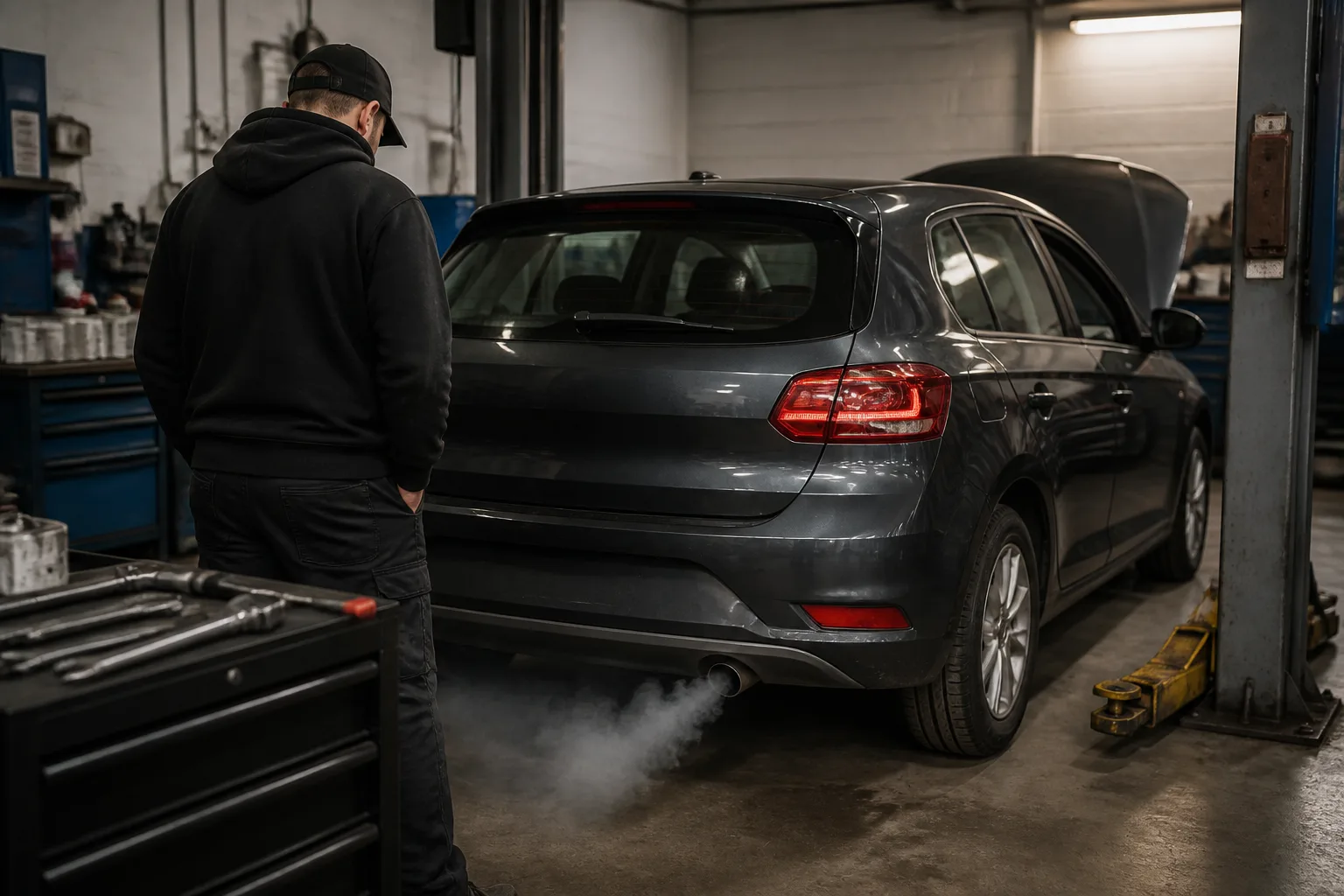
Blue smoke from your exhaust usually means that engine oil is getting into the combustion process and being burned along with the fuel. A small puff on start-up may have a different cause from thick smoke that continues while you are driving, so the pattern matters.
Exhaust smoke colour is not a perfect diagnostic tool. Light, grey or blue-grey smoke can be difficult to distinguish in poor light, and condensation can make a healthy exhaust look smoky when the engine is cold. However, a definite blue haze, particularly alongside a falling oil level or an oily smell, should not be ignored.
What causes blue smoke from an exhaust?
Inside a healthy engine, oil lubricates moving parts but should be kept separate from the air and fuel mixture. If oil passes into the cylinders or exhaust system, it can burn and produce blue smoke. Common possibilities include the following.
Worn piston rings or cylinder wear
Piston rings help seal the combustion chamber and control the oil on the cylinder walls. If they are worn, damaged or stuck, oil can pass into the combustion area. This may lead to persistent blue smoke, increased oil consumption, reduced performance or lower engine compression.
This type of fault cannot be confirmed from the exhaust colour alone. A garage may need to assess the engine’s condition with appropriate tests rather than replacing parts based on symptoms alone.
Valve stem seals
Valve stem seals help prevent oil from entering the cylinders around the engine’s valves. If they become worn, oil may collect while the vehicle is parked. A puff of blue smoke after starting, or after the engine has been idling and the accelerator is used, can be consistent with this type of problem.
That pattern is only a clue, not a diagnosis. Other faults can produce similar smoke, particularly on an older or high-mileage vehicle.
Turbocharger oil seals
Turbocharged engines use oil to lubricate the turbocharger. A problem with the turbocharger or its oil seals can allow oil into the intake or exhaust side. Possible accompanying signs include a noticeable loss of power, unusual turbo noises, higher oil consumption or smoke that becomes heavier under load.
If a turbocharged car suddenly produces heavy smoke or changes its engine behaviour, stop somewhere safe and arrange professional assistance. Continuing to drive may increase the risk of further engine or turbocharger damage.
Oil level or crankcase ventilation problems
Blue smoke is not always caused by internal engine wear. An engine that has been overfilled with oil can force oil into places where it should not be. A blocked or faulty crankcase ventilation system can also increase pressure inside the engine and push oil past seals.
These causes may be less extensive than worn internal components, but they still need checking. Correcting the apparent cause without finding out why oil entered the intake or combustion system may leave the original fault unresolved.
When is blue smoke most noticeable?
The timing can help a technician narrow down the possibilities:
- On start-up: a brief puff after the vehicle has been parked may point towards oil entering the cylinders while the engine is off, although other explanations are possible.
- During acceleration: smoke that appears when the engine is under load can be associated with oil entering the combustion process, turbocharger problems or general engine wear.
- When lifting off the accelerator: smoke after a period of overrun can sometimes be linked to oil being drawn past valve components.
- All the time: continuous blue smoke is more concerning than an occasional light puff and should be assessed promptly.
These patterns should be treated as useful observations rather than a way to identify the failed component. Note when the smoke appears, whether the engine is hot or cold, and whether there are changes in performance or oil consumption. That information can help a garage investigate efficiently.
Can I still drive with blue smoke?
It depends on how severe the smoke is and what other symptoms are present. A light, occasional puff does not necessarily mean the engine will fail immediately, but arranging an inspection soon is sensible. Oil burning can worsen, and the underlying fault may cause damage to the catalytic converter, diesel particulate filter or other components.
Stop driving and seek professional advice if the smoke is thick or continuous, the oil pressure warning light appears, the engine loses power, there is a strong smell of burning oil, or the engine is making unusual noises. Do not continue a journey simply because the car still starts and moves.
On a diesel vehicle, an engine that begins to rev uncontrollably can be a particularly serious sign of oil entering the intake system. Move away from traffic if it is safe to do so, switch off the vehicle if possible without putting yourself at risk and arrange urgent assistance. Do not put yourself in danger by investigating a hot or moving engine.
Safe checks you can make
There are a few basic observations that are reasonable for an owner, provided the vehicle is parked safely and the engine is not hot enough to cause burns.
- Check the oil level according to the vehicle handbook, using level ground and the correct procedure for the dipstick or electronic oil measurement system.
- Look for obvious oil leaks beneath the vehicle or around the engine bay, without touching hot components.
- Check whether the exhaust smoke is present only when cold or continues after the engine has warmed up.
- Make a note of warning lights, unusual smells, loss of power, unusual noises and how often you need to top up the oil.
Do not remove hot engine covers, dismantle intake or turbocharger components, or keep driving to see whether the smoke gets worse. If the oil level is very low, do not assume that topping it up has fixed the problem. The reason for the loss still needs to be established, and overfilling can create its own problems.
Blue smoke compared with other exhaust smoke
White vapour on a cold morning is often condensation and should normally clear as the exhaust warms. Thick white smoke that continues from a warm engine can indicate coolant entering the combustion process and needs prompt attention. Black smoke generally indicates that the engine is receiving too much fuel or not enough air.
These descriptions overlap in real conditions, especially in darkness or rain. If you are unsure of the colour, describe what you can see and smell, and whether it changes with engine temperature or acceleration. A garage can then carry out a proper assessment.
Why a garage inspection is worthwhile
Finding the cause may involve checking the oil level and condition, inspecting for leaks, assessing the intake and crankcase ventilation system, and carrying out suitable engine or turbocharger tests. The correct approach depends on the vehicle, its engine type and the exact symptoms.
Blue smoke is an engine symptom, not a repair diagnosis. An inspection can help distinguish a relatively straightforward oil-control issue from wear that needs more extensive consideration. If your car is also struggling to start, our guide to why a car will not start covers some different starting-related causes. If the engine cranks but does not run, see why a car can crank but not start, as that symptom is not normally explained by blue smoke alone.
If you have noticed blue smoke, falling oil levels or an unusual exhaust smell, Ashton’s Garage can inspect the vehicle and explain the likely options without guessing from the smoke colour alone. If the smoke is heavy, warning lights are showing or the engine is behaving unpredictably, stop driving and arrange professional assistance instead.
Frequently asked questions
Is blue smoke from an exhaust always serious?
It should be taken seriously because it commonly indicates that the engine is burning oil. An occasional light puff may not require immediate recovery, but persistent smoke, falling oil levels, warning lights or loss of power warrant prompt professional inspection.
Can low engine oil cause blue smoke?
Low oil is usually a result of oil being lost or consumed rather than the direct cause of blue smoke. An engine running with too little oil can suffer serious damage, so check the level safely and follow the vehicle handbook before driving.
Why does my car smoke blue only when starting?
A start-up puff can occur when oil has entered the combustion area while the vehicle was parked. Valve stem seals are one possible explanation, but the same pattern can have other causes and cannot confirm a particular failed part.
Can I pass an MOT with blue smoke?
Blue smoke can indicate an engine or emissions problem, and the outcome depends on the vehicle’s condition and the cause of the smoke. It is better to have the fault assessed before an MOT rather than relying on the smoke colour to predict the result.
Related advice
Why Does My Engine Make a Knocking Noise?
An engine knocking noise can come from anything from combustion problems to low oil or a loose exhaust part. Learn what the sound may mean, what you can safely check and when to stop driving.
Why Does My Engine Make a Ticking Noise?
A ticking engine can be harmless, but it may also point to an oil, exhaust, valve or timing problem. Learn what the sound could mean and when to arrange a professional inspection.
Why Does My Heater Blow Cold Air When the Engine Is Hot?
A car heater that blows cold air while the engine seems hot can point to low coolant, trapped air, a circulation problem or a fault inside the heating system. Here is what the symptoms may mean and when to arrange a professional inspection.