Why Is There Black Smoke From My Exhaust?
Black exhaust smoke usually means the engine is burning too much fuel or not getting enough air. Here are the likely causes, what you can safely check and when to arrange a garage inspection.
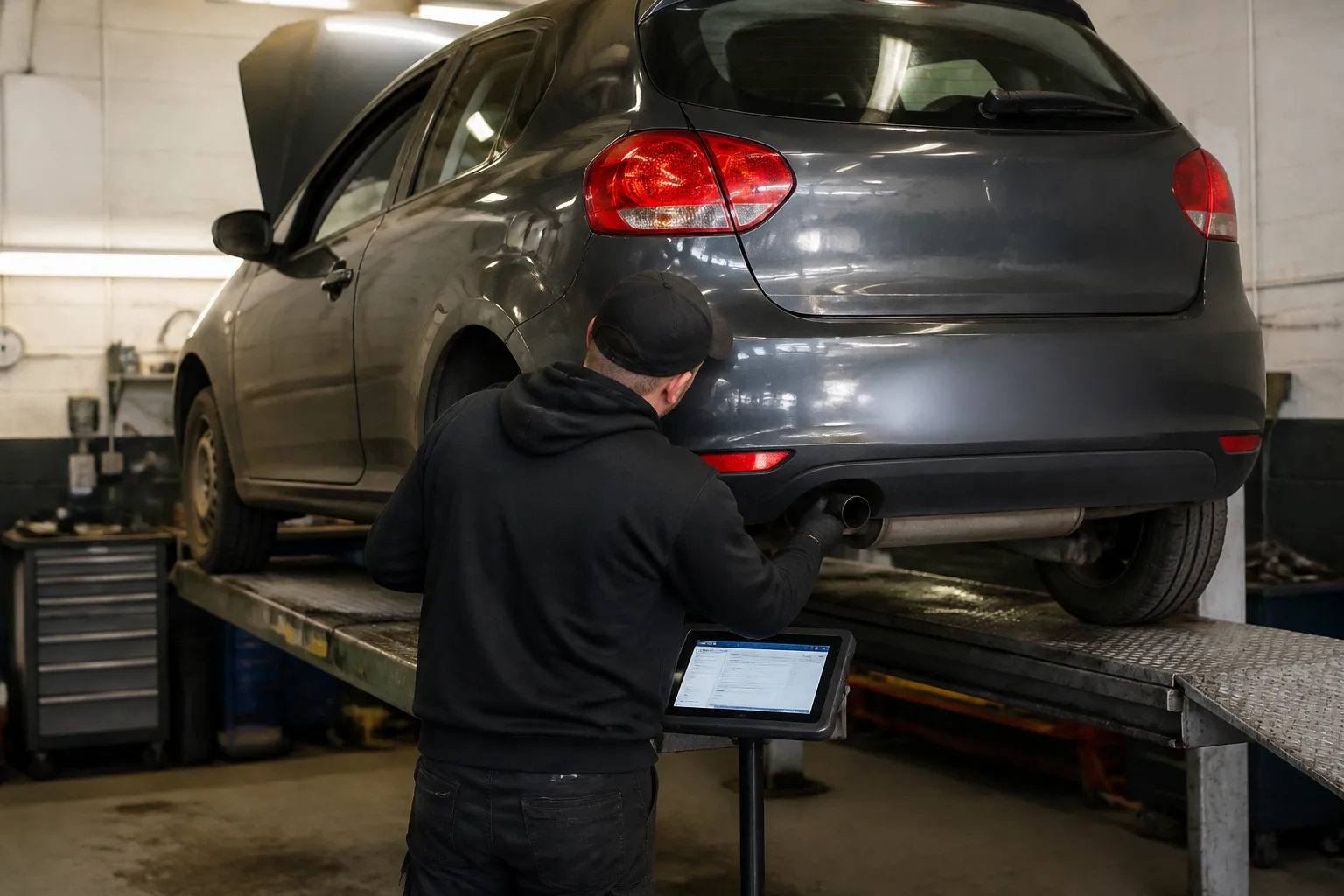
Seeing black smoke from your exhaust can be worrying, particularly if it appears suddenly or becomes heavier when you accelerate. In many cases, it means the engine is receiving more fuel than it can burn cleanly, or that the air supply is restricted. The result is incomplete combustion, which can produce visible soot from the tailpipe.
The exact cause depends on the vehicle, engine type and when the smoke appears. A small puff on an older diesel may have a different explanation from thick smoke that continues from a petrol car. Black smoke is a symptom rather than a diagnosis, so it is important not to assume that replacing one particular part will solve the problem.
What does black exhaust smoke usually mean?
Engines need the correct balance of fuel and air. If too much fuel enters the cylinders, or not enough air reaches them, the mixture may not burn completely. Soot can then leave through the exhaust as black or dark grey smoke.
Modern vehicles use sensors and engine management systems to control fuelling. Diesel engines also rely on systems such as exhaust gas recirculation, turbocharging and diesel particulate filters. A fault in one part of this system can affect the others, which is why a warning light or diagnostic check may be needed to find the underlying problem.
Common causes of black smoke
A blocked or restricted air filter
The engine air filter stops dust and debris entering the intake system. Over time, it can become dirty enough to restrict airflow. This can be more noticeable under acceleration, when the engine needs a greater volume of air.
An air filter is a relatively straightforward service item, but black smoke should not automatically be blamed on the filter. A garage may also need to check the airbox, intake pipework and related sensors for restrictions, damage or incorrect readings.
Air intake or turbocharger problems
A split hose, loose connection or leak in the intake system can reduce the amount of air reaching the engine. On a turbocharged engine, a fault affecting boost pressure may cause similar symptoms. You may also notice reduced power, unusual noises or a warning light, although these signs are not present in every case.
Turbocharger faults can have several causes and should not be diagnosed from smoke colour alone. Continuing to drive with a significant loss of power, loud mechanical noise or rapidly worsening smoke is not advisable.
Fuel injector problems
Injectors deliver carefully measured amounts of fuel. If an injector is leaking, sticking or not delivering fuel correctly, the engine may run too rich, meaning there is more fuel than the available air can burn efficiently.
Possible accompanying symptoms include uneven running, difficult starting, increased fuel consumption or a diesel engine that feels less responsive. These symptoms can also be caused by other faults, so professional testing is normally needed before an injector is replaced.
Sensor or engine management faults
The engine control unit uses information from sensors to adjust fuelling and airflow. A faulty airflow, pressure or temperature sensor can provide incorrect information and lead to an unsuitable fuel mixture.
An illuminated engine management light is useful evidence, but it does not identify the failed component by itself. A diagnostic code points technicians towards a system that needs investigation. It does not always mean that the sensor named in the code is the only cause.
EGR or diesel particulate filter issues
The exhaust gas recirculation system, usually called EGR, sends some exhaust gas back into the engine to help control emissions. Soot and deposits can affect its operation. If the EGR system is not working as intended, the engine may develop smoke, poor response or uneven running.
A diesel particulate filter, or DPF, is designed to capture soot from the exhaust. A DPF problem can be linked with warning lights, reduced power or a restricted running condition. Black smoke from the tailpipe may indicate that the engine is producing more soot than it should, or that an emissions system is not operating correctly. It is not sensible to assume that a long drive will resolve every DPF-related problem.
Does black smoke mean the engine is failing?
Not necessarily. The cause could be a service item, an air leak, a sensor issue or a more serious fuel, turbocharger or emissions fault. Black smoke does not prove that the engine itself needs replacing.
However, persistent or heavy smoke should not be ignored. Poor combustion can affect fuel economy and performance, while an unresolved fault may place extra strain on other components. If the smoke is accompanied by severe power loss, loud noises, an overheating warning, a strong smell of fuel or an engine warning light that is flashing, pull over somewhere safe and arrange professional assistance rather than continuing a normal journey.
What should you do if your exhaust is smoking?
First, note when the smoke appears. Does it happen only when accelerating, while the engine is cold, at idle or all the time? Also note whether the car is running roughly, using more fuel, losing power or displaying warning lights. This information can help a technician narrow down the system involved.
You can carry out a few safe observations without dismantling anything. Check that the fuel filler cap is secure, look for obvious damage to accessible intake pipes and check the vehicle handbook for the meaning of any warning lights. Only check fluid levels when it is safe to do so and the engine has cooled where necessary. Do not reach into a running engine or remove hot components.
Avoid repeatedly revving the engine to make the smoke appear. Do not use fuel or oil additives as a substitute for diagnosis, particularly if the vehicle is under warranty or has a DPF. If the smoke is dense, continuous or getting worse, limit driving and arrange an inspection.
How a garage investigates black smoke
A technician will usually begin by discussing the symptoms and carrying out a visual inspection. Depending on the vehicle, checks may include stored diagnostic information, live sensor readings, air intake and boost hoses, the air filter, fuel system operation and emissions-related components.
The smoke may need to be assessed alongside engine performance and any warning lights. A fault code alone is not a complete diagnosis, and replacing parts without checking the wider system can become expensive and may leave the original problem unresolved.
Ashton's Garage can inspect the vehicle and explain what the findings mean before recommending appropriate repairs. If you are in Salisbury or the surrounding area and the black smoke is persistent, you can find the relevant car repair service and contact the garage for practical advice.
Black smoke compared with other exhaust smoke colours
Smoke colour can provide a useful starting point, but it is not conclusive. Black smoke is generally associated with excess fuel or insufficient air. Blue or blue-grey smoke can indicate that the engine is burning oil, while white smoke may be condensation during a cold start or, if it continues, a sign of another fault.
If you are also dealing with starting trouble, our guides on why a car will not start and why an engine may crank but not start explain some related symptoms. The colour and timing of the smoke still need to be considered alongside the vehicle's other signs.
Key points to remember
- Black smoke usually suggests incomplete combustion caused by excess fuel or restricted airflow.
- Possible causes include a dirty air filter, intake leak, turbocharger issue, injector fault, sensor problem, EGR fault or DPF-related issue.
- Smoke colour alone cannot identify the failed component.
- Persistent, heavy or worsening smoke should be professionally inspected.
- Stop driving and seek assistance if smoke comes with severe power loss, overheating, loud mechanical noises or other signs that the car may be unsafe.
Black smoke is often repairable, but finding the cause matters more than treating the visible symptom. A proper inspection can help distinguish a simple airflow problem from a fault that needs more urgent attention.
Frequently asked questions
Can a dirty air filter cause black smoke?
Yes. A heavily restricted air filter can reduce the air available for combustion and may contribute to black smoke, particularly under acceleration. Other causes are also possible, so replacing the filter may not resolve the symptom if there is an intake, fuel or sensor fault.
Is black smoke more common on diesel cars?
It can be more noticeable on diesel engines because soot is produced when diesel fuel does not burn completely. However, petrol engines can also produce black smoke if the fuel mixture, airflow or engine management system is not working correctly.
Can I drive with black smoke coming from the exhaust?
It depends on how heavy the smoke is and whether other symptoms are present. A brief, minor puff may not require an immediate stop, but persistent or dense smoke should be checked promptly. Stop safely and arrange professional help if there is severe power loss, overheating, loud noise, a strong fuel smell or a flashing warning light.
Will a DPF clean fix black smoke?
Not necessarily. A DPF clean may be relevant in some cases, but black smoke can also result from excess fuelling, restricted airflow, an injector fault, turbocharger problem or sensor issue. The cause should be established before choosing a repair.
Related advice
Why Does My Engine Make a Knocking Noise?
An engine knocking noise can come from anything from combustion problems to low oil or a loose exhaust part. Learn what the sound may mean, what you can safely check and when to stop driving.
Why Does My Engine Make a Ticking Noise?
A ticking engine can be harmless, but it may also point to an oil, exhaust, valve or timing problem. Learn what the sound could mean and when to arrange a professional inspection.
Why Does My Heater Blow Cold Air When the Engine Is Hot?
A car heater that blows cold air while the engine seems hot can point to low coolant, trapped air, a circulation problem or a fault inside the heating system. Here is what the symptoms may mean and when to arrange a professional inspection.