
Why Is There a Puddle Under My Car?
A puddle under your car may be harmless condensation, but it can also indicate a coolant, oil, fuel or brake fluid leak. Learn how to identify the likely fluid and when to stop driving.
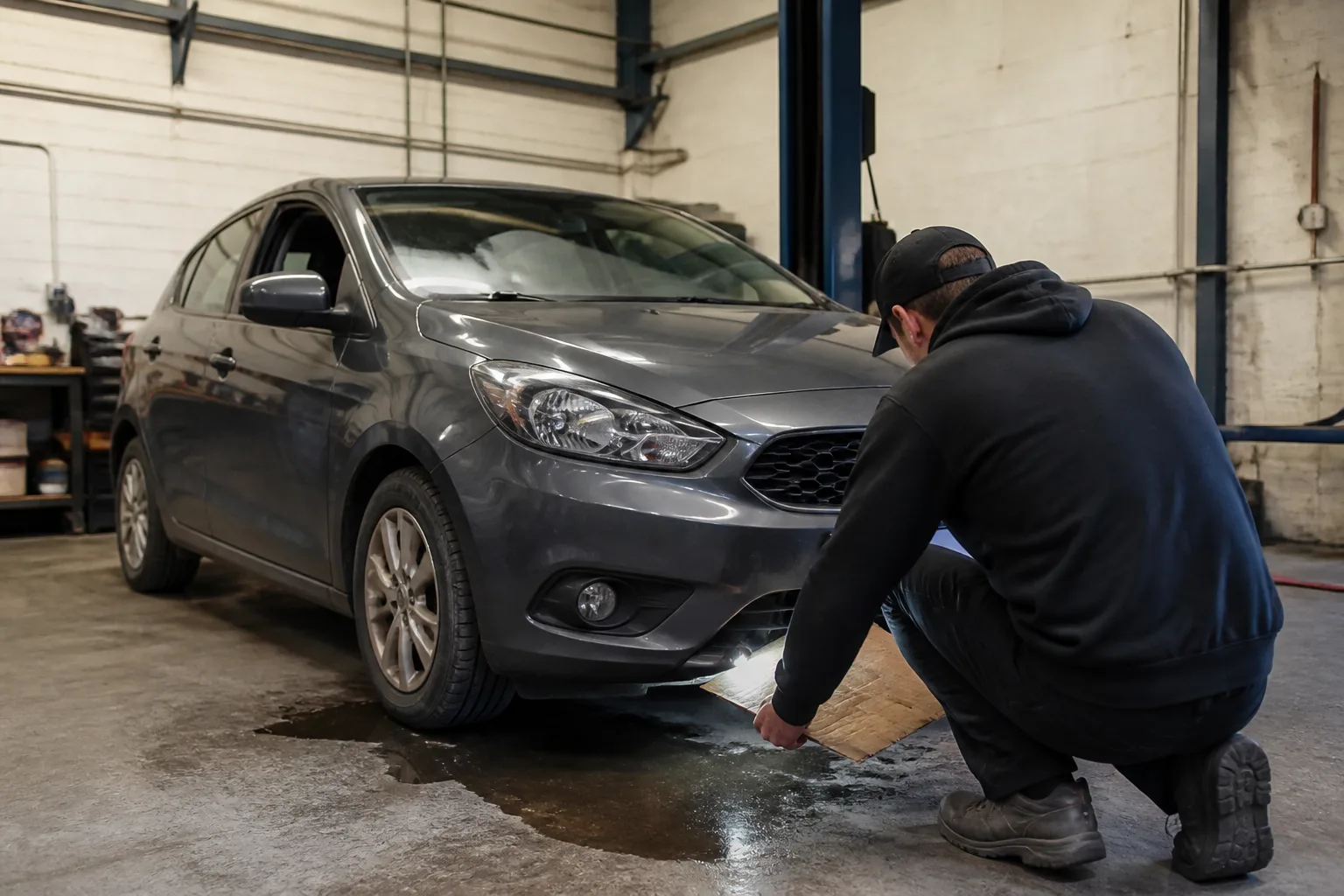
Finding a puddle under your car can be worrying, particularly if you are not sure what the liquid is. Sometimes it is simply water from the air conditioning system or rain draining from the vehicle. In other cases, a puddle can point to a fluid leak that needs professional attention.
The colour, smell, texture and position of the puddle can provide useful clues, but they cannot confirm the cause on their own. Several vehicle fluids can look similar, especially after mixing with road dirt or rainwater. Treat these checks as a way to decide what to do next, rather than as a remote diagnosis.
First, check whether it is just water
Clear, odourless water is often harmless. Air conditioning removes moisture from the air inside the car, and that moisture is discharged beneath the vehicle. You may notice a small puddle near the front passenger side after using the air conditioning, particularly on a warm day.
Water can also collect underneath a car after rain or washing. It may drain from the bodywork, doors, scuttle panel or exhaust system. Condensation from the exhaust is normal when the engine is cold and usually disappears as the exhaust warms up.
Water should still be checked if the puddle is unusually large, appears when the air conditioning has not been used, or is found inside the cabin. Damp carpets may indicate a blocked drain, damaged seal or another water ingress problem rather than a fluid leak.
What the colour and smell may indicate
Before touching anything, look at the puddle in good light. Do not taste or deliberately handle an unknown vehicle fluid. If you use a piece of plain cardboard or paper to identify the liquid, keep your hands away from hot components and wash them afterwards.
Coolant
Engine coolant may be pink, red, orange, yellow, blue, green or another colour, depending on the vehicle and the coolant used. It can feel slightly slippery and may have a distinctive sweet smell. A coolant leak can appear near the front of the car, around the radiator, hoses, water pump or expansion tank.
Coolant loss matters because the engine relies on the correct coolant level to control its temperature. Warning signs can include a rising temperature gauge, an overheating warning light, steam, a sweet smell from the engine bay or the need to top up the expansion tank repeatedly.
If the temperature warning appears, the gauge rises into the hot zone or steam is coming from under the bonnet, stop in a safe place and switch the engine off. Do not remove the coolant cap while the engine is hot, as pressurised coolant can cause serious burns. Allow the vehicle to cool and arrange professional assistance.
Engine oil
Engine oil is usually amber when fresh, becoming brown or black as it is used. It feels oily and may form a dark patch on the ground. An oil leak can come from several areas, including seals, gaskets, the sump or the oil filter, so the position of the puddle does not identify the failed part by itself.
A low oil level can cause severe engine damage. Check the oil level using the method described in your vehicle handbook, with the car parked safely on level ground and the engine in the condition specified by the manufacturer. If the oil pressure warning light is on, or the oil level is very low, do not continue driving. Arrange an inspection or recovery instead.
Washer fluid
Screenwash is commonly blue, although it can be another colour. It normally has a noticeable detergent or alcohol smell and is often found towards the front of the car. A leak may be caused by a split hose, damaged washer bottle or faulty pump.
A washer fluid leak is not usually an immediate mechanical emergency, but it can leave you without a reliable way to clean the windscreen. If visibility is poor, do not set off until the windscreen can be kept clear.
Fuel
Petrol and diesel have a strong, recognisable smell. Fuel may leave a clear, pale or slightly oily-looking patch, but colour is not a reliable way to identify it. A fuel leak is a fire risk and should not be treated as a minor drip.
If you can smell fuel, see liquid around the fuel tank or fuel lines, or notice a sudden drop in the fuel gauge, switch off the engine. Keep away from cigarettes, flames and other ignition sources. Do not drive the vehicle. Move away from the area if necessary and seek professional assistance.
Brake fluid
Brake fluid is often clear to pale yellow when new and can become darker with age. It is slippery and may appear around a wheel, beneath the master cylinder or near brake components. It can be difficult to distinguish from other fluids after it has spread across dirty surfaces.
A brake fluid leak can reduce braking performance and is a road safety concern. If the brake pedal feels soft or spongy, travels further than usual, the brake warning light is on, or you can see a possible leak near a wheel, do not continue driving. Stop safely and arrange a professional inspection or recovery.
Transmission or steering fluid
Some vehicles can leak transmission fluid, which may be red, brown or another shade, while hydraulic power steering systems may use a fluid that looks similar to automatic transmission fluid. Newer cars may have electric power steering and no hydraulic fluid reservoir at all.
A leak in either system can affect how the vehicle changes gear or how the steering feels. If the steering becomes unusually heavy, notchy or difficult to control, stop driving when safe and seek help. Steering and transmission problems need proper identification rather than simply topping up an unknown fluid.
Where is the puddle located?
The position can help a technician investigate, although fluids can run along undertrays and drip some distance from the original leak.
- Near the front: possible engine oil, coolant, washer fluid, air conditioning water or a fluid from the steering or transmission system.
- Near a wheel: possible brake fluid, coolant from a nearby component, or water from the air conditioning drain depending on the vehicle.
- In the centre: possible fuel, transmission fluid or water draining from the exhaust or bodywork.
- Near the rear: possible fuel, exhaust condensation or water draining from the vehicle.
Undertrays can also collect fluid and release it later, making the puddle appear in the wrong place. This is one reason a visual check underneath is not always enough.
What should you do next?
Park on a level surface if it is safe, note when the puddle appeared and take a photograph of the liquid and its position. Check the dashboard for warning lights and pay attention to changes in temperature, braking, steering, engine noise or exhaust smoke.
Do not crawl underneath a car supported only by a jack, and do not remove covers or start dismantling components to find the leak. A garage can inspect the vehicle safely, check fluid levels and use the appropriate diagnostic methods to locate the source.
Regular servicing can also help identify weeping seals, worn hoses and low fluid levels before they become more serious. If your car is due an inspection or you are unsure what the puddle is, you can find out more about vehicle servicing at Ashton's Garage.
When is a puddle under a car unsafe?
Stop driving and seek professional advice if the liquid smells of fuel, the brake pedal feels different, the steering is affected, the engine is overheating, an oil pressure warning appears, or a warning light is accompanied by unusual noises or smoke. These symptoms may indicate a fault that could make the vehicle unsafe or cause expensive damage if you continue.
If the liquid is clearly only clean water from air conditioning or rain, and the car has no warning lights or other symptoms, it is usually reasonable to monitor it. When there is any doubt, having the vehicle checked is the sensible option. A short inspection can establish whether the puddle is harmless condensation or evidence of a leak that needs attention.
Related reading
For more practical maintenance guidance, see our articles on how often your car should be serviced, what is included in a full car service and servicing a car that is driven very little.
Frequently asked questions
Is water under my car always a problem?
No. Clear, odourless water may be normal condensation from the air conditioning, rainwater draining from the bodywork or condensation from the exhaust. A large puddle, damp interior or water appearing without an obvious reason should still be checked.
Can I drive with a small leak under my car?
It depends on the fluid and the symptoms. A small amount of clean air conditioning water is generally harmless, but a leak involving fuel, brake fluid, coolant or engine oil can make driving unsafe or damage the vehicle. If you cannot identify the liquid, arrange professional advice before driving.
How can I tell if a puddle is coolant?
Coolant may be coloured, slippery and sweet-smelling, but colours vary between vehicles and contamination can change its appearance. A rising temperature gauge, overheating warning, steam or repeated coolant loss makes a coolant problem more likely and should be checked promptly.
What should I do if the puddle smells like petrol or diesel?
Switch off the engine, avoid flames and other ignition sources, and do not drive the vehicle. Fuel leaks can present a fire risk, so arrange professional assistance or recovery.
Can a garage find a leak if the puddle is not directly under the faulty part?
Usually, a technician can trace the leak by inspecting the vehicle and its fluid levels, but undertrays and vehicle surfaces can allow fluid to travel before it drips. The puddle location alone cannot reliably identify the failed component.
Related advice
Why Is My Car Leaking Oil?
A leaking car can leave anything from a small damp patch to a serious loss of engine oil. Find out the common causes, what you can safely check and when professional inspection is needed.
What Is Power Steering Fluid and When Should It Be Checked?
Power steering fluid helps some steering systems work smoothly and safely. Learn what it does, how to check it, which warning signs to watch for and why not every modern car uses it.
How Often Should Transmission Fluid Be Changed?
Transmission fluid does not have one universal change interval. Find out how your gearbox type, manufacturer guidance and driving conditions affect when it should be inspected or replaced.