
How Often Should Transmission Fluid Be Changed?
Transmission fluid does not have one universal change interval. Find out how your gearbox type, manufacturer guidance and driving conditions affect when it should be inspected or replaced.
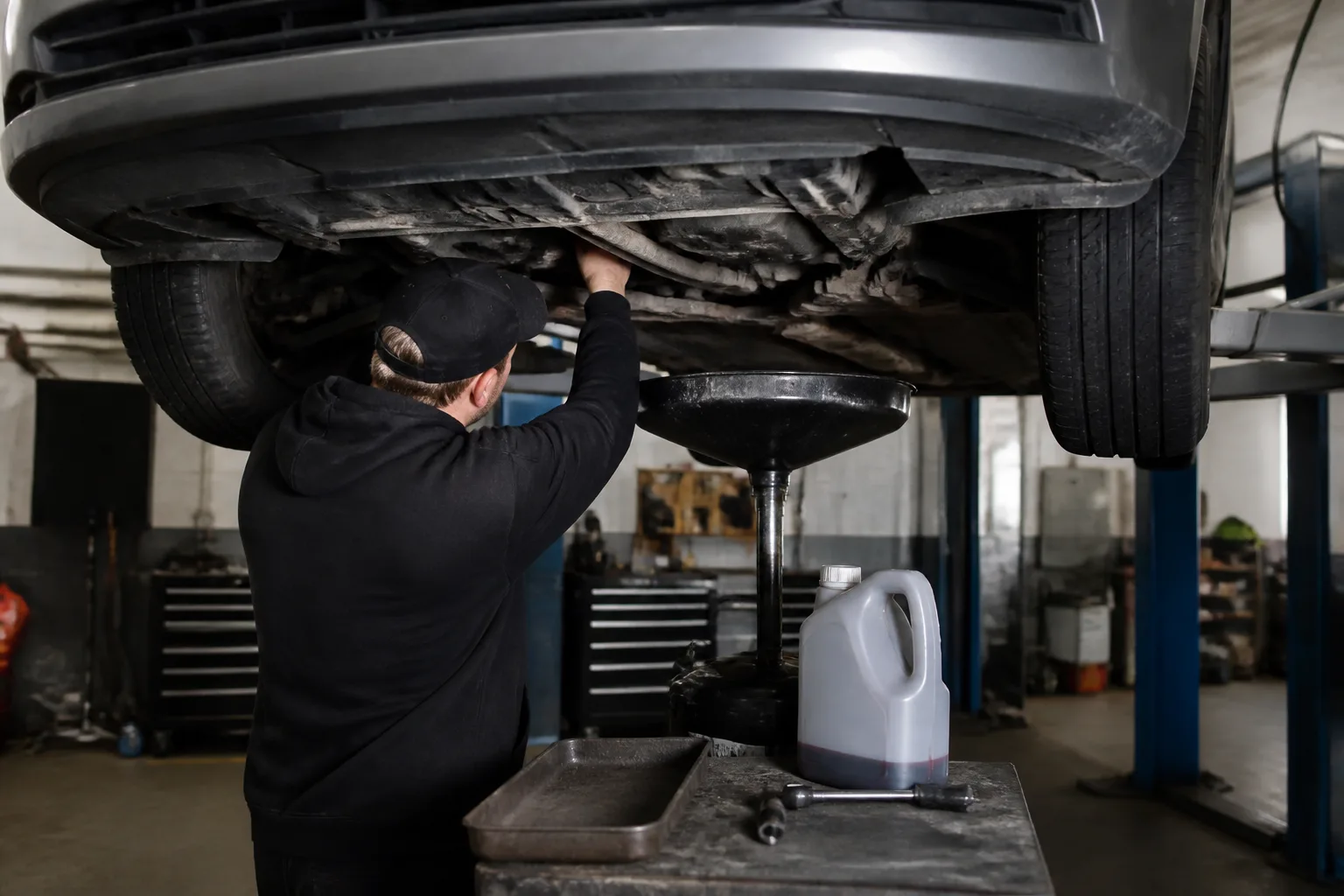
There is no single answer to the question of how often transmission fluid should be changed. The correct interval depends on the vehicle, the type of gearbox and the manufacturer’s maintenance schedule. Some cars have a specified fluid change interval, while others describe the fluid as sealed for life or do not list a routine replacement in the standard service schedule.
That does not mean every gearbox fluid lasts indefinitely. Transmission fluid lubricates moving parts, helps control hydraulic pressure and, in automatic gearboxes, can also help transfer heat. Over time it can deteriorate, become contaminated or lose some of its ability to protect the transmission.
What is the usual transmission fluid change interval?
As a broad guide, many vehicles are checked or serviced somewhere between around 40,000 and 100,000 miles, but this is not a recommendation that applies to every car. Some manufacturers specify a much shorter interval, particularly for certain automatic, dual-clutch or continuously variable transmissions. Others only call for checks or fluid replacement under particular driving conditions.
The handbook and service schedule for your exact vehicle should take priority over any general interval. The required fluid specification is also important. Automatic transmission fluid, manual gearbox oil, dual-clutch fluid and CVT fluid are not interchangeable products, even if they look similar.
If you are unsure what your car requires, the vehicle’s registration number, model, engine and gearbox details can help a garage identify the correct maintenance information. This is safer than choosing a fluid based only on the make of the car or a general description such as “automatic oil”.
Why does the gearbox type matter?
Manual gearboxes
Manual transmissions generally use gear oil rather than automatic transmission fluid, although some modern designs use a specialist low-viscosity fluid. The fluid may not be included in every routine service, but it still has a role in lubricating gears, bearings and synchronisers. A change may be advised at a specified mileage, after a repair or if there is evidence of contamination or leakage.
Traditional automatic gearboxes
Conventional automatic transmissions use fluid for lubrication, cooling and hydraulic control. The fluid is exposed to heat and friction, particularly where a vehicle is used for towing, frequent stop-start driving or on steep roads. Some automatic gearboxes have a scheduled fluid and filter service, while others have a different inspection or replacement procedure.
Dual-clutch transmissions
Dual-clutch gearboxes can have separate fluid requirements for different parts of the transmission. A fluid change may be particularly important at the interval specified by the manufacturer because the gearbox uses hydraulic and mechanical systems that depend on the correct fluid condition and level.
CVT transmissions
Continuously variable transmissions use a specific CVT fluid designed for their belt, chain and pulley arrangement. Using the wrong product can cause poor operation or damage. CVT servicing should therefore follow the vehicle manufacturer’s instructions rather than a generic automatic gearbox interval.
Does “sealed for life” mean the fluid never needs changing?
Not necessarily. “Sealed for life” usually means the manufacturer does not include a routine fluid change in the normal scheduled maintenance plan, or considers the original fill suitable for the expected service life under defined conditions. It does not remove the need to investigate a leak, damaged seal, unusual noise or a change in gearbox behaviour.
There can also be a difference between a normal-use schedule and a severe-use schedule. Heavy traffic, repeated short journeys, towing, carrying heavy loads, mountainous driving and high ambient temperatures can place more demand on a transmission. Your handbook may give different guidance for these conditions.
What are the signs that transmission fluid needs attention?
Transmission problems can have several possible causes, so symptoms should not be treated as proof that the fluid alone is at fault. Signs that merit a professional assessment include:
- Delayed engagement when selecting drive or reverse.
- Jerking, shuddering or slipping during gear changes.
- Unusual whining, humming or grinding noises.
- Difficulty selecting gears in a manual vehicle.
- A warning light or message relating to the transmission.
- Fluid visible beneath the vehicle, especially if it has an unusual colour or smell.
Fluid colour is not a reliable diagnosis by itself. The correct appearance varies between products, and dark or dirty-looking fluid may point to age, heat or internal wear, but further checks are needed to establish the cause. A leak can also lower the fluid level, and driving with insufficient fluid may lead to serious transmission damage.
If the vehicle is slipping badly, refusing to select a gear, making severe noises or losing drive, avoid continuing to drive it unless a professional has confirmed that it is safe. Arrange an inspection or recovery where appropriate. Continuing to use a vehicle with a suspected transmission fault can make the damage worse and may leave you without reliable drive or reverse selection.
What happens during a transmission fluid service?
The work varies according to the transmission design. A garage may check for leaks, inspect the condition of the fluid, confirm the level using the manufacturer’s specified method and replace the fluid or filter where the service schedule calls for it. Some gearboxes require a particular fluid temperature, filling procedure or diagnostic check, so this is not always a simple drain-and-refill job.
A routine fluid service also cannot repair worn clutches, damaged seals, failing solenoids or internal gearbox components. If a vehicle already has shifting problems, the technician should assess the wider system rather than assuming that replacing the fluid will cure the fault.
It is useful to keep a record of the fluid type and service date. This helps the next technician follow the correct specification and makes future maintenance easier to plan. It can also be relevant when checking a used car’s history.
How can you find the right interval for your car?
- Check the vehicle handbook and service schedule for the exact gearbox fitted.
- Look for separate guidance covering towing, heavy traffic or other severe-use conditions.
- Confirm whether the schedule refers to a fluid inspection, fluid replacement, filter replacement or a complete transmission service.
- Ask a qualified garage to verify the fluid specification before any work is carried out.
Transmission maintenance is one part of a wider servicing plan. If you are reviewing the condition of your vehicle as a whole, our guide to how often you should service your car explains why time matters as well as mileage. You may also find our explanation of what is included in a full car service useful when comparing maintenance needs.
For vehicles that cover low annual mileage, fluid age and the manufacturer’s time-based schedule can still matter. Our article on servicing a car that is driven very little covers some of the other components affected by infrequent use.
When should you ask a garage to check it?
Ask for advice if the service history does not show when the transmission fluid was last inspected or replaced, especially before buying a used vehicle or taking a car on a long journey. It is also sensible to have the gearbox assessed if the vehicle has a leak, warning light or noticeable change in shifting behaviour.
As an independent garage, Ashton’s Garage can check the maintenance requirements for your vehicle and explain whether a fluid inspection or service is appropriate. You can find information about vehicle servicing in Salisbury and contact the team if you would like help working out the next sensible step.
Frequently asked questions
How do I know when my transmission fluid was last changed?
Check the service book, invoices or digital service record for a transmission or gearbox fluid service. If there is no clear record, a garage can check the vehicle’s maintenance requirements and advise whether an inspection is sensible.
Can old transmission fluid cause slipping?
Degraded or low fluid can contribute to poor transmission operation, but slipping can also be caused by worn clutches, electrical faults, leaks or other internal problems. It needs proper assessment rather than an assumption that a fluid change will solve it.
Is manual gearbox oil the same as automatic transmission fluid?
No. Manual gearboxes, conventional automatics, dual-clutch transmissions and CVTs can require different fluids. Always use the specification given for the exact gearbox.
Can I change transmission fluid myself?
Some vehicles have straightforward-looking drain points, but the correct fluid, level and filling temperature can be critical. Because an error can damage the gearbox, professional servicing is the safer option unless the vehicle manufacturer’s procedure is fully understood and followed.
Related advice
Signs Your Auxiliary Belt May Need Replacing
Learn the common signs of a worn or damaged auxiliary belt, what it does, and when a professional inspection is the safest next step.
What Is an Auxiliary Belt and What Does It Do?
An auxiliary belt drives several important engine accessories, including the alternator and, on some cars, the water pump. Here is how it works, what warning signs to look for and why belt condition matters.
How Often Should a Car’s Auxiliary Belt Be Checked?
Most auxiliary belts should be inspected during routine servicing and whenever warning signs appear. Learn what the belt does, how often it needs checking, which symptoms matter and why replacement intervals vary between vehicles.