What Is Included in a Full Car Service?
A full car service is a detailed check of your vehicle's main safety, maintenance and operating systems. Find out what is usually included, what is not covered and when professional advice is worthwhile.
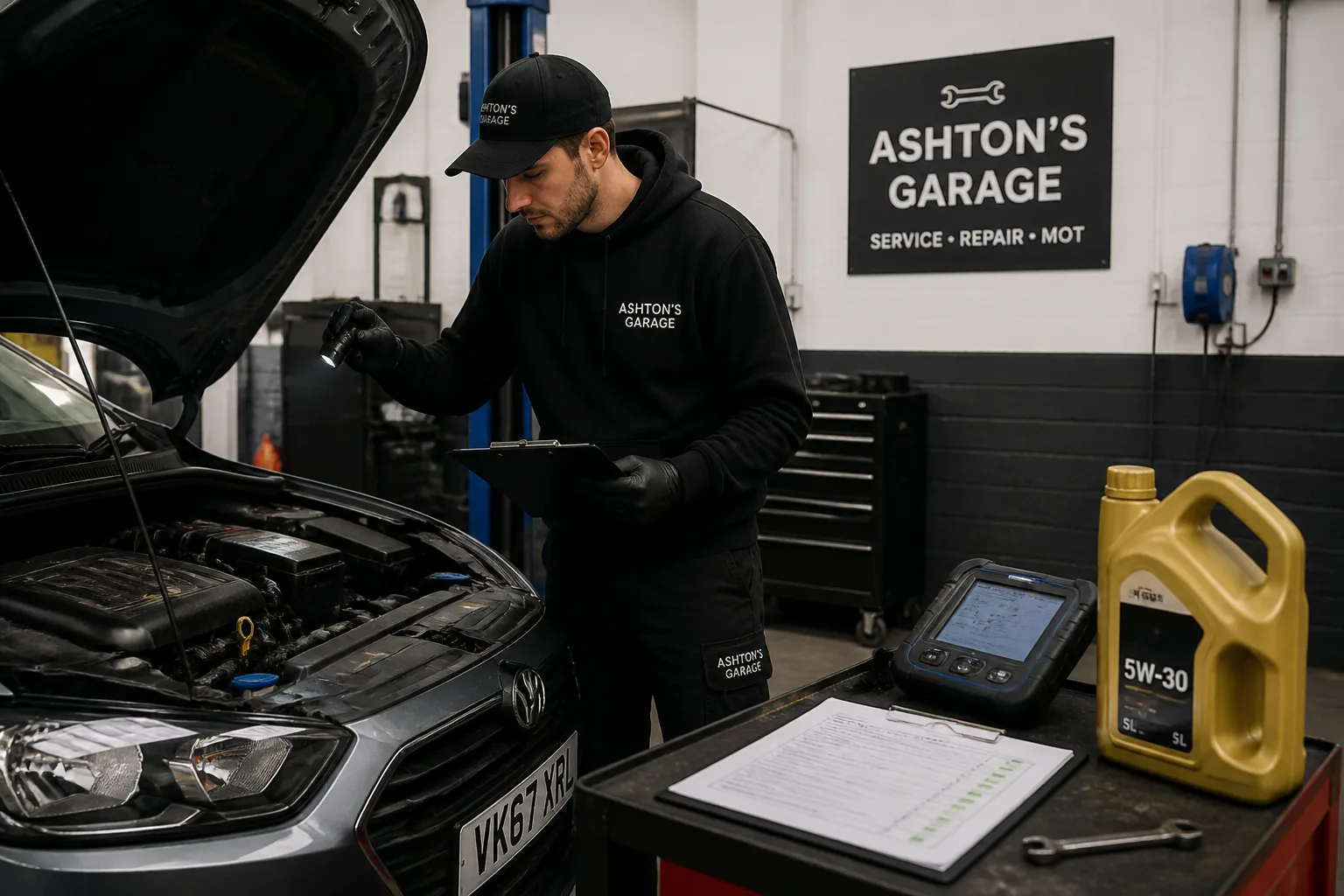
If you are wondering what is included in a full car service, the short answer is that it is a structured inspection and maintenance check covering many of the parts that affect your car's safety, reliability and day-to-day performance. It is more thorough than a basic visual check, but it is not the same as an MOT and it does not automatically include every repair your vehicle might need.
The exact work depends on the car's age, mileage, engine, manufacturer service schedule and service history. A good garage should explain what has been checked, identify anything that needs attention and separate routine maintenance from optional or urgent repairs.
What does a full car service usually include?
There is no single checklist that applies identically to every make and model. However, a full service will normally involve checks and, where required by the service schedule, maintenance across the following areas.
Engine oil and filter
The engine oil level and condition are checked, and the oil is commonly replaced as part of a full service. The oil filter is also usually changed because it removes contamination from the oil as it circulates around the engine. Using the correct oil specification matters, particularly on newer cars with turbochargers, diesel particulate filters or manufacturer-specific requirements.
Fluid levels and condition
A technician will generally inspect the levels and visible condition of fluids such as engine coolant, brake fluid, screenwash and power steering fluid where the vehicle has a hydraulic system. A top-up may be appropriate, but a falling level can indicate a leak or another fault. Topping up without investigating the reason is not always a complete solution.
Brakes, tyres and suspension
The braking system is inspected for visible wear and possible problems. This can include the brake pads, discs, pipes, hoses and accessible components. Tyres are checked for condition, tread and signs of damage, while suspension components are examined for wear, leaks or other concerns that may affect handling.
These are important checks, but a service is not a guarantee that every fault will be found or that components will never need replacing between service intervals. If your car is pulling to one side, vibrating under braking, making unusual suspension noises or showing signs of tyre damage, arrange professional advice rather than waiting for the next scheduled service.
Lights, wipers and visible electrical items
Exterior lights, indicators, hazard lights and other accessible electrical items are commonly checked. Wiper blades and the windscreen washer system may also be inspected because clear visibility is an important part of safe driving.
You can help by mentioning any warning lights, intermittent faults or problems with starting before the inspection begins. A fault that only appears occasionally may need more investigation than a simple visual check.
Belts, hoses and the engine bay
Visible belts, hoses, pipes and connections are checked for signs of deterioration, damage or leaks. The technician may also look for fluid residue, corrosion or other evidence that a component needs closer attention. Some service items, such as a timing belt, are replaced according to a separate age and mileage recommendation. They are not automatically changed during every full service.
Battery and charging system
The battery and relevant charging components may be inspected, with testing carried out where appropriate. A battery can appear acceptable during a basic visual check but still have reduced capacity, especially in cold weather or after repeated short journeys. If the vehicle has had slow cranking, electrical glitches or difficulty starting, tell the garage so this can be considered as part of the assessment.
Diagnostic checks and warning lights
Many modern vehicles can be connected to diagnostic equipment to check for stored fault codes or investigate a warning light. This can provide useful information, but a fault code is not always a complete diagnosis. It points towards an area that needs interpretation alongside the vehicle's symptoms, inspection findings and service history.
What is not normally included in a full service?
A full service does not mean every component is removed, measured or replaced. Repairs and replacement parts are normally separate from the scheduled service unless they have been agreed in advance. Examples may include new brake discs and pads, a new battery, clutch work, suspension repairs, air-conditioning work or timing belt replacement.
Some garages offer different service levels, so it is sensible to ask what their full service checklist covers. You should also check whether the quoted service includes parts, labour, diagnostic time and any manufacturer-specific requirements. A reputable garage will not treat every advisory item as an immediate repair. It should explain the condition of the part, the likely consequence of leaving it and how soon it deserves attention.
Is a full service the same as an MOT?
No. An MOT is a legal test of whether a vehicle meets specific safety and environmental standards at the time of the test. A service is broader maintenance intended to help keep the vehicle running reliably and identify developing issues.
An MOT pass does not replace servicing. A car can pass an MOT and still benefit from fresh oil, filter replacement, fluid checks or maintenance that is not part of the test. Equally, a service does not replace an MOT when your vehicle requires one. If you are unsure how the two fit together, our guide to the difference between an interim service and a full service may help, although your vehicle manufacturer's schedule should remain the main reference.
Why does a full service matter if the car seems fine?
Some problems develop gradually and may not be obvious from the driver's seat. Oil can degrade, filters can become restricted, tyres can wear unevenly and small leaks can become more serious over time. Regular servicing gives a technician an opportunity to look at the vehicle in a structured way rather than waiting for a breakdown or a dashboard warning.
It can also help maintain a useful record of the vehicle's condition. This may support future maintenance decisions and make it easier to spot patterns, such as recurring fluid loss or repeated warning lights. Cars that cover low annual mileage still need appropriate maintenance because time, short journeys and infrequent use can affect some components. Our advice on servicing a car that is driven very little explains why mileage is not the only consideration.
How often should a full service be carried out?
The correct interval depends on the vehicle and its manufacturer recommendations. It may be based on time, mileage or whichever comes first. Driving conditions can also matter. Frequent short trips, towing, heavy traffic and long periods of standing may place different demands on a vehicle than regular longer journeys.
Use the handbook or manufacturer service information as the starting point, and keep records of previous work. If the service history is incomplete, a garage can inspect the vehicle and explain what is known, what is due and what may need further investigation. You can also read our guide to how often a car should be serviced for more help with planning maintenance.
What should you tell the garage before a service?
Give the technician as much useful information as you can, including:
- Any dashboard warning lights, even if they have gone out again
- Changes in starting, engine noise, fuel use or driving feel
- Unusual smells, smoke, leaks or fluid loss
- Problems with the brakes, steering, clutch, gears or suspension
- Recent repairs, replacement parts or work carried out elsewhere
- Your typical driving pattern, such as short urban journeys or regular motorway use
These details can help the garage decide whether a routine service is sufficient or whether a separate diagnostic inspection should be allowed for.
What happens after the service?
You should receive a clear explanation of the work completed and any findings. Items may be described as satisfactory, requiring monitoring or needing attention soon. If a repair is recommended, ask what the issue affects, whether the car is safe to continue driving and whether the work is urgent or can be planned.
At Ashton's Garage, practical workshop experience, appropriate diagnostic equipment and a clear explanation are all part of looking after a vehicle properly. The aim is not simply to replace parts, but to understand the vehicle's condition and recommend work that is relevant to its needs. If you would like to arrange a full service or discuss what your car is due, you can find more information about our vehicle servicing in Salisbury.
A full service is most useful when it is treated as part of an ongoing maintenance plan, rather than a one-off check that guarantees trouble-free motoring. Keeping to the right schedule and acting on sensible advice can help you address smaller concerns before they become more disruptive or expensive.
Frequently asked questions
How long does a full car service take?
The time varies by vehicle, service schedule and whether the technician finds anything that needs further investigation. A routine full service is usually planned as a workshop appointment, but additional diagnostic work or agreed repairs may require longer.
Does a full service include an oil change?
An oil and oil filter change is commonly included in a full service, but the exact checklist can vary. The correct oil specification should be confirmed for the particular vehicle.
Will a full service make my car pass its MOT?
No. A service and an MOT are different. Servicing supports maintenance and reliability, while an MOT checks specific legal safety and environmental requirements at the time of the test.
Does a full service include replacing brake pads or tyres?
Not normally. Brakes and tyres are usually inspected, but replacement parts and related labour are separate work unless they have been agreed as part of the appointment.
Should I service my car if it has done very few miles?
Usually, yes, because service intervals are often based on time as well as mileage. Oil, fluids, batteries, tyres and other components can still be affected by age or infrequent short journeys.
Related advice
What Is Brake Fluid and Why Does It Need Changing?
Brake fluid transfers pressure from the pedal to the brakes, but it can absorb moisture over time. Here is why changing it matters and what warning signs to take seriously.
How Often Should Engine Coolant Be Changed?
Engine coolant does more than stop your car freezing in winter. Find out how often it usually needs changing, why the interval varies, and which warning signs should be checked by a garage.
What Is a Timing Belt and When Does It Need Replacing?
A timing belt keeps your engine’s internal parts moving in sync. Learn what it does, how often it may need replacing and why relying on symptoms alone can be risky.