Why Is My Engine Overheating?
Find out why an engine may overheat, what the warning signs mean and what to do safely if the temperature rises while you are driving.
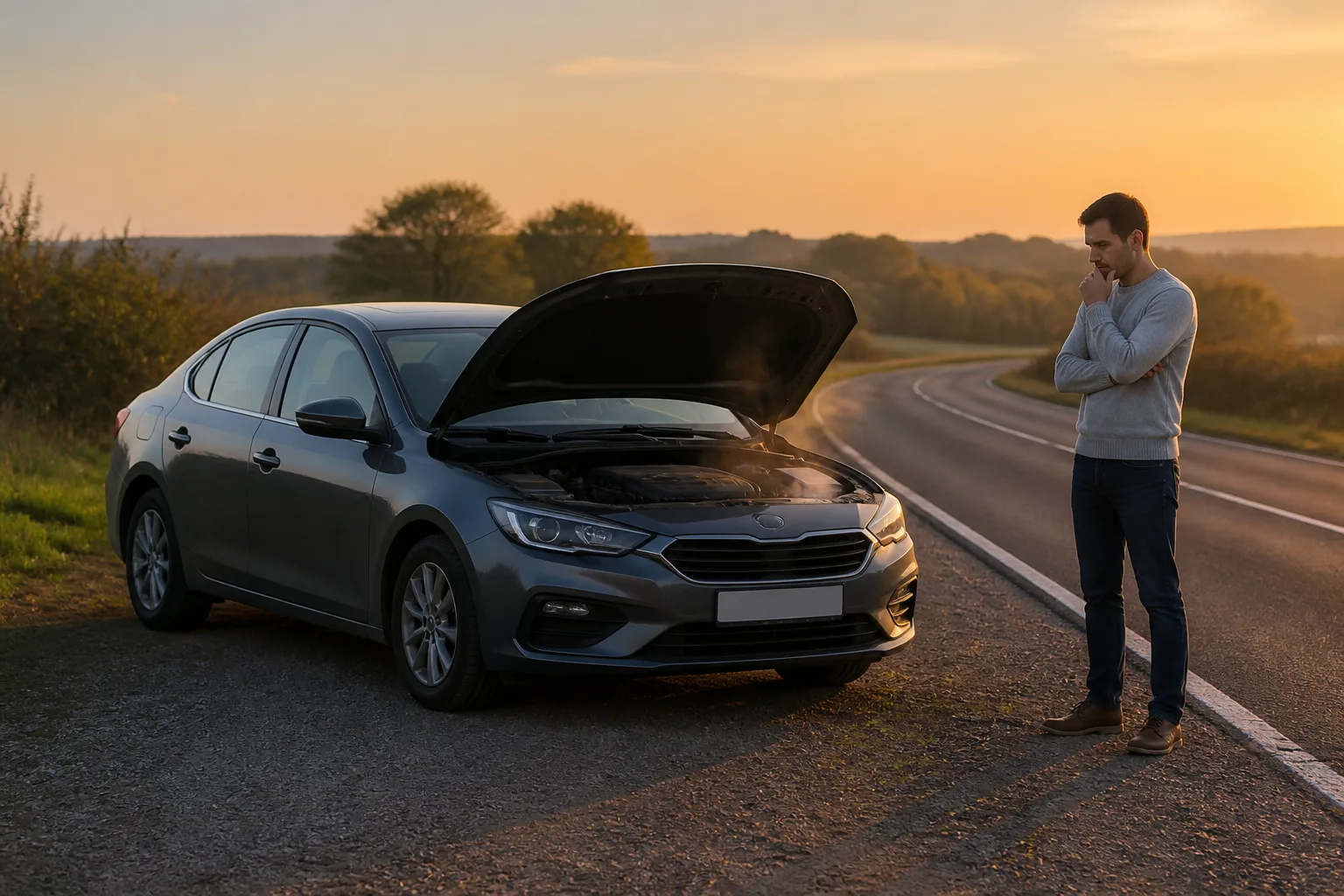
If your temperature warning light comes on, the gauge moves into the red or steam starts coming from under the bonnet, your engine may be overheating. This is not a fault to ignore. Continuing to drive can turn a relatively contained cooling-system problem into serious engine damage.
There are several possible reasons for overheating, and it is not always simply because the coolant level is low. A fault with the cooling fan, thermostat, water pump, radiator or an electrical component can also stop the engine from controlling its temperature properly. Without inspecting the vehicle, it is not possible to say which part is at fault.
What to do if your engine is overheating
If the temperature gauge is rising quickly, a warning light appears, or you see steam, look for a safe place to pull over as soon as possible. Switch off the engine and leave it to cool. Do not continue driving just because the car still feels as though it is running normally.
Never remove the coolant reservoir cap or radiator cap while the engine is hot. The cooling system can be pressurised, and hot coolant or steam may escape and cause serious burns. The electric cooling fan may also start unexpectedly, even after the engine has been switched off, so keep hands and clothing away from the fan area.
Once the engine has cooled completely, you may be able to look at the coolant level in the expansion tank. Check the vehicle handbook for the correct level and coolant specification. If the level is very low, there may be a leak or another fault that needs attention. Topping up does not repair the underlying problem, and the engine should not be driven if coolant is visibly leaking or the temperature rises again.
Common reasons an engine overheats
Low coolant or a coolant leak
Coolant carries heat away from the engine and transfers it to the radiator. If the level drops, there may not be enough fluid circulating through the system. Leaks can come from hoses, clips, the radiator, the water pump, the thermostat housing or the engine itself.
You might notice a coloured or watery patch beneath the car, a sweet smell, damp areas around the engine bay or repeated drops in the coolant level. However, some leaks only appear when the system is hot and pressurised, so there may be no obvious puddle after the car has been parked.
A failed cooling fan
The radiator needs airflow to remove heat, particularly when the car is stationary or moving slowly. An electric cooling fan normally switches on when needed. A failed fan motor, fuse, relay, wiring connection or temperature sensor can prevent it from operating.
This type of fault may be more noticeable in traffic, while queuing or after the car has been idling. The temperature can sometimes fall again once the vehicle is moving at higher speed, but that does not mean the fault has gone away.
A faulty thermostat
The thermostat regulates coolant flow between the engine and radiator. When the engine is cold, it stays closed to help the engine warm up. As the temperature rises, it should open and allow coolant to circulate through the radiator.
If the thermostat sticks closed, coolant may not reach the radiator properly and the engine can overheat. A thermostat that is stuck open usually causes slow warm-up or a low operating temperature rather than overheating, but either condition needs proper testing.
A worn or failed water pump
The water pump circulates coolant around the engine and cooling system. If its impeller is damaged, its drive belt has a problem or the pump develops a leak, coolant flow may be reduced or lost altogether.
Possible clues include overheating, coolant leakage near the pump, unusual noise from the belt area or a temperature that rises unpredictably. These signs can overlap with other faults, so replacing a part based on symptoms alone is not always appropriate.
A blocked radiator or cooling-system restriction
The radiator has narrow passages that can become restricted by corrosion, contamination or internal deposits. External damage or dirt can also reduce airflow through its fins. A restriction may prevent the system from shedding enough heat even when the coolant level appears normal.
Other restrictions can affect hoses or internal coolant passages. A cooling system that has been contaminated or filled with an unsuitable fluid may need more than a simple top-up.
Head gasket or engine-related problems
In some cases, overheating is linked to a head gasket problem or another internal engine fault. Warning signs can include repeated coolant loss without an obvious external leak, white exhaust smoke after the engine is warm, bubbles in the coolant system, contaminated engine oil or persistent overheating.
These symptoms are not proof of a failed head gasket, as some can have other causes. They do mean the vehicle should be assessed promptly. Continuing to drive an overheating car can cause further damage to the cylinder head, gasket or other engine components.
Why is my engine overheating if the coolant level is normal?
A normal coolant level does not confirm that the cooling system is working correctly. The thermostat may not be opening, the water pump may not be circulating coolant, or the radiator fan may not be running. There could also be a blockage or an internal engine fault.
This is why repeatedly topping up the reservoir is not a reliable solution. If the temperature warning returns, arrange a proper inspection rather than continuing to drive and hoping the problem clears.
Can I drive an overheating car?
It is generally unsafe to continue driving when the temperature gauge is in the red, a coolant warning appears, or steam is visible. Stop as soon as it is safe, switch off the engine and allow it to cool. If the vehicle cannot be safely checked or the cause is unclear, recovery is the safer option.
Do not pour cold water over a hot engine, as sudden temperature changes can damage components. Do not open the coolant cap while hot. If the car overheats again shortly after cooling down or topping up, it needs professional inspection before further use.
What checks will a garage carry out?
A garage will normally begin by checking the coolant level and condition, looking for leaks and inspecting hoses, the radiator, belts and visible wiring. Further tests may be needed to check system pressure, thermostat operation, fan operation, coolant circulation and whether combustion gases are entering the cooling system.
Electronic diagnostics may help identify a sensor, fan-control or other electrical fault, but a fault code is not always the same as a failed component. The results of the tests should be considered alongside the vehicle's symptoms and inspection findings.
If your vehicle has overheated or is losing coolant, Ashton's Garage can inspect the cooling system and advise on the next step. If the problem has left the car unable to start, our guide to why a car may not start explains some related possibilities. Electrical issues, including a cooling fan fault or a battery that has been drained by repeated starting attempts, may also be relevant, and you can read more about why a car battery keeps going flat.
How to help prevent overheating
- Check the coolant level only when the engine is fully cold.
- Use the coolant type and mixture specified by the vehicle manufacturer.
- Pay attention to warning lights, unusual smells, leaks and changes in the temperature gauge.
- Have repeated coolant loss investigated rather than simply topping up indefinitely.
- Keep servicing and maintenance up to date, particularly if the vehicle is used in heavy traffic or for long journeys.
An overheating engine can have a straightforward cause, but it can also indicate a fault that will worsen quickly. Stop safely when the warning signs appear and get the vehicle inspected before relying on it for another journey.
Frequently asked questions
Why is my engine overheating but there is no visible coolant leak?
The thermostat, cooling fan, water pump or radiator may not be working correctly, or there may be an internal engine fault. Some leaks only appear when the system is hot and pressurised, so a visual check may not find them.
How long should I wait before checking the coolant?
Wait until the engine and cooling system are fully cool. The system can remain hot and pressurised after the engine has been switched off, so do not remove the coolant cap while it is hot.
Can low engine oil cause overheating?
Low or incorrect engine oil can increase friction and contribute to high engine temperatures, but it does not explain every overheating problem. Check the oil according to the handbook and have the cooling system assessed if the temperature warning appears.
Should I drive after topping up the coolant?
Only consider moving the vehicle if the engine is fully cool, there is no obvious leak, the correct coolant has been used and the temperature remains normal. If it overheats again, stop and arrange professional inspection or recovery rather than continuing to drive.
Related advice
Why Does My Car Battery Keep Going Flat?
A car battery that repeatedly goes flat may be old, undercharged, affected by cold weather or being drained by an electrical fault. Here is how to narrow down the likely cause safely.