Why Is My Car Overheating but Not Losing Coolant?
A car can overheat even when the coolant level appears unchanged. Learn what may cause it, what you can safely check and when to stop driving.
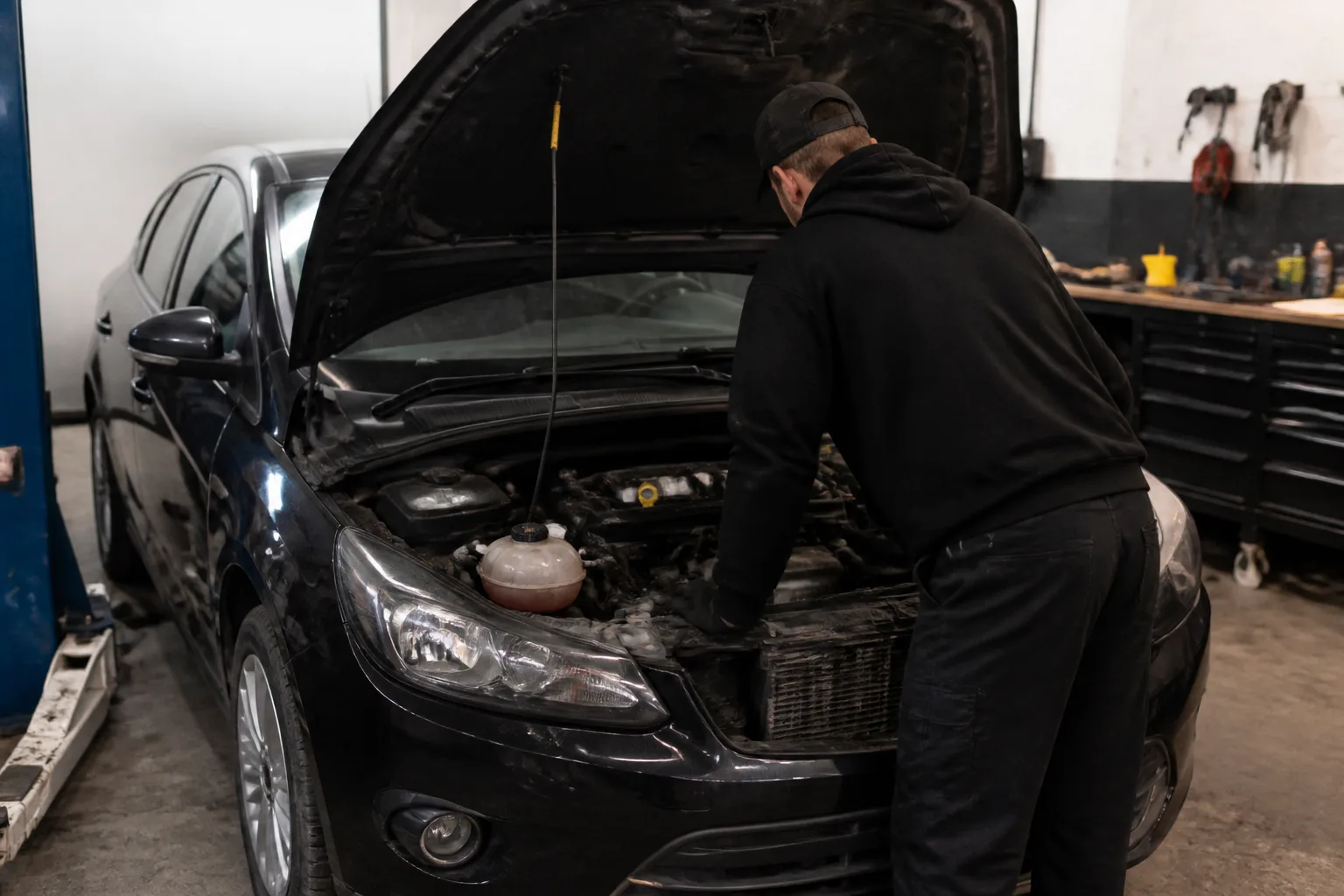
If your temperature gauge is rising or a coolant warning light has appeared, but the coolant level has not dropped, it can be confusing. Coolant loss is only one possible reason for an engine to overheat. The cooling system may still contain the correct amount of fluid while a thermostat, radiator fan, water pump or another component is no longer working properly.
Overheating should be treated seriously. Continuing to drive with an engine that is too hot can cause expensive damage, even if there is no visible leak. If the temperature gauge is in the red, a warning light is flashing, steam is coming from under the bonnet or the engine is running roughly, stop somewhere safe and switch off the engine. Allow it to cool fully and arrange professional assistance rather than trying to drive on.
What does it mean if the coolant level has not changed?
The coolant carries heat away from the engine and releases it through the radiator. For that process to work, the coolant must circulate at the correct rate and the heat must be transferred to the air. A normal level does not prove that circulation, airflow and temperature control are all working.
There may also be a small leak that only appears when the system is hot and pressurised. Coolant can evaporate from a warm component or escape as a fine spray, leaving little or no puddle. However, an overheating problem with no obvious loss of coolant can also be caused by a fault elsewhere in the system.
Common reasons a car overheats without an obvious coolant loss
A thermostat that is stuck closed
The thermostat controls when coolant flows through the radiator. While the engine is cold, it stays closed to help the engine warm up. Once the engine reaches operating temperature, it should open and allow coolant to circulate through the radiator.
If it remains closed, hot coolant may be trapped in the engine while the radiator stays relatively cool. The coolant level can look perfectly normal, but the engine may overheat, particularly after the vehicle has been driven for a while.
A radiator fan that is not operating
The radiator needs airflow to remove heat. At speed, air enters through the front of the vehicle, but the electric cooling fan is especially important in traffic, when idling or when travelling slowly.
A failed fan motor, fuse, relay, wiring fault or temperature switch can stop the fan from coming on. A common pattern is a vehicle that stays at a normal temperature on an open road but begins to overheat in queues or urban traffic. Do not put your hands near the fan to check it. It can start unexpectedly, even after the engine has been switched off.
A failing water pump
The water pump circulates coolant around the engine and radiator. If its internal impeller is damaged or the pump is no longer turning correctly, coolant may not move sufficiently. Some pumps can also leak from a seal or bearing, although not every water pump fault produces an obvious puddle.
Reduced circulation may cause overheating under load, such as on a long hill, while towing or during a longer journey. A garage can assess the symptoms and inspect the cooling system without assuming that the coolant level tells the whole story.
A blocked or restricted radiator
Internal deposits, contamination or corrosion can reduce the passages available for coolant. External dirt, leaves or damage to the radiator fins can also restrict airflow. In either case, the system may contain enough coolant but be unable to remove heat effectively.
Radiator problems are not always easy to identify by sight. A proper assessment may include checking temperature differences across the system and inspecting the condition of the coolant and components.
Air trapped in the cooling system
An air pocket can interrupt coolant circulation and create local hot spots. This may happen after cooling system work, or when the system has been low on coolant at some point. The expansion tank can still show a reasonable level while parts of the system contain air instead of coolant.
Bleeding a cooling system is not simply a matter of removing a cap and letting the engine run. Different vehicles have different procedures, and opening a hot cooling system can cause serious burns. Cooling system work is best left to someone with the correct information and equipment for the vehicle.
A head gasket or combustion gas problem
In some cases, combustion gases can enter the cooling system through a failed head gasket or related engine fault. This can pressurise the system, disturb coolant circulation and cause overheating. Coolant loss may be small or not immediately visible.
Possible warning signs include repeated bubbling in the expansion tank, a cooling system that becomes pressurised unusually quickly, white exhaust smoke, a misfire on start-up or a mayonnaise-like deposit under the oil filler cap. These signs can have other explanations, so they do not confirm a head gasket fault on their own. A garage may need to carry out cooling system and engine tests before reaching a conclusion.
A faulty temperature sensor or gauge
Sometimes the engine is not actually overheating, but a sensor, wiring fault or instrument display is reporting an incorrect temperature. This should not be assumed, particularly if the warning is accompanied by poor running, a coolant smell, steam or other symptoms.
A faulty reading still needs attention. Driving on the assumption that the gauge is wrong could mean overlooking a genuine overheating problem.
What should you do when the temperature rises?
If the gauge moves above its usual position, turn off the air conditioning and, if safe, switch off the engine as soon as you can stop away from traffic. Do not continue driving simply because the coolant reservoir appears full. If steam is visible or the warning remains on, keep clear of the engine bay and allow the vehicle to cool.
Never remove the expansion tank or radiator cap while the system is hot. Pressurised coolant and steam can escape suddenly and cause severe burns. Once the vehicle is fully cold, you can look for obvious signs such as a low reservoir level, fresh wet patches or dried coolant residue. Do not touch hot components, reach near a fan or attempt a repair at the roadside.
If the level is low, the reason still needs to be found. Topping up may be a temporary measure in some circumstances, but it does not repair a leak or resolve a circulation fault. Use the correct coolant information for the vehicle and avoid mixing products unless you know they are compatible.
Can I drive a car that is overheating but not losing coolant?
It is generally not sensible to keep driving an overheating car. The absence of visible coolant loss does not make the situation safe. Further driving can warp engine components, damage the head gasket or turn a relatively contained cooling fault into major engine damage.
If the gauge only rises briefly and returns to normal, record when it happens, such as in traffic, on hills or with the heater on, and arrange an inspection promptly. If the gauge reaches the red zone, the warning light comes on, the engine loses power or steam appears, stop driving and seek recovery or professional advice.
How a garage checks the cause
A technician will usually begin by checking the vehicle's symptoms and looking for signs of leaks, damaged hoses, poor airflow or electrical faults. Further checks may involve the cooling fan, thermostat operation, water pump circulation, radiator condition, coolant pressure and engine temperature readings.
Where necessary, tests can help distinguish between a sensor problem and genuine overheating, or between a cooling system fault and a possible head gasket issue. The important point is that several faults can produce similar symptoms. A full diagnosis is safer than replacing parts based only on the coolant level.
Ashton's Garage can inspect overheating concerns and explain the findings in plain English. If your car has overheated or is showing a temperature warning, you can find the relevant car repair service in Salisbury and discuss the safest next step before using the vehicle again.
Related advice
Cooling system faults can sometimes involve electrical components such as fan motors, relays or wiring. If you are also dealing with repeated electrical symptoms, our guide to why a car battery keeps going flat may help explain some related possibilities. If the vehicle will not restart after an overheating incident, see our advice on why a car might not start, but do not repeatedly crank an engine that has overheated without having it checked.
Frequently asked questions
Can a car overheat if the coolant reservoir is full?
Yes. A full reservoir does not prove that coolant is circulating properly or that the radiator fan, thermostat, water pump and radiator are working. A sensor fault or trapped air can also cause overheating symptoms.
Is it safe to open the coolant cap after the car overheats?
No. Wait until the engine and cooling system are fully cold. The system can remain pressurised and release scalding coolant or steam when the cap is removed.
Why does my car overheat in traffic but not on the motorway?
This pattern can point towards a radiator fan or airflow problem because the vehicle receives less natural airflow at low speed. It is not a definite diagnosis, so the cooling system should be inspected.
Can a faulty thermostat cause overheating without coolant loss?
Yes. If the thermostat does not open, coolant may not flow through the radiator effectively. The level can remain unchanged while the engine temperature rises.
Related advice
Why Does My Engine Make a Knocking Noise?
An engine knocking noise can come from anything from combustion problems to low oil or a loose exhaust part. Learn what the sound may mean, what you can safely check and when to stop driving.
Why Does My Engine Make a Ticking Noise?
A ticking engine can be harmless, but it may also point to an oil, exhaust, valve or timing problem. Learn what the sound could mean and when to arrange a professional inspection.
Why Does My Heater Blow Cold Air When the Engine Is Hot?
A car heater that blows cold air while the engine seems hot can point to low coolant, trapped air, a circulation problem or a fault inside the heating system. Here is what the symptoms may mean and when to arrange a professional inspection.