Signs a Water Pump Is Failing
Learn the common signs of a failing water pump, including coolant leaks, overheating, unusual noises and temperature changes, plus when it is unsafe to keep driving.
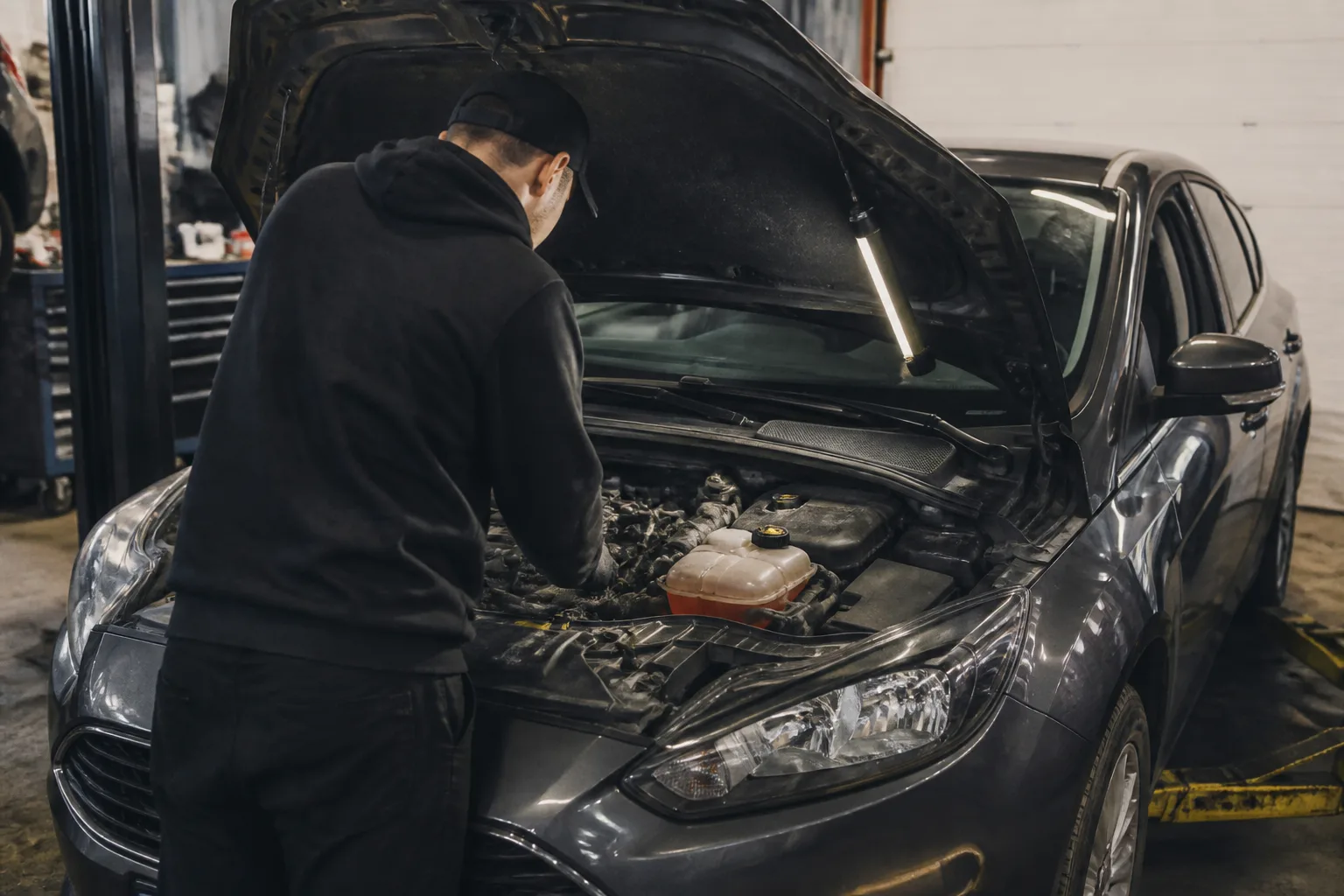
Your car’s water pump is a key part of the engine cooling system. It circulates coolant through the engine and radiator, helping to carry heat away from the engine before the coolant returns for another cycle. If the pump is not working properly, the engine can overheat and suffer serious damage.
Water pumps can fail in more than one way. A bearing may become worn, the pump seal may start leaking, or the internal impeller may no longer circulate coolant effectively. Some symptoms are easy to spot, while others can look like a thermostat, radiator, hose or cooling fan problem. That is why the signs below should be treated as reasons for an inspection rather than a definite diagnosis.
What are the signs a water pump is failing?
1. The engine temperature is higher than usual
A temperature gauge that is regularly higher than its normal position can indicate a cooling system problem. A failing water pump is one possibility, particularly if the temperature rises in traffic or during longer journeys.
Some vehicles use a temperature warning light rather than a traditional gauge. Others may display a message telling you that the engine is too hot. Do not ignore either warning. A water pump that is not circulating coolant properly can allow hot spots to develop inside the engine, even before the gauge appears to show a severe problem.
2. The engine overheats
Overheating is one of the most important warning signs. You may see the temperature gauge move into the red, hear a warning chime or notice steam from under the bonnet. The coolant warning light may also come on, although the exact warning depends on the vehicle.
If your car overheats, pull over somewhere safe and switch the engine off. Do not remove the coolant cap while the engine is hot, because the system may be under pressure and hot coolant can cause serious burns. Allow the vehicle to cool and arrange professional help. Continuing to drive an overheating car can turn a cooling system fault into expensive engine damage.
3. Coolant is leaking from the front of the engine
A water pump leak may leave a puddle or small patch of coolant beneath the front or centre of the engine. Depending on the coolant type, the fluid may be pink, blue, green, yellow or another colour. It can also be difficult to see on a dirty engine or after the fluid has dried.
Some water pumps have a small drain hole, sometimes called a weep hole, which may release coolant when the internal seal is failing. A leak from this area is not something to seal or ignore. Other cooling system components can leak in a similar place, so the source needs to be checked rather than assumed.
4. A grinding, whining or rumbling noise
The water pump is driven mechanically on many engines, although some modern vehicles use an electric pump. A mechanically driven pump contains a bearing that can wear over time. This may produce a whining, grinding or rumbling sound from the belt side of the engine.
The noise may change with engine speed and can be more noticeable when the engine is revved. However, drive belts, tensioners, idler pulleys and other accessories can make similar noises. Avoid putting your hands near belts or pulleys with the engine running. A garage can identify the source safely and check whether the pump, belt drive or another component is responsible.
5. Coolant is disappearing without an obvious puddle
If you need to top up the coolant repeatedly, there is likely to be a leak somewhere or another fault causing coolant loss. A water pump can leak only when the engine is running, or the coolant may land on a hot component and evaporate before it reaches the ground.
Do not rely on regular top-ups as a long-term solution. Running with a low coolant level reduces the system’s ability to remove heat and may allow air into the cooling system. Air pockets can also affect coolant circulation and make the problem harder to diagnose.
6. Coolant or steam around the pump area
A light crust or staining around the water pump, belt covers or nearby components can be a sign that coolant has been escaping and drying. Steam, a sweet coolant smell or visible dampness may also point towards a leak.
These signs do not prove that the pump itself has failed. Hoses, housing seals and other parts may be close by. A technician will normally inspect the cooling system and may use a pressure test or other diagnostic checks to find the source.
7. The heater is blowing cold air when the engine should be warm
A heater that suddenly stops producing warm air can sometimes be linked to poor coolant circulation or a low coolant level. It may occur alongside an overheating problem, particularly if the water pump is not moving coolant through the engine and heater circuit.
There are other possible explanations, including a thermostat problem, trapped air or a blocked heater component. If cold air from the heater is followed by a rising temperature gauge, treat the combination seriously and stop driving when it is safe to do so.
Can you drive with a failing water pump?
It depends on the symptoms, but an overheating warning, steam, a rapidly rising temperature gauge or a significant coolant leak means you should not continue driving. Stop safely, switch the engine off and arrange professional assistance. The risk is not limited to the water pump. Excess heat can damage gaskets, cylinder heads and other engine components.
If there is only a faint noise and the engine temperature is normal, the car may not need to be stopped immediately, but it should still be checked promptly. A noisy pump bearing can worsen and may affect the drive belt on some engines. If that belt fails, other systems may stop working as well.
What causes a water pump to fail?
Common causes include normal wear in the pump bearing or seal, corrosion, contamination in the coolant and incorrect coolant maintenance. On some engines, the water pump is driven by the timing belt. In those cases, the pump may be replaced as part of timing belt work, depending on the manufacturer’s recommended maintenance approach and the condition of the components.
Electric water pumps can develop electrical or control faults instead of the belt and bearing problems found on a conventional pump. The exact design varies between vehicles, so the registration or vehicle details are useful when arranging an inspection.
How is a water pump fault diagnosed?
A garage will consider the symptoms together rather than replacing the first part that looks suspicious. Checks may include looking for coolant traces, assessing the coolant level, inspecting the belt drive, listening for bearing noise and checking the engine temperature. A pressure test or electronic diagnostic check may also be appropriate.
It is worth mentioning any warning lights, leaks, unusual smells, temperature changes and recent coolant top-ups. If the vehicle has also struggled to start after overheating, our guide to why a car may not start may help explain the wider symptoms. If the engine turns over but does not run, see why a car can crank but not start, while remembering that diagnosis often requires the vehicle to be inspected in person.
What should you do if you suspect a failing water pump?
Check the temperature warning signs and, only when the engine is cold, look for obvious coolant loss around the engine bay. Do not remove covers, disturb belts or attempt a repair without the correct knowledge and equipment. Cooling systems and drive belts can present serious risks, and a wrong diagnosis may leave the engine vulnerable to overheating.
If you are in Salisbury or the surrounding area and have noticed overheating, coolant loss or a new noise from the belt side of the engine, Ashton’s Garage can inspect the cooling system and discuss the appropriate repair. The aim is to establish whether the water pump is involved and prevent a manageable cooling fault from becoming wider engine damage.
Frequently asked questions
How long can you drive with a bad water pump?
There is no safe distance that applies to every vehicle. If the engine is overheating, steaming or losing coolant, stop driving and arrange professional assistance. Even a pump that is only noisy should be inspected promptly because the fault may worsen.
Will a failing water pump show a warning light?
It may do, especially if the engine temperature becomes too high or the coolant level falls. However, a water pump can begin to wear or leak before a warning light appears, so noises, coolant loss and temperature changes should not be ignored.
Can a water pump leak without overheating the engine?
Yes. A small or developing leak may not cause immediate overheating, particularly if the coolant level is still adequate. Repeated coolant loss should still be investigated before the leak becomes more serious.
Is a water pump replaced during a timing belt change?
On some engines the water pump is driven by the timing belt, so replacement may be considered at the same time. The correct approach depends on the vehicle manufacturer’s guidance, the engine design and the condition of the pump and belt components.
Related advice
Why Does My Engine Make a Knocking Noise?
An engine knocking noise can come from anything from combustion problems to low oil or a loose exhaust part. Learn what the sound may mean, what you can safely check and when to stop driving.
Why Does My Engine Make a Ticking Noise?
A ticking engine can be harmless, but it may also point to an oil, exhaust, valve or timing problem. Learn what the sound could mean and when to arrange a professional inspection.
Why Does My Heater Blow Cold Air When the Engine Is Hot?
A car heater that blows cold air while the engine seems hot can point to low coolant, trapped air, a circulation problem or a fault inside the heating system. Here is what the symptoms may mean and when to arrange a professional inspection.