Signs Your Auxiliary Belt May Need Replacing
Learn the common signs of a worn or damaged auxiliary belt, what it does, and when a professional inspection is the safest next step.
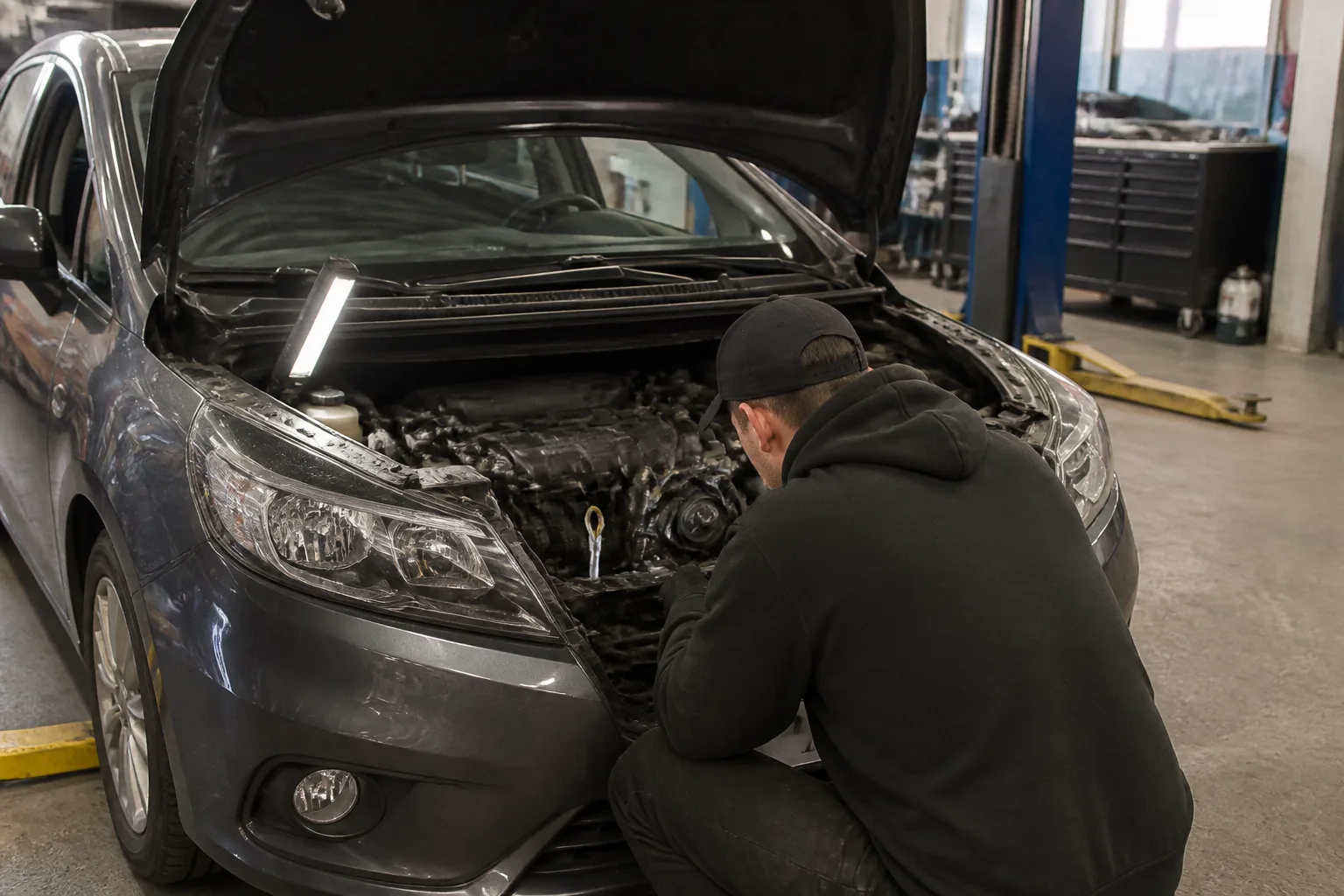
The auxiliary belt, sometimes called the serpentine belt or drive belt, is a relatively simple component with an important job. It transfers power from the engine to equipment such as the alternator, air conditioning compressor and, on some vehicles, the water pump or power steering pump.
Belts are made from reinforced rubber and are designed to cope with heat, movement and continuous use. They do not last indefinitely, though, and wear is not always obvious during a quick look under the bonnet. Knowing the signs your auxiliary belt may need replacing can help you deal with a developing problem before it leaves you stranded.
What does the auxiliary belt do?
The engine turns a crankshaft pulley. The auxiliary belt runs around this and one or more other pulleys, allowing the engine to drive various accessories. A tensioner keeps the belt tight, while guide or idler pulleys help it follow the correct route.
The exact arrangement varies between vehicles. Some modern cars use one long belt, while others have more than one belt. The belt may drive the alternator, which charges the battery, as well as air conditioning and other engine accessories. On some models it also drives the water pump or a pump used for steering assistance.
This is separate from the timing belt or timing chain. The timing system controls the relationship between the engine's internal moving parts. The auxiliary belt works on external accessories, although a failed auxiliary belt can still cause serious problems depending on the vehicle's design.
Common signs of a worn auxiliary belt
1. Squealing or chirping from the engine bay
A high-pitched squeal when starting the engine, accelerating or switching on the air conditioning can indicate belt slip. A chirping sound that changes with engine speed may also be linked to belt alignment, a tensioner or another pulley rather than the belt itself.
Noise alone cannot confirm the cause. A belt can be worn without making a sound, and replacing the belt will not solve the problem if a pulley or tensioner is causing it to run incorrectly.
2. Cracks, fraying or a glazed appearance
With the engine switched off, you may be able to see part of the belt from above. Signs of concern include visible cracks, loose strands at the edges, missing pieces of rubber, deep grooves or a shiny, glazed surface.
Do not put your hands near the belt or pulleys while the engine is running. Some parts can start moving unexpectedly, and access may be restricted by covers or other components. If the belt is difficult to see, a garage can inspect it safely as part of a service or diagnostic check.
3. A battery warning light or electrical problems
If the auxiliary belt drives the alternator and begins slipping or breaks, the battery may no longer be charged properly. A battery or charging warning light may appear, and electrical equipment may begin to behave unusually.
It is important not to assume that the battery itself is at fault. A charging problem can involve the alternator, wiring, a pulley or the auxiliary belt. If a warning light appears together with belt noise, arrange professional advice promptly and avoid driving further than necessary.
4. Overheating or a rising temperature gauge
On some cars, the auxiliary belt drives the water pump. If that belt fails, coolant may stop circulating properly and the engine can overheat. Not every vehicle uses this arrangement, so the symptoms and risks depend on the specific engine.
Never continue driving an overheating car in the hope that it will recover. Stop somewhere safe, switch off the engine and allow it to cool. Do not remove a coolant cap while the engine is hot. Continuing to drive can cause expensive engine damage and may create a roadside safety risk.
5. Heavy or unusual steering
Some vehicles use an auxiliary belt to drive a hydraulic power steering pump. If the belt slips or breaks, steering assistance may be reduced or lost. The steering wheel may suddenly feel much heavier, particularly at low speed.
If this happens, treat it as a roadworthiness concern. Slow down only if it is safe to do so, move to a suitable place and stop. Do not continue a normal journey until the vehicle has been inspected.
6. Air conditioning stops working
A belt problem can affect the air conditioning compressor on vehicles where it is belt-driven. If the air conditioning stops working on its own, this does not necessarily mean the auxiliary belt is worn. Low refrigerant, an electrical fault or a compressor problem can have similar results.
However, air conditioning failure alongside squealing, visible belt damage or other warning lights is worth having checked rather than treating as an isolated comfort issue.
7. A burning rubber smell
A slipping belt can generate heat and produce a smell similar to hot rubber. This can also be caused by a seized pulley or another component placing excessive load on the belt.
Turn the engine off if the smell is strong, especially if it is accompanied by smoke, warning lights or unusual noise. Wait for the vehicle to cool and seek professional advice. Do not spray belt dressing or other products onto the belt in an attempt to quieten it.
How long should an auxiliary belt last?
There is no single replacement interval that applies to every car. Belt life depends on the vehicle, engine design, mileage, age, operating conditions and the condition of the tensioner and pulleys. A belt can deteriorate through age as well as use.
The manufacturer's maintenance schedule is the best starting point, but an inspection may be sensible sooner if the car has developed a new noise, has been exposed to oil or coolant contamination, or is being prepared for a long journey. A regular service can provide an opportunity to check the belt and related components. You can also read our guide to how often a car should be serviced for broader maintenance guidance.
Can you check an auxiliary belt yourself?
A basic visual check with the engine off is generally reasonable if the belt is clearly visible and you can inspect it without removing covers or reaching into the engine bay. Look for obvious cracking, fraying, contamination or missing sections. Do not try to test belt tension by pulling hard on it, and do not start dismantling parts to gain access.
The appearance of the belt is only part of the picture. A garage will also consider the belt's routing, tensioner, idler pulleys and the accessories it drives. If a belt is replaced without finding the reason it failed, the replacement may suffer the same problem.
When should you stop driving?
A noisy belt does not always mean immediate failure, but it should not be ignored. Stop and arrange professional inspection if the belt is visibly damaged, the battery warning light is on, the engine is overheating, steering assistance has changed, or there is smoke or a strong burning smell.
If the belt has broken, the vehicle may lose charging, cooling or steering assistance depending on its design. The safest option is recovery or professional advice rather than driving to a garage. If the symptoms are mild and no warning lights or overheating are present, contact a garage promptly and ask whether the car is suitable to drive in for inspection.
What happens during an inspection?
A technician can check the belt for wear and contamination, confirm that it follows the correct route and assess the tensioner and pulleys. They may also check whether the alternator, air conditioning compressor, water pump or steering pump is operating as expected.
Replacing only the belt is not always the right solution. If a tensioner is weak or a pulley is rough, those parts may also need attention. The correct work depends on the vehicle and the cause of the symptoms, which is why remote diagnosis is not reliable from a noise or warning light alone.
If your car is showing possible auxiliary belt symptoms, Ashton's Garage can inspect the belt and related components as part of appropriate servicing or repair advice. If you are unsure whether the vehicle is safe to drive, explain the symptoms before travelling so the safest next step can be considered.
Related maintenance advice
Auxiliary belt checks are one part of keeping a car reliable. Our guide to what is included in a full car service explains the wider checks commonly carried out, while interim service versus full service may help if you are deciding which type of maintenance is suitable.
Frequently asked questions
Is an auxiliary belt the same as a timing belt?
No. An auxiliary belt drives external components such as the alternator and air conditioning compressor. A timing belt or timing chain controls the timing of the engine's internal components. They have different jobs and replacement requirements.
Can I drive with a noisy auxiliary belt?
A noisy belt may continue working for a while, but it could also be slipping or affected by a failing pulley. Arrange an inspection promptly. Stop driving if there is overheating, a battery warning light, heavy steering, smoke, visible belt damage or a strong burning smell.
What happens if the auxiliary belt breaks?
The result depends on the vehicle. You may lose battery charging, air conditioning, power steering or coolant circulation. Some failures can leave the car unable to continue safely, so switch off the engine and seek professional advice rather than assuming it is safe to drive on.
Can an auxiliary belt be checked during a service?
Yes. A technician can inspect the belt, its routing and related tensioners and pulleys during appropriate servicing. A visual inspection can identify obvious damage, but the cause of noise or premature wear may require further checks.
Related advice
What Is an Auxiliary Belt and What Does It Do?
An auxiliary belt drives several important engine accessories, including the alternator and, on some cars, the water pump. Here is how it works, what warning signs to look for and why belt condition matters.
How Often Should a Car’s Auxiliary Belt Be Checked?
Most auxiliary belts should be inspected during routine servicing and whenever warning signs appear. Learn what the belt does, how often it needs checking, which symptoms matter and why replacement intervals vary between vehicles.
Does Service History Affect a Car’s Value?
A clear, consistent service history can support a car’s value by giving buyers confidence in its maintenance and condition. Here is what records are worth, what buyers look for and how to fill gaps responsibly.