What Is an Auxiliary Belt and What Does It Do?
An auxiliary belt drives several important engine accessories, including the alternator and, on some cars, the water pump. Here is how it works, what warning signs to look for and why belt condition matters.
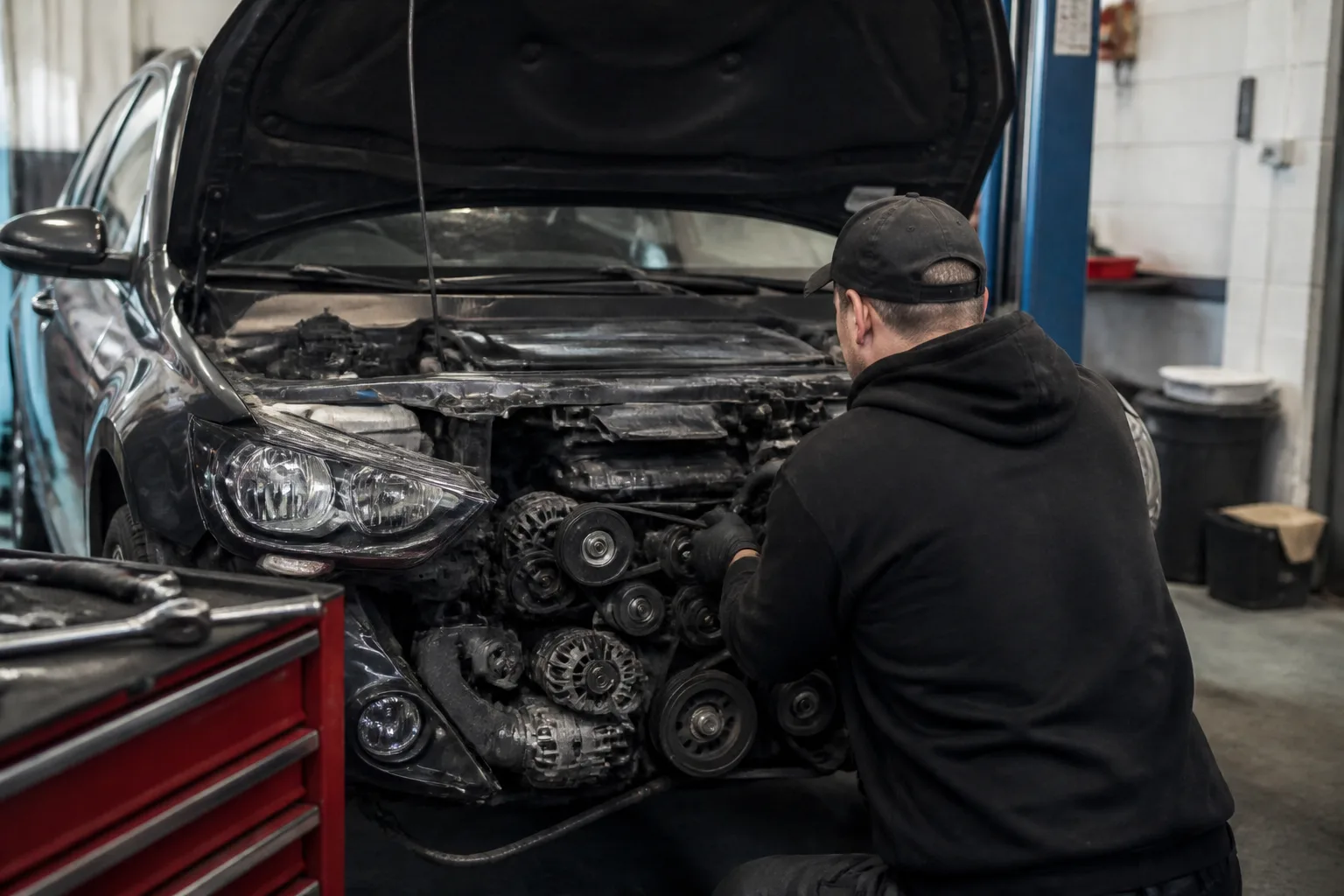
An auxiliary belt is a continuous rubber belt fitted to the front or side of the engine. Its job is to transfer power from the engine’s crankshaft pulley to several accessories that the car needs while it is running.
Depending on the vehicle, the auxiliary belt may drive the alternator, air conditioning compressor, power steering pump and water pump. Some cars have more than one belt, while others use a single belt known as a serpentine belt because it winds around several pulleys.
Although it is a relatively simple component, the auxiliary belt plays an important part in keeping the engine and electrical systems working. If it becomes worn, slips or breaks, the consequences can range from a flat battery to overheating or a loss of power assistance.
How does an auxiliary belt work?
The engine’s crankshaft turns whenever the engine is running. A pulley attached to the crankshaft drives the auxiliary belt, which then turns the pulleys connected to the alternator and other accessories.
The alternator uses this mechanical drive to generate electricity and keep the battery charged. If the car has belt-driven air conditioning, the belt also turns the compressor that circulates refrigerant through the system. On some vehicles, the belt drives the water pump, which circulates coolant around the engine.
Older cars may use separate belts for different accessories. Many modern engines use one ribbed belt to drive several components. A tensioner keeps the belt tight enough to maintain contact with the pulleys, while guide or idler pulleys help it follow the correct route.
What does an auxiliary belt do?
The exact layout varies between makes and models, but an auxiliary belt commonly operates the following:
- Alternator: produces electricity while the engine is running and helps recharge the battery.
- Air conditioning compressor: powers the compressor when the air conditioning system is switched on.
- Power steering pump: on vehicles with hydraulic power steering, supplies assistance to make steering easier.
- Water pump: on some engines, circulates coolant to help control engine temperature.
Not every car uses the auxiliary belt for all of these functions. Some vehicles have an electric water pump or electric power steering, for example. The correct belt arrangement can be confirmed from the vehicle’s technical information or maintenance schedule.
Is an auxiliary belt the same as a timing belt?
No. The two belts have different jobs and should not be confused.
The timing belt, where fitted, synchronises the movement of the crankshaft and camshaft inside the engine. It is an internal engine component and is usually enclosed by protective covers. If a timing belt fails, serious engine damage may occur on some engines.
The auxiliary belt is mounted externally and drives accessories such as the alternator and air conditioning compressor. It is usually easier to see during an inspection, although some of its route may still be hidden by covers or other components.
The replacement schedule for a timing belt and an auxiliary belt is not necessarily the same. If you are unsure which belt your vehicle needs, check the service information rather than relying on the general term ‘fan belt’. That older name is still used by some people, even though the belt often drives much more than a cooling fan.
What are the signs of a worn or failing auxiliary belt?
An auxiliary belt can deteriorate through age, heat, contamination, incorrect tension or wear in one of the pulleys it runs around. Possible warning signs include:
- Squealing or chirping noises: a belt may slip or make noise if it is worn, contaminated or not held at the correct tension.
- Visible damage: fraying, damaged ribs, glazing, splits or missing sections indicate that the belt needs professional attention.
- A battery warning light: if the belt stops turning the alternator, the battery may no longer be charged properly.
- Heavy steering: on a car with a belt-driven hydraulic steering pump, belt failure can remove power assistance.
- Engine temperature rising: if the belt drives the water pump, a failed belt may affect coolant circulation and lead to overheating.
- A burning rubber smell: this can be caused by belt slip, but other faults are possible, so it should not be treated as a definite diagnosis.
Modern belts do not always show obvious cracks before they fail. The ribs can wear or the rubber can harden without making the problem easy to spot from above. A noisy belt may also be a symptom of a worn tensioner, idler pulley, alternator bearing or another component, rather than the belt itself.
Can you drive with a noisy auxiliary belt?
A brief noise does not prove that the belt is about to break, but it should not be ignored. A belt that slips or runs out of line can deteriorate quickly, particularly if a pulley or tensioner is failing.
If the battery warning light comes on, the steering suddenly becomes heavy, the engine temperature rises, or you see a damaged or loose belt, pull over when it is safe to do so and switch the engine off. Continuing to drive may leave the vehicle without charging, steering assistance or coolant circulation, depending on its design. Driving an overheating engine can cause further damage.
Do not reach into the engine bay while the engine is running. If the belt has broken, avoid attempting to restart the car repeatedly. Arrange professional assistance or an inspection so the belt system and the components it drives can be checked safely.
How often should an auxiliary belt be replaced?
There is no single replacement interval that applies to every vehicle. The correct period depends on the manufacturer’s schedule, the engine design, mileage, age, driving conditions and the condition of the belt system.
Auxiliary belt condition is normally considered during routine maintenance. It is sensible to ask for it to be checked when the vehicle is serviced, especially if the car is older, has covered significant mileage or is showing belt-related noises. The tensioner, idler pulleys and driven accessories should also be assessed, because fitting a new belt will not resolve a fault elsewhere in the system.
Service history is useful here. If there is no clear record of when the belt was last replaced, a garage can inspect it and advise whether replacement is appropriate. You can find more context in our guides to how often a car should be serviced and what is included in a full car service.
What happens during a professional inspection?
A technician will usually inspect the belt’s condition and routing, check its tension where applicable, and look for signs of misalignment or contamination. The pulleys and tensioner may also be checked for roughness, looseness or unusual movement.
The inspection should take account of the vehicle’s specific design. Some belts are partly enclosed, and a visual check alone may not identify every problem. If replacement is needed, the correct belt must be fitted and routed accurately. A garage may also recommend replacing a worn tensioner or pulley if it is likely to damage the new belt.
Ashton's Garage can check an auxiliary belt as part of routine vehicle servicing in Salisbury and explain whether the belt, its tensioner or another component needs attention. If you have noticed a warning light, unusual noise or a change in steering or engine temperature, mention that when arranging an inspection.
In summary
An auxiliary belt transfers engine power to important accessories. It may drive the alternator, air conditioning compressor, hydraulic power steering pump and, on some cars, the water pump. It is different from the timing belt, but its failure can still leave a vehicle unable to run reliably or safely.
Unusual noises, visible belt damage, a battery warning light, heavy steering or rising engine temperature are reasons to take the issue seriously. Basic visual awareness is useful, but diagnosing the belt system often requires checking the tensioner, pulleys and driven components as well. For more information about maintenance schedules, see our guide to interim and full services.
Frequently asked questions
How long does an auxiliary belt last?
Its service life varies by vehicle, mileage, age, driving conditions and belt design. Follow the manufacturer’s maintenance guidance and have it inspected if there is no clear replacement record or if you notice noise or visible damage.
What happens if an auxiliary belt breaks?
The result depends on what the belt drives. The alternator may stop charging the battery, power steering assistance may be lost, and the engine may overheat if the belt drives the water pump. Stop safely and arrange professional assistance if this happens.
Can an auxiliary belt affect the battery?
Yes. If the belt drives the alternator and slips or breaks, the alternator may not charge the battery correctly. A battery warning light can appear, although that light can also be caused by other charging-system faults.
Is a fan belt another name for an auxiliary belt?
People sometimes use ‘fan belt’ to mean an auxiliary belt, particularly when referring to older cars. Modern auxiliary belts often drive the alternator and other accessories rather than a mechanical cooling fan.
Related advice
How Often Should a Car’s Auxiliary Belt Be Checked?
Most auxiliary belts should be inspected during routine servicing and whenever warning signs appear. Learn what the belt does, how often it needs checking, which symptoms matter and why replacement intervals vary between vehicles.
Does Service History Affect a Car’s Value?
A clear, consistent service history can support a car’s value by giving buyers confidence in its maintenance and condition. Here is what records are worth, what buyers look for and how to fill gaps responsibly.
Signs Your Car Is Overdue a Service
A missed service is not always obvious. Learn the common signs your car may be overdue maintenance, what they can mean and when professional checks are sensible.