Can You Drive an Overheating Car?
An overheating car should not usually be driven further. Learn what to do safely, what the warning signs may mean and when professional inspection is needed.
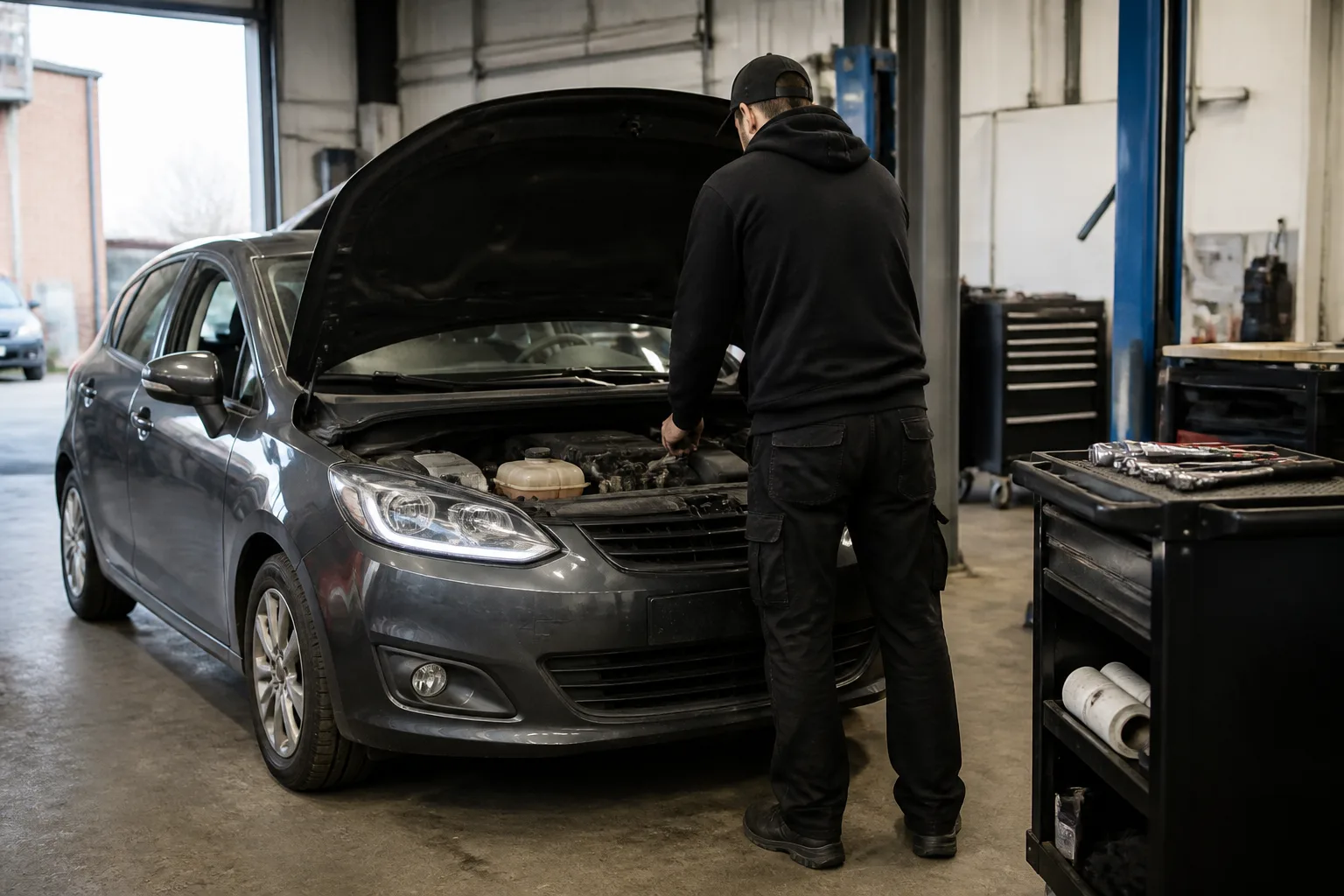
Can you drive an overheating car? In most cases, you should stop as soon as it is safe to do so and switch the engine off. Continuing to drive while the temperature is too high can turn a relatively contained cooling-system fault into serious engine damage.
It is not always possible to know from the dashboard warning alone why the engine is overheating. The cause could be low coolant, a failed cooling fan, a stuck thermostat, a damaged hose, a water pump problem or another fault. Some causes are minor to repair, while others can leave the vehicle unsafe or uneconomical to drive.
What counts as an overheating car?
Most vehicles have a temperature gauge that normally sits within a consistent operating range. If the needle moves into the red zone, a temperature warning light appears, or a message tells you to stop the engine, treat it as an overheating problem.
Other signs can include steam or vapour from under the bonnet, a strong sweet smell from coolant, a loss of engine power, unusual knocking or ticking noises, or coolant visibly leaking beneath the vehicle. The heater may also blow cold air when the engine is hot, although that symptom can have several possible causes.
A warning light or gauge reading should be taken seriously even if the car still seems to drive normally. The temperature display may not show how quickly the situation is worsening.
Should you keep driving if the temperature warning appears?
Generally, no. If the gauge is rising towards the red zone or a temperature warning is displayed, find a safe place to pull over as soon as possible. Turn off the engine and allow the vehicle to cool. If there is steam, a substantial leak, a burning smell, loss of power or unusual engine noise, do not continue driving once the car has cooled.
Stopping promptly helps prevent further damage, but it does not confirm that the car is safe to drive again. A vehicle may appear normal after cooling down and then overheat again within a short distance. Driving on in that situation can cause severe damage to components such as the cylinder head, head gasket or engine block.
If you are on a motorway or another dangerous stretch of road, prioritise getting yourself and your passengers to a safe position. Use hazard lights where appropriate and seek breakdown assistance if the vehicle cannot be moved safely.
What to do when your car overheats
1. Pull over safely
Reduce speed smoothly, avoid hard acceleration and move away from traffic if you can do so safely. Do not stop in a live lane unless there is no alternative. Once stationary, switch the engine off if the temperature warning remains present or the gauge is too high.
2. Do not open the coolant cap while the engine is hot
The cooling system can be pressurised when hot. Removing the expansion-tank or radiator cap may release scalding coolant or steam. Keep your hands away from the area and wait for the engine to cool fully. This can take considerable time, depending on the fault and conditions.
3. Look without touching
Once you are in a safe place, you can look for obvious signs such as a pool of fluid, a split hose or steam. Do not reach into the engine bay, attempt to move a fan or handle hot components. An electric cooling fan can start unexpectedly, even after the ignition has been switched off.
4. Arrange appropriate help
If the warning was severe, the vehicle has lost coolant, or the cause is not obvious, recovery or professional inspection is the sensible option. Do not rely on adding coolant and hoping the problem has gone away. If the level is low, there may be a leak or another fault that needs attention.
Can you drive a short distance after the car cools down?
There is no universal safe distance. In some situations, a car may cool because it has been stationary, only to overheat again as soon as it is driven. The answer depends on why the temperature rose, how high it went and whether coolant has been lost. Those details cannot be confirmed reliably from the roadside.
Do not drive the vehicle if the temperature warning returns, the gauge rises again, steam is present, fluid is leaking, the engine sounds abnormal or the car is losing power. A tow or recovery service may be safer than trying to reach a garage under its own power.
If the engine stopped during the incident and now will not restart, avoid repeated attempts to start it. You may find our guides on why a car will not start and why a car cranks but does not start useful, but an overheating incident should still be mentioned when requesting assistance.
Why might a car overheat?
Several cooling-system and engine faults can produce similar symptoms:
- Low coolant: Coolant may have escaped through a leak, or the level may have fallen because of an existing fault.
- A damaged hose or radiator: Cracks, splits or corrosion can allow coolant to escape.
- A cooling fan fault: The fan helps remove heat when airflow through the radiator is limited, particularly in slow traffic.
- A thermostat problem: The thermostat controls coolant flow as the engine reaches operating temperature. If it does not work correctly, circulation can be affected.
- A water pump fault: The pump helps circulate coolant through the engine and cooling system.
- A head-gasket or other engine fault: Overheating can be both a cause and a result of internal engine problems. Further testing is needed to establish what has happened.
These possibilities can overlap, and the same warning does not identify one specific failed part. A visual check may find a leak, but it may not explain the full problem.
Why professional inspection matters
An overheating engine needs more than a quick top-up if the underlying cause has not been established. A garage can inspect the cooling system, check for leaks and assess related components using suitable diagnostic and pressure-testing equipment where appropriate.
It is also important to explain exactly what happened. Tell the technician whether the warning appeared in traffic or at speed, whether steam was visible, whether the heater changed temperature, whether the engine lost power and how far the vehicle was driven after the warning. This information can help guide the inspection without assuming a diagnosis.
If your car has overheated and you are unsure whether it is safe to move, contact Ashton’s Garage about a cooling-system inspection or repair. We can discuss the symptoms and the safest next step for the vehicle rather than encouraging you to drive on when there may be a roadworthiness or engine-risk concern.
How to reduce the chance of overheating
Keep an eye on the temperature gauge and do not ignore coolant-level warnings. During routine servicing, ask for the cooling system to be checked if you have noticed a changing temperature reading, a coolant smell or repeated need to top up. Regular maintenance cannot prevent every fault, but it can help identify leaks and worn components before they develop into a roadside problem.
The key point is simple: an overheating warning is a reason to stop and investigate, not a warning to continue until the destination. Cooling the engine may protect it temporarily, but only a proper assessment can establish whether the car is safe to drive again.
Frequently asked questions
Can I drive my car if the temperature gauge is in the red?
No. Pull over safely, switch off the engine and allow it to cool. Do not continue driving if the gauge has reached the red zone, particularly if there is steam, a coolant leak, unusual noise or loss of power.
How long should I wait before opening the bonnet?
Wait until the engine and cooling system have cooled sufficiently, and keep away from the coolant cap while the system may still be pressurised. Hot coolant and steam can cause serious burns.
Can low coolant cause a car to overheat?
Yes, low coolant can reduce the cooling system's ability to carry heat away from the engine. However, a low level may indicate a leak or another fault, so simply topping up does not necessarily solve the problem.
Is it safe to drive after an overheating car has cooled down?
Not automatically. The car may overheat again as soon as it is driven. If the warning returns, coolant is leaking, steam is visible or the engine sounds abnormal, arrange recovery or professional inspection instead of driving further.
Can overheating damage the engine?
Yes. Continued overheating can damage engine components, including the cylinder head, head gasket or engine block. The level of risk depends on the cause and how long the engine remained too hot.
Related advice
Why Does My Engine Make a Knocking Noise?
An engine knocking noise can come from anything from combustion problems to low oil or a loose exhaust part. Learn what the sound may mean, what you can safely check and when to stop driving.
Why Does My Engine Make a Ticking Noise?
A ticking engine can be harmless, but it may also point to an oil, exhaust, valve or timing problem. Learn what the sound could mean and when to arrange a professional inspection.
Why Does My Heater Blow Cold Air When the Engine Is Hot?
A car heater that blows cold air while the engine seems hot can point to low coolant, trapped air, a circulation problem or a fault inside the heating system. Here is what the symptoms may mean and when to arrange a professional inspection.