
Winter Car Maintenance Checklist: Prepare Your Car for Cold Weather
Use this practical winter car maintenance checklist to check your battery, tyres, fluids, lights, visibility and heating before colder, wetter weather arrives.
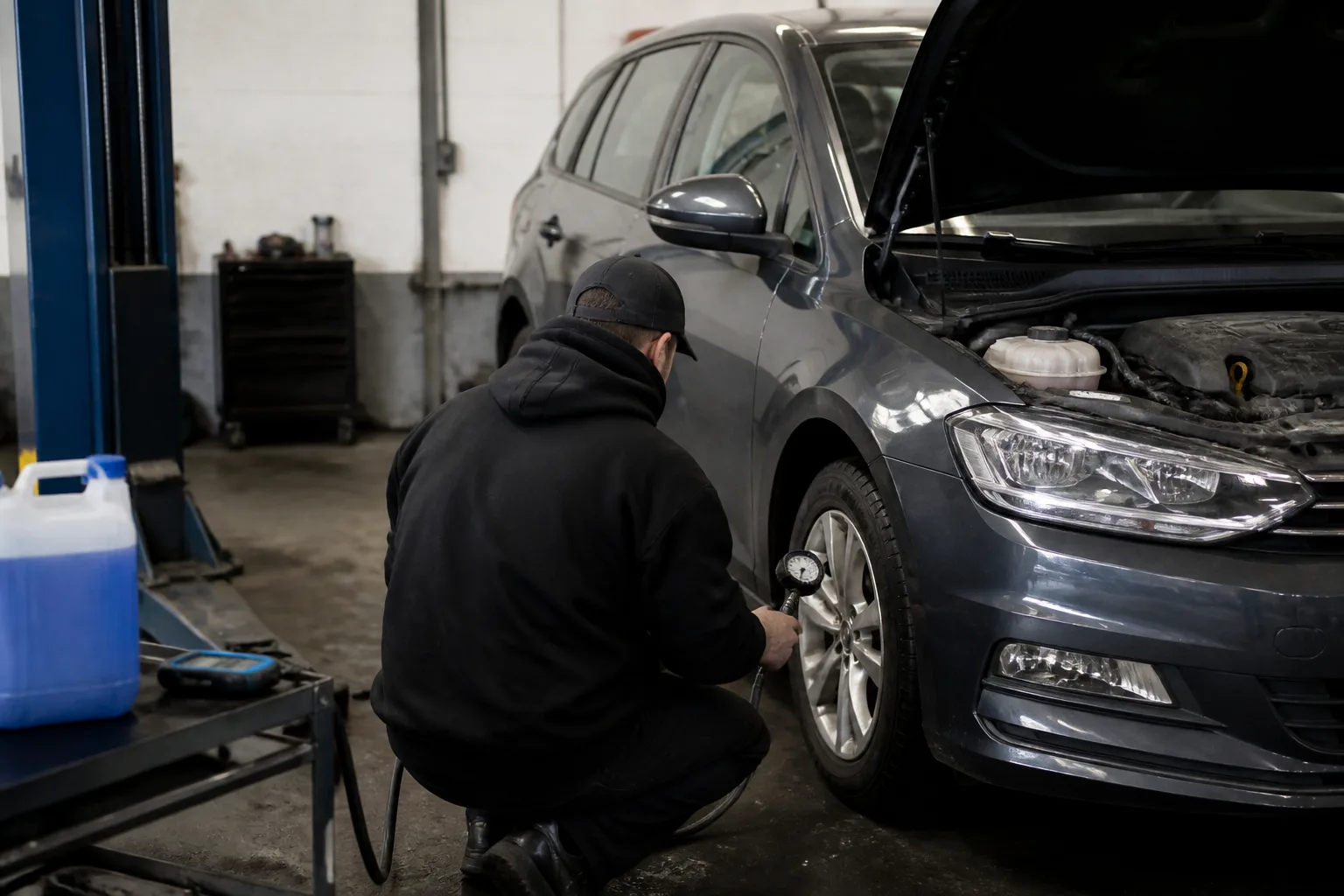
Cold weather does not create every car problem, but it can expose weaknesses that were less noticeable during the warmer months. A tired battery may struggle to start the engine, tyres can lose pressure as temperatures fall, and dirty or ineffective lights can make winter journeys harder for you and other road users.
This winter car maintenance checklist covers the sensible checks most motorists can make before the weather turns colder. It is not a substitute for a service or a professional inspection, but it can help you spot issues early and decide when your car needs further attention.
1. Check the battery and starting system
Winter places extra demand on the battery. The engine can be harder to turn in low temperatures, while the heater blower, heated screens, lights and wipers may all be used more frequently.
Look for obvious signs that the battery may be struggling, such as slow engine cranking, dimming lights when starting or repeated difficulty starting after the car has been left overnight. Corrosion around the battery terminals or a battery case that appears damaged also deserves professional attention. Do not attempt to dismantle or repair the battery yourself.
If the battery has gone flat, repeated jump-starting may only mask the underlying problem. The battery, charging system and starting circuit may all need to be assessed, particularly if the problem returns.
For more detail on this subject, see our guide to how cold weather affects your car battery.
2. Inspect the tyres
Tyres are your car's contact with the road, so their condition matters especially when roads are wet, icy or covered in standing water. Check all four tyres, including the spare if your car has one, for cuts, bulges, cracks or objects lodged in the tread or sidewall.
Check the tread condition across the tyre rather than looking at one small section. Uneven wear can indicate an alignment, suspension or inflation problem. A tyre with a bulge or significant damage should not be treated as a minor cosmetic issue. It may not be safe to continue driving on it.
Check pressures when the tyres are cold and use the pressures recommended by the vehicle manufacturer. These are usually shown in the handbook, on a label in the driver's door area or inside the fuel flap. Do not rely on the pressure printed on the tyre itself, as that is not normally the recommended pressure for your particular vehicle.
Temperature changes can affect readings, so our article on checking tyre pressure when the temperature changes explains why regular checks are worthwhile.
3. Test the lights and keep them clean
Winter often means more driving in darkness, rain, mist and spray. Walk around the vehicle and check the headlights, sidelights, brake lights, indicators, rear fog light and reversing lights. Ask someone to operate the controls if you cannot see the lights from the driver's seat.
Dirty lamp covers can reduce the amount of light reaching the road and make your car less visible. Clean them carefully and replace failed bulbs where this is straightforward for the vehicle. If a light keeps failing, flickers or has water inside it, the fault may need investigation rather than another bulb.
Make sure the number plate is clean and readable, and avoid fitting bulbs that are unsuitable for the vehicle. If you are unsure about a lighting fault, a garage can check the system without guessing.
4. Check screenwash, wipers and visibility
Use screenwash rated for winter conditions rather than relying on plain water. Water can freeze in the reservoir, pipes or jets, leaving you without an effective way to clear road grime. Follow the product instructions when mixing or topping up screenwash.
Inspect the wiper blades for splits, lifting edges or smearing. Wipers that leave broad wet patches or chatter across the glass may no longer be clearing the screen properly. Avoid using wipers to remove thick ice, as this can damage the blades and place unnecessary strain on the mechanism.
Clear ice and snow fully before setting off, including from the windows, mirrors, lights and roof where it could fall onto another road user. Use a proper scraper and suitable de-icer, and make sure the glass is clear rather than simply making a small viewing area.
5. Check the engine coolant and other fluids
Coolant helps regulate engine temperature and provides protection against freezing. Check the level only when the engine is cold and use the correct coolant specification for your vehicle. Do not remove the coolant cap from a hot engine, because the system may be pressurised and could cause burns.
A falling coolant level, visible leak or warning message should not be ignored. Overheating can cause serious damage, and a low level may have an underlying cause that cannot be resolved by repeatedly topping up. If the temperature warning appears, steam comes from the engine bay or the temperature gauge rises unusually high, stop somewhere safe and seek professional advice. Continuing to drive may be unsafe for both the vehicle and its occupants.
It is also sensible to check the engine oil and brake fluid levels in line with the vehicle handbook. Do not mix fluids unless the manufacturer specifies that it is suitable, and do not treat a fluid level that keeps falling as normal maintenance.
6. Make sure the heater and demister work
A working heater and demister are important for more than comfort. They help keep the windscreen and windows clear so that you can see properly.
Check that warm air reaches the windscreen and that the heated rear window operates. If the blower only works on some settings, produces unusual noises or fails altogether, arrange an inspection. A damp interior, persistent misting or a sweet smell from the vents may also indicate a problem that needs investigation.
Never drive with poor visibility in the hope that the screen will clear later. If you cannot see clearly through the windscreen, wait until it is safe to proceed.
7. Check brakes, steering and suspension for warning signs
Pay attention to changes in how the car feels. Pulling to one side, vibration under braking, a soft or sinking brake pedal, grinding noises, unusual knocks or a steering wheel that feels different can all have several possible causes.
These symptoms cannot be diagnosed accurately from a checklist alone. Problems involving brakes, steering or suspension can affect roadworthiness and safety. If a warning light appears, the car becomes difficult to control, or braking feels abnormal, stop when it is safe and arrange a professional inspection. Avoid carrying out dismantling or adjustment work at home unless you are properly trained and equipped.
8. Check the vehicle's emergency equipment
Keep a few sensible items in the car for unexpected delays: a charged phone, suitable clothing, a torch, drinking water and any medication you may need. Check that the jack and wheel-changing equipment are present if your vehicle is designed to use them, although some cars have a repair kit or space-saving spare instead.
Do not attempt to change a wheel in a dangerous position, on a live traffic lane or in poor visibility. If a tyre is damaged and you cannot reach a safe place, contact a breakdown provider.
When should your car have a winter service?
A seasonal check is particularly sensible if the car has been difficult to start, has warning lights showing, has recently developed a new noise or has not been serviced for some time. A garage can inspect key areas such as the battery and charging system, tyres, brakes, fluids, lights and wipers, while considering the vehicle's service requirements.
There is no need to wait for a fault to become serious before asking for advice. Ashton's Garage can carry out a sensible inspection as part of its vehicle servicing in Salisbury, explain anything that needs attention and distinguish urgent safety concerns from routine maintenance.
A simple winter routine
Before colder weather arrives, check the battery, tyre condition and pressures, lights, screenwash, wipers, coolant and visibility. Repeat the basic checks during the season, especially before a long journey or after a sudden change in temperature.
Small checks can help identify developing problems, but they cannot confirm that every part of a vehicle is safe. If your car shows a warning light, loses a fluid, handles differently or develops a braking, steering or overheating symptom, have it inspected rather than relying on this checklist alone.
Frequently asked questions
How often should I check my car in winter?
Check the tyres, lights, screenwash and visible fluid levels regularly, and repeat the checks before long journeys or after a sharp change in temperature. Arrange a professional inspection if you notice warning lights, leaks, unusual noises or changes in braking, steering or starting.
Should I warm up my car before driving in cold weather?
You should clear the windows and mirrors fully before moving off, then drive gently while the engine reaches its normal operating temperature. Avoid leaving the vehicle unattended with the engine running, and follow the vehicle manufacturer's guidance.
Can cold weather cause a car battery to go flat?
Cold conditions can make starting more demanding, particularly when a battery is already ageing or undercharged. Slow cranking, dim lights during starting or repeated flat batteries are reasons to have the battery and charging system checked.
Do I need winter tyres in the UK?
Winter tyres are not automatically required for every UK driver. The right choice depends on your vehicle, journeys, local conditions and storage arrangements. Any tyre fitted should be suitable for the vehicle, correctly inflated and in good condition.
What should I do if my car overheats in winter?
Stop somewhere safe as soon as possible, switch off the engine and allow it to cool. Do not remove the coolant cap while the engine is hot. Seek professional advice, particularly if there is steam, a warning light, a visible leak or the temperature rises again.
Related advice
What to Check Before a Summer Road Trip
Planning a summer road trip? Use this practical UK car checklist to check tyres, fluids, lights, battery, air conditioning, luggage and warning signs before setting off.
What Should You Keep in Your Car for a Winter Journey?
A practical guide to the clothing, equipment and basic supplies worth carrying in your car for winter journeys in the UK, plus sensible checks before you set off.
Why Does My Car Air Conditioning Smell?
A bad smell from your car air conditioning is often linked to moisture, a dirty cabin filter or contamination in the ventilation system. Learn what the smell may mean and when professional attention is sensible.